New book co-edited by CRC fellow Patrice Oppliger now available
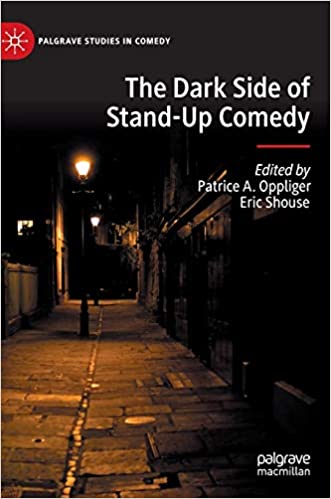
"The Dark Side of Stand-Up Comedy," a new book co-edited by Patrice Oppliger (CRC fellow) and Eric Shouse, is now available for purchase.
*Update: While this schedule remains the same, the conference will now be taking place virtually (not in Australia, as previously planned).*
This May, communication scholars from around the globe will convene for the International Communication Association's 70th annual conference, including several of the CRC's fellows.
As the program has recently been made available, we've compiled our own schedule of sessions and presentations that will feature CRC/BU COM-affiliated faculty and students. It can be accessed here.
In a project conducted for the State House News Service, CRC researchers used biometric methods to measure potential voters' subconscious responses to candidates running in this year's presidential election.
Utilizing galvanic skin response (GSR), facial expression analysis, eye tracking, and self-report survey data, researchers Susie Blair, Anne Danehy, and Mina Tsay-Vogel designed a study to better understand how voters respond to information about six of this year's candidates—five of the Democratic frontrunners, plus Donald Trump.
Reporter Craig Sandler of the State House News Service authored a piece about the study's findings which has since been published on WGBH's news site.
"Biometrics studies like the one the CRC conducted for the News Service do ask voters questions in traditional ways, and the group was asked a battery of questions about their personal impressions of the contenders after being presented with their photos and biographies," he writes. "But they studied those photos and biographies on a monitor that recorded their eye movements and facial expressions, and while wearing sensors that measured their galvanic skin response—a proven indicator of emotional involvement and arousal."
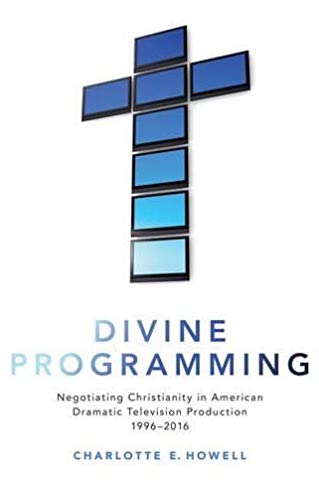
From the mid-90s to the present, television drama with religious content has come to reflect the growing cultural divide between white middle-America and concentrated urban elites. As author Charlotte E. Howell argues in this forthcoming book, by 2016, television narratives of white Christianity had become entirely disconnected from the religion they were meant to represent. Programming labeled "family-friendly" became a euphemism for white, middlebrow America, and developing audience niches became increasingly significant to serial dramatic television. Utilizing original case studies and interviews, Divine Programming investigates the development, writing, producing, marketing, and positioning of key series including 7th Heaven, Friday Night Lights, Rectify, Supernatural, Jane the Virgin, Daredevil, and Preacher.
As this book shows, there has historically been a deep ambivalence among television production cultures regarding religion and Christianity more specifically. It illustrates how middle-American television audiences lost significance within the Hollywood television industry and how this, in turn, has informed and continues to inform television programming on a larger scale. In recent years, upscale audience niches have aligned with the perceived tastes of affluent, educated, multicultural, and-importantly-secular elites. As a result, the televised representation of white Christianity had to be othered and shifted into the unreality of fantastic genres to appeal to niche audiences. To examine this effect, Howell looks at religious representation through four approaches—establishment, distancing, displacement, and use—and looks at series across a variety of genres and outlets in order to provide varied analyses of each theme.

Charlotte E. Howell is an Assistant Professor of Television Studies in the Department of Film and Television and a research fellow of the CRC. Her work has been published in the Cinema Journal, Critical Studies in Television, Networking Knowledge, Kinephanos, and in the anthology Supernatural, Humanity, and the Soul: On the Highway to Hell and Back.
This week, communication scholars, practitioners, and educators from around the world are congregating in Toronto, Canada for the Association of Education in Journalism and Mass Communication (AEJMC)'s 102nd annual conference. Many members of the BU COM community—including some of the CRC's research fellows—will be in attendance to share their scholarly work and convene with colleagues around this year's theme, "Investing in Our Futures."
Below is a list of AEJMC conference presentations and panels featuring BU COM and CRC-affiliated faculty and doctoral candidates (click image to view full-size):
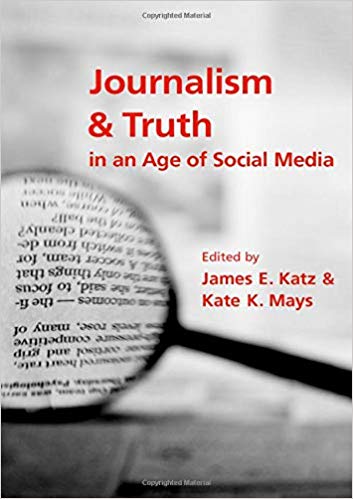
Truth qualities of journalism are under intense scrutiny in today's world. Journalistic scandals have eroded public confidence in mainstream media while pioneering news media compete to satisfy the public's appetite for news. Still worse is the specter of "fake news" that looms over media and political systems that underpin everything from social stability to global governance.
This volume aims to illuminate the contentious media landscape to help journalism students, scholars, and professionals understand contemporary conditions and arm them to deal with a spectrum of new developments ranging from technology and politics to best practices.
Fake news is among the greatest of these concerns, and can encompass everything from sarcastic or ironic humor to bot-generated, made-up stories. It can also include the pernicious transmission of selected, biased facts, the use of incomplete or misleadingly selective framing of stories, and photographs that editorially convey certain characteristics. This edited volume contextualizes the current "fake news problem." Yet it also offers a larger perspective on what seems to be uniquely modern, computer-driven problems. We must remember that we have lived with the problem of people having to identify, characterize, and communicate the truth about the world around them for millennia.
Rather than identify a single culprit for disseminating misinformation, this volume examines how news is perceived and identified, how news is presented to the public, and how the public responds to news. It considers social media's effect on the craft of journalism, as well as the growing role of algorithms, big data, and automatic content-production regimes. As an edited collection, this volume gathers leading scholars in the fields of journalism and communication studies, philosophy, and the social sciences to address critical questions of how we should understand journalism's changing landscape as it relates to fundamental questions about the role of truth and information in society.
James E. Katz is Feld Professor of Emerging Media at COM, where he directs its Division of Emerging Media Studies. He has been awarded a Distinguished Fulbright Chair to Italy, fellowships at Princeton, Harvard, and MIT, and the Ogburn Career Achievement Award from the American Sociological Association. Dr. Katz is an elected fellow of the International Communication Association and the American Association for the Advancement of Science (AAAS).
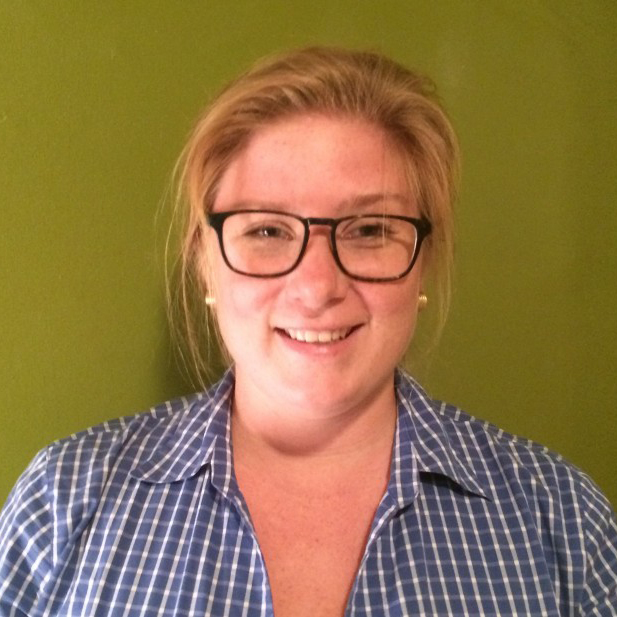
Kate K. Mays is completing her PhD in Emerging Media Studies at COM and is a Graduate Student Fellow for computational and data-driven research at the Rafik B. Hariri Institute for Computing and Computational Science & Engineering at Boston University. She has presented her research findings at a variety of international conferences and in several journals. After graduating from Georgetown University, she worked in the publishing industry before coming to Boston University for advanced studies.
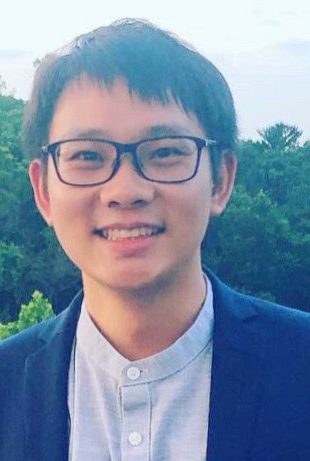
As Boston University begins to invest its resources and expertise in the emergent field broadly referred to as "big data," BU Today has published a multipart series exploring the promises, consequences, and future of data science. Part Five of this series—titled "Big Data, Big Impact"—features insights from two of the CRC's faculty fellows, Lei Guo (Assistant Professor, Emerging Media Studies) and Chris Wells (Assistant Professor, Journalism).
Both Guo and Wells have worked extensively with big data, both as a research method and as a topic of interest in and of itself. Their research utilizes computational methods to explore online media phenomena such as fake news, filter bubbles, and the influence of algorithms on news consumption.
Full story available on the BU Today website: "What You Read and Watch is Changing Media Forever"
Recently, the Communication Research Center received an unexpected and exciting email. Attached was a scanned copy of the first-ever CRC newsletter, published in November of 1959 (the year the CRC was established).
We are so thrilled to have this documentation of the CRC's rich history and hope you enjoy learning about the center's early research endeavors as much as we have.
Many thanks to John W. Holman for getting in touch and mailing us the original document, which will be framed and displayed at the CRC.
Learn more about the history of the CRC (article by Dr. Michael G. Elasmar)

Dr. Melvin DeFleur, a former professor of communication at Boston University and renowned communications scholar, was posthumously awarded the Association for Education in Journalism and Mass Communication (AEJMC)'s Eleanor Blum Distinguished Service to Research Award.
Dr. DeFleur conducted pioneering academic research in the communications field, authoring over a dozen books—including the widely-cited textbook “Theories of Mass Communication," which has been translated in 10 languages. At Boston University, he served as both a faculty member and chair of COM's Mass Communication, Advertising and Public Relations department. In 2011, the Communication Research Center created the Dr. Melvin DeFleur Distinguished Lecture Series, a tribute to his groundbreaking contributions to mass communication research and his valued membership at the CRC.
The award will be presented during the AEJMC's August 2019 Conference in Toronto, Canada.

A New York Times article about the changing nature of our digital experiences cites a recently-published paper in Human-Computer Interaction co-authored by the CRC's Jim Cummings.
The concept of "screen time" has been long used to understand how—and for how long—individuals interact with their devices. But as more applications have become available to internet users, understanding people's digital experiences and how often they switch between tasks has become more complicated.
"Consider what a person can do in just the time it takes to wait for a bus: text, watch a comedy skit, play a video game, buy concert tickets, take five selfies, each with a different set of cartoon ears," explains The New York Times' Benedict Carey.
As a response to this newfound complexity and fragmentation of experience, Cummings and his co-researchers documented, via screenshots, the digital activity of 30 participants. The resulting digital records, they write, are best conceived of as "screenomes"—adapted from the word "genome."

Researchers reported that, on average, participants switched from one screen activity to another every 20 seconds and spent hardly 20 minutes on one continuous activity. Their findings were presented as a stream of color-coded graphs (shown at left) depicting what kind of activities individuals used their screens for—entertainment, news, or work, for instance—and how they switched between these tasks.
Quoted in The New York Times' piece, co-author Byron Reeves (Professor of Communication at Stanford University) explained the significance of their proposed "screenomic" framework.
“It’s very counterintuitive to say at this stage, but the fact is, no one really knows what the heck people are seeing on their screens. To understand what’s happening, we need to know what exactly that is.”