News

Letter from the Director: March 2022

Disinformation Warfare in Perpetuating World Tensions

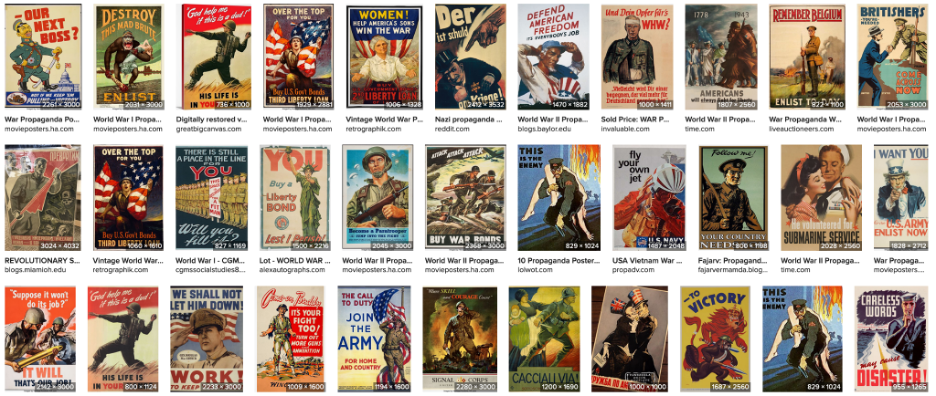
The unfolding, grisly war in Ukraine has made clear that in 2022 – nearly a century after communication theorist Harold Lasswell’s dissertation on propaganda – battles take place not only with physical confrontations, but also continue via information warfare designed to win the hearts and minds of observers. Communication researchers play a special role in helping to understand this process.

In the first days of the Ukraine invasion near the end of February 2022, I heard a live interview on the BBC Newshour where host James Menendez interviewed a member of the Russian Federal Assembly, Vitaly Milonov. For four minutes – with minor pushback from Menendez – Milonov parroted Russian President Vladimir Putin’s talking points, including that “the UK, European Union, and United States have provoked the invasion, that Ukraine's president lacks public support, and that Russia has valid rights to keep Ukraine under its influence.” This interview was followed by another with former US ambassador to Russia, Michael McFaul who proceeded to tear into Menendez for airing “nonsense” from a Russian MP. McFaul asked,

…if it was September 1st, 1939, would you put on the air a member of the Nazi Party to try to explain this ridiculous, absolute falsification of history and information that we just heard from Mr. Milonov? Because this is complete, utter nonsense what he just said, and I’m wondering if we’re doing a service to the world by giving him a voice on the BBC?

Herein is another exemplary case where the gatekeeping and framing responsibilities of journalists is crucial amidst a tidal wave of propaganda. Adding to the complex decisions traditional journalists must make when reporting on wars is the ascendance and accessibility of social media platforms. Citizens are now able to help narrate the first draft of history, highlighting the heroism of everyday Ukrainians as they resist and fight back against the Russian military. Of course, the danger is that this digital front is also vulnerable to propaganda and outright disinformation campaigns to demoralize or deceive Ukrainians and the wider world.

To help make sense of this complex environment, I turned to two of the CRC’s Research Fellows with expertise in international communication.

According to H. Denis Wu, Professor of Communication, “International news about wars has been immensely critical to people’s surveillance of the state of the world because of the nature of the subject matter as well as the information about it.” He explained,

The news about wars is more impactful for people and inevitably riskier, harder, and more expensive for the media to deliver. The coverage of Ukraine so far reflects what communication researchers have long indicated: it shows what has happened as well as the emotions behind the stories. The news has covered not just the military activities and economic sanctions – which is extremely important – but also the bravery, resistance, and resilience of the Ukrainians who face an almost insurmountable enemy. The former category of news belongs to the first-level agenda while the latter is affect-based, thus second-level agenda. It is crucial in shaping the sentiment of audiences and their actions, as illustrated in Image and emotion in voter decisions: The affect agenda.

Of course, shaping perceptions of wars has a long history. Michael G. Elasmar, Associate Professor of communication provides some of this background:

Shortly after the end of World War II, the United States, under the auspices of UNESCO, launched a major research initiative for determining the conditions that affect international understanding, intergroup perceptions, and support for military conflict among nations. It was called the World Tensions Project. The overarching goal was to determine what can be done to preempt a repetition of the devastation witnessed during World War II. The initial World Tensions Project resulted in numerous studies that examined the role that communication and media play in contributing to how other countries and people living in those countries exist in our minds. It is worth noting here that, at that time, the field of communication science did not yet exist, and the study of media impact was scattered across sociology, psychology, education, and other classical disciplines. Interest in conducting this type of research waned and mostly disappeared after the 1960s when there was a growing belief that another world war was no longer a probable event.

I asked Elasmar what the knowledge gained from the original World Tensions Project tells us about the likely changes in the reaction of Americans over time to the Russian invasion of Ukraine. He explained,

Studies conducted in the two decades following the launch of the World Tensions Project taught us that news and entertainment media play an important role in creating, reinforcing, and/or modifying the images of countries in our heads and these images can influence attitudes toward other countries and support for military action. And that pre-existing information about a country will determine which portions of the new information about this specific country the human brain will focus on and retain in its memory. Before the Russian invasion of Ukraine, surveys of Americans conducted in 2020 by the Pew Center for the People and the Press (PCPP) and by Gallup in early February of 2022 have consistently found an unfavorable opinion of Russia among a vast majority (70% and 85% respectively) of survey respondents. Between 2007 and 2020, PCPP found that favorable opinion of Russia among Americans had fallen by 25%. Gallup found that favorable opinion of Russia dropped from 51% in early February of 2012 to 15% in early February of 2022. These patterns show that the preexisting information about Russia’s government was already overwhelmingly negative prior to its invasion of Ukraine.

Applying what we learned from the World Tensions Project, we can predict that the images of atrocities and destruction stemming from the Ukraine invasion will strongly reinforce the pre-existing negative information about the Russian government held by Americans. One direct implication of this effect is that American consumers might shy away from traveling for leisure to Russia and/or consuming Russian-made goods and services for a long period after the Ukraine war no longer dominates international news. Another indirect implication is that the images of destruction and atrocities emerging out of Ukraine might interact with other negative factors prevailing in the minds of Americans in ways that no one could have predicted just a few weeks ago. The longer the war in Ukraine goes on, and the more its effects are felt in their daily lives (through price increases of everyday necessities, threats of cyberattacks, news about the potential of nuclear bombs by the Russian military, predictions of a recession etc.) the more likely will Americans demand for and support a direct military intervention to end what they perceive as a Russian threat to their safety and the safety of their families. Americans will want to hold the Russian government accountable for destroying a modern European country and committing atrocities against civilians, and to punish the Russian government for a war that is causing an impending economic recession and stifling American optimism about the end of the pandemic.

As the war in Ukraine drags on, our CRC Fellows continue to monitor the important role of mediated communication in forming, changing, and reinforcing perceptions of war, countries, governments, and people around the world.

Letter from the Director: February 2022

Following the Playbook of Our Earliest Broadcasters

The continuing concerns about the spread of misinformation are at the forefront of news again in early 2022, engulfing celebrities Joe Rogan and Whoopi Goldberg and their employers.

In Rogan’s case, accusations of Covid-19 vaccine misinformation have dogged his “Joe Rogan Experience” podcast that is on the Spotify streaming service platform. Recent reporting indicates Spotify has paid Rogan at least $200 million to exclusively license his podcast. After inviting Dr. Robert Malone on his show – an aggrieved infectious-disease researcher who claims to be the inventor of mRNA vaccine technology yet has spread baseless conspiracy theories about the vaccines – a coalition of over 250 public health officials, scientists, and academics wrote an open letter to Spotify calling for it to mitigate the spread of misinformation on its platform. This was followed by several artists, led by Neil Young, requesting the removal of their music catalogs from Spotify if Rogan’s podcast was allowed to continue. In response, Spotify agreed to add “content advisory” warnings to virus-related content and Rogan stated he will try to offer a better balance of expert perspectives going forward.

In the case of Whoopi Goldberg, a co-host of ABC-TV’s talk show The View, it was a discussion about a school district banning the Pulitzer-prize winning Maus – a graphic novel about the Holocaust – that landed Goldberg in trouble. She repeatedly claimed that the Holocaust was not based upon racial hatred because it involved “two white groups of people.” Although she later apologized and conceded she was misinformed about the Holocaust, she was suspended for two weeks by ABC.

Like many professors, I have been examining these controversies with students in my “Understanding Media” course. Not only are these cases instructive as examples of misinformation circulating beyond social media platforms, but they also serve as an entree to discuss limits of free expression and the gatekeeping obligations of private companies such as Spotify in contrast to broadcast networks, such as ABC (which is owned by The Walt Disney Company), and the stations that air ABC content.
To enrich our understanding of this last point, I turn to CRC Fellow Deborah L. Jaramillo who is an associate professor of film and television at COM. Based upon her expertise of the U.S. television industry’s historical attempts to censor its programs and regulate its business practices, she offered this perspective:

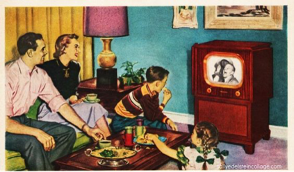
In 1950 a man wrote to television entertainer Arthur Godfrey, incensed at the risqué content in the previous week’s program. Godfrey’s “coarseness and vulgarity” had no place within earshot of the letter writer’s wife and daughter; indeed, the man demanded an apology from Godfrey, himself. This man was one of many who flooded networks, advertisers, stations, and government officials with complaints about this emerging medium called television. Struggles over content have only escalated since the first complaint letter reached the desks of government regulators, but U.S. media companies have clung rather successfully to a strategy employed since early radio and encouraged by the government, which cannot censor: self-regulation.

Many different stakeholders grappled with the perceived excesses of early television programming. Eager to keep the commercial system intact and alternative systems (like non-commercial and subscription TV) at bay, the National Association of Broadcasters, the networks, and advertisers drafted codes, standards, and editorial policies to manage programming. The 1952 Television Code, for example, propped up conservative values, policing content pertaining to religion, marriage, gender norms, and law enforcement. But it also prohibited content that demeaned people of different racial backgrounds, religions, and abilities. Stakeholders like the NAB wanted to ease TV into homes so that it complemented middle-class sensibilities and caused the least disruption to viewers’ spending habits. Although they seemed draconian and an affront to creative freedom, these self-regulatory maneuvers largely lacked teeth. For legal reasons, stations subscribed to the radio and TV codes voluntarily; violation of the codes could not trigger a license revocation. That was the FCC’s department. Nevertheless, self-regulatory efforts like industry codes and network censorship departments persisted. Simply put, they looked good. If a set of standards could convince the FCC and television reformers that broadcasting could be clean and serve the public interest—that broadcasters cared about viewers—then advertiser-supported television could become a normal part of household routines across the U.S.

As entertainment media have multiplied and platforms have proliferated, standards have relaxed, but they have not disappeared. From TV to streaming audio, media companies remain averse to government interference, and they still use these policies to convince the public and lawmakers that they are, at heart, ethical businesses that care about their audiences’ wellbeing—even if the material they harbor is out of step with social norms. That Spotify opted to release its content standards to the public in the wake of the Joe Rogan controversy demonstrates that public-facing codes are still believed to have currency, even if their efficacy is up for debate.

Content standards are not neutral; they uphold particular values and imagine particular audiences. Additionally, they are not and cannot be static; programs are cultural artifacts as much as they are industrial outputs, so they will always challenge efforts to contain them. Standards adapt to shifting norms and industrial circumstances, but they also bend according to the perceived value of talent, audiences, and media brands. High-profile creatives like Norman Lear and Steven Bochco were famous for negotiating with network censors to get boundary-pushing content on air. The cases of Joe Rogan at Spotify and Whoopi Goldberg at The View on ABC offer a set of circumstances decidedly different from Lear’s and Bochco’s, but they are emblematic of the tension between policing content and spurning high-performing talent. The swift, temporary suspension of Goldberg is unsurprising, given the reputation of network news, the historical relationship between news and the public interest, and broadcast stations’ proximity to government regulation. Spotify, by contrast, has no such history or proximity. It can more easily (but not without bad press) contort its standards to protect its earners, but it still follows the playbook of our earliest broadcasters. At the end of the day, neither the nearly 80-year old network nor the 16-year-old streaming platform opted to blow up their talent. We were instead treated to two versions of self-regulation that, when placed in historical context, demonstrate that legacy media and new media have more in common than we might think.

As self regulation continues to dominate in controlling U.S. media content, two cautionary tales are worth noting. Despite often lacking teeth, as Jaramillo writes, self regulation led to the deplatforming of Father Coughlin in 1940 from his long-running syndicated radio show. With his anti-Semitic proselytizing, Coughlin was considered “an enemy of democracy, a disciple of fascism, an advocate of violence, and a purveyor of racial hatred.” Out of fear of losing their broadcast licenses due to “purposeful untruths that debase radio as an instrument of racial or religious persecution,” the National Association of Broadcasters (NAB) strengthened its Code of Ethics in 1939 prohibiting the sale of airtime for divisive political or religious commentary. Under threat from the Federal Communications Commission and concern about losing authority among member stations, the NAB proceeded with the messy task of pressuring stations – some of which were resistant – to voluntarily terminate their business relationships with Coughlin.

More recently was the deplatforming of the then-president of the United States, Donald J. Trump, from Twitter for violating its “Civic Integrity” policies by inciting violence related to the January 6, 2021, storming of the U.S. Capitol. Other social media platforms followed Twitter’s lead.

In both cases, it was ultimately the apparent threats to democracy where media companies took the extreme measures of blowing up their talent. Will contemporary media companies such as Spotify continue to follow the broadcaster playbook? Our fellows will be watching and listening.

Survey: Slim majority trust media, hiding huge partisan gap

By Burt Glass

A slim majority of Americans trust the media to accurately report on top issues of the day, but that fact hides a deep divide between Democrats and Republicans, according to a new survey by Boston University’s College of Communication.

When it comes to climate change, vaccines, and elections, about 3 of 5 Americans, or 60%, trust the media to provide accurate information to varying degrees. The percentage jumps to about 80%, however, for Democrats and drops to just more than a third (34-37%) for Republicans.

Read the full story here.

.

Research on Tap Event: Health Misinformation: How it Affects Society and How We Can Deal With It

By Lindsy GoldbergJanuary 24th, 2022in Homepage

Research on Tap: Health Misinformation: How it Affects Society and How We Can Deal With It

Thursday, February 10, 2022 | 4-5:30 p.m.

Virtual

Co-sponsored by the Rafik B. Hariri Institute for Computing and Computational Science & Engineering and the Office of Research. Hosted by Gianluca Stringhini, Assistant Professor, Electrical & Computer Engineering, College of Engineering.

False or inaccurate information can influence how the public responds to health issues, and reduce the effectiveness of public health measures. To ensure an effective response to public health crises like outbreaks and pandemics, we need a better understanding of how misinformation unfolds, how it affects public perception, and how to craft better messaging to influence behavior.

At this Research on Tap, BU faculty across a broad range of disciplines, including computer science, communication, and public health, will present their research to better understand and mitigate health misinformation.

Featuring: Marshall Van Alstyne | Michelle Amazeen | Chris Chao Su | Kathleen Corriveau | Traci HongEric Kolaczyk | Arunima Krishna | Jeremy Menchick | Gianluca Stringhini | Monica Wang

To view the videos and slides from this event, click here.

Letter from the Director: January 2022

Communication Research in 2022

As we embark on a new calendar year, I asked some of our CRC fellows to share their thoughts on important communication research trends for 2022.

For COM Assistant Professor of Emerging Media Studies Chris Chao Su, it is the pandemic that will continue to play a prominent role in shaping communication scholars’ research agendas. He explained,

As a researcher mainly concerned with media audiences, I think two research trends will continue to develop and serve to help us understand the impact of the COVID-19 pandemic and beyond on media and communication. The first research trend examines the role of digital platforms and the changing behaviors of online media users with regard to consumption and production of COVID-19 related information, including vaccines, preventive measures, and virus variants. As part of an ongoing project, I have observed that social media users have redefined news credibility from an institution-centric viewpoint to a more individualized, network-centric perspective. I found that trust in the news becomes more of a personal experience than a socially-fabricated symbol. 

Secondly, the pandemic has resulted in a further deterioration of the digital divide between the privileged class and the marginalized. Globally, social protests advocating for minorities’ rights will continue to be the dominant discourse in 2022. Therefore, the expansion of polarization beyond political discourse to other social and cultural regimes might be of interest to communication scholars.

The effects of the pandemic were also a driving consideration for COM Associate Professor of Media Science Mina Tsay-Vogel. “Given our increasing reliance on digital media, virtual spaces, and computer-mediated interactions to sustain the social fabric of our everyday lives as a result of the pandemic, these trends certainly point to important implications for our evolving relationship with technology.” She continued, 

The escalating costs of the pandemic have undeniably made the fragility of human life and fleeting passage of time much more salient than ever before, in turn causing people to reassess their life’s purpose and potential. Such revelations have encouraged individuals to seek more meaningful personal, social, and professional pursuits, hence outcomes such as The Great Resignation. In doing so, technology has unquestionably been a source, platform, medium, and intervention of empowerment by facilitating personal change and growth, work-life balance, social support networks, and movements that inspire social change – all of which point to the need to expand digital well-being and positive technology research in the field of communication. 

For COM Assistant Professor of Public Relations Arunima Krishna, it is the confluence of the pandemic as well as the unrelenting mis- and disinformation efforts that are driving her research interests. She said, “As the Covid-19 pandemic continues to rage on, a key challenge that communicators and researchers face is how to rebuild trust in the scientific community, especially among those who still question the science behind masking, vaccines, and indeed, the virus itself.” For instance:

The many reported communication missteps from the CDC have further contributed to lowered credibility not only of the CDC but also of the scientific community in general, and have eroded faith in recommendations proffered by the CDC and other public health agencies. The need for the (so-called) hard sciences to work with not just communicators but also communication researchers to identify theoretically grounded ways to address vaccine hesitancy, mis- and disinformation, and increase compliance with Covid-19 preventive measures is dire. For example, in one of my research articles on disinformation, I advanced a typology of disinformation susceptibility to identify those for whom disinformation messages may be most effective vs. least effective. 

Disinformation is also of concern to COM Professor of Communication Denis Wu, specifically, “the tenacity of disinformation and misinformation, fervent disregard of truth, and their threat to democracy and collective well-being.” To address these issues, Wu explained,

I have worked with colleagues to examine the processing of varied political (or politicized) messages, communications of environmental crises across geographical regions and political spectrum, and emotions and perceptions toward political leaders and of foreign nations. The impact of these studied issues can be found on candidate evaluations and electoral decisions, environmental policy and regulation, and international relations that may result in war and peace

I agree with my colleagues that digital media technologies will continue to be important areas of study, especially as Dr. Tsay-Vogel indicates, for positive well-being. I also agree about the importance of identifying disinformation efforts, particularly around scientific issues such as vaccines, but also climate change and vaping. Both vaccine and climate change disinformation are prevalent with long histories. As my coauthors and I noted in The COVID-19 Vaccine Communication Handbook, anti-vaccination misinformation stretches back 200 years and is characterized by reasoning flaws and fallacies. While climate change disinformation is more recent, there is evidence of it since at least the 1970s. Of course, we must not forget that it was the U.S. tobacco industry in the 1950s that wrote the playbook on manufacturing uncertainty about scientific evidence. This manufactured “uncertainty” narrative thrives today as we’ve seen with the COVID-19 vaccines and climate change. There is no science-based uncertainty about the safety of U.S. COVID-19 vaccines and that climate change is happening and caused by human activities. 

There are also sources of science disinformation that are easily overlooked. I am studying how corporations and interest groups are using covert persuasion techniques to influence public opinion on scientific topics. Sponsored content – advertisements disguised as news articles – are being used widely in mainstream news media, increasingly by companies wishing to contradict the actual news reporting of a news outlet or to suppress critical reporting of that corporation in the future. For instance, sponsored content created by The New York Times’ T Brand Studio on behalf of ExxonMobil is being used as evidence in a climate liability lawsuit against the fossil fuel company by the Massachusetts Attorney General for being “false and misleading” and in violation of the state’s Consumer Protection Act. Moreover, social media “influencers” are being paid to promote the (unverified) efficacy of health-related products without disclosing that they have been paid to do so. These hidden persuasion techniques have been shown to deceive the majority of people who encounter it, particularly as the paid disclosures disappear when the content is shared on social media. 

On behalf of my colleagues, we look forward to offering more of our expertise on these and other important areas of communication research as we progress through 2022. As students and faculty return to campus for the spring semester, more interesting research discussions and revelations are sure to emerge.


Letter from the Director: December 2021

As 2021 draws to a close, I asked some of our CRC Fellows to reflect on the last 12 months and share what was most noteworthy to them in the realm of communication research.

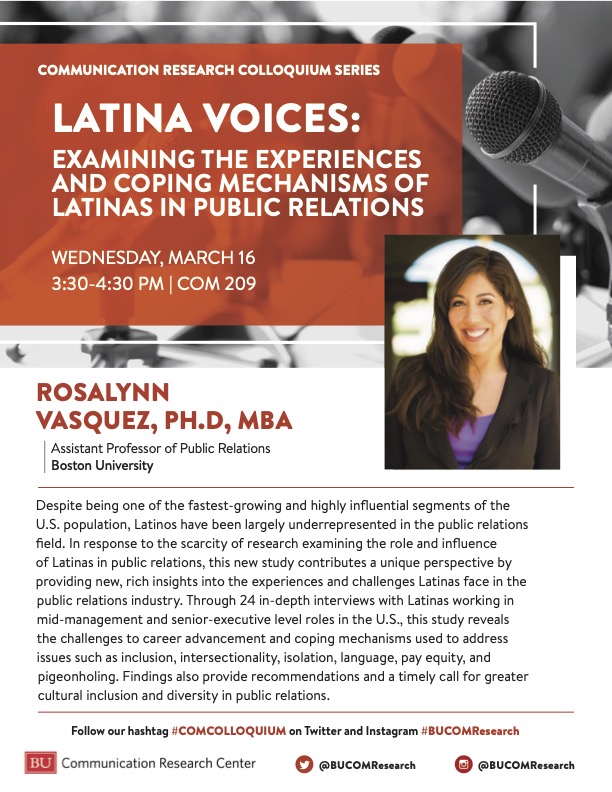
Two of our Fellows observed an increased emphasis on communication efforts for social change. For Assistant Professor of Public Relations Rosalynn Vasquez, who examines corporate sustainability and advocacy communications, she found the growth of social impact communications and the growth of JEDI (justice, equity, diversity, and inclusion) practice groups among PR agencies and in-house practitioners most interesting and something to keep an eye on. “There is a growing need for communication leaders to take the lead in defining and discussing diversity, equity, & inclusion in organizations,” she said. “Words matter and ensuring consistency and clarity will be crucial when communicating with internal and external stakeholders.” A similar observation was made by Assistant Professor Yi Grace Ji, who is a strategic communication researcher. While previously it was primarily health communication scholars that focused on communication for social good, over the last year Ji has noticed more advertising and public relations practitioners looking to see how they can align their programs with social change efforts. “Students are gravitating toward this, as well,” said Ji.

For Assistant Professor of Emerging Media Studies James Cummings, who studies media psychology and human-computer interaction, what was noteworthy was the increasingly mainstream discussion of virtual spaces and remote interactions. Most notable was the announcement of Meta, as a not just a corporate rebranding by Facebook, but a declaration by one of the world’s leading media firms that their vision of the near-term future is immersive virtual experiences. The envisioned scenarios in which our conventional “2D” media interactions  are integrated with VR and AR experiences poses all sorts of interesting considerations, both theoretical (in terms of classic approaches to studying message processing and effects, like excitation transfer, priming, and source attribution), as well as ethical (Meta is funding researchers to help them design a safe, inclusive, privacy-preserving “metaverse”).

For me, it was noteworthy that this year’s Nobel Peace Prize winners were journalists Maria Ressa and Dmitri Andreyevich Muratov for their efforts to defend freedom of speech and protect democracies from – as Ressa put it – the “toxic sludge” of misinformation. Ressa is co-founder of the Phillipine’s Rappler, a digital news organization that is a signatory to the International Fact-Checking Network. Indeed, my research has found that fact-checking may be understood as a democracy-building tool that emerges where democratic institutions are perceived to be weak or are under threat. That the Nobel Committee would bestow this prize upon those fighting misinformation shows that the importance of addressing the global infodemic continued in 2021 and will likely be a force for communication researchers to reckon with in the new year.

Letter from the Director: November 2021

This letter is part of a monthly series from the Director of the CRC, Dr. Michelle Amazeen.

Facebook’s WALL-E Moment?

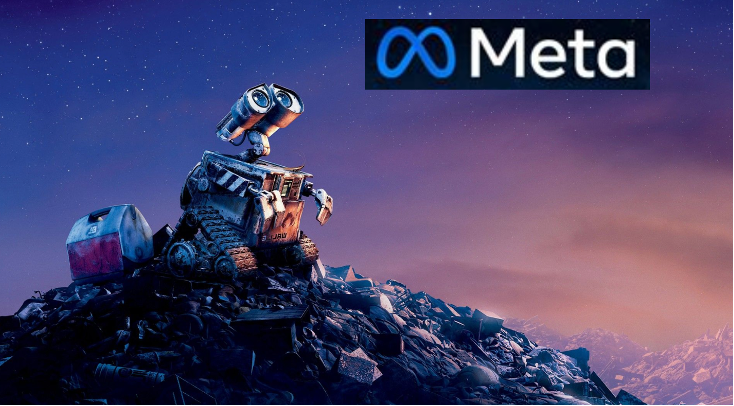
When Facebook announced it was changing its name to Meta last month, the Disney-Pixar movie WALL-E (2008) was the first thing that came to my mind. The sci-fi movie was about a robot left on an uninhabitable Earth to clean up the garbage left behind by humans. Rampant consumerism and corporate greed had left Earth a wasteland, and humans were evacuated to outer space. In this same way, I envision Facebook abandoning the real world for the virtual “metaverse.” They leave behind unimaginable quantities of disinformation amplified by their algorithms along with harassment, hate speech, and angry partisans.

To move beyond my initial reaction and gain more insight into the implications of Facebook’s name change (and strategic plans) from a communication research perspective, however, I turned to two research fellows within COM’s Communication Research Center (CRC) who study emerging media.

Media psychologist and COM Assistant Professor of Emerging Media Studies James Cummings indicated that a Metaverse – if successful – would produce new issues in information processing and would place a new emphasis on theories of interpersonal communication rather than just mass communication. As I feared, he also said it has the potential to augment existing media effects of concern related to social networking such as misinformation, persuasion, "addiction," distraction, etc.

First, Cummings explained there would be major implications for how billions of people select, process, and are influenced by media content. To be successful, the Metaverse platforms will need to transform current modes of information processing and computer-mediated communication interactions into much more immersive, cognitively absorbing experiences. “For instance,” he said,

“The mainstreaming of consumer-facing immersive ‘virtual reality’ (VR) – which typically place high demands on users' processing – will be coming in an age of media multitasking. Interfaces will need to figure out how to immerse users while still permitting them to access different information streams. Similarly, mainstreaming ‘augmented reality’ (AR) experiences will also mean requiring users to skillfully juggle attentional demands, multitasking between virtual and real-world stimuli. These are common practices for hobbyists, but may present more of a learning curve for a broader population of users.”

Thus, Cummings suggests, if the Metaverse is the ecosystem of devices and experiences CEO Mark Zuckerberg envisions, users will be switching back and forth between different types of immersive experiences and stimuli (reality, AR, VR, etc.). “This scenario, if brought to fruition, will be ripe for excitation transfer, priming, and other media effects based on sequential experiences” he said.

Second, Cummings expects that a successful Metaverse would mean exchanges with mediated stimuli that are much more like face-to-face or interpersonal interactions. “This will require designers to master key elements of media richness theory and factors influencing users’ sense of spatial and social presence,” he explained. In other words, social networking and other Metaverse activities may not only entail extractive information processing (in the form of reading text, examining pictures, watching video, etc.) but increasingly also immersive perceptual experiences (a sense of transportation and/or colocation, the processing of nonverbals, etc.).

Finally, Cummings indicates that immersive media are rife for a whole new breed of covert persuasion – such as “native advertising,” or ads that mimic their surroundings – to the extent that users confuse the perceptually plausible with the real. He’s particularly interested in seeing the impact of immersion on users’ perceptions of message authorship and authorial intent.

Indeed, back on Earth, native advertising has been widely adopted to covertly promote not only commercial products, but also political candidates. Candidates are increasingly relying upon “influencers” to post supportive messages on Facebook and other social media without consistently disclosing they are being paid to do so. As I have previously addressed here, if the regulatory agencies that oversee advertising – both commercial and political – have not been able to keep up with the digital transformation of our media ecosystem, how will they be able to regulate the Metaverse?

For COM Associate Professor of Emerging Media Studies Chris Wells, the promise and pitfalls of the Metaverse depend entirely on how Facebook rolls it out. For example, the radical network effects we see from social media rely to some degree on the extremely shortened forms of communication—short texts and short videos—that allow information scanning and selection on a very rapid scale. He indicates the pseudo-social presence of virtual reality would seem to reduce the number of people you can actually interact with. “How will the Metaverse be organized and who will you be able to interact with?” Wells asks. Are people going to have coffee virtually? Virtual meetings? He suggests that a site such as Second Life may offer rudimentary evidence of the kinds of interactions that emerge when people engage with strangers in a massive virtual world.

Presumably, Wells suggests, Facebook will still have to provide a great deal of content moderation in the Metaverse if people are to have any interactions outside tightly defined networks. “Given Facebook’s track record with their current platform,” Wells says, “this could well be an unmitigated disaster; but expecting this may lead them to tightly control who interacts with whom and in what ways.”

Second Life notwithstanding, Wells also questions who will actually want to engage in such a virtual space. “My read of the pandemic is that people don’t particularly want to keep sitting in their bedrooms and interacting through Zoom,” he said.

“Will wearing an Oculus headset make that a lot better? I’m not sure. But I also suspect that there are at least a lot of people for whom going to a virtual concert or playing virtual chess with a friend in the park are paltry substitutes for the real thing.”

He concedes that there are a lot of Millennials and Gen Zs who spend a lot of time in their bedrooms on video games, with digital avatars, and so forth. One possibility, says Wells, is that the Metaverse becomes a niche space for these sorts of folks.

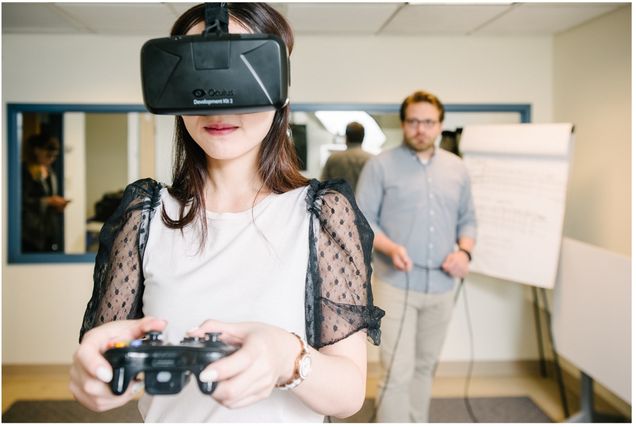
As these Metaverse developments take shape, CRC fellows are well positioned to monitor these emerging media uses and perceptual effects. The CRC has multiple Oculus virtual reality headsets that can be paired with our psychophysiological measurement tools. For as technology takes us to new realms, we have a responsibility back on Earth to analyze and understand how humans are affected.

If you are interested in learning more about the CRC’s technologies or research, please contact Lab and Research Manager Lindsy Goldberg at crccom@bu.edu.


Communication Research Colloquium Series Hosts Dr. Joshua Darr on 11/11/21

By Lindsy GoldbergOctober 29th, 2021in Homepage

On November 11, the Communication Research Center is pleased to host Dr. Joshua Darr,Assistant Professor, Manship School of Mass Communication and Department of Political Science at Louisiana State University.

Home Style Opinion: How Local Newspapers Can Slow Polarization

Local newspapers can hold back the rising tide of political division in America by turning away from the partisan battles in Washington and focusing their opinion page on local issues. When a local newspaper in California dropped national politics from its opinion page, the resulting space filled with local writers and issues. We use a pre-registered analysis plan to show that after this quasi-experiment, politically engaged people did not feel as far apart from members of the opposing party, compared to those in a similar community whose newspaper did not change. While it may not cure all of the imbalances and inequities in opinion journalism, an opinion page that ignores national politics could help local newspapers push back against political polarization.

RSVP is required for this event. Please RSVP here.

CRC Fellows Mourn the Passing of Dr. Donald L. Shaw

By Lindsy GoldbergOctober 22nd, 2021in Homepage

On behalf of CRC Fellows, Dr. Lei Guo offers a few words on the significance of Dr. Shaw's work for the field of communication and understanding media effects:

"Dr. Donald Shaw, one of the most influential scholars in communication research, passed away on October 19th, 2021. Dr. Shaw was best known for his work, with Dr. Maxwell McCombs, on developing agenda-setting theory in 1972 to explain the way news media influences public opinion. Their work was groundbreaking and revolutionary at the time and is still very relevant today to help us understand the power of the media, old or new. For example, his more recent work on agenda melding further clarifies how individuals of different backgrounds consume and are affected by news in this diverse media landscape. Dr. Shaw’s scholarly work and his passion and dedication for communication research influenced generations of students."

Dr. Shaw was the Kenan Professor Emeritus at the UNC Hussman School of Journalism and Media, where he taught for 46 years. His legacy of teaching and research will continue to live on in those he taught, inspired, and influenced.