Outside of the Classroom: Cheese, Beer, and Life on the Farm
Gastronomy students are always busy, both inside the classroom and out. On the rare occasion that school is not in session, students take advantage of the chance to get away and explore life outside of the program. In this mini series, students will recount their 2014 Spring Break to provide insight into gastronomy life outside of school.

by Mary Chapman
One of the highlights of moving back East from California (aside from the Gastronomy program!) is being just a few hours drive from Windhorse Farm, my aunt and uncle’s parcel of land in Vermont’s Northeast Kingdom. My last visit there, a whopping 7 years ago, provided me with some of the culinary memories that fueled my passion for food; I couldn’t wait to make more. After delaying our trip by a day due to Vermont’s biggest storm of the year, we hit the road before dawn on Friday morning.
One exciting change to the area since my last visit has been the addition of the Cellars at Jasper Hill to Jasper Hill Farm, which has made some of my favorite cheeses since 2003. “The Cellars” are a series of caves where cheeses are aged - a process called affinage. We were lucky to score an insider’s tour. Our host, Vince, showed us from cave-to-cave allowing us to taste cheeses at varying stages of the aging process. When we were done, Vince sent us on our way with a box of cheese and tips on how to accomplish our next task: hunting down Heady Topper IPA.

I’d never tried Heady Topper, but we had requests from friends back in Cambridge to bring back as much as we could get our hands on. Why? It sits at the top of Beer Advocate’s Top 250 Beers in the World. At 2:15 we arrived at Hunger Mountain Coop in Montpelier and were told by the circle of men already collecting in the beer aisle that Heady Topper would arrive at 3:00. We queued up and waited alongside people from as far away as Virginia. My favorite part was the response from the locals, who couldn’t understand the fascination and stared at us like a bunch of loons. All this for beer? For them, it wasn’t exotic or exciting; they had access to world class beer all the time.

Finally, we were off to the farm where the chores that would become routine by the end of our visit awaited; giving water and hay to the cows, horses, and donkeys, feeding the chickens and collecting their eggs, and my favorite chore: mucking. If you’re lucky enough to not know what mucking is; it means shoveling poop. Good thing the animals are cute, and the view was amazing. 
The beer hunt continued on Saturday at Hill Farmstead Brewery. If we’d thought our 45 minute wait for Heady Topper was something, it was nothing compared to two hours at Hill Farmstead. Brewmaster Shaun Hill produces some of the most balanced beers I’ve ever tasted. Once I’d had a taste, the two hour wait felt completely worth it.

Five full growlers of beer later we headed back to the farm to help my aunt and uncle make butter and mozzarella cheese. I left most of the duties to my cheesemonger boyfriend as I sifted through old family photos.

That night, as we sipped on Heady Topper and munched on Jasper Hill cheeses, my uncle Rob grilled porterhouse steaks that had come from their herd, and Aunt Kate made mac n’ cheese. It was the meal that I’d been craving throughout my 6 years living in California and now, thanks to my experiences out there and with the Gastronomy program, I had so much more to add to the dinner conversation. Kate and Rob are passionate about regulations placed on small farmers like themselves and Aunt Kate was excited to learn that there are people like us (Gastro students) who are aware of issues they deal with. For instance, how it was fine for them to serve us their beef, raw milk, raw cheese, and butter, but it would have been illegal for them to sell it to us. When we hit the road the next morning, we had a car full of beer, cheese, and butter, and a brain full of inspiration to continue my studies with a focus on farming policy.

Mary is a first year Gastronomy student. Before joining the program, she spent 6 years making wine and selling artisan cheeses in Sonoma County, California.
2014 Spring Lecture Series: Three Squares: The Invention of the American Meal
 Designed by Audrey Reid
Outside of the Classroom: Finding Food in the Ocotillo Wells SVRA
Gastronomy students are always busy, both inside the classroom and out. On the rare occasion that school is not in session, students take advantage of the chance to get away and explore life outside of the program. In this mini series, students will recount their 2014 Spring Break to provide insight into gastronomy life outside of school.

By Karen Given
As Gastronomy students, we read about food, taste new foods during class breaks, chat about new restaurants with classmates, and dream about days when we’ll have time to try all the new recipes we’re discovering in historic cookbooks. Sometimes, we try to get away from the subject. This spring break I tried…and failed.
I spent the first three days of break at the Ocotillo Wells SVRA in Southern California. What’s a SVRA? Basically, it’s a big chunk of desert where people camp -- mostly in dusty but comfortable motor homes and travel trailers -- and drive around in dirtbikes, quads, and all-terrain 4-seat vehicles called RZRs. Ocotillo Wells is 100 miles northeast of San Diego, near the increasingly toxic Salton Sea. It’s hot out there, but it’s not exactly a hotbed for gourmet food.

Yet somehow, out in the middle of the desert, where scorpions outnumber kitchen utensils, I found myself surrounded by food. Suited up in motorcycle helmets and goggles and holding on to the roll cage for dear life, we drove out to a place called the Peanut Patch. We didn’t find any peanuts, but instead discovered oddly shaped rocks that had been stacked by previous visitors. I couldn’t help notice the giant pear and a small circle of toadstool mushrooms.

We continued on to a place called the Pumpkin Patch. There, we found dozens of rocks that had formed in the shape of overgrown pumpkins.
The next morning, my dad got up early to make bacon while my mom prepared eggs-in-a-frame. I've heard other names for this simple combination of toast and a fried egg, including: hen-in-a-nest, toad-in-the-hole, and cowboy egg. A friend from undergrad even called them one-eyed-Egyptians.

But none taste more delicious than those cooked and eaten outdoors, glimmering under the sun and covered with a very fine layer of desert dust.

Karen Given is a part time Gastronomy student and full time reporter and producer for NPR's Only A Game, produced at WBUR, Boston.
Getting Hands-On: Learning to Butcher Hogs
by Bethy Whalen
 The picture that I sent my mother and sister was captioned: “I made a new friend!” It was a picture of me, holding up a massive hog’s head in a plastic bag.
On February 15th, I joined my friend Sarah and her family in Ruckersville, Virginia for their annual hog butchering. Every year, they purchase whole hogs from Buffalo Creek Farm and carve them into delectable portions for the year to come.
Early that morning, Sarah’s parents arrived at the house with two massive hogs in the back of their pickup truck – both split down the middle with heads off and organs out. We dragged the halves onto a tarp-covered table and got to work. My first job was to process the heads.
It was amazing and strange to hold the head of a recently slaughtered animal in my hands. This hog still had its eyes in its head, and the first time I looked at it, all I could think of was the terrifying animatronic pigs from the 1999 movie version of Animal Farm I had watched in my high school English class. I had never been that up close and personal with a hog before.
Sarah’s family had decided not to make pon haus this year (known in different parts of America as scrapple – a loaf composed of, amongst other things, meat scraps from the boiled whole head), so my job was to take the hogs’ heads, cut out the jowls for bacon, and remove the rest of the head meat for grinding into sausage. Step one of this process was to cut the heads in half - not the job for a dainty knife, but rather, a hefty axe.
I’m definitely no woodsman; trying to split a hog head down the middle with an axe is pretty difficult. Thankfully, I’m not squeamish either, because by the time I was done, there was pig brain splatter all down the front of my overalls. Once the heads were processed, I helped trim the cuts which were being carved off the body. It was incredibly fulfilling to take the large pieces and make them look like something you’d find in a grocery store.
All in all, it was an incredible day. We started with two hogs and ended with an abundance of gorgeous meat cuts and plenty of sausage. It was a great adventure to process these magnificent animals, and fascinating to see exactly how the other white meat goes from animal to food.
Bethy Whalen is a second year Gastronomy student concentrating on food policy. She is an enthusiastic food activist and avid supporter of the school breakfast and lunch programs.
BU Spring Break

Say Cheese!

By Marleena Eyre
On February 22, 2014, an uncharacteristically warm day, members of the BU Gastronomy Students Association spent the afternoon stretching cheese curds into velvety mozzarella and turning fresh milk into ricotta. Microbiologist Dr. Benjamin Wolfe, who is teaching Microbiology of Food for the BU Gastronomy Program this semester, hosted the GSA’s Cheese Making Workshop. With a passion for all things microbial, Dr. Wolfe obtained his B.Sc. from Cornell, his Ph.D. from Harvard University, and is currently a postdoctoral fellow at Harvard University’s FAS Center for Systems Biology with Dr. Rachel Dutton.
Walking past modern offices lined with complex equations written on windows in Harvard’s Northwest Lab Building, Dr. Wolfe led us to the kitchen where we were greeted by large stainless steel pots and a slew of ingredients ready for cheese making. Before jumping into the cooking portion of the workshop, Dr. Wolfe gave a brief lecture on microbes and the fundamentals of cheese making.

The acidity which separates the casein micelles – proteins in milk that make it appear white – from the whey, also helps to bind the proteins together. This can be done with the addition of rennet or acids such as lemon, vinegar, or citric acid. From these curds, a plethora of delicious cheeses can be made. Though the excess whey is not used in the rest of the process, it can be saved and used as a nutritional additive to smoothies, used to keep a block of feta cheese fresh, or even used as a liquid replacement in baking.
After walking through the various steps to making fresh mozzarella, Dr. Wolfe sliced a 10-pound block of pressed cheese curds and placed the pieces into bowls of hot salted water to induce the stretching process. Mozzarella making is all about physics and using physical manipulation to produce the desired textural attributes known for comprising this well-known cheese.

The pulling motion of stretching mozzarella helps to align the casein micelles which are indiscriminately assembled when the cheese curds are produced. Within a few minutes, our hands turned the chunks of rigid cheese curds into silky strings ready for consumption; it was as if we were transported back to childhood and playing with silly putty.
Rounding out the workshop, we had the opportunity to peek inside the lab where Dr. Wolfe and his colleagues spend hours researching and testing thousands of microbial strains. Amongst the lab equipment was a makeshift cheese cave showcasing the fruits of their labor. One whiff of the temperature-controlled refrigerator, a zone of concentrated microbes, was not for the faint of heart; it is an acquired scent prized by cheese enthusiasts.
As gastronomy students, we couldn’t go home without sampling some of the cheese we had made. We gladly piled our plates with caprese salad and ricotta and honey slathered slices of bread. There was even enough for each of us to take some home to share with family and friends.


Making cheese at home can be a fun DIY project, and fresh cheeses are the easiest to start with. Ricotta and mozzarella are a couple great examples for novices to try. Ideally, cheese should start with raw milk, but in the United States it can be difficult to come by, especially in the state of Massachusetts. Fresh cheeses, like these, are somewhat more forgiving and can be made with purchased cheese curds or pasteurized milk – you’ll just want to make sure that you get the highest quality milk for the best results.
If you’re interested in learning more about cheese making and the science behind it, visit Dr. Wolfe’s website. He strongly suggests picking up a copy of Harold McGee’s On Food and Cooking: The Science and Lore of the Kitchen as well. Missed out on making cheese with the GSA? Check out their event page for future workshops, panels, and more!
Marleena Eyre is a second year Gastronomy student, an editorial intern at NoshOn.It, and blogs at The Flex Foodie. When she’s not studying or writing about food, she can be found paging through cookbooks at her local bookstores or breaking the ice on the Charles River with her rowing team. 
TEDxManhattan Viewing Party
 TED talks have taken the world by storm as they bring together professionals and amateurs alike, to talk about big ideas.
This Saturday, March 1, 2014, the Gastronomy Students Association would like to invite you to a viewing party of TEDxManhattan's: Changing the Way We Eat. They will be streaming the conference live and would love for you to join the conversation about our changing food world.
For details about the viewing party, check out the Events Page.
For more information about TEDxManhattan and the conference, you can visit their website at tedxmanhattan.org
Food Photography Workshop with Nina Gallant

by Audrey Reid
We all love drooling over those stunning pictures of food in magazines and online. Don’t deny it, you are reading a food blog, of course you love to look at food. Well, it is people like Nina Gallant that we have to thank for appeasing our delightful addiction. Nina is a food photographer. She has a knack for revealing the truth of a dish. Like a sculpture, it is what it is, but finding the right way to portray it takes time, talent, and vision.

Nina’s family has always been in the food business. So intimidatingly so, that she left Massachusetts to pursue a more artistic outlet at The Cooper Union School of Art in New York. Nevertheless, no matter how much she thought she was escaping the family profession, her work always seemed to return to themes of food and hospitality. It wasn’t until she was working as a photographer’s assistant on a food shoot, though, that she had her great 'aha' moment to become a food photographer. Since then, she has opened her own brick-and-mortar studio in Allston, working on cookbooks, food product packaging, and the occasional portrait.
Nina recently joined the Boston University community to share her skills with eager students and community members. This spring, she is leading a workshop on the essentials of food photography through the BU Metropolitan College Program of Food, Wine & the Arts. Following the four week course, which meets on Saturdays in April and May, students will be comfortable using their cameras on manual and editing their photos in Photoshop Elements. To be a good photographer, you must be able to see the end result and know how to overcome your limitations to get there. This is where Nina comes in.

Nina’s goal is to find students who want to learn how to use their cameras as more than a point-and-shoot, and those who want to learn the finer techniques of capturing the perfect food shot, and transform them into confident, capable food photographers. During the first two weeks, Nina will teach students how to maximize the use of their camera’s settings, frame a shot, and to manipulate and enhance photos in Photoshop Elements. The third week will be an adventure into the field to learn about taking photographs of foods as you might normally encounter them. The last session will be a day of eating and photo sharing. Each student will have chosen a dish or meal to photograph at home and will display their creative vision in a mini art show. The more you do, the easier it gets. So yes, there will be homework, but only the fun kind.
This amazing workshop is for photographers of every experience level who wish for a little guidance in their practice and are seeking that 'aha' moment where everything clicks into place.
For more information about dates, requirements, and pricing, please visit the Program of Food, Wine & Arts website.
To see more of Nina’s work, visit her website at ninagallant.com
Audrey Reid is president of the Gastronomy Students Association, manager of the Gastronomy at BU blog, and in her final semester of the Gastronomy Program. She has a BS in Chemistry, is a graduate of the Culinary Arts Program, and is earning her MLA with a concentration in Food Policy.
Brewers Helping Neighbors

By Molly Farrar
On Thursday, February 6, a group of Gastronomy students attended Brewers Helping Neighbors in the South End, an event benefiting United South End Settlements, a community outreach organization. In true Gastronomy student fashion, our goal for the evening was to enjoy good food and drink. However, beyond that, we learned more about the wonderful programs this community center provides, as well as networked with small, local businesses.
 The United South End Settlements’ mission is “to build a strong community by improving the education, health, safety and economic security of low-income individuals and families” living in the South End neighborhood. Events such as this one, provide vital funds to the community center and its many youth, adult, and senior programs.
At the sold-out event, we enjoyed tasting numerous samples provided by the local restaurants and breweries represented, while a jazz band played in the background. Highlights of the food available included deviled eggs with steak tartare and crispy shallots from Back Bay Harry’s, and mini Irish stout cupcakes with espresso cream cheese frosting from South End Buttery.
 As for the beer, the usual suspects were there, such as Harpoon and Samuel Adams, but we focused our attention on the smaller breweries in the area. A favorite for those in attendance was Banner Beer Company, a relatively new company started by Todd Charbonneau, former Head Brewer at Harpoon Brewery. From talking to him, we learned that he focuses on creating flavorful session beers, defined by their low alcohol by volume (less than 5%). The Banner All Nighter ESB was definitely one of our favorite beers of the evening!
Overall, it was a great night filled with good company, food, and beer, all for a great cause. What more could you ask for?
Molly Farrar is in her first semester in the Gastronomy program and just moved to Boston from Virginia. She can't wait to see what the city looks like without a blanket of snow!
Career Advice on Food Writing and Culinary Tourism
by Carlos Olaechea
There’s no doubt that Gastronomy students have a passion for food, but sometimes it helps to have some professional insight into how we can turn that passion into a career. With many of our peers taking advantage of Boston Globe dining editor Sheryl Julian’s food writing class, and increased interest in visiting places for their food and beverages as much as their sights, a career in food writing and culinary tourism is on the minds of many students. On Thursday, February 6th, 2014, the BU Gastronomy Students Association hosted a discussion panel that addressed those career paths. The event featured Catherine Smart and Peggy Hernandez, both reporters for the Boston Globe’s dining section, as well as Lauren Cicione, who organizes wine tours in Italy for connoisseurs.
 Catherine Smart is a graduate of the BU Gastronomy Master’s program, and, when she is not submitting articles to the Globe, she is working hard as a personal chef. As most writing gigs are freelance and don’t provide a steady source of income, Smart says it’s a good idea to have another job. She is thrilled with her personal chef business, which she finds both enjoyable and lucrative, and recommends students take the Culinary Arts Laboratory if they wish to follow in her footsteps.

Smart also advises that persistence and networking are key in developing a career in food writing, with which Peggy Hernandez couldn’t agree more. A longtime Globe veteran, Hernandez began her career as a news reporter covering “crime and grime” in the late 80s and early 90s before her husband’s job had them moving abroad. Upon returning to the US, Hernandez began freelancing for the Globe’s dining section and is known for her in-depth coverage of food trends. Both Hernandez and Smart strongly advise writers to join networking sites such as Muck Rack and LinkedIn to help brand themselves as serious writers.
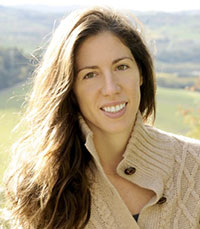
Lauren Cicione got her start in culinary tourism quite by accident. Working in the New York City art world, she was no stranger to wining and dining. Once the recession hit, the market for fine art dwindled, and Cicione decided that a sojourn in Italy would be ideal. It was there that she befriended small wine producers in Piedmont and Tuscany, and, before long, had an exclusive business organizing Italian wine tours for the most discerning connoisseurs.
Like Smart and Hernandez, Cicione says that networking is key, as the majority of her clients are referred to her by word-of-mouth. She also says that it is important to do your research when planning to start a business: look at your competitors to see what they’re doing and how much they’re charging, and don’t forget that your time and knowledge are valuable. Beware of selling yourself short, while you want to be reasonable, you have to keep in mind that you are offering your talents and, especially to those in the Gastronomy program, your educational background.
The best news is, there are many people who are willing to help you along the way. Professors are a great resource to help launch your career, and many people are more than happy to offer their assistance or advice.
For those who missed the panel discussion, a digital recording is available on request by emailing gastronomyatbu@gmail.com.
Catherine Smart
smartentertaining.com
Lauren Cicione
tuscanauteur.com
Carlos Olaechea was born in Peru and spent most of his life in Miami, FL before moving to Boston for the gastronomy program. He was the dining columnist for his college newspaper and the Miami dining editor for Joonbug.com.