Letters from the Director

Letter from the Director: April 2025

Do Something...

By: Michelle Amazeen

In February, I joined a panel hosted by Boston University’s Frederick S. Pardee School of Global Studies titled “Politics by Non-Politicians: Elon Musk, Social Media, and the 21st-Century Election Landscape.”

Banner in the style of 1940's Rosie the Riveter with a woman holding a megaphone beneath the text Do Something...

During the Q&A, a student named Aiden asked a question that has stayed with me ever since:

“I was born in 2002. I was six years old in 2008, so I don’t remember the financial crisis. I don’t remember Occupy Wall Street. When I was 13 or 14, I was entering high school when Trump was elected. And so, all I’ve known of this country is instability and horror. It seems like a fallacy that we have any power as young people…what is the point of continuing to care, and if we continue to care, does that mean we have power, and if so, where can we actually apply it, because to me, it doesn’t seem like we do.”

Aiden’s question was raw, honest, and, sadly, not unique. I’ve heard many variations of this from students over the past few months—bright, thoughtful young people who are wondering whether their voices matter in a world that feels like it’s spiraling.

So to Aiden—and to everyone who has asked a similar question—let me start with this:
Your voice absolutely matters.

Context: Yes, Things Are Bad. But This Isn’t the First Time.

There’s no question we’re in a turbulent time. Government investment in scientific research is being slashed, tariffs are straining relationships with allies, and the U.S. has withdrawn from the Paris Agreement. Misinformation is rampant. Political polarization is deepening. There are real threats to democratic norms.

But this isn’t the first time young Americans have lived through chaos—or shaped what came next.

During the U.S. Civil War, young people served as soldiers, nurses, and supporters on the home front. In the Industrial Revolution and Progressive Era, they pushed for labor reforms, women’s suffrage, and education rights. Students led protests during the Civil Rights Movement, the Vietnam War, and the fight against apartheid in South Africa.

Today’s world may feel unprecedented, but history reminds us: young people have always been at the forefront of change.

Today’s Changemakers

Greta Thunberg began striking for climate action outside the Swedish parliament at age 15. She has since galvanized a global youth movement, reshaped public discourse, and pressured governments to act.
And in December 2024, the Montana Supreme Court upheld the rights of 16 young plaintiffs who argued that the state’s support for fossil fuels violated their constitutional right to a clean and healthful environment. They won.

These aren’t anomalies. They’re proof that passion and persistence—especially from young people—can make a tangible difference.

Yes, There Are Risks

Getting involved isn’t always safe. History is full of reminders of this—from the students beaten on the Edmund Pettus Bridge during the Civil Rights Movement, to those killed at Kent State protesting the Vietnam War. Today, some international students who’ve attended pro-Palestinian protests are facing deportation.

But not getting involved carries a risk, too: the risk of leaving the future in someone else’s hands.

Cynicism and apathy don’t just arise from despair—they’re often the goal. Chaos breeds confusion. Confusion breeds disengagement. And disengagement leaves power unchallenged.

Understanding Media Power

One of the most powerful—and accessible—ways to push back is by engaging critically with the information we consume and share.

Young people today are increasingly getting their news from social media, especially TikTok. But much of that content is shaped by influencers—often male and conservative—and lacks the journalistic standards of verification, context, and accountability.

Foreign state actors are creating fake news sites and paying influencers to subtly shift public opinion. This is not conspiracy; it’s a documented strategy.

Want to make a difference? Start by protecting the integrity of our media ecosystem:

Other Ways to Take Action

There are many entry points. One great resource is Protect Democracy, a nonpartisan nonprofit focused on preventing authoritarianism and strengthening democratic institutions. Their guide outlines tangible ways you can get involved—at any level and any age—including:

  • Staying informed
  • Voting (and helping others register and vote)
  • Running for local office
  • Educating your peers
  • Practicing self-care and building community

Final Word: To All the Aidens Out There

Your voice and actions do matter. And they always have.

You don’t need to change the world overnight. But by staying informed, standing up for your values, and supporting others who are doing the same, you’re already reshaping the world around you.

Use your voice. Use your tools. Use your power.

Because despite the noise, despite the fear, despite the cynicism—you do have it.
And we need it now more than ever.


###

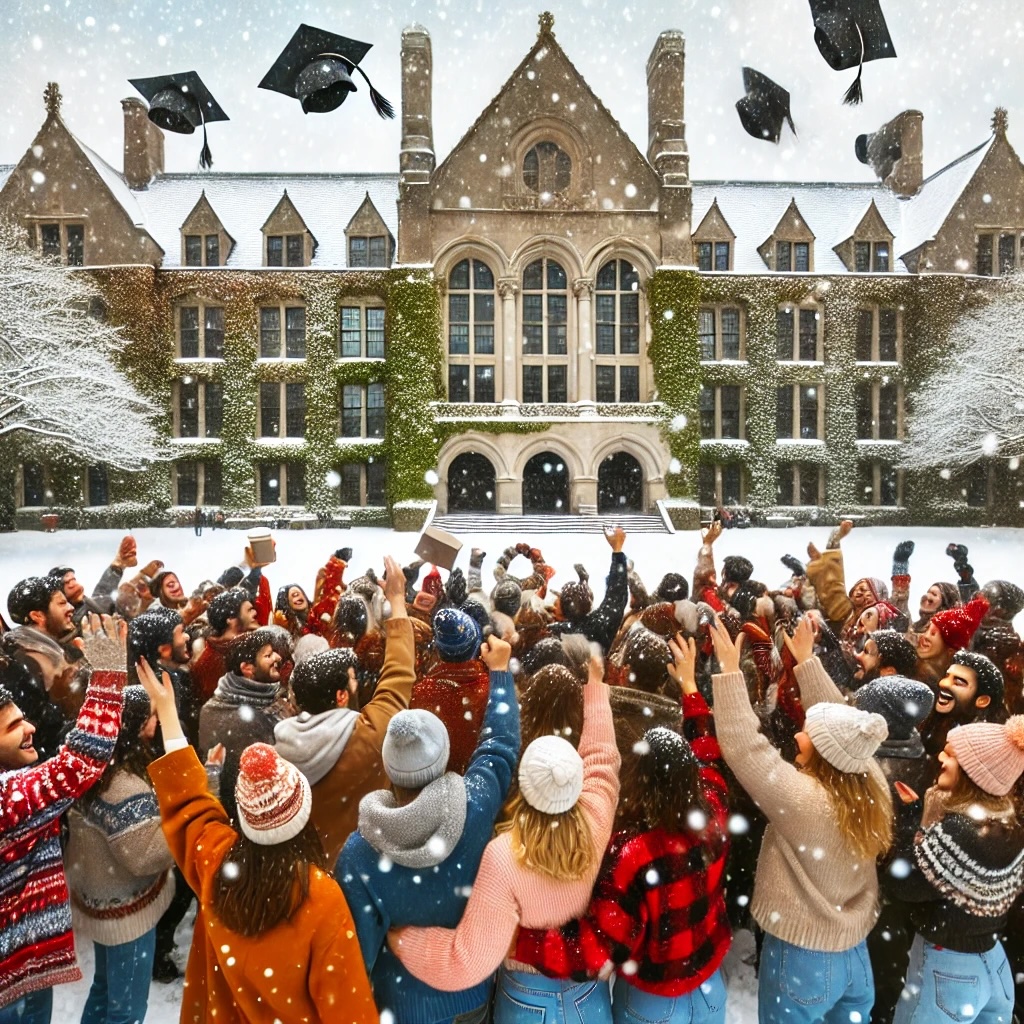
Image Credit: ChatGPT

Faculty Spotlight: Fulbright Scholar Roy Grundmann on Ocean Liners & His Upcoming Publication

By Yelena Rodolitz

Dr. Roy Grundmann is the most recent recipient of the Fulbright Scholar Award, a grant awarded to distinguished faculty members across the nation to further their scholarship through exposure to foreign academic and cultural environments. Grundmann is an esteemed faculty member of Boston University, and is the co-founder of the Film Studies program. Alongside his instruction in this discipline, Grundmann is the contributing editor of Cineaste Magazine, and a member of the Society for Cinema and Media Studies. Some of his most notable publications include Andy Warhol’s Blow Job, The Wiley-Blackwell History of American Film, and A Companion to Michael Haneke. Dr. Grundmann has been kind enough to answer a few of our questions about his post-award plans prior to leaving for his sabbatical overseas.

Yelena: What do you hope to accomplish during your Fulbright experience?

Dr. Grundmann: I want to use my fellowship to jumpstart my new research project. I just finished a book (due out with State University of New York Press this year) and am now seeking to develop my follow-up project.

Yelena: Can you tell us a bit about the nature of your previous research?

Dr. Grundmann: Over my 26 years as a full-time academic, I have researched and published on various aspects of American and global film history as well as on questions of film and media theory, cinema aesthetics, queer studies, and cultural studies. In 2019, I decided to make my research even more interdisciplinary by exploring how film and media intersect with certain subfields of history, such as maritime history and, related to that, the history of how and why people have moved around the globe from the nineteenth century into the present period. More concretely, I research the representation of ocean liners as emblems of modernity in literature, film, and visual culture.

Yelena: What about this particular area interests you?

Dr. Grundmann: What interests me is how ocean liners have shaped modernity and postmodernity’s cultural imaginaries about migration, encampment, de/colonization, and tourism. The book due out next year, On Shoreless Sea: The MS St. Louis Refugee Ship in History, Film, and Popular Memory, explores the history and cultural memory of what has often been called “the ship of Jews,” which left Nazi Germany for Cuba in 1939 with over 900 Jewish migrants and which, after Cuba and the U.S. refused to accept those refugees, was headed back for Germany before it received last-minute permission to dock in Belgium. I am now embarking on my next, more expansive research project, tentatively titled Floating Signifiers: Ocean Liners in Literature, Film and Popular Culture.

Yelena: Why have you chosen Austria to study ocean liners?

Dr. Grundmann: The answer is that Austria was not always landlocked. During the peak period of European migration between the 1880s and 1920, Austria was a maritime power that had access to the Mediterranean via the Adriatic. Part of the Austrian's migration to the U.S. proceeded through that route. Austrian culture is rich with literary, cinematic, and other visual documents about that phenomenon. My stay in Austria will also afford me the opportunity to visit several archives in other European countries to explore sea-borne migration as a phenomenon and to research cinematic documents (non-fiction and fiction) that cover it. I am also interested in hearing from BU colleagues, whose parents, grandparents, and great grandparents have come to the U.S. on an ocean liner.

Yelena: How would you like your research to impact the academic and broader communications communities?

Dr. Grundmann: I want my research to impact how the communications community and lay people perceive such phenomena as migration (both deliberate and forced) and tourism through media representations of ocean travel. In my completed book, I explore, among other things, how U.S. press coverage of the plight of the St. Louis passengers shaped how the American public viewed the Jewish refugee crisis before World War II and how subsequent films, plays, novels, and cartoons have shaped our cultural memory of the St. Louis incident. But the epilogue to my book on the St. Louis is about the present: I discuss an experimental film that uses a recent cell phone video that was shot by a Mediterranean cruise tourist and that shows a dinghy with African migrants floating on the open ocean. How does this film differ from mainstream media representations of the Mediterranean migrant crisis? And what role does the cruise ship play, from which the video featured in this film was shot? I try to give my research concrete cultural and political relevance by discussing how current representations of ocean travel shape the way we learn and think about some of the most challenging crises currently affecting our globe.

Grundmann’s upcoming research marks a departure from his previous work, in both a literal and figurative respect. As he embarks on his Fulbright journey overseas, his work invites us to consider the ways in which media representations shape our understanding of historical events. His newest publication, On Shoreless Sea: The MS St. Louis Refugee Ship in History, Film, and Popular Memory, is anticipated for release this year and will explore this theme in more detail. However, readers should also expect his publication based on his ongoing research to hit the market at some point in 2026. More information regarding Dr. Grundmann’s publication history and academic background can be found on his personal website, which is accessible through his faculty profile on the College of Communication website.

Survey: Across parties, Americans accept removal of false health info by social media companies, survey says

By Burt Glass

An overwhelming majority (72%) of Americans across political parties believe it is acceptable for social media platforms to remove inaccurate information about public health issues, according to a new opinion survey from Boston University.

The survey, designed by researchers at the Communication Research Center at the university’s College of Communication, found that Americans agreed on this across political divides, with 85% of Democrats, 70% of Independents, and 61% of Republicans approving of companies removing this kind of false content.

The same poll reveals that nearly two in three adults (63%) believe if social media posts spread unverified information about a public health issue, it is acceptable for independent fact-checking organizations to verify social media content. About the same percentage (65%) of Americans believe it’s acceptable for social media companies to lower the visibility of inaccurate information about public health issues on their apps and websites, known as “downranking.”

The integrity of public discourse is at risk as political leaders push the boundaries of truth,” says Michelle Amazeen, an associate professor at Boston University’s College of Communication and director of the Communication Research Center. “With social media companies abandoning their fact-checking programs, it is more urgent than ever for these platforms to take meaningful action, given their pivotal role in shaping the national conversation.”

In contrast, less than half (48%) of those surveyed support the “community notes” model where users write and rate notes that appear next to specific posts. Although there are some partisan differences—73% of Democrats, 62% of Independents, and 55% of Republicans favor a fact-checking model—the lukewarm reception of community notes crosses party lines.

“The results so far of social media platforms relying on users to rate the accuracy of posts are sobering,” Amazeen says. “Despite the presence of the community notes programs, social media platforms that use this model remain rife with misinformation.”

Read full story here.

Survey: Despite Election Results, Americans Held More Negative Feelings About Trump Than Harris, Survey Finds

By Burt Glass

Americans surveyed just before the presidential election held stronger negative emotions about Donald Trump than Kamala Harris, running counter to the results days later, according to the latest survey by Boston University’s College of Communication.

Nearly half of respondents said they would describe their feelings about Trump as “disgusted” (48%) or “repulsed” (45%). In contrast, about a third said they would describe their feelings about Harris as “disgusted” (34%) or “repulsed” (32%). The gap was similar when respondents considered other emotions such as anger and fear.

Neither candidate seemed to elicit enthusiasm among respondents. Only 40% felt enthusiastic, strongly other otherwise, about Harris, and 31% felt that way about Trump.

Yet four days after the survey was completed, Trump won nearly 50% of the popular vote compared to slightly more than 48% for Harris.

“In general, Americans were slightly more enthusiastic toward Harris and more angry, afraid, and disgusted by Trump,” said H. Denis Wu , a professor at Boston University’s College of Communication and author of the survey questions. “Partisan difference of emotions in candidate evaluations is predictable and self-clarifying.

“However, the emotions voters had right before the election did not necessarily align well with their party memberships, as some Democrats were angry and disgusted by Harris,” he added.

Read full story here.

Letter from the Director: January 2025

Americans Expect Social Media Content Moderation

By: Michelle Amazeen

In an age where misinformation spreads at the speed of a click, the announcement by Meta—formerly Facebook—to abandon its partnership with independent fact-checking organizations raises urgent questions. Meta’s decision comes at a critical juncture, as the U.S. faces an era where disinformation campaigns—often amplified by political figures—threaten democratic discourse and public trust. How will this shift affect the quality of content on its platforms? And, as Meta is the largest funder of fact-checkers globally, what does this mean for the future of fact-checking itself?

Meta CEO Mark Zuckerberg justified the decision by claiming that the company’s fact-checking program “too often became a tool to censor.” Yet, a recent poll from Boston University’s College of Communication paints a very different picture of public sentiment. A majority (72%) of Americans believe it is acceptable for social media platforms to remove inaccurate information about public health issues. Support spans political divides, with 85% of Democrats, 70% of Independents, and even 61% of Republicans agreeing that such content moderation is necessary.

Instead of relying on independent fact-checkers, Meta is pivoting to a “community notes” model. In this approach, users write and rate notes that accompany posts containing dubious claims. This model mirrors the approach Elon Musk has implemented on Twitter, now rebranded as X.

But Americans remain skeptical. The same poll reveals that nearly two in three adults (63%) believe independent fact-checking organizations should verify social media content. In contrast, less than half (48%) support the “community notes” model. Although there are some partisan differences—73% of Democrats, 62% of Independents, and 55% of Republicans favor a fact-checking model—the lukewarm reception of community notes crosses party lines.

Is there any evidence that crowdsourcing claim verification works? The academic literature is mixed. In certain contexts, crowdsourcing can rival expert verification. However, other research highlights its inconsistencies. Crowdsourcing is generally effective at assessing the credibility of news sources but struggles to reliably identify disinformation. Partisanship often undermines its efficacy, influencing which claims are selected for verification. Moreover, distinguishing verifiable claims from unverifiable ones is a skill that typically requires training.

Black and white photo of a hand dropping a ballot into a ballot box.

In practice, the results are sobering. Despite the presence of the community notes program, X remains a platform rife with misinformation on elections, climate change, and other critical topics. Offloading content moderation responsibilities onto users is yet another example of platforms shirking their duty to ensure the safety of their digital products. By abandoning content moderation, social media platforms risk enabling disinformation from those in power. Accountability measures are essential, especially as a new administration with a history of weaponizing disinformation takes office.

Still, paying independent fact-checkers has its own complications. Under Meta’s program, the platform itself determined which claims were submitted for review. This approach often resulted in fact-checkers debunking viral but non-political content, while more politically charged claims that could influence democratic processes went unaddressed. Additionally, Meta did not disclose what happened to posts flagged as inaccurate, leaving fact-checkers in the dark about the impact of their work.

Thus, the silver lining in Meta’s rejection of fact-checkers may be that the commercial imperatives of the company will no longer influence fact-checker claim selection process. Freed from Meta’s influence, fact-checkers might return their focus to democratic priorities. However, the financial loss will undoubtedly strain these organizations.

There is a potential bright side: the public could play a pivotal role in sustaining independent fact-checking. According to the Boston University poll, one-third of U.S. adults would donate $1 to fund these initiatives through crowdfunding campaigns. Such efforts could restore some of the financial resources that fact-checking organizations need to thrive.

The question of who should moderate social media content—and how—is a critical challenge of the digital age. As political leaders test the limits of truth, the integrity of public discourse hangs in the balance. Social media platforms must rise to the occasion, for their role in shaping the national conversation has never been more consequential.

Michelle A. Amazeen is Associate Professor of Mass Communication at Boston University, Associate Dean for Research at the College of Communication and directs the Communication Research Center.

Reflection on the 2024 ICA Preconference – “Reimagining Digital Activism: Navigating Complexities and Forging New Perspectives”

By Chris 'Chao' Su, Ph.D

As one of the co-organizers of the 2024 ICA Preconference, “Reimagining Digital Activism: Navigating Complexities and Forging New Perspectives”, I had the privilege of working with a diverse and dynamic group of scholars, practitioners, and students. The event, held at the Gold Coast Convention & Exhibition Center in Australia on June 20, 2024, brought together researchers from around the world to explore the intersection of activism, nationalism, and digital technologies. This preconference highlighted the transformative potential of digital activism while addressing the challenges and complexities that come with it.

The preconference featured an exciting range of panels, including discussions on emerging concepts in activism, algorithmic resistance, and the evolving activist repertoire. Among the notable moments was the keynote roundtable with leading scholars such as Jun Liu (University of Copenhagen), Guobin Yang (University of Pennsylvania), Joyce Nip (University of Sydney), Wenhong Chen (University of Texas at Austin), and myself who shared our experience and reflections on the current state and future of digital activism research. This set the tone for an engaging day, with presentations that bridged theoretical innovation and empirical exploration.

One standout session involved a group of graduate students from our own Emerging Media Studies at Boston University’s College of Communication. Their paper, “Agenda Setting in the Wizarding World: Examining Attribute Agenda and Network Agenda in the ‘Hogwarts Legacy’ Video Game Controversy on Twitter/X”, presented a fascinating analysis of digital activism in response to a video game controversy on social media. This paper is currently under review at a top SSCI journal, reflecting the quality and relevance of the research emerging from our institution. The students’ work was a testament to the caliber of research being conducted at the College of Communication, and it was exciting to see them present alongside established scholars.

The preconference also underscored the importance of methodological innovation in the study of digital activism. Discussions around data access, technological challenges, and the need for inclusive research methodologies resonated deeply with me, as they highlighted the barriers scholars face when studying activism in the digital age. Moreover, the focus on the ethical implications of digital technologies and the need for collaboration between scholars and activists was a recurring theme, one that I believe will continue to shape future research in this field.

Looking ahead to the 2025 preconference, I am excited to continue building on the conversations and collaborations initiated last year. I hope to further explore how digital activism can be studied across multiple platforms, addressing the synergies between social media spaces and how they shape movements globally.

Overall, the 2024 ICA Preconference was a remarkable success, and I look forward to seeing how the conversations we started will evolve in 2025 and the coming years.

Letter from the Director: December 2024

The Fall 2024 Semester in Review

By: Michelle Amazeen

December marks the conclusion of another bustling semester for the CRC which kicked off with our inaugural open house co-hosted with the Center for Innovation in Social Science. We also celebrated the 15-year milestone of our Colloquium Series, which consists of monthly research presentations that highlight current and original research of CRC fellows. Our fall speakers included Dr. Denis Wu (September), Dr. Chris Wells (November), and Dr. Maria “Betsi” Grabe (December).

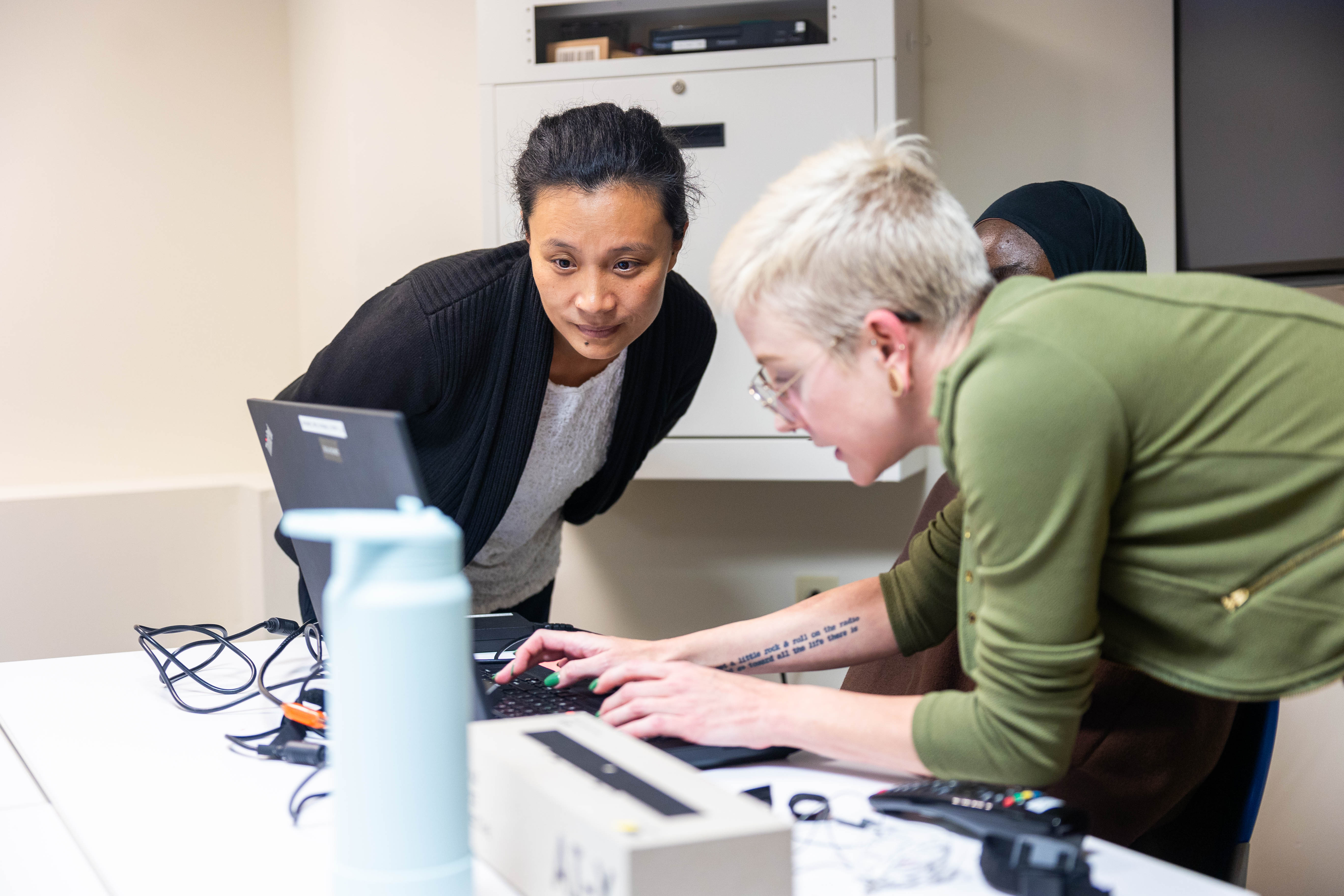
An image of faculty from BU's School of Hospitality and the CRC Lab Manager, Amanda King, prepping a graduate student for biometric data collection.
A graduate student being prepped for biometric data collection by the CRC Lab Manager, while a faculty member looks on, pictured here.

Every semester, the CRC invites a distinguished scholar from outside the university to share their outstanding scholarship, expertise, and experience with the BU community. Our Fall 2024 Dr. Melvin L. DeFleur Distinguished Lecturer was Dr. Bartosz Wojdynski (University of Georgia) who spoke about deepfakes, AI images, and the psychology of detection. We were thrilled to welcome nearly 200 attendees from the BU community and from other universities in the Boston area.

To foster connections within our research community, our faculty fellows met monthly as part of our Work-In-Progress meetings. Special guests this semester included representatives from BU’s Institutional Review Board and from the office of BU’s Foundation Relations. We will continue these meetings in the spring semester on the first Thursday of the month at 3:30 pm. Our first meeting will be February 6th. Moreover, our Lunch & Learn series continued, enabling doctoral students the opportunity to talk with scholars such as Edward Schiappa, Ph.D, Arunima Krishna, Ph.D, Maria Grabe, Ph.D, and Katy Coduto, Ph.D, about their academic research and careers.

We concluded the semester with an onsite workshop focused on training faculty fellows on our biometric technology. Led by an iMotions Product Specialist, the workshop offered an introduction to the iMotions software, theoretical insights into neuroscience and voice analysis, and practical, hands-on experience with the hardware and software required for conducting in-depth analyses with these tools. If you are interested in learning more about biometrics, short primers are available here and here.

Given the University’s commitment to involving students in research, the CRC continued to facilitate fellows’ efforts to recruit students as research participants via our SONA research participant management system. SONA provides both graduate and undergraduate students with the opportunity to engage in various research activities across COM while earning course credit. This semester, students from 42 different COM courses had access to 26 research opportunities. Faculty fellows (or their advisees) who utilize CRC resources are required to register their courses with SONA. We encourage you to consider including your courses in the upcoming Spring semester. To enroll, please complete this form. For more details about the SONA program, visit our website or email us comsona@bu.edu.

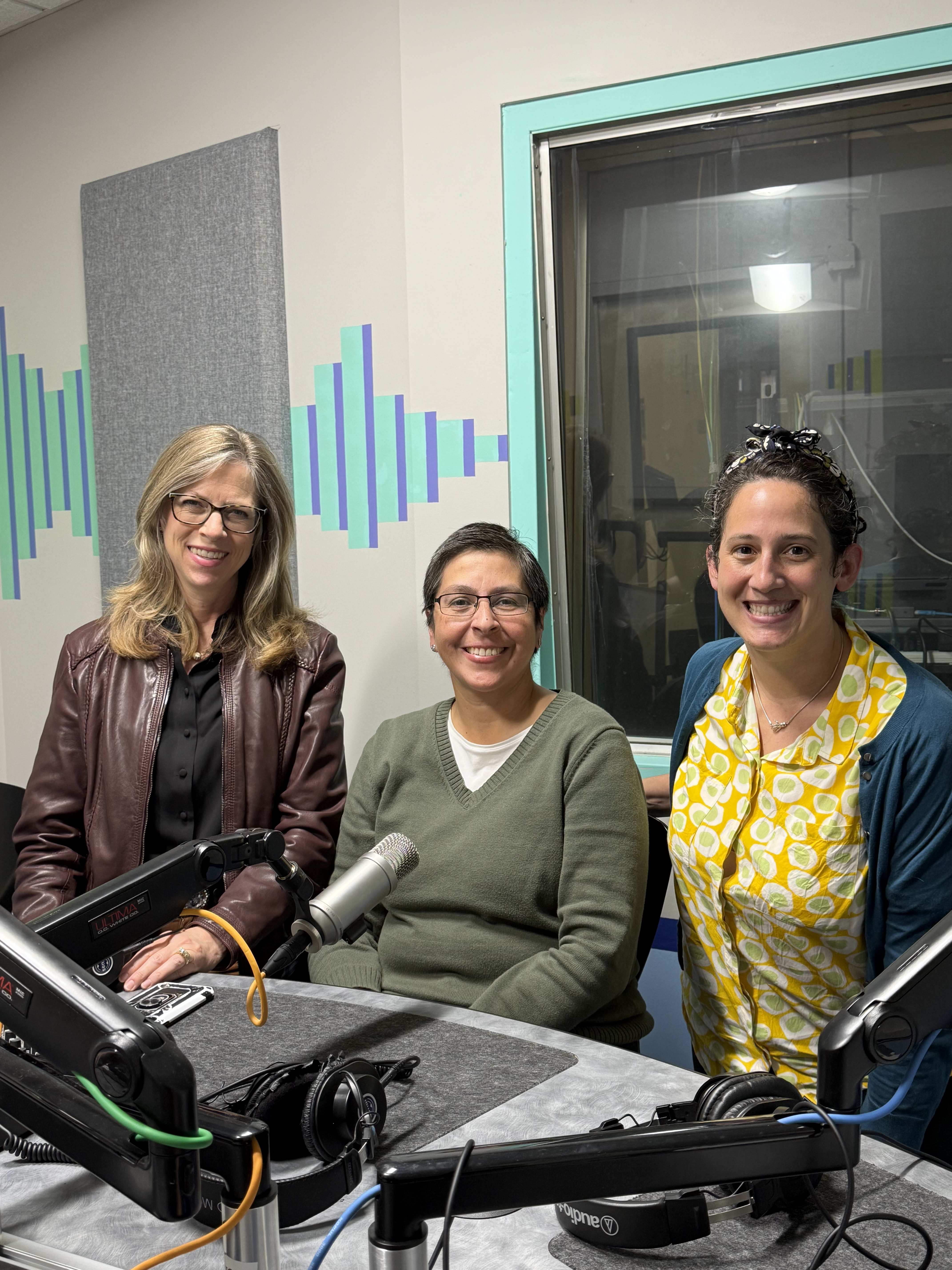
Michelle Amazeen, Ph.D, Tammy Vigil, Ph.D, and Charlotte Howell, Ph.D photographed in the podcast studio.
All smiles following the first recording of 'The COMversation' with Michelle Amazeen, Ph.D (left), Tammy Vigil, Ph.D (center), and Charlotte Howell, Ph.D (right), pictured here.

The CRC also sought to advance the thought leadership of its fellows with the Media & Technology Public Opinion Poll. In August, Prof. Anne Danehy lent her expertise to a poll about candidate imagery: Democrats’ Convention Knocked Trump’s Image Among Independents, Survey Suggests. Our September poll addressed social media warning labels that corresponded to research from Dr. Traci Hong: Social Media Should Include Warnings About Nicotine, Vaping – and Social Media Itself, Say Large Majorities. And in October, our poll examined gendered media effects with Dr. Nivea Canalli Bona: Social Media Negatively Impacts Women More than Men, Americans Say in Survey. Faculty fellows interested in participating in a future poll can propose topics of interest by completing this form.

Finally, to make communication research more accessible to the public, the CRC has launched The COMversation, a podcast that connects academic insights with current events. Hosted by Dr. Charlotte Howell, the debut episode dives into the evolving norms of communication and the role of misinformation in politics, providing listeners with an engaging, in-depth discussion on these timely issues. And, as of today, the second episode Wicked Success has been released; it explores the rise in on-screen adaptations, big-budget marketing tours, and what led to the wicked success of Wicked Part 1.

None of these efforts would have been possible without the commitment and hard work of our staff this fall. I am tremendously grateful to our Lab and Research Manager, Amanda King, who received their certification from iMotions in human behavior research and has been offering an unbelievable number of workshops to our students throughout the semester. I would also like to thank our wonderful graduate and undergraduate assistants who helped to keep the Center running. Yelena Rodolitz (EMS) is our SONA administrator doing the behind-the-scenes work on our research participant management system. Yifang “Violet” Li (MCR) is our Communications Assistant writing about and promoting our activities. And Abby Bonner (FTV) and Eliza Lakritz (MS/AH) are our Podcast Assistants putting all the procedures and protocols in place for getting our podcast launched. Thanks to all, and I’m delighted our assistants will be continuing with us in the spring semester.

To our CRC community of fellows, I wish you all a joyous and restful holiday season and look forward to the many new and exciting activities we are planning for 2025!