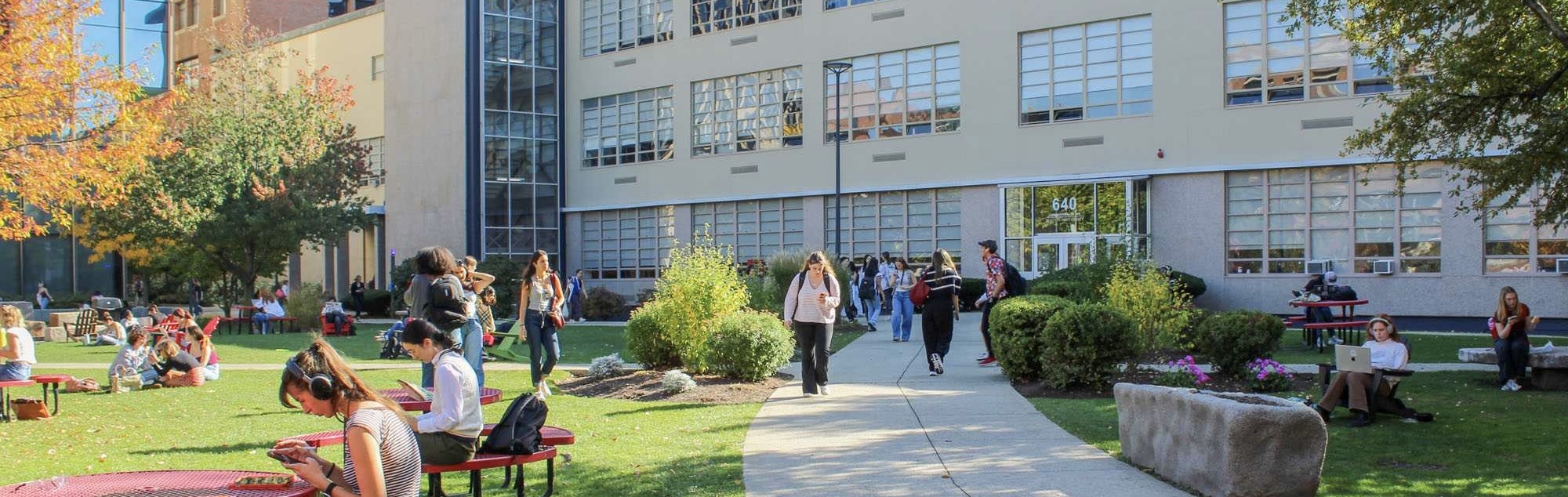
Communication and Inequalities in Context: Reflections from Cape Town
By Michelle Amazeen

On June 4-8, 2026, Boston University was well represented at the 76th Annual International Communication Association (ICA) Conference with over a dozen faculty and graduate students in attendance. Held in Cape Town, South Africa, this year’s theme – Communication and Inequalities In Context – proved especially resonant given the location’s rich and complex history.
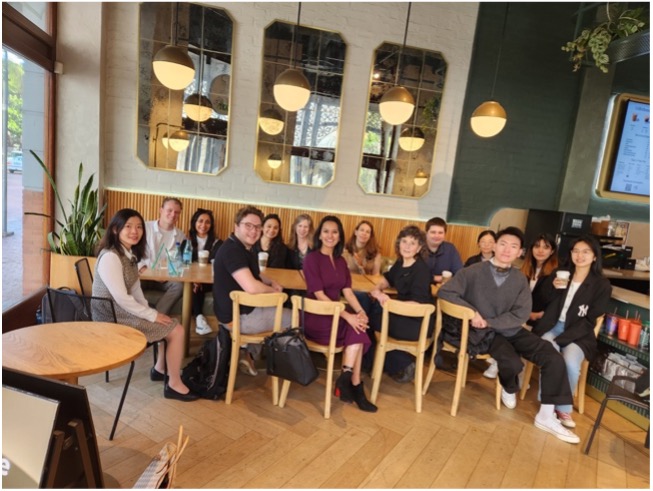
As one of the biggest global gatherings for communication scholars, the conference offered abundant opportunities for community building, networking, and hearing cutting-edge research before publication. Several CRC faculty and graduate students were recognized with awards for their excellence in communication research:
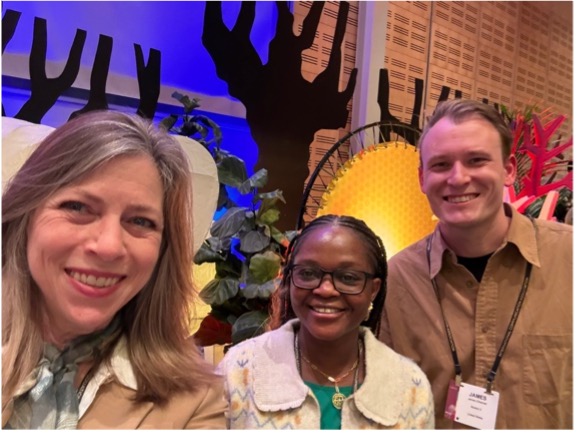
A paper led by PhD student James Crissman along with Drs. Ayse Lokmanoglu and Betsi Grabe won the top paper award for “Tracing Visual Communication’s Cross-Disciplinary Citation Footprint in a Network Analysis from 1975 to 2024” in the Visual Communication Studies Division.
Dr. Joshua Baldwin was a collaborator on “Ease and Constraints on Enjoyment and Appreciation: The Role of Narrative Challenge” which took top paper in the Communication Science and Biology Interest Group.
Dr. Morgan Weiland won the Best Dissertation Award in the Philosophy, Theory & Critique Division for “Making Internet Law: How Cyberspace was Socially Constructed as a First Amendment Speech System.”
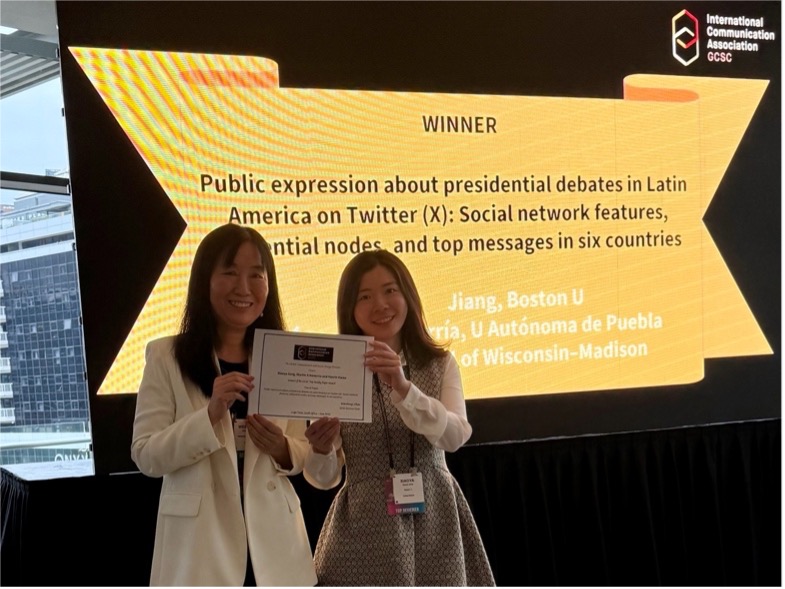
Dr. Xiaoya Jiang won two awards: the top faculty paper award in the Global Communication & Social Change Division for a collaborative paper she led entitled “Public Expression about Presidential Debates in Latin America on Twitter (X): Social Network Features, Influential Nodes, and Top Messages in Six Countries,” and a second top paper award for a paper on which she collaborated: “Information Dynamics in Political Debates: Multimodal Approach to Candidates’ Facial Expressions and Real-Time Public Reaction During the 2024 U.S. Presidential Debates.”
Understanding Communication and Inequality
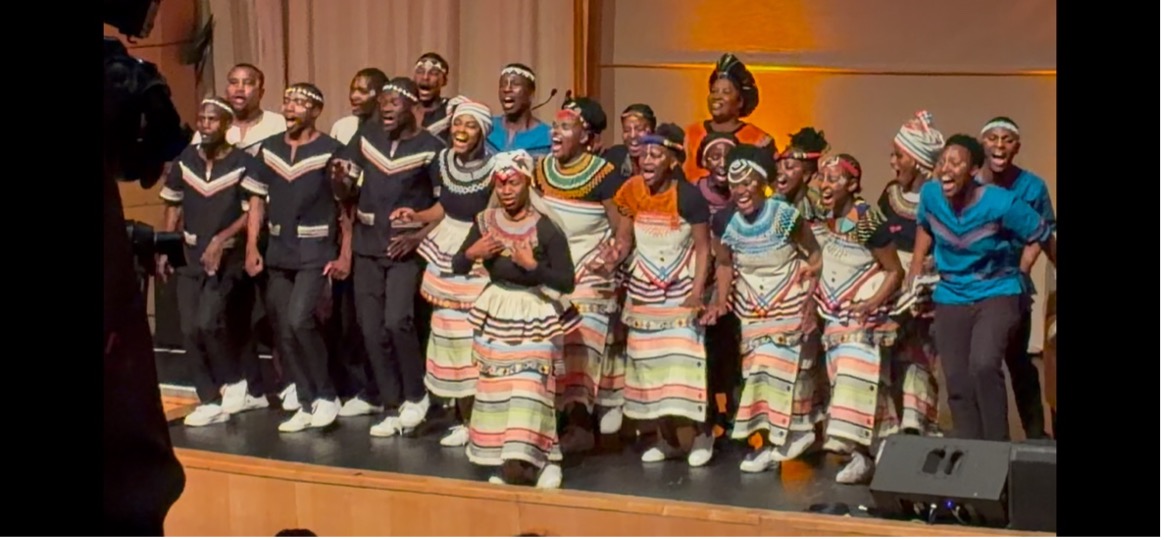
Beyond the research presentations, the conference theme took on visceral meaning as we explored Cape Town’s landscape and history. We were treated to the traditional music and dance of the indigenous Khoisan people at the opening ceremonies—a moment that honored the voices often marginalized in dominant narratives.
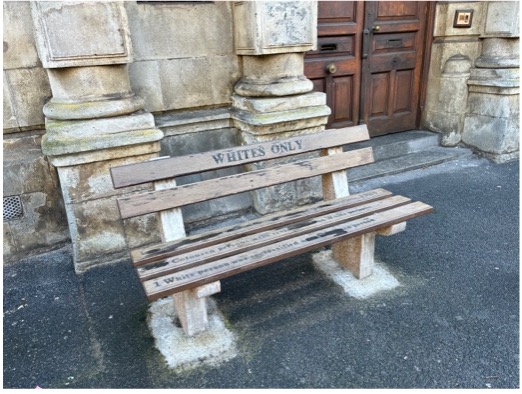
Yet the visit also confronted us with the weight of South Africa’s apartheid era. Standing before a “whites only” bench outside one of the buildings, or learning the stories of the brutal segregation that once defined the nation, the conference’s focus on Communication and Inequalities in Context moved from the theoretical to the deeply personal.
The courage and moral clarity of leaders like Nelson Mandela and Archbishop Desmond Tutu, who refused to be silenced and worked to bridge divides through dialogue, reminded us why our work as communication scholars matters. How we tell stories, whose voices are amplified or suppressed, and how institutions communicate—these are not neutral acts. They shape societies and perpetuate or challenge inequalities.
A Scholar’s Summer
Beyond learning and sharing research, there were opportunities to experience Cape Town and South Africa’s extraordinary natural beauty: Table Mountain and Cape of Good Hope, as well as wildlife including seals, penguins, ostriches, and baboons. We also toured the region’s magnificent wineries and tasted the fabulous wines of South Africa.
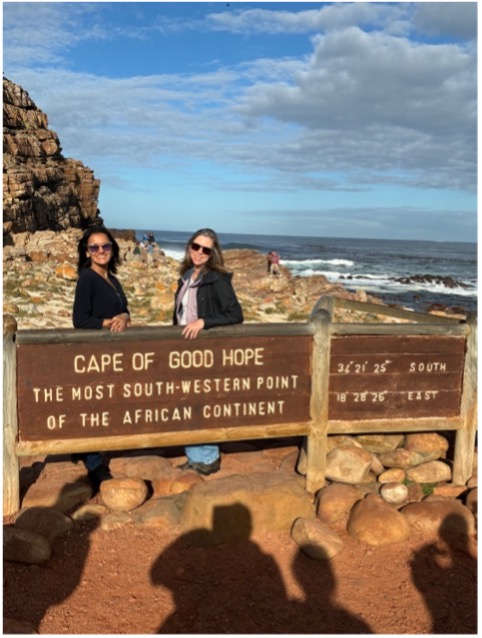
As I reflect on this experience, I feel genuinely fortunate to be a scholar who can engage with communication research while also experiencing the world—to travel, learn, and wrestle with the ideas and places that shape our understanding of human connection and society. During the summer months when classes are out of session, friends often ask, “Don’t you have the summers off?”
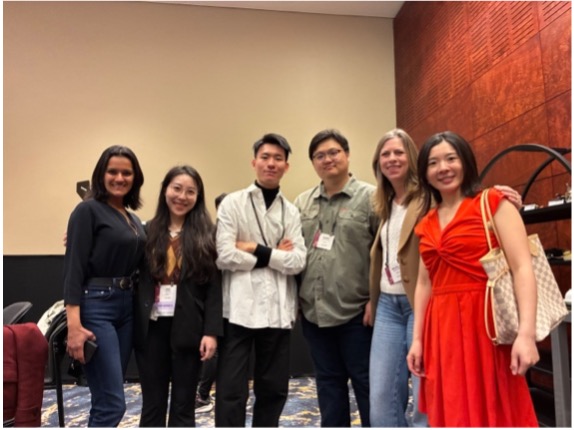
This week in Cape Town was, in part, what we do with those summers. We attend conferences, deepen our expertise, build partnerships with scholars across the globe, and return to our teaching and mentoring enriched by these experiences. Scholarship is a privilege—one we take seriously and use to contribute knowledge that strengthens our field and, ultimately, our society.