Spotlight on… Judy Hahn, PhD, MA
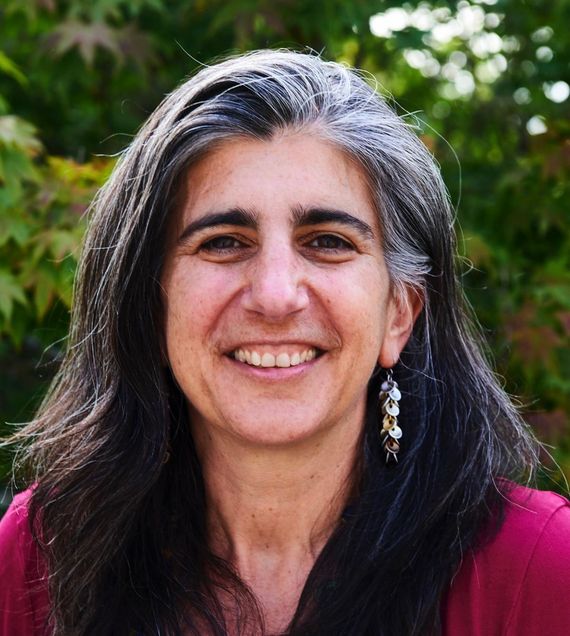
Congratulation on the newly funded Center for Alcohol/HIV Innovations and Biomarker Research (CALIBER) P60! Can you give us a brief overview of CALIBER?
Center for Alcohol/HIV Innovations and Biomarker Research (CALIBER) is a comprehensive program of research, training, and dissemination in partnership with the community to (1) reduce the harmful effects of alcohol use on HIV prevention and HIV-associated comorbidities, (2) advance innovations in alcohol measurement, and (3) train the next generation of alcohol/HIV investigators. CALIBER brings together behavioral, clinical, and translational scientists to develop approaches to the problems that alcohol brings to people affected by HIV from several angles. We also have the incredible resource of the MACS/WIHS Combined Cohort Study (MWCCS), the longest running cohort study of PWH in the US, which is a rich source of data and study participants across the US. Our research focuses on groups that are key to ending the HIV epidemic, including couples and women with HIV, and on liver disease which is a serious HIV comorbidity.
In terms of the projects, we covered a bit of a broad range to try to encompass the multiple issues of alcohol and HIV in the US. Project 1 is some really innovative work combining personalized feedback of breathalyzers and PEth testing with couples’ motivational interviewing. There are two investigators leading that project- Amy Conroy has done a lot of work with couples, and Tyrel Starks has been developing this couples’ motivational interviewing for alcohol and substance use, which we’re applying here to alcohol use. The project is really about developing and piloting the intervention, so feasibility and acceptability will be the primary focus, with exploratory analyses on outcomes including unhealthy alcohol use and PrEP uptake. For this project we plan to leverage the MWCCS for recruitment nationwide.
Project 2 is a Phase II clinical trial led by Sarah Woolf-King and building on the work that she has been doing with an alcohol intervention based on acceptance and commitment therapy. She’s also brought in a collaborator, Jillian Scheer, who is an expert in trauma-focused interventions. The project is focused on women with HIV and unhealthy alcohol use who are trauma-exposed. They will develop and test an expressive writing intervention to reduce both unhealthy alcohol use and traumatic stress. This project will also leverage the MWCCS for recruitment.
Project 3 will use data that are already collected in the MWCCS to do a deep dive into HIV, alcohol use, and liver disease outcomes. We know that alcohol and HIV both have independent, negative effects on the liver, but a lot of the studies that have looked at HIV excluded people with alcohol use. So we will include alcohol use, using biomarkers to have a clear exposure variable, and look at the different phases of liver disease, from fatty liver to inflammation, fibrosis, and cirrhosis. We’re able to do this because of the large MACS-WIHS cohort which has extensive biomarker data and liver imaging. To enrich that piece, there is new evidence that the gut also plays a role in liver disease, so we plan to do some epigenetics and advanced sequencing of the gut microbiome as a part of Project 3.
Tell us about your role in CALIBER.
This is very new for me to be leading something where I’m not leading the actual research! As co-principal investigators, Phyllis Tien and I brought together all of the different cores and projects that form the Center. Our vision included thinking about what we could do to leverage the existing cohort, and how we could support some exciting and innovative research within the Center.
You’ve been a key leader in URBAN ARCH since its early days. How does CALIBER build on your previous work in URBAN ARCH and other studies?
I have benefited from participating in URBAN ARCH, and have learned that we can do more working together rather than individually. Having a Center comprised of research with complementary goals allows for efficient use of resources, as well as exchange of ideas. I have very much valued the regular meetings, exposure to many experts in the field through our workshops and annual meetings, and the strong emphasis on training new investigators.
Last time we interviewed you in 2023, you mentioned that the next phase of biomarker research is bringing biomarkers to participants and integrating them into clinical care. Do you think CALIBER will help to advance that goal?
Yes, like I mentioned of our main research projects will be examining how using feedback based on PEth testing and breathalyzer testing can augment a couples-based motivational interviewing intervention to reduce alcohol and increase HIV prevention uptake.
Also, one of our trainees is developing a study to examine how patients want to receive their biomarker results as part of behavioral counselling.
What do you hope the center will accomplish over the next 5 years?
We plan to move the needle forward on ending the HIV epidemic by using creative ways to address one of the key barriers to ending the HIV epidemic, which is alcohol and other substance use. We plan to use top notch research, innovative pilot projects, and high community engagement to do this. We also hope that our research will also have broader significance for people who don’t have HIV, but may have other morbidities or co-infections that are caused or exacerbated by unhealthy alcohol use.
A lot of your work so far has been international, but this Center is entirely domestic. Any differences you can comment on between your international work in Uganda and domestic work in the US?
Liver disease is much more salient in the US- they have a lot less liver disease in Uganda, for example, which is one reason why it was important to do this work in the US. Some of the technology is also more suited at this point to the US. For example, Projects 1 and 2 involve interventions being delivered remotely. That’s something we’ve worked on in Uganda, but we’ve found it more challenging in the international setting. But I think the broad issues and themes are relevant worldwide.
We were hoping that we would be able to renew our P01 and that the ongoing international work there would be complementary to this work, and we’d still like to continue that. There’s so much crosstalk, where we learn something in one setting that becomes important for another setting, in both directions.
For someone new to this field, what is one message you hope they take away about HIV and alcohol use research?
I think this is an exciting time, as new technology and pharmacotherapies arise to help people with substance use, including unhealthy alcohol use. There is still a lot of work to be done to understand how to best deliver these innovations, and there are likely to be opportunities for collaboration within our P60 and across the other newly funded P60s.
Any other comments?
Stay posted for ways for trainees to get involved! We will try to pick up the excellent example set by URBAN ARCH in being a Center for generous exchange of ideas and collaborations. We are very grateful to be able to do this work and hope to meet our goals and make the funders proud.