International URBAN ARCH Center Core and Project Updates
Administrative Core
The Admin Core had a busy and productive winter. In January, we hosted our latest quarterly International URBAN ARCH Visiting Scholar Research-in-Progress webinar. The session featured Amy Justice and colleagues, who shared updates and emerging findings from the HIV and Alcohol Research Center Focused on Polypharmacy (HARP) P01 program. They also introduced the newly funded Aging Well with HIV through Alcohol Research and Risk Reduction and Education (AWAR3E) P60 center. The webinar recording can be viewed here.
We are also excited for the upcoming 2026 URBAN ARCH Annual Meeting, which will be held on March 30 in Boston and virtually. If you plan to attend, please register here if you have not done so already. Click here to view the meeting agenda.
We look forward to continuing to share updates and engaging with the URBAN ARCH community in the months ahead.
Biostatistics and Data Management Core
General updates
Data management and analyses are underway for GRAIL, TALC, and TRAC, including derived-variable creation and documentation. For GRAIL, the BDM Core provided analytic support for an abstract on stigma submitted to IAS 2026 (lead: Karsten Lunze) and for a manuscript submitted to AIDS and Behavior (lead: Becca Fisk‑Hoffman).
TALC
TALC has enrolled the full target of 200 participants; follow-up is ongoing. The BDM Core supported development of four TALC analytic plans:
- Social Vulnerability Index and CD4 Cell Count (lead: Sylvia Shangani)
- Hazardous Alcohol Use and Lung Damage in People with HIV and TB (leads: Anacret Byamukama, Kaku So‑Armah)
- LAM, GeneXpert, and Chest CT Findings (lead: Julian Adong)
- Intersectional Stigma Analysis (leads: Karsten Lunze, Fatema Shafie Khorassani)
TRAC
The BDM Core continues to support TRAC with multiple analytic plans, analyses, and manuscripts on:
- New TB infection/disease (leads: Winnie Muyindike, Judy Hahn)
- Smoking (lead: Adah Tumwegamire)
- Depression and under‑reported alcohol use (leads: Elli Shwartz, Sarah Lofgren)
- PEth sampling mechanisms (lead: Fatema Shafie Khorassani)
- Bar attendance (lead: Carol Asiimwe)
- Alcohol expenditures (lead: Nicholas Mugisha)
TB Risk by Alcohol Consumption (TRAC) Study
The aims of the TB Risk by Alcohol Consumption (TRAC) study are to estimate the incidence rate of new TB infection among people with HIV (PWH) with prior negative tuberculin skin test (TST) results by level of alcohol use (Aim 1) and to determine the incidence of active TB disease among PWH with prior latent TB infection (LTBI), who received TB preventative therapy (TPT), by level of alcohol use (Aim 2).
As of March 1, 2026, we have successfully concluded TRAC study enrollment with 500 participants. To achieve this goal, we made phone call attempts to 694 prior study participants for Aim 1 screening. We reached 558 participants and invited all of them for screening. Of the 558 screened, we found 522 to be eligible, while 20 people declined consent to participate in the study. Therefore, we enrolled a total of 502 participants into the study, however 2 participants were enrolled in error and were subsequently excluded, leaving the total number enrolled as 500. Self-reported AUDIT-C scores from TRAC baselines visits show 138 (28%) in the no alcohol group, 203 (41%) in the low/moderate alcohol use group, and 158 (32%) in the high-risk alcohol use group. Baseline PEth results of 451 participants show 155 (34%) in the no alcohol use group with PEth levels of <20 ng/ml, 155 (34%) in the no alcohol use group with PEth levels of 20-<200 ng/ml, 155 (34%) in the no alcohol use group with PEth levels of >200 ng/ml.
Of the 500 (217 (43%) females and 283 (57%) males) enrolled with a median age of 42 years, 75 had positive TST results following placement and reading of TST within 72 hours. After excluding 4 participants (2 with prior active TB on chart review, and 2 with no TST result), and including 8 with active TB on chart review but with TST negative results, we found 83 out of 496 (16.7%) had new TB infection/disease. We found no associations with active TB/positive TST at baseline by smoking status, household TB diagnosis, or number of rooms in the household.
We successfully completed 474 6-month follow up phone calls (95% completion rate), 478 12-month in-person visits (96% completion rate), 480 18-month follow-up phone calls (97% completion rate), 481 24-month in-person visits (98% completion rate), 301 30-month follow-up phone calls (80% completion rate), and 203 36-month in-person visits (83% completion rate). At the 12-, 24-, and 36-month visits, we placed PPDs on only those who had negative results at baseline, 12, and 24 months. Of the 407 PPDs placed at the 12-month visit, 42 were positive (10% positivity rate). Of the 358 PPDs placed at the 24-month visit, 33 were positive (9% positivity rate). Of the 175 PPDs placed at the 36-month visit, 10 were positive (6% positivity rate). Seven participants were disenrolled from the study and Eleven died due to reasons unrelated to study participation.
We have successfully concluded Aim 2 procedures with three rounds of review from TB registries, clinical registries, and medical records in 18 clinics from which participants were recruited in previous studies. We found all records (988 total) included in Aim 2. Of the 988 records reviewed, 30 (3%) participants were diagnosed with active TB after receiving INH and 39 (4%) participants were dead. We are investigating the cause of death in these participants. We also found that 139 (14%) participants transferred out of their original clinics.
Tuberculosis, Alcohol, and Lung Comorbidities (TALC) Study
In Aim 1 of the TALC study, we enrolled 200 participants to investigate the relationship between alcohol use and post-TB lung disease in people with HIV (PWH). The team has reached another exciting milestone, as we have now completed follow-up for the full cohort at the 3- and 6-month timepoints! Follow-up continues at the 9-, 12-, 15-, and 18-month timepoints.
In Aim 2, we are qualitatively evaluating factors for tailoring alcohol and smoking interventions in PWH being treated for TB. We interviewed 24 TALC study participants and 12 key stakeholders, including TB providers and other health workers. All interviews have now been fully transcribed and coded, and the team is actively developing manuscripts using the data.
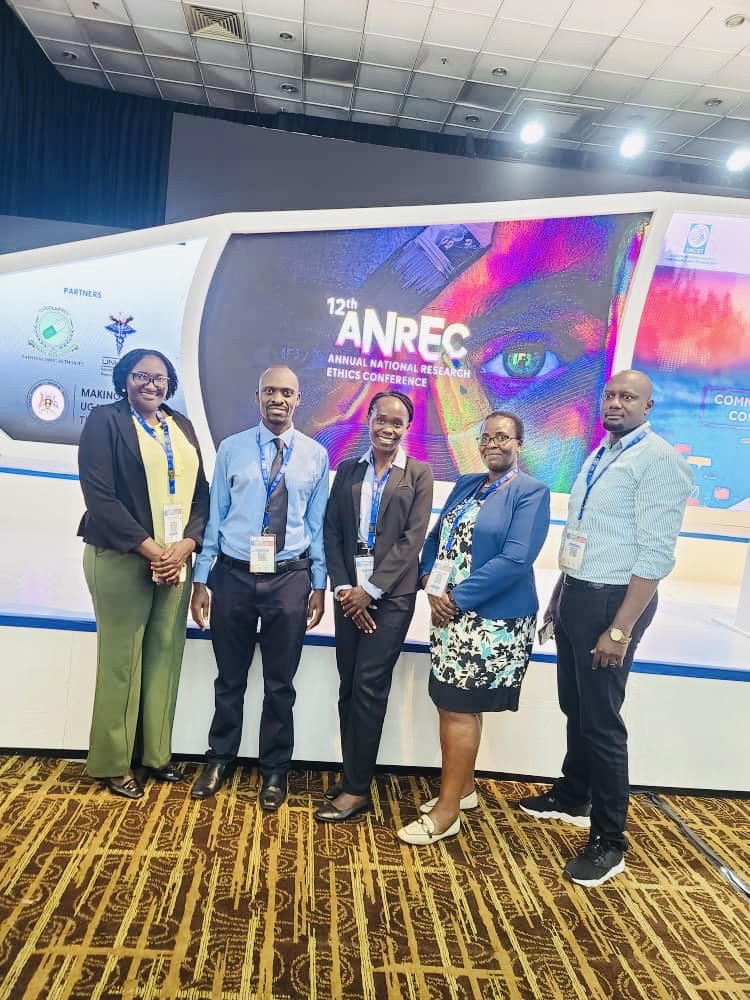
At the recent Conference on Retroviruses and Opportunistic Infections (CROI) in February, TALC co-investigator Dr. Anacret Byamukama presented an abstract entitled, “Hazardous Alcohol Use and Lung Damage in People with HIV and TB.” The findings from this analysis showed that heavy alcohol use is common among this cohort of people with HIV and TB, and is closely linked to smoking. Dr. Anacret will also present this work at the upcoming conference of the American Thoracic Society (ATS) in May.

Last month, the team said goodbye to TALC qualitative RA Eunice Kanini as she completed her work with the TALC study. Eunice has been a crucial part of the qualitative team and brought a unique insight to each interview. Her dedication and commitment to this work has truly been inspiring, and we look forward to her continued involvement in qualitative manuscripts. Eunice will continue working as a qualitative RA for another study in Mbarara. We hope to with you again in the future, Eunice!
Gabapentin to Reduce Alcohol and Improve Viral Load Suppression (GRAIL) Study
GRAIL study enrollment began in November 2023 and recruitment was temporarily paused from June 9, 2025 through September 15, 2025 due to funding constraints. The projected recruitment end date is end of April 2026.
As of March 4, 2026 the study has enrolled and randomized 199/220 participants. A total of 508 in-person screenings have been completed to date. The main reasons for ineligibility include an undetectable HIV viral load (135/176; 76.7%), a negative AUDIT-C score (40/504; 7.9%), and a negative EtG test (174/463; 37.6%). Women comprise 23% of the sample. The study team has continued to actively complete follow-up visits, with 1,020 in-person and 722 phone visits completed to date with follow-up rates above 80% for all visits.
The GRAIL study team recently met with the DSMB in January 2026 and are preparing for the next DSMB meeting in June 2026.
The team has two manuscripts under review, “Gabapentin to achieve HIV viral load suppression in people with risky drinking in Mbarara, Uganda: study protocol for a randomized, double-blinded, placebo-controlled trial (GRAIL) and “High Prevalence of Unhealthy Alcohol Use among Persons with Non-Suppressed HIV in Mbarara, Uganda”. An abstract titled “Intersectional stigma, alcohol severity and ART adherence among unsuppressed PWH with unhealthy alcohol use in Uganda” was submitted for consideration to the 2026 International AIDS Society (IAS) Conference.