May 2026 Newsletter
Upcoming Events and Opportunities, and MISI’s New Post-doc Fellow
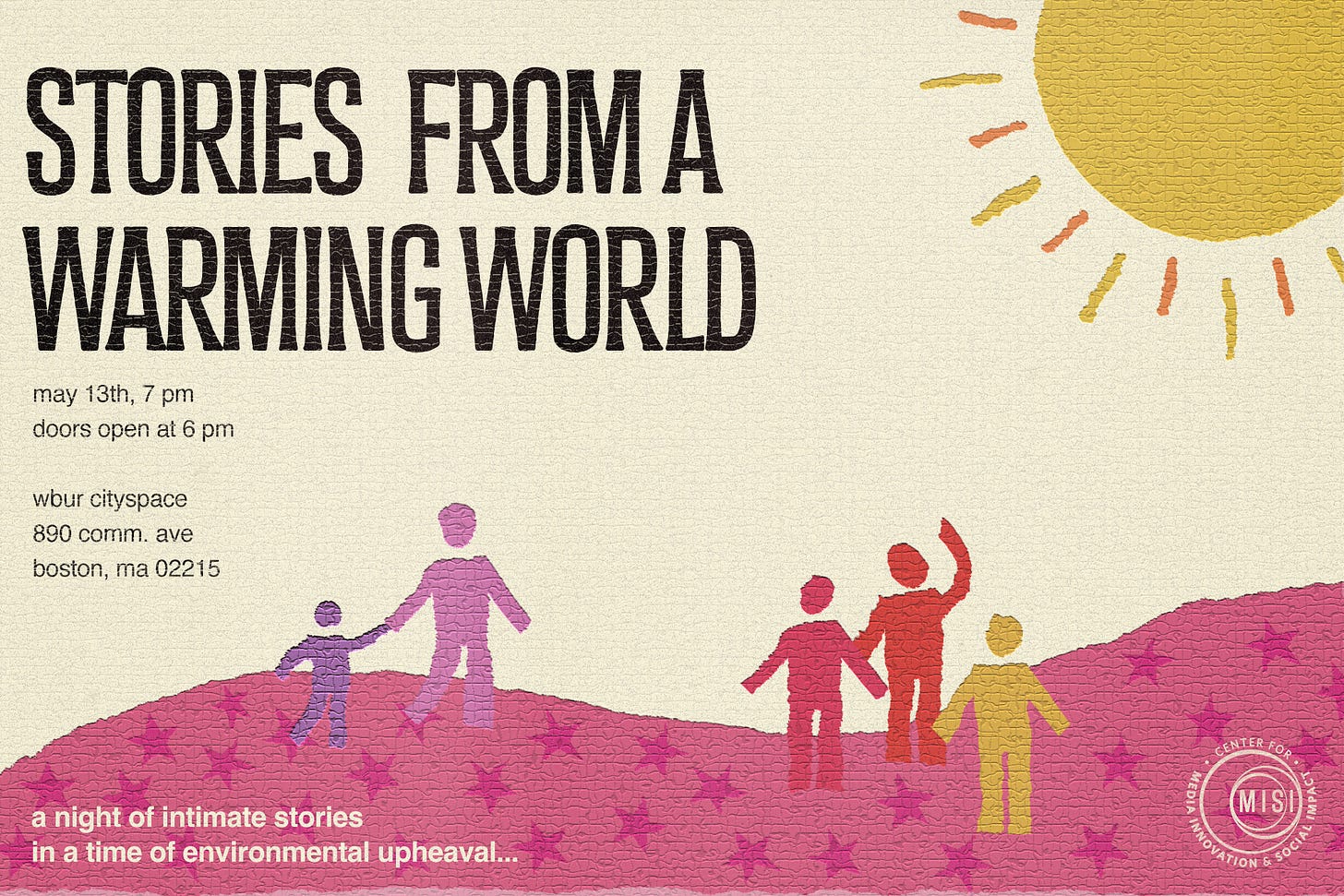
Stories from a Warming World
Next Wednesday, join us at WBUR’s CitySpace for Stories from a Warming World! The event will feature members of the MISI community who will share personal stories about climate and perseverance. These storytellers will explore what it means to create and connect with others in the face of a changing climate.
Sarah Halford: MISI Post-Doctoral Fellow
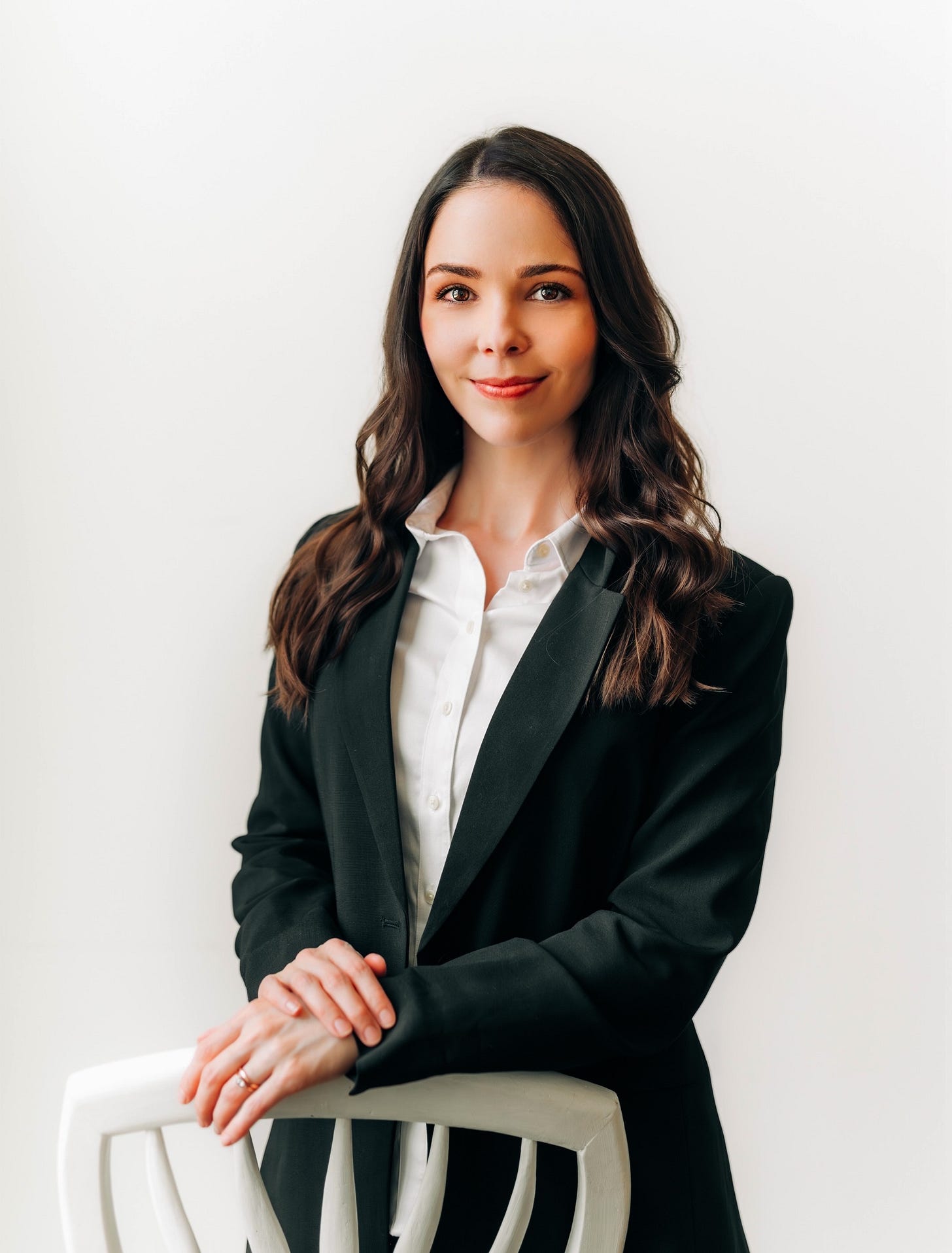
Sarah J. Halford will be joining the Center for Media Innovation & Social Impact in July as a postdoctoral fellow. She will help to lead the center’s new research initiative on Publics, Communication, and Trust (PACT), which will include an ethnographic study of three communities in Massachusetts engaged in resistance to perceived environmental threats. The study will examine how people come to trust information and messengers, and it will investigate how geography and access to information impact that trust.
Halford began her PhD in sociology at Brandeis University in 2017, at a moment when public conversations about misinformation and conspiracy theories were picking up speed. What stood out to her then wasn’t only the spread of conspiracy theories, but the communities built around those theories, and how those communities were being framed in popular discourse.
“There were a lot of people who were describing people in these alternative knowledge communities as being pathological or crazy or talking down to them,” she said.
Halford’s research focuses on how we approach misinformation. Instead of immediately diagnosing the problem or treating it with a quick-fix solution, her research aims to understand where these beliefs come from.
“The tendency was to problematize conspiracy beliefs just right off the bat and jump to solutions… without really, truly understanding the problem itself,” she said.
Halford uses the term “alternative knowledge communities” to describe the broad set of groups connected by institutional skepticism. These communities vary widely, but share a common distrust. Her research turns to this relationship between people and institutions, looking into both how it forms and how it breaks down.
“When I speak to these communities, I’m not trying to fact check anything. I’m not trying to dissuade them of their beliefs,” she said. “I’m genuinely interested in their perspective.”
The result is not a single explanation but, instead, a layered understanding of these beliefs and how they relate to institutional distrust. At MISI, Halford will continue this work by examining how people navigate information across both online and offline environments and how trust is built within these spaces. Her approach to research lends itself to understanding the proliferation of misinformation at its source, as she asks how these beliefs are formed, what sustains them, and how trust can be rebuilt.
What Inspired Our MISI Fellows
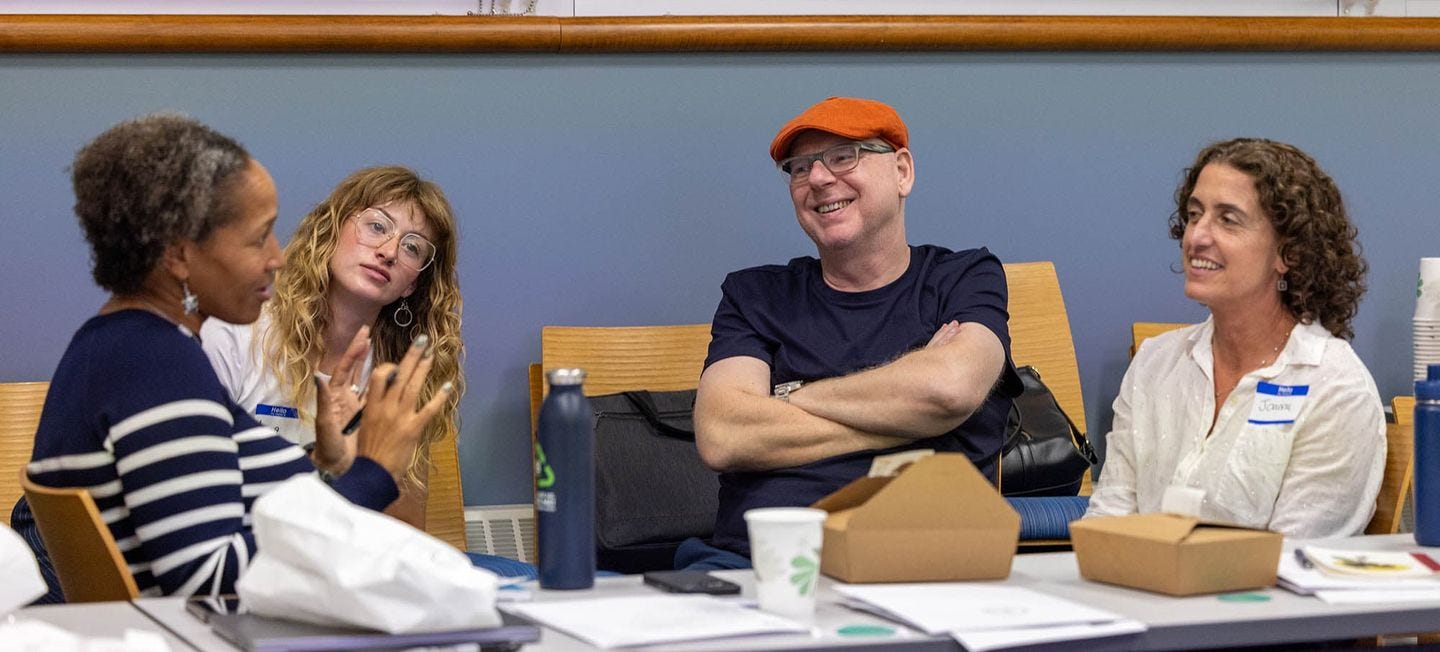
Our 2026 MISI Fellows are now live on our website! Take a look at their profiles to learn more about the wide range of projects, research interests, and creative work that has shaped this year’s group. From environmental storytelling to critical media research, their work reflects how communication is central to community engagement and information systems.
The United Nations & MISI
This October, MISI will be part of Communicating for a Better World— a three-day conference bringing together communication experts from academia, civil society, business, the diplomatic community, and the United Nations. Held in New York City, participants will reflect on current communication challenges, learn from past approaches, and explore how communication can strengthen the United Nations and advance solutions to global issues. This conference is organized by the Columbia University School of International and Public Affairs and the CUNY Ralph Bunche Institute, with hosting support from Columbia World Projects and the CUNY Graduate Center.
Spark! Demo Day
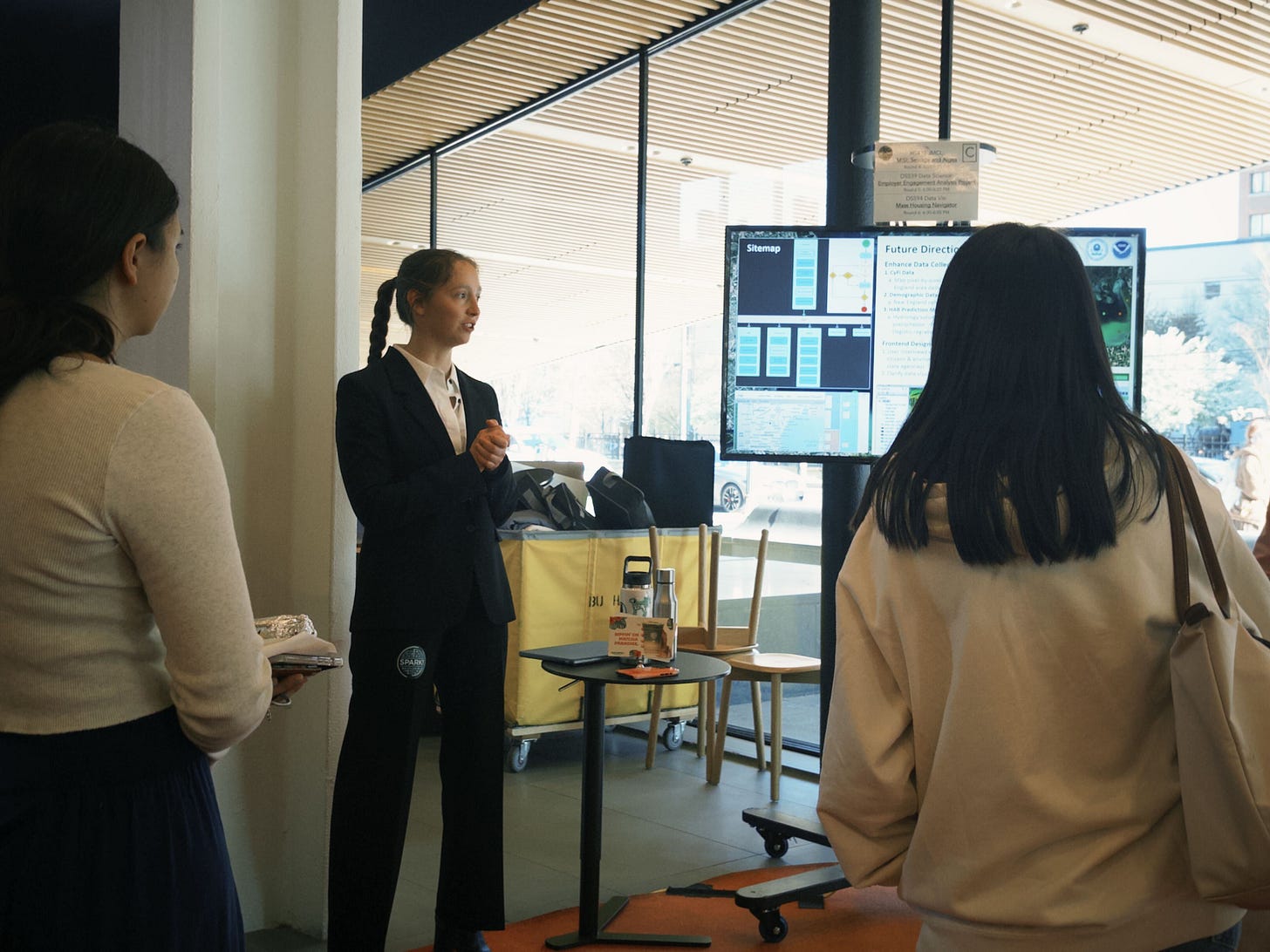
Congratulations to the two MISI teams who presented during Spark!’s Demo Day. Led by Eric Gordon, the On the Porch initiative was selected to present on stage, sharing their project successes with their community-centered AI assistant— designed with and for Dorchester residents. Additionally, the Native Ads team— led by Michelle Amazeen— presented their project during the postering session, showcasing their incredible work through the semester in developing a public-facing initiative that tracks how fossil fuel companies use native advertising to shape public opinion.