Second Annual Boston Fermentation Festival
By Katherine Wood
Katherine Wood recounts her experience at the Boston Fermentation Festival, which occurred on Saturday, September 27th.
 On a warm September afternoon in Jamaica Plain, friends, fermenters, and food lovers of all kinds came together to celebrate the 2nd annual Boston Fermentation Festival. The Boston Fermentation Festival is the primary event organized by Boston Ferments, a self-described “collective of fermenting enthusiasts, lovers of real food, and folks interested in the health aspects of living foods.” Aside from the Fermentation Festival, Boston Ferments holds courses, dinners, and workshops bringing public attention to the benefits of fermented foods.
The fest was set up in conjunction with the Egleston Farmers Market, which occurs every Saturday in Jamaica Plain. It featured several exhibitors including Real Pickles, Katalyst Kombucha, and AO Biome.
 The day was packed with book signings from several national authors, along with a speaker series, tastings, a “pickle off,” a culture sharing table, and a kraut-making workshop. The speaker series included talks by Boston University professor Ken Albala on the history of ideas about fermentation and digestion. Geoff Lukas, Chef de Cuisine at Sofra Bakery and Café took listeners on a tour of the world discussing fermentation delights across cultures. The speaker series ended with headliner Sandor Katz examining nutrition, foodways, economics and anthropology using fermentation as a lens.
 To break up the full schedule of speakers, Boston Ferments held their very own version of a reality show competition, The Pickle Off. Prior to the festival, Boston area chefs were invited to create their own lacto-fermented vegetables and bring them to the festival to be judged by a panel of pickle experts and festival participants. Attendees also had the opportunity to make their own sauerkraut at the “kraut mob” table where they were provided with cabbage, apples, carrots and salt. The “mobsters” taught the art of sauerkraut making as festivalgoers got their hands dirty, going home with their own bubbling jar to watch the lactobacillus bacteria work their magic. At the end of the day, the “kraut mob” went through 100 pounds of cabbage and 40 pounds of apples and carrots during the communal event.
The Boston Fermentation Festival is most special in that through the exchange of bacteria, sourdough starters or kombucha mothers, as well as information on the most effective ways to make vinegar-free pickles, it evokes a feeling of community and a sense of sharing. Invisible organisms - the microbes - were the stars of the day, and the Boston Fermentation Festival effectively showcased just how crucial these tiny creatures are for the body and palate.
Smörgåbord Nordic Food Festival
by Alex Cheser
Gastronomy student Alex Cheser shares his experiences from last weekend's event
 While the crowd might not have outnumbered the one at the Boston IKEA on a Saturday in September, the very first Smörgåbord Nordic Food Festival debuted with great success. The event is one of many new efforts by The Scandinavian Cultural Center in West Newton to highlight Nordic culture and offer a place for Nordic peoples in Boston to meet and celebrate their heritage and, most importantly, the food.
Scandinavian cuisine, new and old, could be found across the grounds of the Center from the prinskorv station with pølse (sausages) and Swedish meatballs to yellow pea soup served by a man dressed as the Swedish Chef from The Muppet Show. As a ticket holder, you could also sample the scrumptious pastries from The Danish Pastry House and Crown Bakery including coffee breads, macaroons, and the irresistible kringle - that Danish treat of puff pastry, marzipan, butter, and almonds.
 By far one of the most exciting parts of the festival were the tasting stations where four Boston area chefs presented their interpretation of New Nordic inspired cuisine. Offerings ranged from vodka cured salmon blinis, the favorite of the other Gastronomy students who attended, to birch smoked Norwegian cod served with a cauliflower puree and finished with a smokey barley-dulse-mussel sauce.
The winner was a dish of salmon two ways by Chef Peter Hansen from The Cottage in Newton, which consisted of hot smoked Norwegian salmon with pickled beets, mustard glaze, and juniper and peppercorn cured Norwegian salmon belly. This was served on a potato pancake with horseradish cream and caramelized apple. According to Juliane Dybkjaer, a new Gastronomy student from Denmark, this dish stayed more in line with older, Nordic home cooking styles while the others were more high end.

The sold out event also hosted several local vendors selling a range of Scandinavian and Baltic products like nøkkelost, sausages, Estonian chocolate, soup mixes, and various troll inspired knickknacks and Christmas ornaments.
If you purchased a Nordic Foodie ticket there were even two more grand events. The first was a book talk by Chef Sami Tallberg, a Finn who is noted for his use of wild herbs in his cooking. His new book, aptly titled The Wild Herb Cookbook, highlights ways to use wild plants like Japanese rose, sorrel, and others. Foraging is a huge component to New Nordic cuisine, and some of the chefs from the tasting stations had even foraged herbs and pine needles for their dishes.
 The last event of the day was a salmon cook off between Peter Hansen and Tim Fahy, two of the chefs from the tasting stations, that was judged by Chef Tallberg and two representatives from the Norwegian Seafood Council - a major sponsor of the event and the reason salmon was the biggest ingredient of the day. It was great fun, and Chef Peter Hansen won this competition as well, walking away with the biggest bragging rights of the day.
Hopefully this event becomes a mainstay for the Scandinavian Cultural Center, and more people in Boston can tune into the amazing food inspired by fjords, forests, and marzipan.
Startup Stir Offers Insight for Food Startups
by Carlos C. Olaechea
 Every month, Beacon Hill Partners sponsors a Startup Stir event that brings in different professionals to offer advice to individuals considering starting their own business. On Thursday, September 18th, the evening was all about food as a panel of seasoned professionals offered their insights on starting a food business at Workbar in Cambridge. Those in attendance were given some time to mix and mingle, as well as sample some of the panelists’ own products, include ZOOS Greek Iced Tea, Downeast Cider House’s unique brews, Tribe Mediterranean Food’s new hummus and pita chip snack pack, and addictive donut holes from Union Square Donuts.
At 6:30 PM everyone took their seats, and the panelists took center stage and offered stories as to how they all started their businesses, the sometimes-bumpy roads that had to be taken, and how they managed to achieve success.
 Josh Danhoff, of Union Square Donuts, offered that one of the most valuable tools available to budding food businesses in Boston are kitchen incubators that allow startups to rent licensed kitchen space to prepare their foods. They are one of the best, most risk-free ways to test out a product. Union Square Donuts started out this way before moving to their own location, and after much success were able to get a newer, larger location that will be open in October.
Ross Brockman, of Downeast Cider House, had started his company with friends from college right after graduating and notes that the regulation and licensing processes can be grueling. Sometimes it is necessary for business startups to bluff, stretch the truth, and skirt the rules in order to make it through that hurdle. Nevertheless, it is what he deems a naïve excitement for launching your product that gets you through it.
 Christina Tsoupiras’s own experience in launching ZOOS Greek Iced Tea parallels Brockman’s in that she started marketing her product across social media before she even had any product to sell. Half of the battle, according to her, is establishing a lifestyle brand, and sometimes it’s best to “fake it ‘til you make it.” Her iced teas are now featured in over 100 retailers. She continues that it is beneficial to team up with people who have complimentary personality traits – if you are creative, it is best to have someone practical on your team.
Jim Mitchell was perhaps the panelist with the most experience at starting food businesses in the Boston area. He maintains that “success is a cognizable commodity,” and that “it’s not a mystery.” When he helped start Steve’s Ice Cream in Davis Square, they had placed the ice cream makers at the front of the store by the windows so that passersby would be attracted by the drama of the beaters dripping with freshly churned ice cream. Upon opening Bertucci’s, which is now one of the most popular casual Italian chains in the Boston area, he applied the same concept that made Steve’s a success, placing the pizza ovens by the windows. By the time he opened Fire + Ice, he had figured out that what had made his restaurants successful was that touch of the dramatic. It is important for business owners to find that successful model either in their own businesses or in those of their competitors.
 Keeping an eye on your competition was something that Adam Carr was very familiar with. As president and CEO Tribe Mediterranean Foods, best known for its hummus, his focus is always on Sabra, which controls roughly 60% of the market. He keeps packages of all of his competitors’ products in his office so that he never forgets that his isn’t the only product out there, and by looking at different brands, he can apply models that work, as well as improve upon models that don't.
Overall, the panel was an excellent opportunity to pick at the brains of people who have been there and done that and offered choice insight into what it takes for someone to start their own food business not only in Boston, but anywhere. The most encouraging message of the evening was not only the fact that it is possible for a food business idea to have success, but that there is also a world of help and support in this town to get you on that path.
Discussing “Evil Alcohol” with Dr. Lionel Tiger
by Rachel Anderson
 “Food is more than a source of electricity,” Dr. Lionel Tiger announced before going on to joke about the "nineteen" glasses of wine he consumed that evening. Speaking to a room of gastronomes, our thoughts and actions truly paralleled those initial words. It is undisputed. We recognize food as significantly more than fuel. Food is ritual, community, love.
Tonight we all gathered to learn “Why We Use ‘Evil Alcohol’ to Celebrate Life” while enjoying a four course dinner and wine pairing prepared by BU’s culinary arts team. The discussion led by Dr. Lionel Tiger and Dr. R. Curtis Ellison was held the evening before they were to defend their stance on alcohol consumption as part of a healthy lifestyle for the 2014 Bicknell Lecture Series at Boston University on September 18th (click here for a recap of the debate).
 The demonstration room at 808 Commonwealth Avenue had been transformed for this first installment of 2014’s Pépin Lecture Series in Food Studies and Gastronomy: white table cloths, wine glasses, loaves of bread. Over sparkling Crémant de Bourgogne and a spread of Italian cheeses and Sicilian caponata, we introduced ourselves to the other attendees at the table. The second course was then served, and while listening to Dr. Ellison casually introduce the evening’s topic, we took sips of Pinot Bianco. Creamy, easy, and mellow, it was a pleasurable pairing with the poached salmon over shaved fennel, grapefruit suprème, and lemon vinaigrette.
 Tenderloin of beef with a red wine pan sauce was our main course. It was paired with tri-colored cauliflower and a zucchini and heirloom tomato gratin. The wine chosen was a Tres Picos Borsao from Spain, whose leathery character complimented the meat nicely.
It was after enjoying our tenderloin that Dr. Tiger got up and discussed how food was a “mammalian transaction” and “profound interchange.” According to him, the act of cooking tells what humans view as important in the hierarchy of needs, and food forms part of our processes of understanding. We live with a purpose and a desire to feed other mammals.
Dessert brought a lovely apple, pear and cranberry crumble with hints of zest and spice paired with another Spanish wine, this time a dessert wine by Jorge Ordoñez called Victoria 2. Dr. Tiger believes the use of food and ‘Evil Alcohol’ to be part of that mammalian transaction that binds us. On days when those ties to one another feel weakened, we can remember the connection that exists through the sharing of food.
Tonight the meal confirmed that food and alcohol bring pleasure, while the conversation confirmed that both those things grant connectedness. Dr. Tiger’s final declaration for the evening: “The crispy zucchini – that was worth getting up for this morning.” Amen.
Welcoming new students, part IV
The Gastronomy Program looks forward to welcoming these new students for the upcoming semester.
 Meaghan Agnew once harnessed food for malevolent intent when, at the age of 2, she attempted to stuff an entire head of lettuce down her baby sister's throat. But she soon learned that ingredients should be appreciated, not weaponized, and thus began a lifelong love affair with the cultivation and appreciation of food.
After earning a degree from Brown University in the vaguely useful field of sociology, she embarked on a fifteen-year lifestyle journalist career, writing for outlets like the Boston Globe, Fodor’s, and Tasting Table. She spent four years as the Boston editor of the now-departed DailyCandy and is currently the editor of Racked Boston, part of Vox Media. (Because she needs to pay her bills, tuition and otherwise, she also works as a senior editor and social media manager at the BU School of Public Health). Through the Gastronomy program, she’s hoping to burnish her food-writing skills -- or maybe ditch her writing career entirely and become a New Zealand cheesemaker.
When she’s not fulfilling her wanderlust (Costa Rica will probably be her last great adventure for a little while), she shares a refurbished Victorian in the Savin Hill part of Dorchester with her husband Dan, her insane hound dog Watson, and her unflappable cat Spoon.
Therese Enders’s love of food can be easily traced to her large Lebanese family and the  attendant happy memories of cooking and eating together (as well as the occasional unhappy memory, say, of getting caught tossing Jello Jigglers onto Grandma’s roof). She also read far too much Little House on the Prairie as a child and for a long time dreamed of becoming a homesteader. Although that’s unlikely to happen, she did marry someone from North Dakota who is descended from homesteaders, which is just as good.
This fondness for food and farms, combined with her more academic interests in public policy and health, are what led Therese to the Gastronomy program. She went to Michigan State University and graduated with a degree in international relations. After college, she served two terms in AmeriCorps and began thinking more about domestic policy. She is interested in issues of food access and poverty, as well as the role of food in building and strengthening community.
Therese would desperately like to get a dog but for now contents herself with her garden and hiking. Someday she’d also like to have a small farm with chickens, goats, and room to plant as many tomatoes as she wants.
Virginia Hyde is excited to start an adventure in  New England immersing herself in food and food culture. She is from Jacksonville, Fl but has spent the last few years in Nashville, TN where she graduated from Vanderbilt University in 2013 with a B.A. in Medieval European History. Even though she is a little nervous to live in the arctic tundra, she is ready to experience everything that Boston has to offer. She is an avid lover of food related field trips and can't wait to explore local farmers markets, farms and orchards.
She has experience with research, marketing and social media and hopes to use her studies to broaden her knowledge of different food cultures.
Ashley Jackson-Lee is from Chicago, IL and is an enthusiastic foodie, who enjoys traveling and eating. Growing up Chicago, the melting pot, Ashley was always surrounded by diverse and fusion cuisines which gave her a unique appreciation of world and fusion cuisines.
Ashley has a degree in Anthropology and Integrative Biology from the University of Illinois at Urbana-Champaign. In the past she attended the Illinois Institute of Art- Chicago where she took culinary art classes. However she was searching for a more meaningful way to explore food and began exploring in the field of Anthropology. Ashley’s undergraduate thesis studied the relationship between food and culture in student dining at the University of Illinois at Urbana-Champaign. Her research examined food selection and preparation, how food and eating is tied to cultural identity and personhood, and how food feeds into social memory by triggering food sensory responses. Ashley has also done food related research in primates with White-Faced Capuchins at the La Suerte Biological Research Station in Costa Rica studying age and sex differences in diet and activity budget. Ashley is excited to use her time in the Gastronomy program at BU to connect her passion for food, culinary arts, biology anthropology, and culture.
Barkha Shah is a Massachusetts native.  Growing up in a small suburb outside Boston has given her plenty of opportunities to taste New England’s delights. She attended Boston University as an undergraduate, and earned her degree in Biology in 2012. Instead of pursuing the medical field like originally planned, she decided to take the scenic route, which consisted of couch surfing and learning how to cook from her friends. Her dad infused her with a love of cooking shows, and her mom encouraged her to experiment in the kitchen, while her sister became the reluctant taste tester. Barkha is an adventurous eater, and will try anything once.
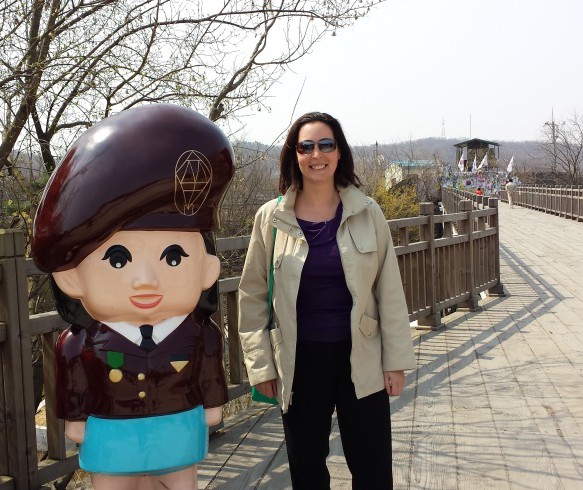 Debra Zides was born in Boston and grew up in Longmeadow, Massachusetts. She holds a B.S. in Mechanical Engineering from Rensselaer Polytechnic Institute, an M.S. in Organizational Management from George Washington University, and an M.S. in Military Operations from the United States Air Force Air Command and Staff College. She recently retired from 20 years active duty military service in the United States Air Force and is excited to return to New England to enjoy the four seasons again. She has extensive experience developing IT, space, and communication systems, as well as serving as a military commander, a United Nations military observer, and running the coalition fixed-wing intra theater airlift system in Afghanistan.
Throughout her military career, she traveled the globe and experienced unique gastronomic opportunities on multiple continents. Brunch in the middle of the migration trail in the Serengeti? Done it. Goat’s milk with dinner in Eritrea? Yep. Fresh figs while gazing out over the Dead Sea? Check. Burning the roof of the mouth off with amazing spices in the Korea demilitarized zone? Painfully amazing. Imbibing the best Trappist monk beers in Belgium? Bottoms up!
Debra’s long-term dream is to create a small, premium quality tequila brand. Additionally, with her new-found appreciation for the challenges in U.S. food system, she has a passion to improve nutritional opportunities and quality of life for families in at-risk communities. She is currently developing a web-based application to assist underprivileged families with understanding the food label nutritional contents to enable individuals to make more informed decisions.
Welcoming new students, part III
The Gastronomy Program looks forward to welcoming these new students for the upcoming semester.
Rachel Anderson eats until unhealthily full and no longer fights the gravitational p ull towards authentic meals in divey locations. She’s an experience enthusiast- a doer, connecter, under committed runner, cocktail drinker, and seeker.
A mash-up of Colorado and Illinois, Rachel has a degree in Anthropology from University of Colorado and a background in sales, social media, and market research in food and beverage. She’s headed to Boston by way of Chicago.
Rachel intends to use her time at BU as an incubator for ideas: to study the anthropological influences on eating and design a role that incorporates technology, consumer behavior and marketplace trends in driving brand strategy, product development, and innovation.
Anna Lisa D. Ferrante was born and raised in Portland, ME, to Italian immigrant parents, and has spent most of her life traveling and eating. She's spent months at a time visiting her family's hometown in the mountains of Abruzzo, exploring both her grandfather’s farm and the traditions of the area. She received her B.A. in History from the University of New England in Biddeford, ME, and credits her time there for  leading her to BU and Gastronomy. In Spring 2013, she studied in Florence, where she took wine tasting and cooking classes. It is there she developed an interest in historical cookbooks, exploring the worlds of Bartolomeo Scappi and others involved in renaissance cooking. When she returned home, her advisor recommended her to an internship at Rabelais Books, a store specializing in rare and antique cookbooks and culinary ephemera in Biddeford, ME. Her access to an endless supply of archival material helped her write an undergraduate senior thesis exploring the evolution of lobster and clambakes in nineteenth century New England, analyzing its use in cookbooks, advertisements, and tourism. In Spring 2014, she spent two weeks in London, and managed to "eat the empire." Her travels have also led her to Belgium, France, Monaco, Germany, and the Czech Republic. Anna Lisa is a firm believer that throughout history, one verifiable constant between cultures in consumption. She hopes to use her Gastronomy education to explore how what we eat reflects our culture and has shaped history, and can't wait to get her hands back on archival materials.
Selena Given is excited to be joining the BU Gastronomy community this autumn to engage and learn beside students and professors who share the same love of food. When Selena is not wining, dining, cooking or talking about her culinary experiences, she spends her daytime working downtown Boston in the financial services industry (although she can certainly can be found chatting about food at work, too!). Selena has worked in financial services since graduating from Converse College in South Carolina with a B.S. in Finance and International Business.
Growing up was, invariably, cleaning up the cake batter bowl and spoon, dancing and singing in the kitchen with her grandmother while making Sunday lunch, always trying to play hostess (with the 'most-est') at her parents' dinner parties. She discovered a love for Scottish Smoked Salmon as a wee one and other delights quickly fell into the "champagne tastes" category, much to the chagrin of her father's wallet! In addition to the sensory delights and nutritional necessity food provides, Selena values how it draws people together, no matter the culture, and is a medium for conversation, celebration, and memory making -- whether it be family, friends or strangers.
Selena is happiest when embarking on new adventures -- be it a foreign land, the latest intriguing local restaurant, or a simple recipe -- but never more so than when she can share her experiences with her friends and family. The Gastronomy program is her next exiting adventure, and Selena is thrilled to have the opportunity to explore the world of gastronomy with fellow students, expand her breadth of knowledge and immerse herself in her passion.
 Chidpim Saelee was born in Bangkok, Thailand, but as with Thai tradition, all of her friends know her by her nickname, Tatee. She attended boarding school in Connecticut and received a degree in business administration from Babson College nearby Boston in June 2011. Since graduating, she has been mostly working in Thailand and Myanmar in her family businesses, including a number of fine dining restaurants in Bangkok. Earlier this year, she attended the Intensive Sommelier program at the International Culinary Center in New York where she really enjoyed studying and tasting wines. Through the gastronomy program at BU, she hopes to be able to combine her love of food and wine with her interest in business.
 Kendall Vanderslice is a pastry chef and writer intrigued by the intersection of food and culture. This passion has taken her around the world — volunteering as a baker and barista on a hospital ship in West Africa, learning traditional food preparation methods while studying in Tanzania, working as a baker at a small café in Chicago and a pastry chef in the farm-filled suburbs of Boston. After studying Anthropology at Wheaton College, she decided to leave the Midwest to explore food along the East Coast. She currently works on the pastry team at Sofra Bakery and as a food contributor at Inspire52.com. Follow her ventures at AVandersliceoftheSweetLife.com."
Growing up outside of Philadelphia, a town with a thriving culinary scene, Kate Weissman has always had an appreciation for good food. After studying abroad in France, she grew a deeper understanding of food cultures around the world. She graduated from Dickinson College in 2007 and went into event fundraising. While she enjoyed raising money for good causes, she craved a position in the food industry. She began working at a public relations firm representing a fast food chain. Here, she learned about the quick service restaurant industry, and the challenges it faces.
 Kate moved to Boston in 2011 to work at Weber Shandwick, representing various food/beverage brands such as S.Pellegrino. Working with these brands has provided her the opportunities to meet talented chefs and culinary influencers from around the world. It has also motivated her start her own food blog, Heaven on a Plate, which gives readers quick and easy recipe ideas.
After learning about the Gastronomy Program at BU, Kate applied immediately. The idea of uniting her passion for food, culture, and career through a specialized program was an obvious choice. She is excited to use what she learns at BU to propel herself forward in the communications field.
Welcoming new students, part II
The Gastronomy Program looks forward to welcoming these new students for the upcoming semester.
Lindsey Barrett was born and raised in Northern California and has always had a sense of adventure. After receiving bachelor degrees in Journalism and Spanish from California State  University, Chico and spending a year of college in Mexico, she was unsure of her next step. She was the sports editor for her college paper and had dreamed of interviewing athletes and telling their stories. But she shifted gears the closer graduation came, finding more love for food and travel. After graduation, Lindsey was no stranger to both. An internship in a kitchen took her from student to employee at a local steakhouse for three years. And after learning the ins and outs of a fast paced kitchen, she decided food has to be more than just a hobby. It was during her adventures to 15 countries that she fell in love with the different cultures and cuisines of the world.
Coming from a small town can be a bit overwhelming, but Lindsey is more than excited to move to Boston and explore the city. In her free time she enjoys a good baseball game, wandering through farmers markets, creating new recipes, trying new food and is still a kid at heart. Remember from the great movie UP, “Adventure is out there.”
Keith Duhamel hails from the Valley – the Blackstone Valley of Central Massachusetts, that is. Having been blessed with parents who encouraged world travel from an early age, Keith has been exploring cultures of a wide breadth for nearly his entire life. His interest in gastronomy started simply at his grandmother’s kitchen counter, devouring Shake-n-Bake chicken livers and a shot of Manischewitz from his own grape jelly jar.
 Keith’s interest in in food led to Johnson & Wales University, where he graduated from the Baking & Pastry program. His life’s work to date has been dedicated to supporting adults with intellectual disabilities, of which Keith has had a successful thirty-year career. Recently graduated from the University of Massachusetts, Keith has decided to return to his passion, food, and plans to focus on history and culture in the Gastronomy program. Keith’s goals combine a lifetime of teaching and learning – he plans to pursue a PhD and eventually to teach about this amazing, vital ingredient to our lives, food.
 When Juliane Schmeltzer Dybkjær was a girl, she wanted her dad to read aloud recipes instead of bedtime stories. And so he did. She still reads recipes before bedtime (and any other time of day, really), but by now, she also gets to develop them – for her food blog madgrisen.dk (translated: The Food Piglet) and for the organic foodstuff company Aarstiderne. When she is not writing recipes, tasting new products, or doing story telling about organic vegetables, she studies for a master’s degree in Digital Design & Communication at the IT University of Copenhagen. And when she is neither studying nor working, she is typically at a concert, a restaurant, or a bar – or, of course, in her kitchen.
Born and bred in Copenhagen, she loves Scandinavian specialties like salty licorice and the infamous tongue twister rødgrød med fløde (red berry compote with cream). Like most Danes, she is also disproportionately proud of sharing nationality with the best restaurant in the world, Noma.
Juliane is into honest and vibrant food and cooking with wine (in the pan as well as in the glass). Most of all, though, she is into different food cultures and adventure – both of which she hopes she will get to explore during her time in Boston.
 Laurel Greenfield is a recent graduate of Boston University’s School of Hospitality Administration and is from Poughkeepsie, NY. When she is not working at Sweet Cheeks BBQ in the Fenway neighborhood, she can be found eating ice cream, watching Anthony Bourdain’s Parts Unknown on repeat, or editing posts for Spoon University’s BU chapter.
When she is not watching other people travel on TV, Laurel spends her savings exploring around the world in pursuit of all things delicious with a special emphasis on ice cream. This past year she has found herself driving down the east coast, up the west coast and flying to Australia and Japan.
Laurel is also a painter whose primary subject is food, especially desserts. She has learned a lot of about the restaurant industry from working at Sweet Cheeks and from working as a pastry intern at Sofra Bakery in Cambridge and is ready to expand her food knowledge with the Gastronomy program. Ultimately Laurel wants to combine her love of food with her passion for painting. She is so excited to meet people who love to talk about food as much as she does!
Kyoung-Ah Kim was born in South Korea and raised in a family of ceramic artists who love to be with earth. (Her parents and sister are all ceramic artists.)  She grew up with touching and feeling the clay with all my senses. This carried over into the farm where the family raised vegetables and cooked them by making a fire in the furnace. Being naturally surrounded by food has had a huge influence on her life.
For five years, Kyoung-Ah worked as a program producer and director on the Food Channel in Korea, where she produced a variety of cooking. During this time it occurred to her that food should not just be a material for TV programs. She aspires to be able to use media to express her passion for food, and her ultimate goal is to find accordance between food and the media. Her first step toward this goal is in enrolling in the Gastronomy program at BU, where she looks forward to meeting her fellow gastronomes
Esther Martin-Ullrich graduated from Temple in 2010 with a super useful BA in Theater,  followed by 3ish years of dancing around the BU Gastronomy program. After taking Culture and Cuisine of Quebec in fall 2013, she realized it was time to apply. Her background is in web content, social media, and copywriting, but her true passion is food history, sparked at age 10 by her American Girl Doll’s cookbook (Felicity or Bust). She hopes to get a doctorate, but mostly wants her husband to get really rich so she can travel, research, and write. A lifelong resident of the Philadelphia area, she has never lived more than an hour away from home, so she’s kind of freaking out right now. Esther likes pugs, Doctor Who, the song “Africa” by Toto, costume dramas, and her long-suffering husband, Andrew. She has a sadly neglected blog, Why’d You Eat That?.
Anna Nguyen was born and raised in Fayetteville, Arkansas, and  graduated with honors from the University of Arkansas with degrees in English Literature and European Studies. After graduation, she moved to Seattle where she worked a plethora of food-related jobs in a ‘foodie city’. During her time off from academia, she read a lot of food-related literature and decided to combine her interests in literature and food and applied for the MLA Gastronomy Program at BU. She is particularly interested in the possibility of writing and publishing. She currently manages a coffee shop in Boston. When not drinking coffee and eating, she enjoys exploring Boston, walking, being outdoors, playing with her cat, and trying to finesse her baking skills.
Rachael Reagan grew up in Tulsa, on  dad’s cooking, mom’s baking, and grandma’s grits. Her Oklahoma childhood created the perfect breeding ground for an aspiring foodie. She fell in love with the ability to create wonderful food and memories. While studying history at the University of Arkansas, she desperately sought to blend her love of food with her love of the past. It wasn’t until studying abroad in Florence that she discovered her star-crossed passions could become one. In her classes abroad, she learned that diet, as well as artistic expression, changed dramatically during the Renaissance. After researching this phenomenon, she found that changing food culture correlates with changing cultural and political climate. She wrote her honors thesis on the diet and food culture of Fascist Italy and Nazi Germany, and plans on pursuing research in the relationship between national cuisine and national ideological identity. Having just moved from Arkansas, she’s very excited to live in a large city where Wal-Mart is not on every corner and meet fellow culinary enthusiasts! When Rachael’s not reading about what fascists eat; she enjoys swimming, exploring, blogging, and watching old Saturday Night Live sketches.
Kelly Scott is from South Jersey, and deeply regrets moving before the Jersey tomato, corn, and blueberry season was really in swing this year. Kelly enjoys canning, pickling, fermenting, and  generally DIYing all things in the kitchen. On a desert island, she would bring her Harry Potter hardbacks, mason jars, and a large canning pot. When she finally leaves the kitchen, Kelly enjoys feminist discourse and all animals of the fuzzy variety. She is interested in Gastronomy because she believes access to good, pure food is a human rights issue that can and should be guaranteed for everyone in our lifetime. Kelly looks forward to making like-minded friends, and can't wait to share her preserves with them (Vanilla Rhubarb Jam, anyone?)!
Nicholas Vincelette was raised and currently resides in Cranston, Rhode Island. Upon graduating from Rhode Island College with a degree in Public Relations, he accepted a position as a Constituent Caseworker in U.S. Senator Sheldon Whitehouse’s Providence office. In this capacity, he assists Rhode Islanders who contact the Senator to resolve issues ranging from commercial fishing and agriculture regulations, State Department visa and passport applications, to healthcare policies and federal student loan programs.
While his interest in cuisine was well established prior to working for the Senator (thanks to his French and Italian relatives), it was enhanced through seeing firsthand the relationships that exist between our government, food producers, media, and hospitality industry. Each sector plays a role in determining our nation’s eating trends and what its nutrition, food production, and trade policies will be. Through the Gastronomy program’s Food Policy and Food Media tracts, he hopes to learn and research more about our food systems and those of other countries. It is anticipated that such will aid in developing strategies that our government can implement via collaborative efforts with manufacturers, restaurateurs, and food media professionals to better our delivery system of whole, unprocessed foods to the masses, nurture their appreciation of them, and provide the education needed to prepare them.
In his free time Nick enjoys frequenting ethnic and farmer’s markets for new ingredients, running, cycling, and having lively discussions of international and political affairs at cafes with friends over an espresso. He considers his runs and bike rides the best times to let his mind wander about the next way he can incorporate Neapolitan, Provençal, Levantine, or Basque (or all four at once) flavors into a new dinner idea!
Welcome New Students
With "back to school" ads in the paper, and the slightest chill in the morning air, it is time to think about fall classes. We are pleased to have another great cohort joining the Boston University Gastronomy Program. These new students have been asked to submit a picture of themselves, a short bio, and what they love most about food. Here are the first two:
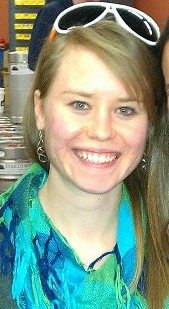 Eileen Beebe was born and raised in the great state of Vermont and firmly believes cheddar cheese should be white, food tastes better when eaten outside and maple syrup is literally the best thing ever. Her childhood memories are a blend of visits to PYO farms, cooking experiments and learning to enjoy the elegance of simple things done well. For a change of scenery, she packed her bags and headed to Clemson University to study food science where she gained appreciation for southern culture through new foods and experiences. Although her blood now runs orange, she is happy to be back in New England and is loving city life here in Boston. She is currently working in the quality assurance department at the corporate office of a grocery store. When not eating, cooking or talking about food; Eileen enjoys exploring the city, rock climbing, hiking and snowboarding. She is excited be a part of the Gastronomy program and is looking forward to making new foodie friends.
Michael Hritz is from Ligonier, PA. He is an active duty Marine, serving since 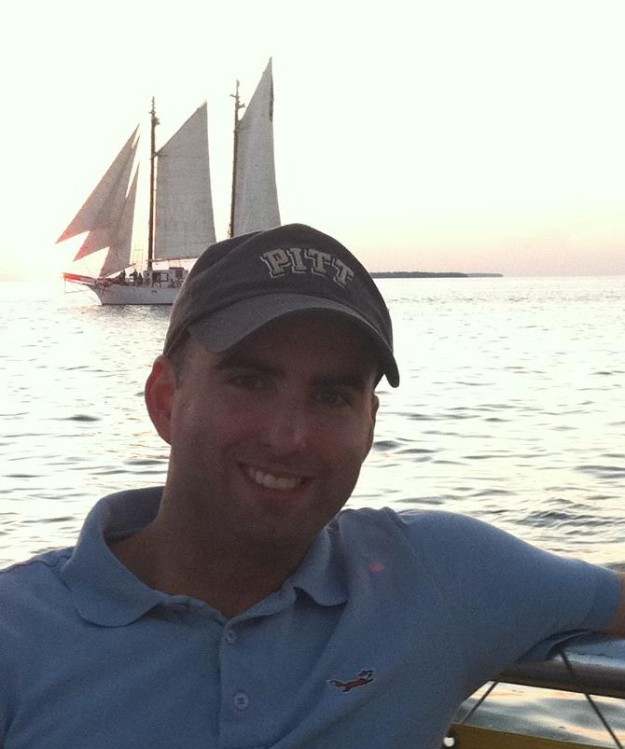 2003, deploying to Iraq, Afghanistan, on board the 24th Marine Expeditionary Unit, and several times with Special Purpose Marine Air Ground Task Force – Crisis Response in Spain and Italy in response to the Benghazi attacks. He is a naval aviator, having flown the CH-46 helicopter but subsequently transitioned to the KC-130J. He is currently assigned to Boston University’s NROTC program as the Marine Officer Instructor. He is interested in Gastronomy’s food policy and business aspects and hopes to, at the completion of the military career, attend culinary school and subsequently open a farm-to-table restaurant.
Spring Lecture Series Recap: Molecularizing Taste at the Intersection of Biochemistry and French Cuisine
 by Marleena Eyre
Molecular gastronomy, a hot trend in the food world in recent years, tends to evoke either quizzical or enthusiastic looks from food nerds—including many of us who are in the BU Gastronomy program. Chefs Ferran Adrià of El Bulli, Heston Blumenthal of The Fat Duck, and Pierre Gagnaire of Restaurant Pierre Gagnaire come to mind as ringleaders who helped to popularize this movement of manipulating the molecular structure of food. Their restaurants often have long waitlists, with some reaching up to four years.
 Those curious to learn more, along with my Food and the Senses class (ML 715), attended Molecularizing Taste at the Intersection of Biochemistry and French Cuisine on April 22,2014. Presented by Sofia Roosth, Ph.D., Assistant Professor at Harvard University, the lecture spotlighted taste and its relationship to science and culinary heritage.
Roosth, an anthropologist of science, spoke about the ethnographic research she performed in Paris, France on molecular gastronomy. She studied the work of Hervé This, a physical chemist and one of the founding fathers of food science, alongside his research assistants in his AgroParisTech lab, part of Institut National de la Recherche Agrnomique (INRA).
Originally known as molecular and physical gastronomy, molecular gastronomy debunks the how and why behind cooking. It is used in conjunction with technoscience, a term that Roosth defines as the combination of technology and science. Methods used to study the chemical compositions of foods include nuclear magnetic resonance (NMR) spectroscopy and thin-layer chromatography.
 Delving deeper into discovering the science behind food, This set out to improve the cooking and dining experience. He built off the works of Marie-Antoine Carême and Auguste Escoffier, who codified old wives’ tales in recipes to prove why they worked (or why they didn’t).
However, when brought into a restaurant, molecular gastronomy extends beyond the field of science and enters the realm of performance art. Typically, diners are presented with a multi-course menu where each dish builds off the previous to defy culinary conventions. The beauty behind the scientific approach to food is that each step of the cooking process can be analyzed, deconstructed to its elements, and applied to creating everything from foams made with lecithin or instant ice cream made with liquid nitrogen. Chefs manipulate diners’ senses, leaving them with a new perspective on the culinary arts.
Manipulating food in the culinary world isn’t the only application of molecular gastronomy. Roosth mentioned that it could potentially be used to tackle food insecurity in developing countries as well. Many research centers around the world are using technoscience to create food products aimed at helping reverse this chronic issue.
While ending world hunger is a huge feat in itself, molecular gastronomy can be used in a multitude of ways and will be here for some time.
Marleena Eyre is a second year Gastronomy student, an editorial intern at NoshOn.It, and blogs at The Flex Foodie. When she’s not studying or writing about food, she can be found paging through cookbooks at her local bookstores or sculling on the Charles River with her rowing team. She can be reached at marleenaeyre@gmail.com.
Garden Time: Getting your hands dirty

by Kimi Ceridon
Soil, not to be confused with dirt, is the life blood of a garden. Dirt is dead and lifeless, but within soil, it is a complex, living ecosystem that keeps plants healthy. Nutrition for vegetables comes from the soil. Having healthy soil is important to an edible garden, but, if you are container gardening, it is difficult to maintain a healthy, thriving ecosystem from year to year.
The roots of plants absorb food, water, nutrients and minerals from soil. They spread into the soil in search of nutrition, forming a plant’s communication web and supply network. The plant above ground tells the root system what it needs and the roots below ground absorb it from the soil. All of the details of soil composition are far too complex to detail here, but there are important elements gardeners should understand.
 Organic matter is the most important component in soil. Unfortunately, plants cannot digest organic material like food scraps and leaves without help from bacterial and fungal microorganisms. These organisms decompose or compost simple organic matter into readily available plant nutrition. They also aerate the soil, allowing roots to expand and water and oxygen to penetrate down to the roots. Together, organic matter and microorganisms are the heart of the nutrition in soil, providing not only the nitrogen, phosphorous, and potassium critical to plant health, but also other trace elements such as magnesium, calcium and iron.
Fertilizers are useful during the growing season and provide basic nutritional needs to a plant, but are not a complete replacement for healthy soil. Soluble nitrogen, phosphorous, and potassium (the numbers on fertilizer bags indicating the percentage available for plant absorption) are only the foundation of plant nutrition. Vitamins and minerals are an important component of soil composition and contribute to the nutrition of fruits and vegetables.

A container garden has little access to the outside world. As such, it is impossible to maintain container garden soil health indefinitely without adding nutrition. During the growing season, side dressings of compost and fertilizers help supplement plant nutrition. However, when starting fresh plants and seedlings in the spring, it is a great opportunity to replenish soil.

With new containers, it is easy to get plants off to a good start. Potting soil is available by the bag at garden stores, but rather than simply using a potting soil alone, mix one part compost to every four parts soil. Soil and compost are less expensive in bulk and indoor gardeners can save money by sharing the cost with neighbors and friends. It may also be less expensive to make a soil mix from scratch, such as the one recommended in All New Square Foot Gardening by Mel Bartholomew. For best results, an edible plant garden should get organic soil. Annually refresh containers full of soil from previous years by removing the old soil and blending it with compost. For containers with living plants, top off with a compost-soil mix or gently remove the plant from the container, loosen the roots and add a compost-soil mix to the bottom.
 Once the soil is ready to go into containers, it can provide plants with a healthy base of nutrition that smells fresh and earthy. Do not overfill containers or pack the soil as roots need space to expand and support larger, bushier plants. Seedlings should have their first two real leaves before transplanting. Place filled containers in a sunny spot and keep the soil slightly moist.
As a complex ecosystem, understanding the many benefits of healthy, thriving soils is not only for gardeners and farmers. Soil nutrition is relevant for all types of food professionals. To learn about the wonderful ecosystem of soil, I recommend the following two books by Jeff Lowenfels:
- Teaming with Microbes: The Organic Gardener’s Guide to the Soil Food Web
- Teaming with Nutrients: The Organic Gardener’s Guide to Optimizing Nutrition
 After 15 years in sustainable product design, Kimi Ceridon shifted focus from consumer products to food systems. She is active with NOFA/Mass Boston Ferments, Waltham Fields Community Farms and has led workshops on chicken keeping, backyard homesteading, fermentation, and brewing. Follow her at noreturnticket.kceridon.com.