Announcing the Spring 2018 Gastronomy Colloquium
We are delighted to share with you the schedule for our Spring Gastronomy Colloquium. We are featuring exciting Food Studies works in progress by scholars from diverse disciplines. The colloquium is intended to be a forum for food studies scholars in the Greater Boston Area to meet each other and as such is open to all who are interested. In other words, come and bring a friend!

All presentations are on Thursday afternoons at 4 PM, and will be held in Fuller 123, 808 Commonwealth Avenue, Boston MA.
Course Spotlight: Food and Public History, Spring 2018
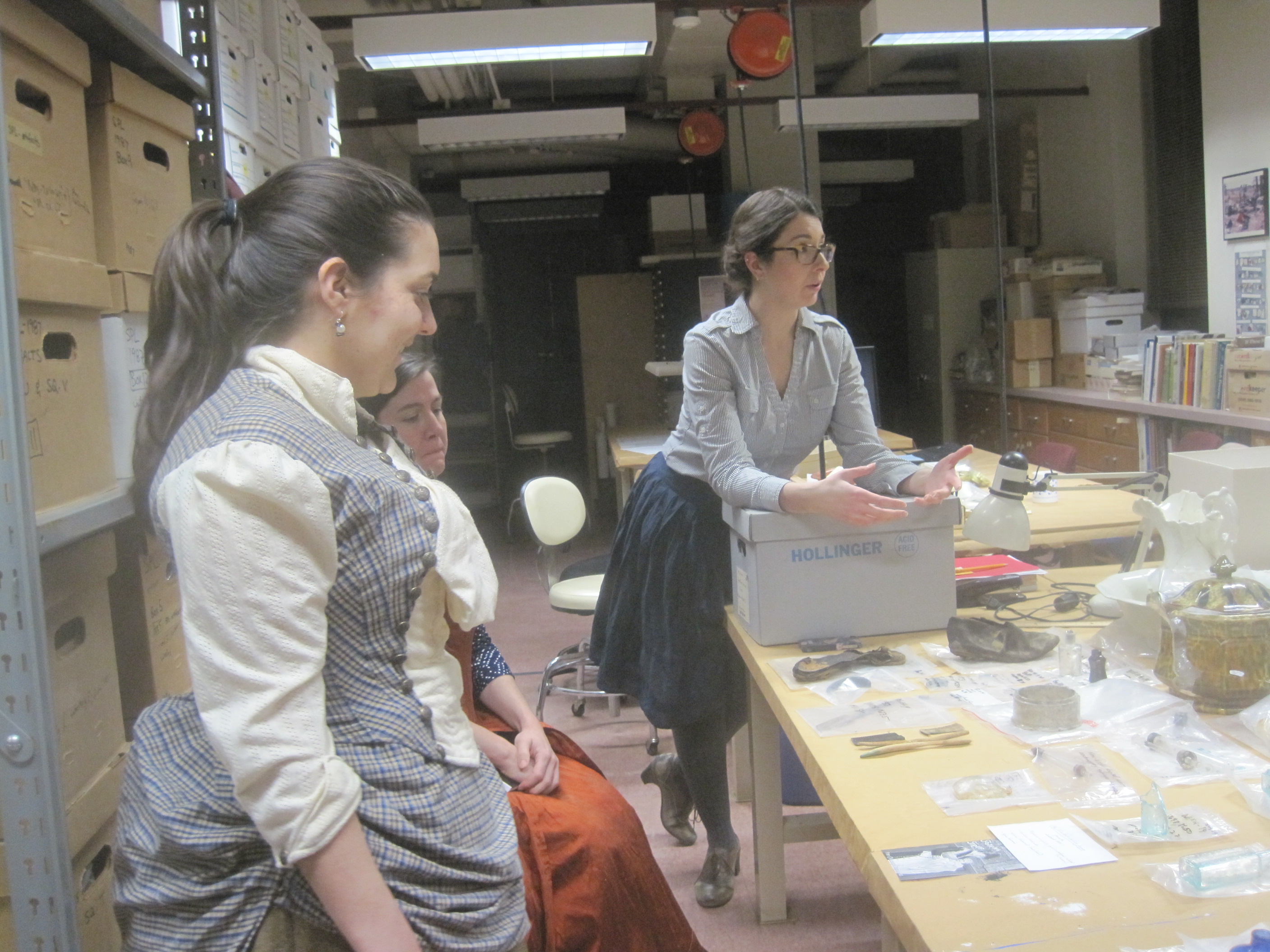 In this 4-credit course, we will examine interpretive foodways programs from museums, living history museums, folklore/folklife programs, as well as culinary tourism offerings, "historical" food festivals, and food tours. Our goal is to compare different way to teach the public about history or cultural heritage using food, and teach the public about the history of food. How do we engage the public? How do we demonstrate the relevance of food as both a historical subject and as a topic of interest today? Through different approaches to public history, can we connect our audience to issues that are so critical today—the future of food movements, for example, or the preservation and understanding of cultural difference? How can we successfully engage the public, whether through displays, tours, or interactive/sensorial experience?
Students will have the opportunity to hear from several experts in historical interpretation, public history, and food history programs, including Dr. Cathy Stanton (Anthropology, Tufts University), whose expertise is in the intersection of food movements and public history; Millie Rahn (Heritage Studies, Plymouth State University), a specialist in folklore studies and folk festivals; Alyssa Shoenfeld, founder of Bites of Boston Food and History Tours; Kathleen Wall, Plimoth Plantation Culinarian; and Ryan Beckman, manager of Historic Foodways Old Sturbridge Village.
This is a project-based course involving experiential learning and hands-on activities. We will be taking field trips to area museums (Plimoth Plantation and Old Sturbridge Village). I hope to schedule two walking tours in Boston as well. In addition, our visits will serve as case studies, allowing students will examine the process of creating mission statements, interpretive goals, and entrepreneurial offerings, as well as different methods of communicating with the public. Projects that build off of these case studies will include developing and creating an exhibit of cookbooks from our cookbook library for display to the university community, and hopefully an exhibit proposal for an area folk festival. The course culminates in a final project in which students develop a proposal for an interpretive foodways program for an area museum, tour program, or other public history forum.
Hope you will join us!
A live classroom option for distance students is available for this course. For more information, contact kmetheny@bu.edu.
MET ML 623, Food and Public History, meets on Tuesday evenings from 6 to 8:45 PM, beginning January 23. Registration information can be found on this page.
More New Students for Spring 2018!
Sarah Critchely
 I’m from a small town on the Connecticut shoreline where I fostered a love for fried seafood and New Haven style apizza. At first, I started my adult life on a very literary path. After studying English at Skidmore College, I went to Brown University to get my MAT degree in Secondary English Education. I finished my first year of teaching and then decided to completely change directions. Figuring that my early twenties were as good a time as any to explore my options, I attended the Cambridge School of Culinary Arts to study pastry. I did a stint at a bakery before moving into the restaurant world, working as a savory cook at the now-defunct TW Food and then as a pastry cook at Harvest Restaurant. I have been working as a confectioner/chocolatier at Spindler Confections in Somerville for the past year where I love learning more about all the intricacies of sugar and cocoa crystals. My favorite thing to cook (and eat) is soup and my favorite baking activity is making layered cakes. I love traveling, the beach during the off-season, Talking Heads, and knitting. Currently, I live in Cambridge with my husband, my cat, and too many cookbooks.
I’m looking forward to continue to make food the central part of my career while stepping out of the professional kitchen world a bit. I have been eyeing the Gastronomy program at BU for years and am so excited to finally be a part of the program! I’m hoping to learn more about food history and food policy and to forge a path onwards from there.
Caitlyn Wright
 I am passionate about the role food has in our communities and more specifically how we feed our communities. Through travel and research I have been able to spend time in several communities where food production is a conscious part of identity. I obtained my undergraduate degrees in Sociology and Studio Art at Hartwick College in the Catskills of New York. Living and doing field work in an agricultural community that was also experiencing deep poverty and serious public health challenges led me to focus my energy on exploring the intersection of food policy, food access, and sustainability in rural agriculture. I interned with the Center for Agricultural Development and Entrepreneurship and collected data to support their grant programs for sustainable hops production. I was a 2015 Farm and Fire Fellow at Watershed Center for the Ceramic Arts in mid-coast Maine where I split my time between making ceramic work and working on Dandelion Springs an organic farm. I ended this fellowship with an understanding of what it means to produce organic food sustainably to feed a local community but also left with questions about how to supply food affordably to a population in a setting without access to large amounts of land.
From here I participated in a class focused on food culture and challenges to food access in central New York, The Harvest Dinner Project. I was an artist and student creating dinnerware in collaboration with a farm to table restaurant which culminated in a benefit dinner supporting a local soup kitchen. Most recently, I was a teaching Fellow at a residency center for agriculture, culinary arts, and fine art in upstate New York, Craigardan. Here I witnessed and collaborated in projects highlighting the pivotal place we are in surrounding agricultural policy and food culture. I am passionate about creating physical spaces that connect people to food and want to understand the framework for building a non-profit that supports food, nutrition, and culture, especially in marginalized populations.
Course Spotlight: Culture and Cuisine of New England, Spring 2018
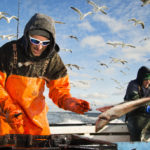

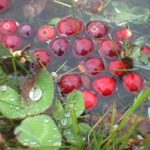
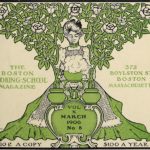

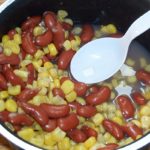
Looking to add another course to your spring schedule? You might consider Netta Davis’s course, Culture and Cuisine of New England. Without fail, this course receives rave reviews from all who take it — from students who have lived in the region for years to those who moved here just for school.
This course explores the unique culinary culture of the New England region. From history and anthropology, to archaeology, material culture, and folklore, this course employs an interdisciplinary approach to learning about regional dishes, their origins and meanings, the extraordinary people who developed New England cookery and food industries, and the intimate relationship between the land, (and sea!), the inhabitants and the foodways that evolved.
The encounters between Native peoples and Europeans brought forth succotash and “indian” pudding, (but maybe not Butterball Turkeys); Immigrant communities added linguica sausage to clambakes and Cranberry Chutney to the Thanksgiving table. From Yankee Pot Roast and Eel Pie to Moxie, Maple Syrup and Sam Adams, New England culture and cuisine is a rich and tasty subject for study.
This class will include a weekend field trip, likely to the Mashantucket Pequot Museum and Research Center in Connecticut. The last class visited there and feasted on Wampanoag chef Sherry Pocknett's superb cuisine in the museum cafe. (You can read Gastronomy alumnus Michael Floreak’s article about the food and beverage program at the museum here.) Weather permitting, we may try our hands at making sea salt from Maine seawater as well.
Culture and Cuisine of New England (MET ML 638) will meet on Thursday evenings from 6 to 8:45 PM, beginning on January 18. Registration information can be found on this page.
Images: Fisherman, Brewery labels, Cranberries, Boston Cooking School Magazine, Moxie, Succotash

_(14750323186).jpg)
Welcome New Students for Spring 2018!
We are looking forward to welcoming new students to the MLA in Gastronomy and Food Studies Certificate programs at Boston University. Here is the first batch of their bios and photos. We hope you will enjoy getting to know them!
Jackie Deschamps
 I grew up in a small town in upstate New York nestled in the Schoharie Valley between the Catskill and Adirondack Mountains. Surrounded by farmland (which I admittedly did not appreciate at the time), my family used to go right to the goat farm for cheese or to the local farm stand for produce. I earned my undergraduate degree in communication management and design from Ithaca College in Ithaca, New York before pursuing my first jobs at a music promotion company in London, UK and then a talent agency in West Hollywood, California.
Since 2012, I’ve been working in the private club industry in Saint Petersburg, Florida and now my work has brought me home to the northeast and to Boston. Through my work in branding, marketing, and special events I’ve been fortunate to work with incredible teams and chefs including Wolfgang Puck, Scott Conant, and more. It was through working in the club industry that I began to thrive on the pace and anticipation of culinary events; I always felt like we were putting on a theatrical production where the ambiance and guest list were just as vital to our story as the food. I’ve always enjoyed sharing stories and creating memorable experiences, which may be what attracted me to the culinary world, as chefs and their teams are storytellers. A certified Level 1 Wine Specialist by the Wine and Spirit Education Trust (WSET), I hope to earn my French Wine Scholar certification and eventually become a Champagne master as well. I’ve always felt a very strong connection to both my French and Italian heritage, which may explain my deep-rooted love for food, wine, and the cultural significance they represent.
I grew up watching Jacques Pepin on television and have always been a fan of Julia Child; their involvement with Boston University is how I discovered the Gastronomy program and was definitely a driving force in my decision to attend BU. I’ve always had a passion for travel and discovering culinary traditions and the Gastronomy program is the perfect place to explore even further with likeminded, yet unique individuals and teachers who all share a passion for food culture. I am most interested in learning more about why people eat what they eat, who they eat with, and why; from cultural, historical and political perspectives.
Favorite food quote: “Tell me what you eat, and I will tell you who you are.” Jean Anthelme Brillat Savarin, The Physiology of Taste
Janaea Eads
 I learned from a very early age the important role that food plays in bringing families and people together. I was adopted from an orphanage in India that placed a huge circular table in the middle of the common room so everyone could share every meal together, and was welcomed into a family where at breakfast we talked about what to eat at lunch, and at lunch, we talked about what to eat at dinner. Growing up, I became extremely familiar with the Eads’ family mottos: “If your name ain’t on it, it’s gonna get eaten!” and “Education is the best gift you can give someone.”
I combined these two mottos while growing up by using my family members as guinea pigs and spending time tutoring and mentoring younger students. Influenced by my dad’s love for travel, I developed the same passion for exploring new cultures and cuisines. My love for food and travel took me to Rome for a semester during college. It was in Rome where I realized that food meant much more to me than a simple motto. However, despite this realization, I thought I’d be better off pursuing what I had ignorantly assumed as a more “practical” degree: a J.D. After graduating from Stony Brook University in 2016 with a BA in English, I spent a year abroad in the Marshall Islands and taught English and College Preparatory to high school students. I also spent the year creating different ways to eat coconuts and fish and found that I was only truly relaxed when cooking; the kitchen was where I’d meditate. After spending a year on an island with a 5-mile circumference and realizing how tiny we all really are, I realized that I couldn’t waste any more time pursuing something I didn’t love. I abandoned my law school track and immediately applied to BU’s program. They say that all roads lead back to Rome, and I am hoping that this is where my degree will take me. I’d love to work for the UN World Food Programme, and also create my own mentorship program that encourages independence, self-sustainability, and overall growth and confidence in youth, so they, too, can grow to love food and the places it can take us.
Laura Kitchings
 I completed a Bachelor of Arts at Macalester College in Religious Studies. As part of my program I conducted archeological fieldwork in Israel, which began my interest in the study of material culture. After a museum internship in Hawaii, where I gained an interest in Polynesian cooking and history, I earned a Master of Arts in Museum Studies from the University of Washington.
Returning to New England in 2008, I pursued professional positions in local archives. I earned a Master of Science in Library Science and a Master of Arts in History, both from Simmons College. As part of my academic programs I traveled to the Czech Republic and South Korea with other librarians and archivists. Some of my favorite experiences during the trips were mealtime conversations with local and American information professionals. The conversations often included discussions of food rules followed by different cultures.
In 2012, while changing my diet to manage health issues, I began taking cooking classes at the Boston Center for Adult Education (BCAE), where I gained an interest in food appliances and technologies. From 2014 to 2017, I worked as an archivist for The Trustees of Reservations, and my work led me to learn about food producers and organizations in Massachusetts.
With a Master of Liberal Arts in Gastronomy, I plan to combine my interests in History, Material Culture, and Food Culture to study mainstream adaptions of cooking technologies.
Laura McCarthy
 My grandparents came to the United States from China, and this early exposure to non-American food and culture stoked my curiosity about other cuisines and food traditions. I grew up in Maryland and enjoyed helping my parents and grandparents in the kitchen and especially loved thinking about the next meal while eating a meal. I was never a picky child and would happily give any food a try such as stir fried snails, spicy kim chee, or dim sum chicken feet. As a result of being adventuresome early, there really isn’t any food I don’t like.
I took the practical education route and graduated from the University of Maryland, College Park with a degree in Finance. I worked as a financial analyst until moving to a tiny island near Hiroshima, Japan after getting married. Trying to shop for groceries in a foreign language I didn’t yet know and cook with unfamiliar ingredients was a challenge every day. After buying a Japanese cookbook and beginning to learn to speak and read Japanese, my eyes were opened to new flavors, foods, and an ancient food culture strongly based on cooking with the seasons. It was a wonderful education and introduction to a new food culture.
With our two children, we also lived in Seattle, London, and Tokyo and settled in the Boston area in 2003. While living abroad, we were fortunate to travel through many countries in both Europe and Asia and try new foods while learning about other food cultures and food histories. As a stay-at- home parent, I became the primary preparer of family meals and used this opportunity to try to recreate some of the foods and dishes we tasted on our travels. Cooking for family and friends was a fun way to experiment and push myself to cook more challenging things. This quest has broadened the depth of my cooking experience and cooking repertoire and fueled my growing interest in cooking and food. In 2010, wanting to further my cooking experience, I volunteered to test recipes for an upcoming cookbook. Since then, I have worked with 3 cookbook authors and tested recipes for 6 published cookbooks. Through this valuable experience of recipe testing, I realized that I might know what I’d like to do when I grow up.
The Gastronomy program will help me toward my goal of becoming a professional recipe creator and tester. I am excited to meet other students who are as food-focused as I am and learn about their journeys to the Gastronomy program. I would also like to further explore food policy and try to find ways to make a difference as a food advocate addressing food access and food quality issues. The experience and knowledge gained from this education will deepen my understanding of food and its role in our lives and prepare me for a career in the world of food.
Larissa Weiner
 I have always had a love for food. Ever since I was a little child, I had an extensive palate. I would try anything my father would try (my mother has a blain palate) so if he was eating sushi, I was eating sushi. I like to learn about the proper pairings of wine and cheese or wine and main dishes, and had a little experience with that when I attended Johnson and Wales University in 2007. I graduated from the University of Hartford in 2011 with a Bachelor’s of Arts in Human Communications. I have been with Boston University Henry M. Goldman School of Dental Medicine for five and half years now. I started in the Clinical Patient Finance office in 2012 and in 2016 moved to the Dental Health Center on the 7th floor as a Patient Care Coordinator. In January of 2017, I was promoted to the Clinical and Administrative Manager of the Periodontology department. Starting in the end of January 2018, I will be starting a new position as the Administrative Manager for the Department of Oral and Maxillofacial Surgery. Throughout my years at Boston University Dental School, I have traveled to 6 different countries and 26 states across the US. My main focus was to try the cuisine that was most popular for that country or state. I have a thirst for knowledge and cannot wait to learn more in the Gastronomy and Food Studies department this coming semester!
Siddharth Yerra
 Siddharth Yerra was born in Hyderabad, India, but stayed all over the country. He is the grandson of a third generation farmer, and grew up around a farm and a lot of food. He completed his undergraduate degree in commerce from Delhi University. After which he worked at a small family run cafe and patisserie called Desserted.
Cities such as Delhi, Lucknow and Hyderabad fabled for their rich food history have had a great influence on the way Siddharth has come to know food. His maternal upbringing, which shaped him as a person and most of his life lessons, experiences were given in the kitchen had food invariably playing a part, which is why he feels it has got so much more to it. He wants to improve the existing foodways in India, with an aim to create an equal food platform. He hopes that the gastronomy program at Boston University will connect him to like-minded people and different food cultures.
The 10 Commandments of Food Photography
Photos and Article by Jerrelle Guy (@chocolateforbasil)
Photography is just another way of communicating, and successful photography communicates as clearly as possible while also making the viewer feel something; when talking about food photography, hopefully that feeling is “hungry”. Here is a list of 10 food-capturing commandments for shooting food that can make any viewer stop in their tracks.
1. Good Lighting

This is the most important rule of all, so it takes the #1 spot on the list. You don’t need expensive camera equipment or a fully stocked photo studio to build the illusion of natural light, just use natural light--one strong and direct source of natural light, streaming through a window, one that doesn’t create harsh shadows on the food. Above all else, stay away from the flash button. Flash flattens the food and erases a lot of the details that make the food look naturally mouthwatering.
2. Avoid Blurriness

Make sure your photo is as crisp as possible. Wipe down your lens and adjust your focus before you start snapping. This may seem silly or obvious, but if you’re like me, and you’re styling your food, propping your food, AND shooting your food all at the same time, it’s easy to forget about this step— there are so many other things to be thinking about. But always double check to make sure you didn’t mistakenly smudge the lens with greasy fingers, definitely adjust the lens to get everything you want to capture in clear focus, and if you have shaky hands, use a tripod.
3. Have a Focal Point

Speaking of things in focus, make sure you’re asking yourself where you want your viewers’ eyes to go first. As the photographer, you have complete control of the story you’re telling, and you can make your viewer focus on anything you deem most important, whether that be the drips on the edge of a chocolate cake or the whole cake itself. Each variation tells a different story. The following are some tips to create better focus in your narrative:
- Put the object you’re showcasing right in the middle of the composition or just off to the side so the viewer can’t avoid it.
- Adjust your aperture to give less important things in the photo a softer focus, making them fall to the background.
- Make sure there is enough space around the object to help it pop off the page (And this leads us into the next commandment…)
4. Utilize the Power of Negative Space

Leaving enough space in the photo for your eyes to rest around the object of attention helps clarify your message. Too many objects can confuse the viewer, and overcomplicate what you’re trying to get across, even if all you’re trying to say is “look at how bubbly and gooey this lasagna is!” We all appreciate lots of space to comfortably take it all in.
5. No Distracting Background Noise

When it comes to propping your food, whether you’re using a tablecloth or your favorite serving tray, pick natural and solid colors or at least colors that compliment the food. Crazy patterns and saturated colors feel unnatural, and are usually a no no. Try whites and ivories, deep blues, dark greys or browns instead.
6. Find the Perfect Angle

Decide if you what to enter the photo directly from the side, at a ¾ angle, or directly from above. A lot of times the object you’re shooting will make this decision for you. Just ask yourself "which angle offers the most information?" And that’s probably the angle you should shoot from. For example, if you’re shooting a trifle or a tiramisu, it’ll probably want to be shot from the side or at least from a ¾ angle so that you can capture all the different ingredients and layers--if you shot it from above you’d lose that information and the viewer might not understand right away what it is they’re looking at. The reverse is true when shooting soup or something in a bowl--a down shot would probably show the most information.
7. Details are in the Garnishes

This is my favorite tip because it brings more personality to your dish. Adding garnishes (of course, only those that were used while cooking or those that compliment the flavor profile of the finished dish) creates details for your eye to get lost in. It doesn’t have to be everywhere in the photo but in a few places here and there to help break up the larger shapes and colors. Sesame seeds on a bagel create something so exciting and stimulating on what would otherwise be a boring piece of white bread.
Some of my favorite last minute garnishes: black sesame seeds, chopped herbs like parsley, cilantro and rosemary, and any and all spices, especially cayenne pepper and paprika (because they’re so vibrant!).
8. Patterns/Textures

The eyes love being given a recognizable shape to stare at over and over again. Patterns of food like chocolate truffles in the grids of a chocolate box, stacked brownies, a stocked fridge with rows of produce, it all creates structure in the middle of chaos, which can be very soothing to the eye and comforting to the mind.
9. Imperfection

Getting caught up in making everything tweezer-perfect is important in the world of commercial food photography, but when it comes to taking personal photos that feels more realistic, try not to get caught up in getting everything picture perfect; be flexible, be a little messy, maybe even shoot it after you’ve taken a few bites of the food. This makes the food feel more inviting and more natural, which is usually the goal, because it makes the viewer feel like they’re there, biting into the food with you.
10. Post- Editing Software

This is my final piece of advice, because it comes only after you’ve followed all proceeding steps. But don’t be fooled, it is SO important for making your food stand out amongst the flood of amateur food photos. Find your favorite photo editing software, and use it religiously, practice different filters and adjust those settings until you find something that works for you. This will take your photo over the top and surely stop people in their tracks.
Student Spotlight: Morgan Mannino
“Cook’s Illustrated, I’ve got a tasting of apple crostata in the main kitchen,” a test cook’s voice mumbles over the telephone speaker.

I look up from my work, it’s 11AM, having some dessert pre-lunch won’t hurt me, plus it’s got apples in it (it’s practically health food) and I’d love to see where Steve is in his recipe development. I grab my phone and head to the kitchen with the hope of stringing together some engaging shots for our Instagram Story. The editors and I stand around a metal table and munch on 3 different samples of crostata, looking for variations in texture and flavor and comment on them. The Cook’s Illustrated team could spend hours analyzing and debating different ways to improve the texture of an apple slice in a crostata. These debates will help inform and color my social posts about the recipe, almost a year in the future. The recipe development happens so far ahead since it involves an extensive, rigorous process of making and making and making again, surveying home cooks who volunteer to make the recipe at home, final tweaking, shooting, and finally publishing. This, of course, is a strange balance with the immediacy in which I am Instagramming what’s currently going on, right now, in the kitchen. Such is the nature of working in social media for a 25 year old magazine.

These tastings punctuate my day as I work towards the overarching goal of marketing Cook’s Illustrated and developing the brand on social media. As a Senior Social Media Coordinator at America’s Test Kitchen, I curate, write, and schedule all the content that goes out on the Cook’s Illustrated Instagram and Facebook accounts (with a little Pinterest here and there). I also work very closely with the magazine editors, video team, photo team, and design team to strategize, visualize, and communicate our brand on the platforms. The craziest time of year is right now, Thanksgiving and the holidays, where I’ll spend 100s of manhours (having started in July) planning and strategizing a cohesive campaign that not only is engaging but also meets our marketing business goals.

I began the Gastronomy program in January of 2016. At the time I had been working at America’s Test Kitchen for almost 3 years, but on the Sponsorship Sales team doing client service work. I had the vision of becoming a member of the social media team, but I needed to pave the path to get there in order to be ready once the opportunity presented itself. The program was a help in that journey, inspiring confidence, inspiration, and helping me craft my writing. It also gave me the knowledge of culture and history of food that I have been able to take into my social media role from writing post copy to adding my opinion in a tasting.
Everyday I am incredibly thankful for my job and for the gastronomy program for not only reminding me why I love food and culture so much, but for giving me the tools to make turn that energy into a tangible reality. Some days I’m capturing our tastings and testings team saw coolers in half with a reciprocating saw for Instagram Stories, others I may be joining them for a tasting of 10 samples of burrata or hot sauce, on very special days there might be chocolate pie or some other treat in our “take home fridge” (where all the extra food goes from recipe development each day) or gushing over the fact that I get to host a food celebrity in house, most days there are dogs wandering about. Needless to say, I often find myself filled with gratitude for my job, especially when a “bad day” is caused by an empty take home fridge or the stress of planning and executing a Facebook Live about prime rib. It’s hard to know where to go from here (I still can’t believe I am working for the magazine that I used to cuddle up and read when I was growing up), and I am so grateful to be here, but know when it’s time I’ll follow where my nose (and taste buds) lead me.

Conference Abstracts Workshop & Potluck
Interested in submitting a proposal for the 2018 ASFS conference? Not sure how to group papers into panel presentations? Curious about where you can submit your academic work? How does one write a proposal, anyway??
Join us for a potluck while we work on writing our conference abstracts on Wednesday, Dec. 13th from 6pm - 8pm in Fuller 109.
Please email Barbara at brotger@bu.edu if you plan on attending.

Student Spotlight: Krysia Villon
Eating well (and I don’t mean healthy), cooking and activism are in my blood.
I believe in food sovereignty for all of us inhabiting this Earth but do not believe we will ever achieve it unless we begin to see ourselves as the caretakers of our Mother rather than the owners of “it.” We cannot see the value in protecting her and fostering her growth if we insist on dominating her and possessing her. We cannot understand the ways in which to care for her if we do not look to our past. How do we get back to being caretakers and protectors so that peoples may achieve true food sovereignty?
I am the daughter of a Peruvian immigrant father and a Boston-born mother of Polish and Scottish/English descent. I am the oldest of five children and the mother of one fierce little girl. I am the granddaughter of a lawyer who became a judge, a homemaker extraordinaire who produced elegant meals and made her own clothes, a farmer who walked over mountains to sell his goods, and mother who became a pro-union community activist while also being godmother to many, among other things.

I come from a long-line of ancestors that have moved mountains for their family and loved ones. It is their children who continue to tell their stories so that they may live within us and through us. This is how we do not forget. This is how we remember and we value those that came before us. My family tree is chock full of creative, faithful, resourceful individuals who have collectively inspired me since I heeded their call to live and breathe into my true self. I consider myself a storyteller.
I was born and raised in the Boston-area and during my formative years my father owned a Latin American restaurant in Cambridge that focused on Peruvian cuisine. I was that little kid that fell asleep on chairs I had pushed together under the tables, that kid that hung out in the kitchen waiting to sneak a taste when someone wasn’t looking, and that kid that even learned to dance salsa after hours in the bar when I should have been home doing my homework. It is with this particular palate, spirit, and the inherited fire in my gut that I found myself attracted to the world of food, history (stories), and foodways.
I spent ten years in fundraising and volunteer management in non-profits and higher education institutions but was unfulfilled. I left my former field and ran off to Johnson and Wales University (JWU) in Providence, RI to obtain my Culinary Arts degree. I think of this as my second life.

I thoroughly enjoyed my time at JWU. I was instructed by fantastic chefs that helped me in refining my cooking skills and allowed me to bring my new found confidence in the kitchen outside the classroom. I also took advantage of the study-abroad program which landed me in Lima, Peru in 2011. I took courses and was trained by more fantastic chefs who deepened my knowledge of Peruvian food, food history and foodways. I postponed my return to the States and stayed in the capital for 6 months. I landed three jobs simultaneously: I worked as a waitress in the only Irish pub to serve Guinness in Lima for money, I worked as a translator and receptionist at a hostel for housing, and I also secured an internship at a Four Fork (Five Star equivalent in the U.S.) restaurant in Lima for experience. I think I slept for a month when I got back. I had every intention to one day open my own restaurant.

Upon my return to the U.S. I completed my culinary degree. It is also during this time I discovered I was pregnant with my miracle baby. Her arrival into my life changed my course slightly but, undoubtedly, changed it for the better. I began to re-think the way I ate, where my food came from, and what I wanted her know about the hands and ingenuity that fed and feed her.
It was during her first year of her life I began my time at Taza Chocolate in Somerville, MA. What drew me to this company was its Direct Trade program in cacao, its connection to food and foodways, and that I would be interacting with the public. I began working part-time at local farmers markets and giving tours which ultimately led me to managing the factory store and tour program today. I am responsible for creating new types of programming and events for the factory store and producing their larger events like our recent Dia de los Muertos block party. In helping plan this event for years I was also able to connect Taza with local cultural organizations to infuse an already successful event into one that was also educational. As manager, I’ve specifically developed programming for children, Spanish-language tours, built a new classroom, enhanced tour materials including video content, created classes like Cacao 101 that teaches about determining the quality of cacao, and even educational games that both inform and engage our customers in new ways.

It was in my own personal experience of learning the comprehensive material in my training at Taza that first sparked my interest in going back to school. I was actively learning again and with that learning arose more questions which only engaged me in more research. It was a beautiful cycle. One morning, two years into my role at Taza, I woke up and realized I had become a storyteller and an educator. When I was young an elder told me that I would become a teacher one day in a non-conventional setting. I had arrived at that moment. I made a decision that I would go back to school so I could immerse myself again in the things that would continue to fuel the fire in my gut. Today, that fire is burning stronger than ever.
I am pursuing my degree at an even pace to remain grounded as a mom and a working woman and to be mindful about the connections I’m making in my research, in my personal and professional networking, and in myself. I now understand more food history and the stories I must learn. I see the gaps and I believe if I learn them I can tell those stories to small and large audiences alike so that we might be reminded of the places from which we come. These stories may come in the form of written word or oral history but I definitely see some more non-conventional, or even conventional, classrooms in my future! We need to hear more stories about the hands, and hearts, that feed us. We need more storytellers before we collectively forget how we got here. I am my ancestors wildest dreams, as Brandan “Bmike” Odums says. I will keep speaking their spirits. I will keep speaking their ingenuity. I will keep speaking their heart so that we are reminded to protect and foster and not to own and possess. I will keep telling the stories. By doing so, I hope I make them proud.

Congratulations to the Julia Child Award Recipients
The Julia Child Award goes to a matriculating student in the Master of Liberal Arts in Gastronomy program who has been nominated by their instructor for outstanding academic work. The following students were recently recognized for their work done in the Spring 2017 semester. Congratulations to everyone!
Ashlyn Frassinelli
 My name is Ashlyn and I'm in my third semester of the Gastronomy program. Before coming to Boston, I studied journalism at George Washington University. When I'm not in class I work as a graduate assistant in event coordinating for the Food and Wine program and I bartend at Lamplighter Brewing in Cambridge.
Karl Koch
 Karl is in his second year as a Gastronomy student after working as a school garden educator in Tucson, AZ, and is particularly interested in the intersection of food systems and social justice. He was cited for his essay for Dr. Messer's U.S. Food Policy & Culture course on rights-based approaches to food policy and discussing sometimes-competing narratives of the "food movement."