Letters from the Director

Survey: Dating Apps Not Best to Find Your Soulmate, But Still Worth It.

By Burt Glass

Dating apps may not be the best way to find a soulmate – but why risk giving them up?

That’s how many Americans feel about dating apps on Valentine’s Day, according to a new Media and Technology survey from Boston University’s College of Communication and Ipsos.

Many more men (42%) and women (37%) either agreed or strongly agreed that “people can find their soulmates” on a dating app, than disagreed (men 16%, women 15%).

Read the full article here.

Call for Proposals: COM Faculty Research Seed Grants

The Communication Research Center (CRC) of the Boston University College of Communication announces its inaugural call for proposals for Faculty Research Seed Grants to begin in Spring 2024. By awarding research grants to faculty within COM, the CRC seeks to promote inter-departmental, cross-disciplinary collaborations on communication-related issues that will help society engage with modern challenges.

Application deadline: March 18, 2024

Award announced: April 15, 2024

More on where and how to apply here.

ICA 2024 Pre-Conference – Reimagining Digital Activism: Navigating Complexities and Forging New Perspectives

CRC fellow Dr. Chris Chao Su is co-organizing the ICA 2024 pre-conference this year and has written an outline of what to expect:

ICA 2024 pre-conference on "Reimagining Digital Activism: Navigating Complexities and Forging New Perspectives."
Link to ICA preconference page here.

The rapid proliferation of digital technologies has reshaped the landscape of activism, attracting attention from scholars, journalists, and the public. However, as this field continues to evolve, it faces a myriad of challenges, from limited comparative research and data accessibility issues to the adaptation of digital repression by various regimes. As activists develop more sophisticated strategies, the need for in-depth exploration of their impact grows.

This pre-conference seeks innovative contributions exploring the intersection of activism and digital technologies, encompassing theoretical and empirical studies at both micro and macro levels. Co-organized by a diverse group of scholars hailing from different disciplines and regions, including CRC fellow Dr. Chris Chao Su, our collaborative effort includes scholars from the United States, Denmark, Germany, the Netherlands, Canada, and Australia. We encourage critical examinations of lesser-studied movements, platforms, and issues, particularly those relevant to minority groups and the Global South.

Our sponsors, including Boston University’s College of Communication, the Sapere Aude: DFF-Starting Grant, and the Center on Digital Culture and Society at University of Pennsylvania, are excited to engage with insights and reflections on digital activism, which have the potential to reshape the future of digital activism research. Join us in Gold Coast, Australia, for this exciting exploration of the dynamic intersection between activism and the digital realm. For more information, please visit the event page.

Letter from the Director: January 2024

Growing Risk of Disinformation

By: Michelle Amazeen
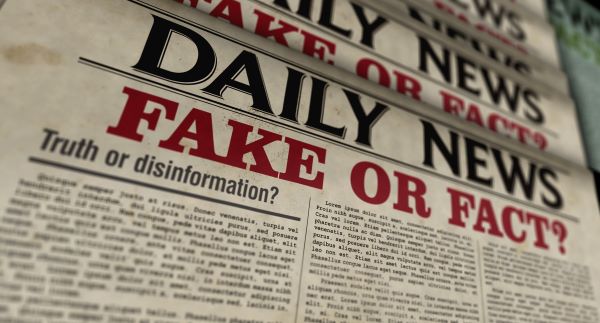
An image of a newspaper with the headline 'Fact or Fake' and a subheading 'Truth or disinformation'.

The new year began with the World Economic Forum releasing its 2024 Global Risks Report which describes hazards occurring in the global landscape from year to year. Topping the 2024 report is the threat of mis- and disinformation intensifying societal divides around the world over the next two years.

Indeed, in the year ahead, the American public is facing numerous issues that require informed decisions. We are navigating a presidential election, military action in Ukraine and Gaza, continued resistance against taking meaningful action on climate change, and lingering waves of Covid-19, just to name a few. Each of these on its own is challenging enough. However, dealing with all of them simultaneously and combined with the increased use of generative artificial intelligence, the media ecosystem is poised for a tsunami of disinformation: deliberately false content intended to mislead.

Do we trust US media to get us this information accurately? According to a nationally representative poll COM conducted in 2022, roughly 60% of Americans said they trusted media to provide accurate information on the issues of climate change, elections, and vaccines. Even fewer (55%) trusted media to make a clear distinction between news and advertising. But there were stark differences in responses based upon political identity: Democrats were much more trusting of media on these topics (80%) than were Republicans (just over a third). Other national polls, such as from Gallup, indicate that Americans’ trust in media more generally is at a record low point with similar partisan divides.

The concern with misinformation is not just among elites, but is also held by everyday Americans. A recent national survey by MediaWise revealed that 4 out of 5 participants (81%) believed false or misleading online images were a problem for society. At the same time, roughly 3 in 4 respondents were not confident in their ability to identify misinformation. According to CRC fellow Dr. Joan Donovan, Assistant Professor of Emerging Media Studies and Journalism and author of Meme Wars, “The entire purpose of media manipulation campaigns is to trick you, so it’s not easy to quickly discern fakes from facts in today’s media. Viral memes are often missing the context needed to understand the motives of the author and really viral memes will shed any reference to the original source as it is distributed. This is why we need to be able to access more reputable news sources on social media.”

Thus, now, more than ever, is when media literacy is essential. Media literacy is the ability to critically analyze stories presented in the media and to determine their accuracy or credibility. My research has shown that the more people know about the media, the better able they are to resist online disinformation efforts. According to our latest Media & Technology poll among a nationally representative sample of US adults fielded this month, 72% of respondents agree that media literacy skills are important in helping people identify misinformation, yet only 42% report knowing how to access quality media literacy training online. Yet, there is demand for these skills as nearly 7 in 10 reported interest in learning how to better distinguish between true and false information online, especially when it comes to identifying misinformation generated with AI.

Given the challenging times before us, I am pleased to welcome a new voice among our CRC fellows who study mediated communication dysfunction. Dr. Betsi Grabe joins COM this month as the Dalton Family Professor and will be directing the Emerging Media Studies PhD program. While the first part of Dr. Grabe’s career was spent conducting research to understand the media’s role in facilitating informed citizenship, more recently her focus has shifted to researching disinformed citizenship. “My sense is that the integrity of the global information ecosystem is critical to the longevity of the democratic way of life,” Grabe tells me. “Actionable research that shapes public debate, informs policy, and empowers citizens is urgently necessary and arguably, part of our social responsibility as academics.”

We are fortunate to have so many esteemed researchers who are committed to understanding why and how media affect us and society at this time of extreme information disorder. I look forward to working with Dr. Grabe and the continued efforts among all CRC fellows in conducting research that matters.

Letter from the Director: December 2023

The Fall 2023 Semester in Review

By: Michelle Amazeen

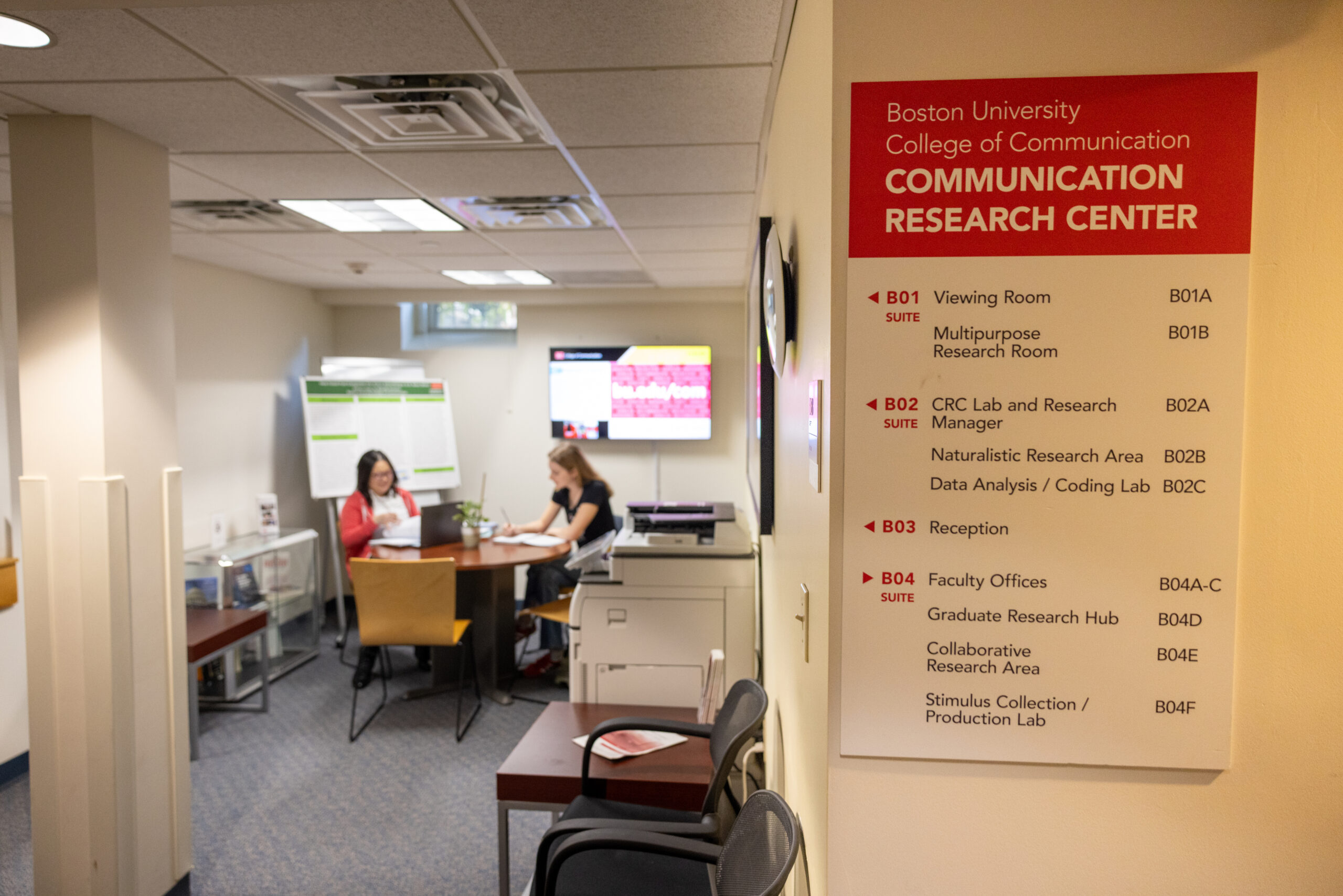
A photo of the directory in the foreground, with two students studying, in the reception area, in the background.
Students studying in the CRC reception area. Photo courtesy of Derek Palmer.

December wraps up another busy semester for the CRC. Our Colloquium Series, which originated in 2009, consists of monthly research presentations that highlight current and original research of CRC fellows. Our Fall Colloquium Speakers were EMS PhD Candidate Alexis Shore (September), Dr. Deborah Jaramillo (October), and Dr. Joan Donovan (November). If you are interested in presenting your research as part of our Colloquium Series this Spring, please sign up here.

Every semester, the CRC also invites a distinguished scholar from outside the university to share their outstanding scholarship, expertise, and experience with the BU community. Our Fall 2023 DeFleur Distinguished Lecturer was Dr. Kjerstin Thorson (Michigan State University) who spoke about news exposure in a datafied media world.

An image of students facing a TV screen, half eaten pizza slices on paper plates on the table in front of them, with a Zoom video on display.
PhD fellow Briana Trifiro's second Lunch & Learn, with EMS alumnae, pictured here.

In promoting a culture of research and collaboration, our fellows met monthly as part of our Work-In-Progress meetings. Special guests this semester included representatives from BU’s Institutional Review Board and representatives from the offices of BU’s Federal and Foundation Relations. Moreover, our PhD fellow Briana Trifiro launched a Lunch & Learn series enabling doctoral students the opportunity to talk with faculty and Emerging Media Studies PhD alumni about their academic research and careers.

One of the unique technologies available in the CRC is our biometric tools which include devices for measuring heart rate, sweat levels in the skin, as well as facial and eye movements. For the first time ever, the CRC hosted an onsite workshop led by an iMotions Product Specialist. Attendees received hands-on training in our iMotions software, designing biometric studies, interpreting data, and drawing actionable conclusions. If you are interested in learning more about biometrics, a quick primer is available here.

Given the University’s commitment to involving students in research, the CRC continued to facilitate fellows’ efforts to recruit students as research participants via our SONA research participant management system. The SONA system gives both graduate and undergraduate students an opportunity to become involved with various research activities across COM while earning course credit for doing so. This semester, 13 research opportunities were available to students from 24 different COM courses. I hope you will consider including your courses in the Spring semester. To enroll your courses, please fill out this form. For more information about how our SONA program works, please visit our website or email comsona@bu.edu.

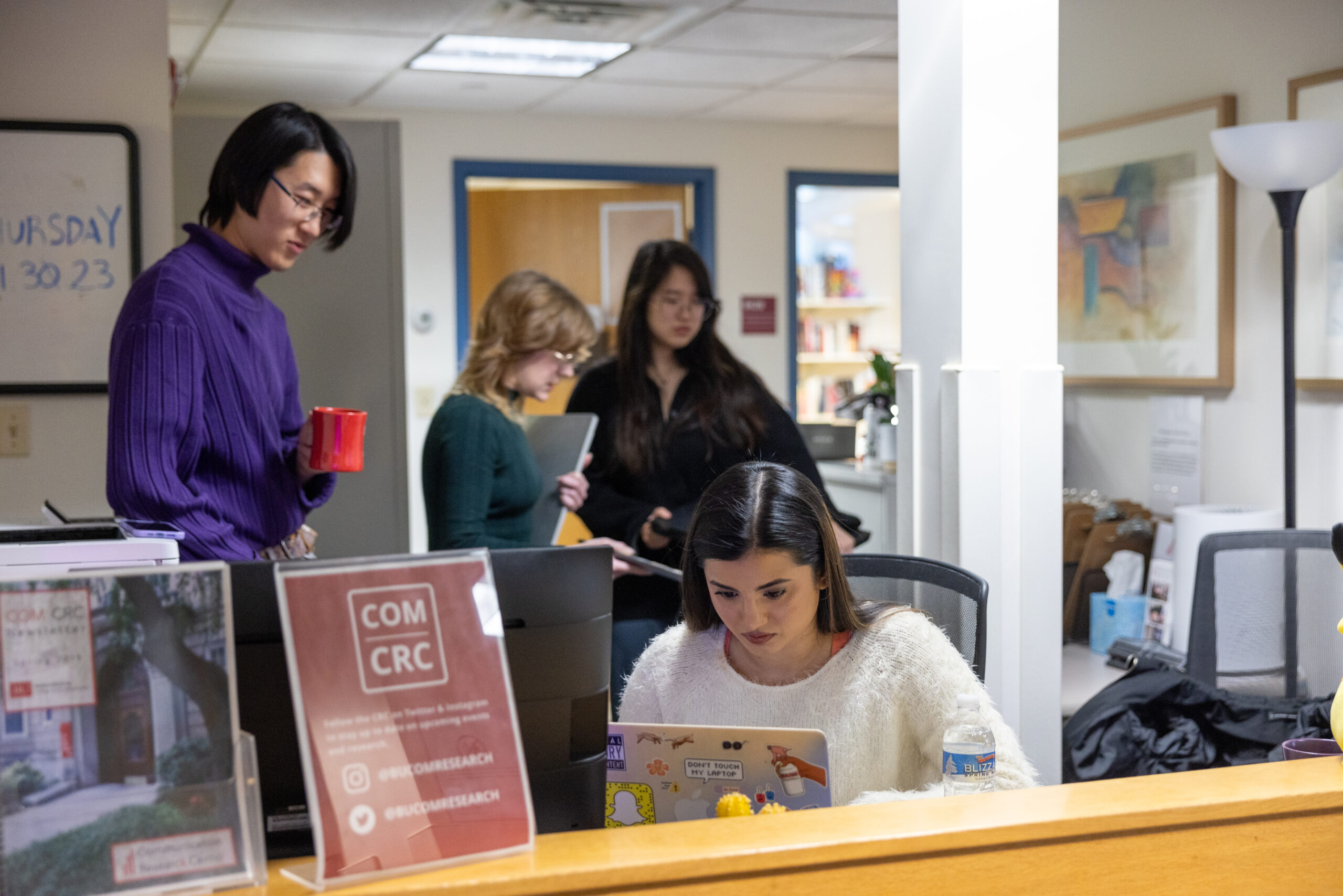
The CRC staff behind the reception desk in various stages of working and communication.
A typical day in the CRC. Photo courtesy of Derek Palmer.

I am incredibly grateful for the commitment and hard work of our staff this fall. Amanda King joined us in September as our Lab and Research Manager and has been quickly getting up to speed on CRC technologies and activities. I look forward to working with them in the Spring semester and beyond. I would also like to thank our wonderful graduate assistants who helped to keep the Center running. Zain Bali (MCR) was our SONA administrator doing the behind-the-scenes work on our research participant management system. Snigdha Bhowmik (FTV) was our Communications Assistant writing about and promoting our activities. And Xinyue “Tracy” Cui (FTV) was our Events Assistant capturing our activities for posterity and making them available on our website. Thanks to you all!

To our CRC community of fellows, I wish you all a joyous and restful holiday season and look forward to the many new and exciting activities we are planning for 2024!

Letter from the Director: November 2023

In Thanksgiving: Rosalynn Carter as Political Communicator (1927-2023)

By: Michelle Amazeen

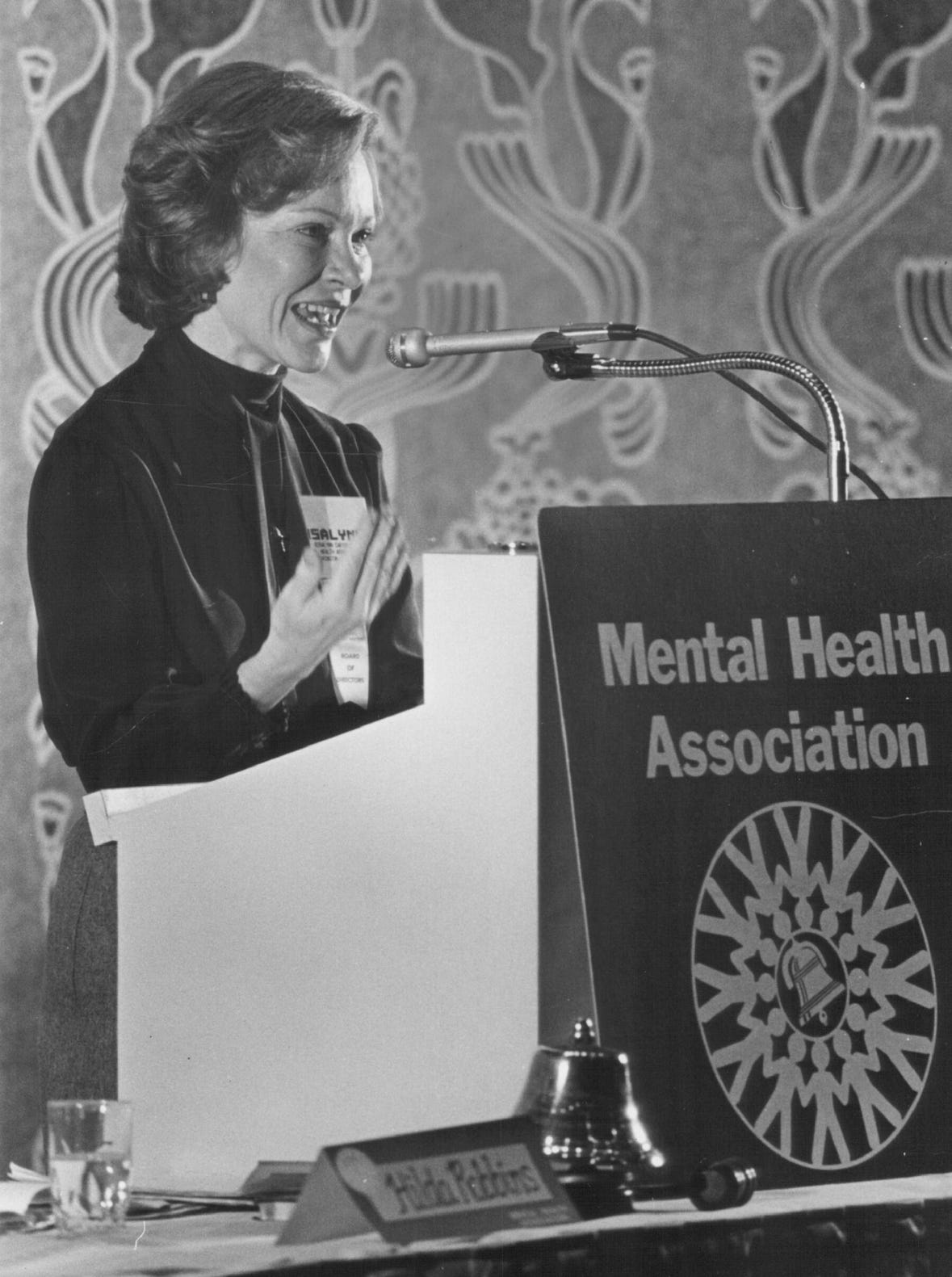
A black and white photo of Mrs. Rosalynn Carter speaking at a podium in front of a poster titled 'Mental Health Association'.

With multiple wars raging and the world enduring infodemics, pandemics, and climate-related disasters, it may seem difficult to be grateful for much of anything at present. However, at this time of Thanksgiving in the United States, I wanted to pay homage to a former First Lady whose actions touched on all of these calamities. Rosalynn Carter died this past Sunday on November 19, 2023 at the age of 96 at her home in Plains, Georgia. To do so, I turned to COM’s Senior Associate Dean, Dr. Tammy R. Vigil, whose expertise includes women as political communicators and who has authored two books about First Ladies including Moms in Chief: The Rhetoric of Republican Motherhood and the Spouses of Presidential Nominees, 1992-2016 (University Press of Kansas, 2019) and Melania & Michelle: First Ladies in a New Era (Red Lightning Books, 2019). The following is a tribute from Dr. Vigil:

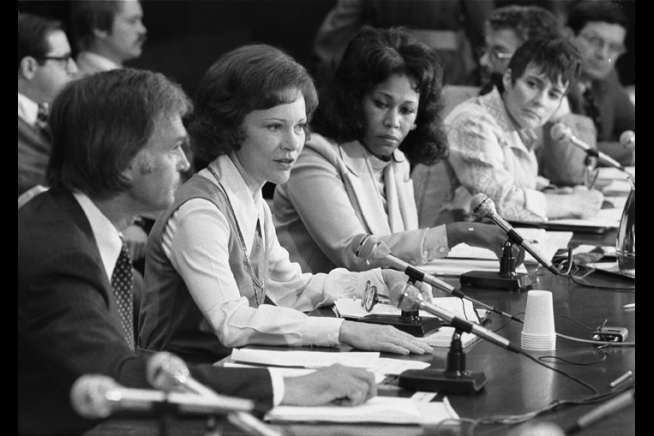
Rosalynn Carter often appeared the picture of demure, middle-class femininity in a well-ironed blouse neatly tucked into a simple A-line skirt. Yet, behind the outward image of reserved simplicity stood a fearless first lady who broke barriers and pushed boundaries. Rosalynn Carter, well-known as a champion of mental health, served as the key White House administrator on behalf of the Mental Health Systems Act and testified in front of Congress as part of her advocacy efforts. She also vigorously supported the Equal Rights Amendment, led workshops on alleviating unemployment, and supported cultural exchange programs. Carter was frequently an official emissary of the president, embarking on diplomatic efforts in Brazil, Costa Rica, Rome, and Thailand, negotiating on behalf of the president and the nation in a manner few first ladies dared to do. Her courageous efforts to use the “velvet pulpit” of the first ladyship in a meaningful fashion resulted in Time magazine dubbing her “the second most powerful person in the United States” in 1979. Her high level of activity led to legislative efforts to curb her influence, yet she persisted. Rosalynn Carter helped formalize the Office of the First Lady, creating resources and space for future presidential spouses to more effectively advocate for causes that impact a wide range of constituents.

During the more than four decades since she left the East Wing, Rosalynn Carter travelled the world as an inspirational and assertive figure whose goals were, as she put it, “waging peace, fighting disease, and building hope.” She continued to crusade for causes she believed in and remained politically active throughout her life. Through the Carter Center, Rosalynn worked toward peace in the Middle East, led public conversations about sexual inequality, promoted childhood immunizations, and drew attention to the importance of caregiving. In 2018, she led a chorus of former first ladies who spoke out against the separation of migrant children from their families at the southern US border, drawing attention to the humanitarian crisis and calling for change. Two years later, she narrated a video segment for the 2020 Democratic National Convention in which she argued for national unity and optimism. Rosalynn Carter was a model of activism, compassion, determination, and empowerment.

I am grateful for the work of Mrs. Carter on behalf of our country and humanity. I am also grateful for the work of my colleagues whose communication research illuminates these important actors.

I wish you and your families a Happy Thanksgiving with time to reflect and reconnect.

A black and white photo of Mrs. Rosalynn Carter speaking in front of an audience.

Letter From The Director: October 2023

By: Michelle Amazeen

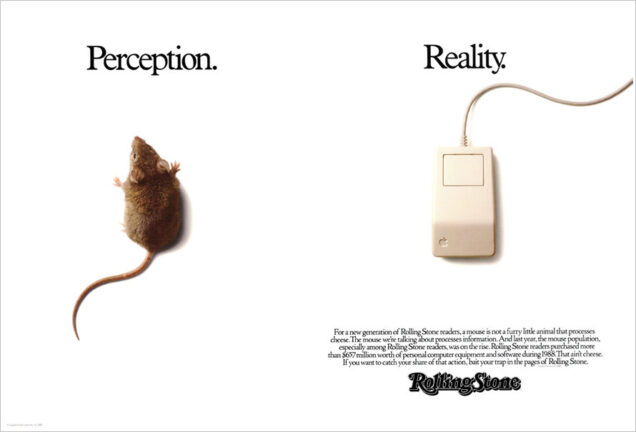
An image of a furry mouse beneath the word 'Perception', opposite a computer mouse beneath the word 'Reality'. A Rolling Stone ad.

In the mid-1980s, Rolling Stone Magazine underwent an image transformation. Widely perceived of as a magazine carrying content that only appealed to a niche population of counterculture hippies, the award-winning “Perception. Reality.” advertising campaign, created by advertising agency Fallon McElligott, disputed that notion. Through a series of over 60 print executions, the ads conveyed that readers were actually mainstream and affluent.
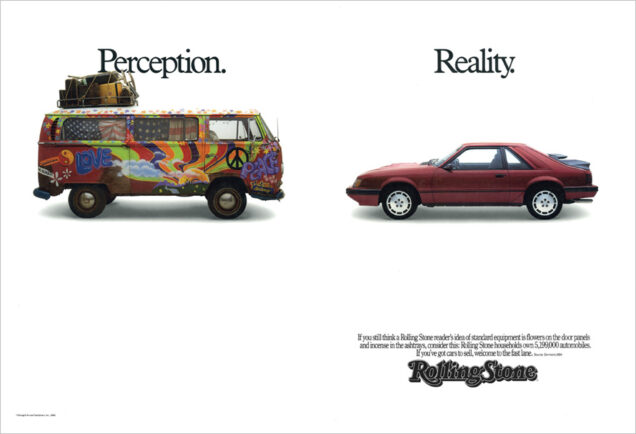
Similarly, the Communication Research Center (CRC) is sometimes perceived of as having activities that primarily involve programming with speakers from other universities and/or research presentations by BU COM faculty. It’s true that since 2011, the Dr. Melvin L. DeFleur Lecture Series has annually invited two distinguished scholars from outside the university to share their scholarship, expertise, and experience with the BU community. Even before then, since October 2009, the Communication Research Colloquium Series has hosted monthly research presentations every semester that highlight current and original research of CRC fellows. However, to say that CRC activities are primarily limited to speaker series is not reflective of reality.

Since 2011, the CRC has facilitated scores of research studies, many involving surveys. Our fellows review survey research protocols to ensure the rights and welfare of humans participating as subjects in research. Dozens of these studies have sampled from the student population of COM made possible by our SONA participant recruitment and study management software that we acquired in 2016. Other studies are based upon non-student populations, such as this onecovered by CNBC – about U.S. adult perceptions of climate change.

Still other studies involve in-lab controlled experiments approved by the university’s Institutional Review Board. One study, for example, examined the ability of participants to recognize whether media content was a news article versus “native advertising,” a form of sponsored content that imitates journalism. Some participants who arrived at the CRC were provided an iPhone on which to view the content while others were provided with a laptop. As predicted by the Persuasion Knowledge Model, even the participants most motivated to engage with news were less likely to recognize that content was advertising when viewed via the iPhone.
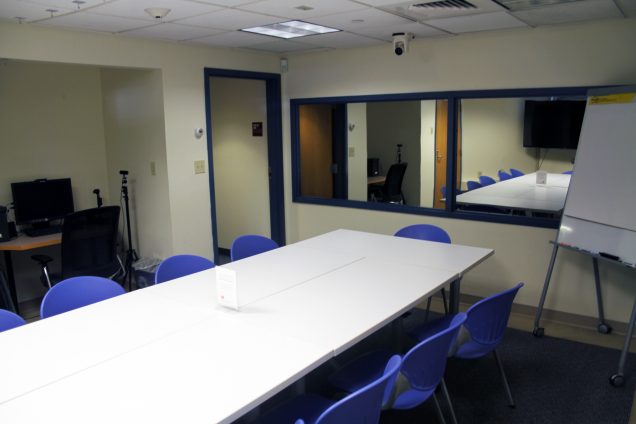
An image of a rectangular table lined with chairs, a one-way mirror lines the back wall.

Beyond surveys and experiments, the CRC has hosted focus groups in our state-of-the art focus group facility. The adjacent viewing room with a one-way mirror allows for unobtrusive observation, and the digital recording tower can create audio/video recordings of sessions.

Our on-site data analysis and coding lab with dual-monitor computer stations facilitates the analysis and coding of media content. In one study, for instance, researchers conducted a content analysis of commonly binge-watched online original TV programs for portrayals of violence. Consistent with Cultivation Theory, the programs were often violent, with non-white women more likely to be targets of sexual violence and non-white men more likely to be the perpetrators.
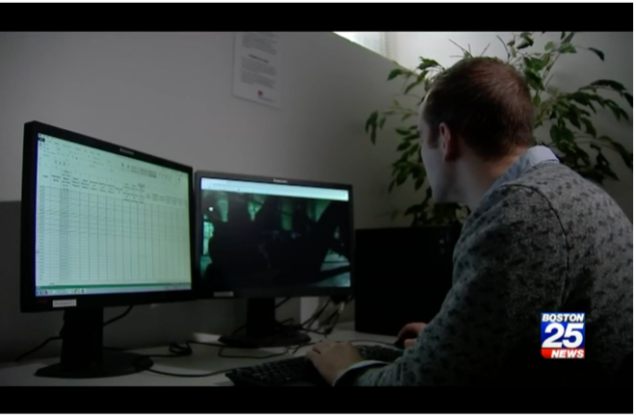
A researcher sitting in front of two monitors, analyzing and coding data.You can learn more about this study from the news coverage it generated in 2019 on Boston 25 News.

Many other studies conducted by CRC fellows rely upon social media data obtained from the varying social media listening tools we offer or leverage COM’s Media & Technology surveys that poll nationally representative samples of U.S. residents.For example, one such study reported by the Boston Globe examined adults’ perceptions of dating apps and another, reported by eWeek, examined artificial intelligence.

Indeed, the reality is that, more than just a forum for scholars to present their research, the CRC has been helping its fellows produce research that has been covered in national news media, from the New York Times to the Los Angeles Times to CNN. That’s research that matters.