News
Ji-Xin Cheng Named William Fairfield Warren Distinguished Professor
On September 23, 2026, Professor Ji-Xin Cheng, Distinguished Professor of Electrical, Computer, Biomedical, and Materials Science Engineering at Boston University, was named a William Fairfield Warren Distinguished Professor, one of Boston University’s highest distinctions for senior faculty. Established in 2008, the professorship recognizes faculty who have made significant contributions to research, scholarship, teaching, and the University community.
Professor Cheng is recognized for his pioneering work in chemical imaging and photothermal microscopy, which enables highly sensitive visualization of molecular bonds and cellular chemistry. Over more than two decades, his research has advanced label-free and bond-selective imaging approaches for studying biological systems and disease, including the discovery of biomarkers associated with aggressive prostate cancer. His research has also contributed to the translation of photothermal microscopy into commercial chemical imaging technologies used by laboratories worldwide. Reflecting on his research journey, Cheng shared, “If you chase something people don’t believe in, that’s harder than chasing a hot topic. But it can be an opportunity. I took the harder way.”
Read the full BU Today article

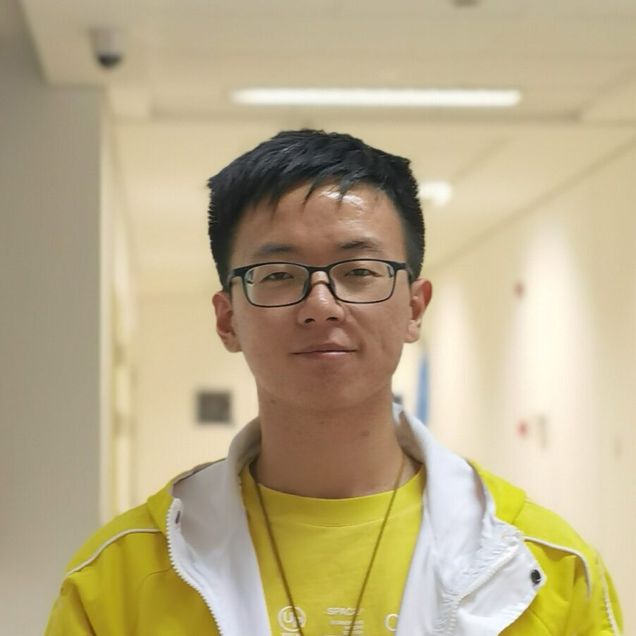
Cheers to Dr. Jianpeng Ao for his offer as a Professor at Wuhan University
We are proud to announce that Dr. Jianpeng Ao has secured a professor position at Wuhan University in September 2026. This new academic appointment marks an exciting milestone in Jianpeng's research career and opens a new chapter for him as an independent researcher and mentor. At Wuhan University, he will continue to build on his contributions to advanced optical imaging and photothermal microscopy while developing new research directions and training the next generation of scientists in the field.
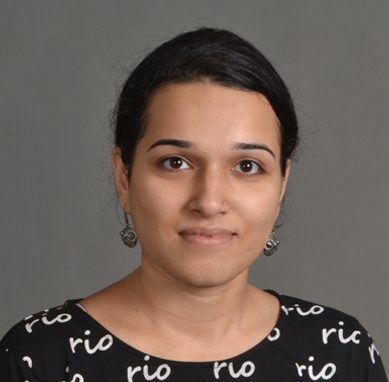
Cheers to Chinmayee V. Prabhu Dessai for her offer as a Scientist at QuantumCell
Congratulations to Chinmayee V. Prabhu Dessai, who received an offer on July 31, 2026 to join QuantumCell as a Scientist. At QuantumCell, Chinmayee will work on advancing stimulated Raman scattering (SRS) technologies for drug development, bringing powerful chemical imaging approaches into biomedical and pharmaceutical applications. Her transition from academic research into an emerging biotechnology company highlights the growing impact of advanced optical imaging technologies beyond traditional microscopy and into real-world drug discovery and development.
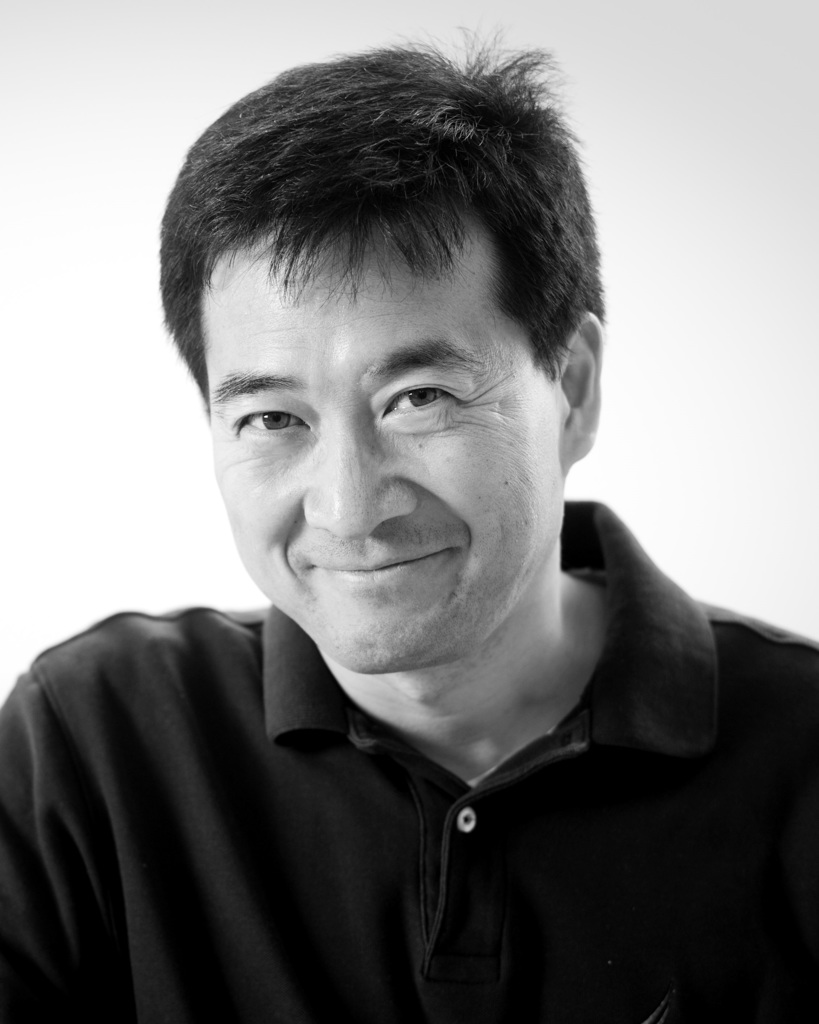
Cheers to Meng Zhang for her offer of Principal Optical Scientist, Harvard University Center for Nanoscale Systems
We are thrilled to celebrate the latest achievement of our alumnus Meng Zhang, who received an offer on August 14, 2026 to join the Harvard University Center for Nanoscale Systems (CNS) as a Principal Optical Scientist. Building on her expertise in optical science and advanced imaging technologies, Meng will contribute to the development and application of cutting-edge optical instrumentation within one of the leading nanoscale research facilities. Her new role represents an exciting continuation of her work in optical technologies and a significant milestone in her scientific career.

FILM published in Nature Methods
We are excited to share that our FILM method, developed by Jianpeng Ao, has been published in Nature Methods. FILM (fluorescence-detected mid-infrared photothermal microscopy) enables organelle-resolved metabolic imaging in living cells and organisms by combining fluorescence imaging with vibrational spectroscopy. Using optical boxcar demodulation together with AI-assisted denoising and spectral analysis, the method allows high-resolution mapping of metabolic activity and chemical composition within individual organelles in their native cellular context.
This work was made possible through a interdisciplinary collaboration within our lab, including our Raman group, which specializes in vibrational spectroscopy and chemical imaging approaches. Together, the study demonstrates how integrating advanced photothermal imaging, spectroscopy, and computational analysis can uncover previously inaccessible aspects of lysosomal metabolism, aging, and disease biology at the organelle level.
Carolyn Marar Receives 2026 PhD Societal Impact Award
Carolyn Marar has been selected as the recipient of the 2026 PhD Societal Impact Award from the Boston University College of Engineering. The Societal Impact Awards recognize dissertations and research projects that demonstrate how engineering innovations can create meaningful impact on society.
As part of the award, Carolyn will be recognized during the ENG Graduate Convocation ceremony and will receive a $1,000 prize.
This marks the second time that a member of Professor Ji-Xin Cheng’s research group has received this honor. Previous recipient Lu Lan, now CTO of Vibronx, also received the award for impactful research. Carolyn is also the founder of Nervara, a company focused on microwave applications and innovation.
Congratulations to Carolyn on this outstanding accomplishment!

Scattering Light, Showered with Praise: Doctor Ji-Xin Cheng Wins 2026 Charles Mann Award
Boston University College of Engineering is proud to announce that Professor Ji-Xin Cheng has been awarded the prestigious 2026 Charles Mann Award for Applied Raman Spectroscopy, recognizing his pioneering contributions to biomedical imaging and optical science.
Presented by the Federation of Analytical Chemistry and Spectroscopy Societies (FACSS), the Charles Mann Award honors individuals who have made significant advancements in Raman spectroscopy—an analytical technique that uses the scattering of light to identify molecular structures.
Professor Cheng, a Theodore Moustakas Distinguished Professor in Photonics and Optoelectronics, has been widely recognized for advancing coherent Raman microscopy, enabling high-speed, non-invasive chemical imaging without the need for fluorescent dyes. His work has led to the development of cutting-edge imaging technologies, including coherent anti-Stokes Raman scattering (CARS) and stimulated Raman photothermal microscopy.
Over the course of his career, Cheng has authored more than 180 peer-reviewed publications and developed innovative tools that are now used globally in biomedical research and diagnostics. His contributions have also translated into real-world impact through commercially available imaging systems and startup ventures.
In addition to this latest honor, Cheng is a Fellow of the National Academy of Inventors and holds over 30 patents, underscoring his commitment to bridging fundamental research with practical applications.
The award will be presented at the SciX conference later this year, celebrating Cheng’s continued leadership in advancing spectroscopy and biomedical imaging technologies.
Chen Yang Lab Develops Promising Retinal Prosthesis to Restore Vision
Researchers at Boston University’s Chen Yang Lab are developing an innovative retinal prosthesis that could help restore sight for people suffering from age-related macular degeneration (AMD), one of the leading causes of blindness worldwide. The technology offers new hope for millions of patients who currently have no cure available.
The device, created in Chen Yang’s lab, is a thin and flexible implant made from polymer and nanocarbon materials. It works by converting light into ultrasound signals, which stimulate the healthy parts of the retina that remain functional despite disease. This process enables visual signals to be transmitted to the brain, potentially restoring a form of vision.
Compared to earlier retinal implants, which were rigid and limited in resolution, this new approach is soft and adaptable. This makes it easier to implant and capable of delivering improved visual clarity and a wider field of vision. Early testing in laboratory and animal models has shown promising results, including successful activation of retinal cells and signs of visual restoration.
The team is now working toward first-in-human studies to evaluate the safety and effectiveness of the technology. While it may take years before it becomes widely available, researchers are optimistic that this breakthrough could transform treatment options for AMD and other retinal diseases.

Carolyn Marar received a Boston University Ignition Award to develop a microwave-based pain treatment.
Chronic pain impacts millions of people worldwide, often limiting quality of life and remaining difficult to treat with existing therapies. A new innovation emerging from Boston University aims to change that.
Carolyn has been awarded a Boston University Ignition Award to advance the development of a novel microwave-based pain treatment. The Ignition Award supports early-stage, high-potential technologies, helping researchers translate their ideas from the lab into real-world applications.
Her approach explores the use of targeted microwave energy as a non-invasive method to manage pain. By focusing on precision and minimizing disruption to surrounding tissue, this technology has the potential to offer a safer and more effective alternative to traditional treatments.
With support from the Ignition Award, Carolyn will continue refining the technology and working toward future clinical applications. This recognition highlights both the promise of her research and the growing role of innovative, interdisciplinary solutions in healthcare.
Mingsheng Li Wins 3rd Place at BU Photonics Research on Tap Event
On March 25, 2026, the Boston University Photonics Student Society hosted its Research on Tap event, featuring student presentations on ongoing research within the BU Photonics Center.
We are pleased to share that Mingsheng Li, a member of the Cheng Lab (PI: Ji-Xin Cheng), was awarded 3rd Place for his presentation.
The event brought together students across photonics-related disciplines for a series of short talks and poster presentations, highlighting the breadth of research at Boston University. The evening concluded with a networking session hosted by NES Optica.
Congratulations to Mingsheng on this achievement!
