INTERVIEW: Pretty Sick
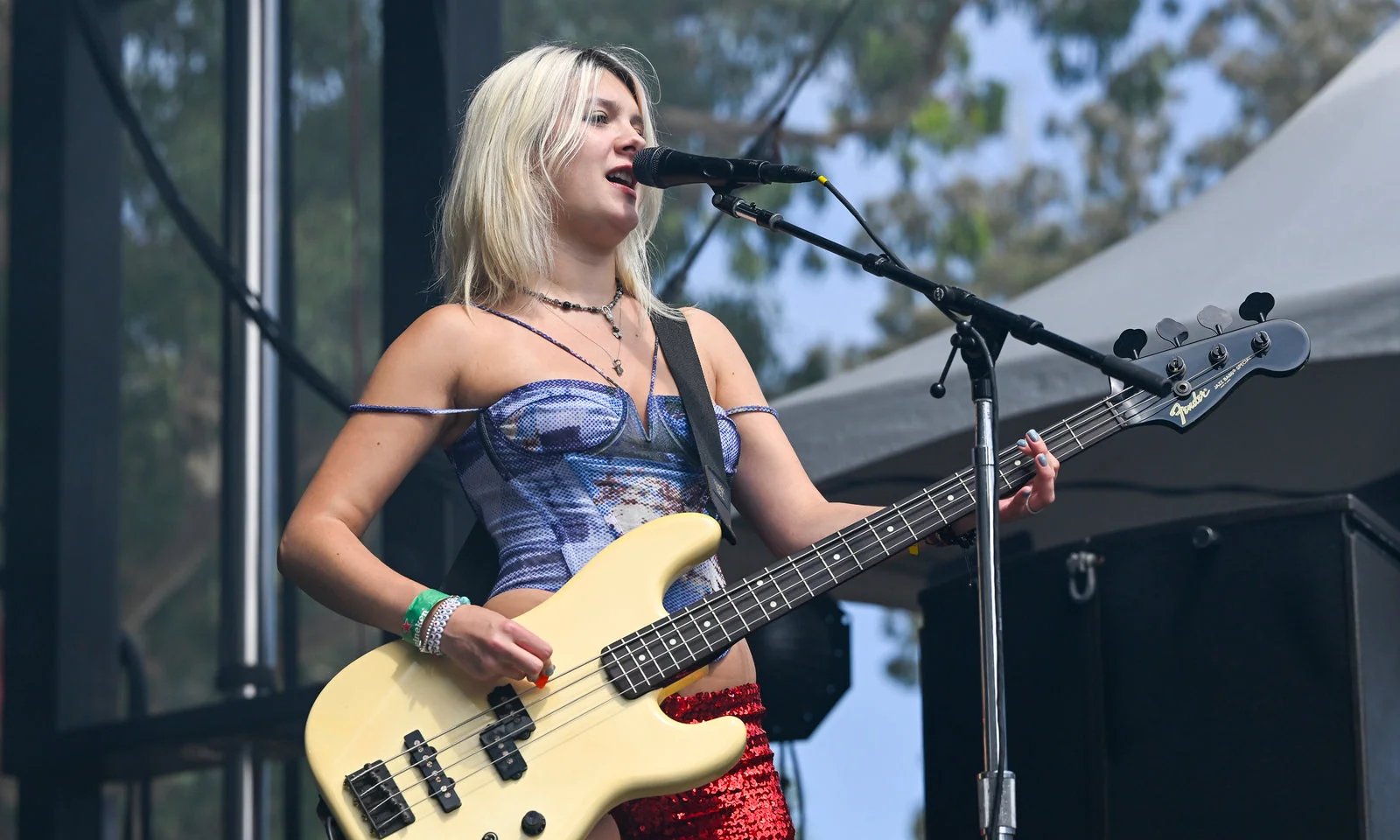
Photo Credit: Steve Jennings / Getty Images
Interview by Owen Butler
Pretty Sick played at Brighton Music Hall on Nov. 4th, touring in support of its new album, “Anarchy,” released in late August. The band’s ethos is undeniably shaped by its New York City origins, but its influences extend far beyond the city. Vocalist and self-described “internet pro” Sabrina Fuentes joined WTBU for an interview after the performance, discussing her experience studying in London, the internet’s role in her artistry and romance in the digital age.
Owen Butler (OB): This is your third stop on the Anarchy Tour, right? How’s it been so far?
Sabrina Fuentes (SF): It’s been really good. I was really nervous, but I feel like I’ve been pleasantly surprised with how great the crowds have been, and I’m excited for all the shows coming up. Tonight was a really great night.
OB: You were in Philly last night or the night before, and I believe you saw Chief Keef right afterwards. How was that?
SF: It was the night before. And yes, I did. It was amazing! He was so good. He was singing the whole time. His mic was on, and he sounded great. He was wearing a lilac tight-fitting sweater and so many diamonds and a beanie, and he looked fucking awesome.
OB: You’re no stranger to the suitcase lifestyle, between touring and having gone to school in London. How has that experience changed your perspective on songwriting or touring?
SF: In New York, I was around a lot of electronic music, but it wasn’t an electronic city in the same way a city like London is. A lot of my friends were a lot more old-school rock-and-roll or jazz background, so moving to London meant I got to explore. I got to make new friends who wanted to explore [electronic music], as well as friends who wanted to explore the intersection of rock and electronic and build a community there. I learned so much from the other musicians that I went to school with and played out with in the DIY scene. It was an overall really positive experience, and I love [London] a lot.
OB: Has playing the new songs live given you a new perspective on them at all?
SF: Yeah, absolutely. I feel like today was the first time I figured out how to sing them live. Before, the way they’re recorded and the way the vocals are performed doesn’t really translate to live performance well because I’m singing quietly in the studio. On stage, I have to be louder because there’s so much noise between the drums and the tracks and Ben’s guitar, and I need to be able to be heard above all of that. It took me a while to figure out how to sing them, but now I feel like this is the first show where I feel more confident with my vocals.
It’s also cool to see people reacting in real time to [the songs] because so far I’ve only heard what people think about them online. Seeing a reaction in real time is really exciting and satisfying.
OB: I think the online component of making art is so interesting, especially because you grew up alongside the internet. It’s always had a presence for you, I imagine. For this album cycle, how have you been navigating the digital sphere differently than before?
SF: Trying to be true to myself and not putting on a costume; working with artists who I really trust who can build a visual world for this music to exist in so that people can understand it better. One of my concerns before [the album rollout] was that people would think it’s different, and they would get the wrong idea about what it is, unless the visuals were perfect.
That was an important part in helping people understand the music, because it is so different from the other stuff we’ve made. We wanted to build a world where people can understand that it’s still very me and still very grunge-and-rock influenced. But with a fresher, newer perspective open to more influences. And not trying to make it gimmicky.
OB: It’s so inspiring the way that rock is being remixed in the digital sphere with different sounds and different perspectives. Like Kim Gordon, she released a trip-hop album after years of rock. It’s so interesting to see people reinvent themselves over and over.
SF: Yeah, absolutely.
OB: Even with this digital component to the new album, it still feels so personal. Like I’ve connected to it more than past albums. Especially now being in college and with the way the world is, this idea of anarchy feels so prevalent. I read in an interview recently that you said that [in America and the UK,] it feels like there is no real leader. I was wondering how the word “anarchy” came into focus for you?
SF: Well, the first song that we wrote on this whole album that I made with Oscar, [“Anarchy”], we were making a lot of different stuff and a lot of different styles of music and seeing what would work. I had a lot of themes in mind that I wanted to explore, but none of them were hitting. Then he made this beat for “Anarchy,” and I just started writing immediately on the spot, and the words that I came up with were about a lot of experiences I’ve had in regard to my relationships with friends and family; my relationship to complacency as an American; my relationship to capitalism. All these things at once were just strolling around. To me, the song is me discussing my worldview with a friend, and the lyrics “They tell me it would be anarchy” is what I was feeling. That having hope for the future, hope that things can get better, feels so utterly insane at this point that you would tell me that that’s anarchy. That that’s completely insane, that’s impossible. And that we’re stuck in a world like this. I know a lot of people who feel that way, and I think that adds to this fear state people live in and this jadedness that allows corruption to happen. We need to be angry and fight for justice and be passionate about other people and the world at large in order for anything to get better.
But I feel sometimes when I talk to people in my life, they treat me like I’m crazy for feeling that way. I have all these angels in my mind, and I can’t forget about being passionate about the world at large. That’s what the song’s about. And then we built the whole album around that idea, and how those ideas affect everything in my life.
OB: The album feels like a response to the disillusionment of our generation, especially in online spaces. It’s hard to strike up a passionate conversation with people because it’s so divisive at times. Do you have any personal response to this disillusionment?
SF: I understand it 110%. I get being broken down by the system and worn out and exhausted, because that’s by design. The Evil Overlords would like for you to feel that way so you can be easily oppressed. That’s why you need to be passionate about your freedom and the freedom of others, about your rights and the rights of others, and the planet, as corny as it sounds. And today is a great example of that. It feels like everybody’s a lot more hopeful, and maybe this will inspire people to continue taking action and not get complacent and comfortable again. To keep fighting for a better future for all of us.
OB: Today definitely feels like a turning point. People seem to be reminded of what matters and how much change you can make. In a world where credibility and truth are constantly up for debate, where do you see the role of fame? Particularly on the song “Star,” I thought you offered a really interesting perspective on the topic.
SF: Most of the time, people who have it are pretty deplorable, and the people who are obsessed with them see such a different side of famous people than the people who interact with them even a little bit. I think there are people who use that power for good, and I think we need more of them. And I think we need more young people and more fans who understand that that’s an important part of being a famous person. But also, it’s hard to tell who’s even famous these days because there are so many fucking bots on the internet.
There are people that I’ve never heard of and that no one in my real life has ever heard of, but they have like 8 billion followers. How the fuck does that work, because I don’t live under a rock? Who even knows? It’s hard to tell from the internet who is even famous. The people who are using their platforms to discuss real issues and be emotional with their audiences or connect with people in a way that’s meaningful are the people who are doing the best and have the realest fan bases. That’s cool to me. The fame, it’s whatever.
OB: One thing I’m really obsessed with this time around is your iconography for the title on the album cover. It takes symbols from all walks of life and spells out the word “Anarchy.” It feels very symbolic of how you can look at each societal structure individually and understand it and why it exists, but all together they spell out anarchy. Was that your intent?
SF: That was the intention. You hit the nail on the head. Lola [Dement Meyers], who creative directed all the visuals for the album cover and designed the logo, drew inspiration from the Coexist bumper sticker that was very prevalent amongst the Green PC hippie families we were kids with. [It draws on] that kind of hopeful, democratic, idyllic time in American history in the early 2000s when we thought so much change was happening. That sticker represents a lot of that hippie-ish, granola-crunchy culture associated with it. And I mean, that is what I believe in at the end of the day.
And everything you said about the symbols coming together to build kind of one structure, which is anarchy. That’s the idea we were playing around with. And she’s just such a great artist and has such an amazing eye. She knew how to make something really beautiful and [that] carries a lot of weight, all with some humor to it. She did a really great job, and I’m grateful she worked with us on that, because she killed it.
OB: That’s really cool! Since that time period, [America has] gained new clarity, and it’s part of this cycle that always repeats. We’ll always look at a time passed and think, “Oh, how idyllically we were thinking,” and one day we’ll think the same of today. But I at least hope people realize their capacity as individuals and take action in the face of this anarchy.
SF: Yeah, absolutely.
OB: For an artist your age, it’s quite unique to have had a fan base for as long as you have. I’m curious how seeing it evolve over time might have influenced your work at all, or what that connection means to you.
SF: It’s influenced the music for sure, because I think about my fans as people a lot and what they’re going through as individuals and why they might relate to what I have also been through. That’s a subject that makes me really emotional. But sonically, it also gives me a lot of confidence knowing that we relate to each other on a very personal level. I feel like I can explore things without alienating the people who listen to my music because I think my lyrics are really confessional and personal. I’ve had a lot of fans tell me really personal things about their experiences with my music, and it makes me feel safe enough in our relationship to be able to explore new things. Because I think they trust me and I trust them, and we understand one another. That’s a really nice relationship to have with any group of people. Much less the people you make music for.
OB: That’s so beautiful. On a bit of a separate note, on “Black and Blue,” a song off the new album, you sing the line, “I think romance is on the rise / and we’re the ones who’s reviving it.” You’ve also recently DJ’ed for the new video-based dating app, Hoppy. I was wondering if you have any words of wisdom for…
SF: For young lovers? Oh my god, that’s a great question! No one’s ever asked me that before.
I think for young people looking for love in general, you should first find out — maybe not immediately — what you’re passionate about and what you care about and what makes you who you are. Don’t ever be afraid to hide that from someone who you might like. Anyone who would want you to be different is not someone you should waste your time on. And that’s not their fault, necessarily. If you’re not compatible, then you’re not compatible. It doesn’t need to be the biggest heartbreak of all time if you’re not. If somebody doesn’t like you for exactly who you are and you’re trying to play to their interests, then you’re just gonna end up bored, unhappy and losing yourself in the relationship. A good relationship should be two people becoming more themselves together.
And I think this goes for friendship, too, or anything. When you find the person who uplifts you and loves you for you, you’re going to be the best version of yourself for them and so happy. And you’ll be able to excel in every area of your life you want to excel at instead of dimming your life for someone else. That’s my advice!
OB: I think the online dating sphere definitely accentuates that, too.
SF: Absolutely, because the way you’re perceived is so visual and so subjective. And it puts in your mind so much [about] the way you’re being perceived. Young people need to think about who they are and not how they come off, because the right ones will see that you’re cool and that you’re just like them, no matter what. Don’t worry so much is my advice.
OB: I read your Glamcult interview, and you mention you have prophetic dreams. I’m really intrigued by the idea of the artist as the oracle, or that to some degree, the role of the oracle in ancient societies has been absorbed by the modern-day artist. How has clairvoyance played a role in your work?
SF: I don’t know how much it influences my work. I can definitely tell when things are going to be popular next. Sonically, from a cultural standpoint, things feel obvious to me. And I could tell when we made this album that no one else was making something like this right now. And if they were, it was 1 or 2 people. When we were making the album, we were between this [genre] and a twee album. It might’ve been something indier, something Neon Indian-adjacent. But I was like, “This isn’t right, this isn’t hitting for me.” Collective-consciousness-wise, I can feel more minds on this right now than I can on [the other genre], so I’ve decided to do [Anarchy], because this [sound] is going to be next anyway. That’s one way it’s influenced me. But I don’t think I’ve ever had prophetic dreams about my music.
I had a dream once where I was talking to my dad, and he asked, “Are there violins on the new album?” when we were making Make Me Sick Make Me Smile, and I responded, “Yeah, there are. We’re in the process of hiring a string quartet.” And [in real life] he had been having the same dream as me, and we were having the same conversation within the dream. He called me and asked if I had the same dream, and I was like, “I had this dream, too!” We were just having a conversation on the astral plane. That’s the only music-related [prophetic dream] I’ve had. Most of the time they’re random, like a celebrity is going to die.
OB: I was wondering if there were any interesting soundbites on the album, particularly ones that spawned from a dream?
SF: No, but one time I had a dream that Nico from the Velvet Underground sang a whole song to me, and I woke up, and I remembered the whole thing and wrote it down and sang it. I don’t think I’ve put it in anything yet, though. I’m not sure if she’d want me to, but I don’t know. I forget where I get stuff from so quickly. I would have to look at the lyrics, but I don’t know off the top of my head if any came from a dream. They might have. Stuff like that does happen, but once they all exist in one song, I stop thinking of the lines individually, and then they just become like a big blob in my head. They become a feeling more than a song.
OB: There are a lot of sonic textures on this album. Do you have a favorite Easter Egg sound effect you included? There were a lot that I’m afraid I didn’t catch.
SF: I love all the glass break sounds. Those are my favorite. They feel so crystal-y and pretty to the ear, and I like the sound of the money counter on Black and Blue, like it’s counting stripper money.
This interview was edited for clarity