INTERVIEW: Good Kid
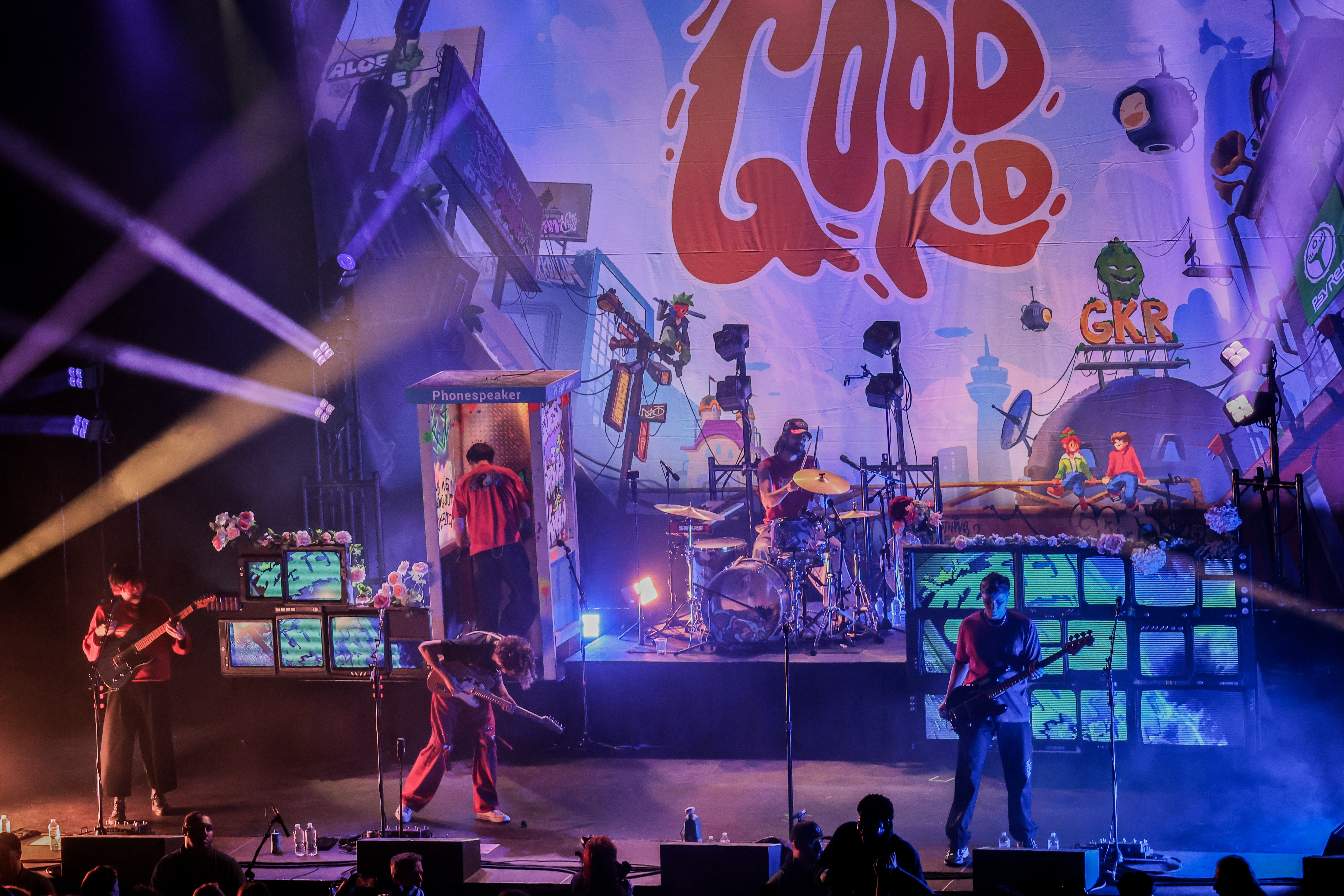
Photo Credit: Sam Weber
Interview by: Michelle Leung
Good Kid is a Toronto-based indie rock band that just keeps making waves and innovating with their independent approach to music. The band consists of Nick Frosst (lead vocals), Jacob Tsafatinos (guitar), David Wood (guitar, songwriting), Michael Kozakov (bass), and Jon Kereliuk (drums). I had the pleasure of chatting with Michael before Good Kid’s show at Roadrunner on April 16.
Michelle Leung (ML): It’s so great to meet you. For people who haven’t encountered Good Kid yet, how would you describe the band?
Michael Kozakov (MK): We’re a band that plays fast-paced indie rock with influences from J-rock and pop-punk and indie bands like Two Door Cinema Club. We’ve been a band for over ten years now, and we finally released our first full-length album “Can We Hang Out Sometime?” [this past month]. On top of music, we also focus a lot on character building. We’ve developed a whole world of characters and we tell stories through music videos and album art, and we’ve been doing that for a long time. So now there’s a lot of stories to tell.
ML: Jumping right into your debut album, what sets this collection of music apart from all the EPs and previous standalone singles that you’ve done?
MK: I would say the main thing that sets it apart is how we recorded it. So before, we would just write a song, record a song, release the song, [then] write a song, record a song, release the song. We’d eventually pack those up and release them as an EP. Whereas [the album] was recorded all in the same three-week session in L.A. with the same producer, and they all kind of sound like they were made together. I think if you listen to our EPs before, they don’t always sound like all the songs are written together. A cohesive theme started forming, and this album is really about all the different challenges that we, as individuals, went through. The way to deal with those challenges is to get together and talk about them, and play music.
ML: The album targets the process of change and relationships, and it takes a nostalgic look back at simpler times in life. How do you think you personally connect with those themes?
MK: The way we work is the same way we’ve been working ten years ago when we just started. Every Tuesday and Thursday, we get into a room and we rehearse together, we show each other demos, and we play together. It’s simple when it comes to creating music, [but] I think everything around it becomes more complicated. We have to tour way more than we ever expected. We love playing shows, but it can also be tough to be away from home for a long time. So there’s new stuff, new challenges we have to adapt to.
ML: How did the direction and production of your producer, John Congleton, specifically guide these songs?
MK: John is very opinionated about how to create music, and he expressed it to us very explicitly in long emails and monologues about how music really should be raw and human, and it affected the way we recorded. I remember Nick did a take, and Jacob was like, ‘Okay, cool, can we listen for mistakes?’ [To which] John was like, ‘Nope, we don’t listen for mistakes.’ It jarred us because we’re trained to be meticulously editing everything and making sure everything is perfect; that was just not the vibe in the studio. It was more about getting the rawest take and moving on. So that really challenged us because there was anxiety, there’s insecurity. We have some songs where there’s literally mistakes in the takes. We learned to love the mistakes, because editing a mistake is not hard. We didn’t do it because we couldn’t; we kept it there because this is what a band sounds like, and this is what we sound like raw. We went to John because he made some of my favorite records and produced [for] Wallows. “Model” by Wallows was my favorite album of the year, it was just so sonically interesting. So if you listen to this album, I think there’s so many cool sounds that we’d never even considered exploring before.
ML: Do you have any examples of the sounds you experimented with?
MK: The song “Rift” is crazy when it comes to guitar effects. I got to play a Höfner bass, which is, like, a Paul McCartney muted violin-looking bass. I [also] got to play Rickenbacker, and they all play and sound different. [John] pushed me to try different ways of playing that I would have never considered before. There’s a song called “Tea Leaves,” and he [said], “Would you consider trying to play it in a more Motown way?” I was like, “Are you crazy? Like Motown? We’re Good Kid!” [then] “Sure, I’ll try, but I don’t know.” Then I played it and I was like, damn, that works, that is cool. With the song “Ghost Keeper,” I wrote it as a kind of sad and emotional song. So I wrote this driving bassline for it and John was like, “Wanna try playing a groove on it?” Again, very counterintuitive to me: I was, like, a groove? I don’t want people bopping to this song. Then I played it, I sat on the couch, he pressed play, and then I just started crying. Because the song expressed the exact emotion that I was going through when I wrote it a year prior. He has this experience of pushing you in ways you wouldn’t expect to be pushed, and then that brings us to life, and that was incredible.
ML: As a musician myself, I think the idea of perfectionism is emphasized a lot. Do you think it was freeing to have that experience working with John?
MK: Freeing is not what I would describe it as. Because with a record, you release it once, and then people are gonna hear it a thousand times. It’s stressful to know that people are gonna hear your mistakes, and how are they gonna perceive them? So I wouldn’t say it was freeing. The freeing piece was after the record came out, and people embraced it. Like, oh, turns out you’re not here for my perfection. You’re here for the meaning.
ML: I see. How do you think your philosophy surrounding music creation has changed over the years?
MK: I think in the old days, we were so focused on defining what our sound is. We were saying no to a lot of things. And as time moved on, we became more open to being playful. That started on our previous EP where we released a song called “Premier Inn,” and Nick was like, “What if I play the trumpet on it?” [We] were like, “Sure, that sounds fun.” I think we’re just way more open to fun ideas than we were before. Like there’s a song called “Ground.” We really liked that song. We’ve been playing it live every show for the past ten years. At some point, we saw the fans embrace us being playful, so [we] were like, “Just release ‘Ground.’” I’m so happy that it’s out. It’s weird, it’s grungy, it’s loud. It sounds nothing like our happy indie rock songs, but I think what we learned over time is that the more fun we have, the more fun our audience has. It’s not about sticking to guardrails.
ML: For songs like “Eastside” and “Cicada,” do you think that the animated music videos resonate more with the audience rather than your in-person music videos?
MK: I would say they do, because there’s so much room for storytelling there, and people love stories. There’s not a lot of bands who have the opportunity to work with an animator to create a whole world. For people who follow our music videos, anytime we release a new one, it’s like you get a new chapter of the story. Now we try to incorporate that story into our show as well. There’s a whole team of people thinking about these stories all the time. We have our creative director, Gabriel Altrows, who’s been doing illustrations for us from day one, and now the animator Xray Alpha Charlie. We were sending them songs and seeing what stories can come out of them and how to present them. I think when people see something that takes this amount of effort, [they] really resonate with it. Also when you watch it, there’s just so much going on there that it’s worth rewatching over and over and over again.
ML: And how is it working with content creators, since you worked with LilyPichu and other voice actors for those music videos?
MK: It’s wonderful. It’s so cool to have these really talented friends that you just call up and be like, “Hey, we have an idea. Want to do a trailer for our music video?” Now Lily is the voice of [Mimi.] We even reached out to [her] again, and the show starts with her voice.
ML: Does the band come in with a certain idea for the animations or is there a lot of conversation around that with your creative director and such?
MK: I think we generally try to let the art team own that piece as much as possible because it’s so easy to get too many cooks in the kitchen. When we started talking about this album and how we want to tell stories around it, we talked about how somebody who doesn’t know anything about the band and just discovers the music should have an excellent experience. Now, if they dive a bit deeper, and maybe see a video, they’re like, “Oh, this is a cool video. This looks beautiful and interesting.” That’s also a level where they could just stop and enjoy that. But if they dive deeper and deeper and deeper, they can discover the characters, discover the lore, the world, and so we wanted to make sure there’s enough layers for people to keep discovering. We kind of laid out the framework for it by coming up with the [premise] for the story for this album, which we call “The Rift.” The main character, Mimi, creates a device that can bend time, and that goes wrong as different characters abuse that device. So the stories we tell around the album are how the different characters deal with the outcome of the rift, or how we got to the rift. We just let go and let Xray Alpha Charlie, Gabe, and the others run free with it. Consistently [we’re] so delighted and so surprised.
ML: It’s been really inspiring to see the band carving out a very non-traditional path in the industry. Your music is DMCA-free and you’re very creator-centric. There must have been some criticisms, but how are you staying true to yourselves?
MK: We actually haven’t had any criticism. The hardest part about doing this is, if you’re in a label, there’s all these distributors. They’ve created these systems for a reason: to protect artists from other people stealing their music. It’s just for us that the cons didn’t outweigh the pros. We really, really wanted to make sure that creators can use our music because we saw that it started happening organically. They already started using our music, but they just couldn’t monetize their videos. We thought, like, that’s silly. We should just let them monetize their videos. Why not? Because we’re independent, we’re able to do that. So it’s not that we face criticism, it’s that we’re lucky that we’re able to do it because we’re an independent band. I mean, the outcomes of this were amazing. It’s so cool to see from random kids making Fortnite montages to some of the biggest content creators in the world using our music. It’s amazing to just casually watch a Mr. Beast video, and then be like, “Hey, it’s my song.”
ML: Yeah, that must have been a big moment for you guys, hearing your songs in a Mr. Beast video.
MK: I had no idea that was happening. just get a text like, “Yo, did you see the new Mr. Beast video?” I was like, “Okay, let me go press play.” Then it’s like, oh my God, that’s our song! And then, wait, that’s another song! That’s a third song! And then, like, seven songs in, I was like, “Oh my God, he’s used half of our discography.”
ML: That sounds transformative. I also know there might have been talk about creating a Good Kid anime or comic?
MK: We would love to. Obviously storytelling is something we care a lot about, and right now, music videos are the medium we found that works for us to do that. The honest answer is it’s very expensive to produce a comic book — printing them and manufacturing them. We don’t want to create something that is going to be very expensive to buy. So I think we’re just waiting for the right time to be able to do it.
ML: Switching gears into some questions about the tour: are there any favorite moments or standout moments that you had from the first couple shows?
MK: Yeah, there was a proposal that happened. In the past, they happened in the crowd. This time, the person came on stage, and I don’t think I’ve ever seen anybody propose to anybody else really up-close. So I got super emotional. Like I see the guy who was proposing, he was kind of trembling. I’m trembling. The moment was so emotionally charged, and then we went into song. I’ve heard the song “Madeleine,” like, a thousand times at this point. When we played it this time, I just really felt it, and the audience was in [on] this hypercharged moment. ‘Cause it’s just beautiful to see one person say, “I love you, and I want to be with you forever.” The song is about wanting to be with someone forever.
ML: That’s beautiful. You guys just announced that Last Dinosaurs are supporting you for the European leg of the tour. How are you feeling about that?
MK: So excited. We’ve been fans of them since day one of starting this band. I think at some point, we were considering naming the band “Space Dinos,” and we decided against it because it was a little too close. Yeah, we’ve been massive fans of the band, and over the years, we got really lucky and got to meet them and become friends with them. So now getting to share a stage together, I mean, those shows are gonna be insane.
ML: Yeah, I wish they were playing tonight’s show! Are there any specific songs you’re most excited to perform from this tour’s setlist?
MK: I’ve been really stoked to play “Ghost Keeper.” Honestly, when I wrote it, I didn’t think it was gonna make it on the record, ’cause it just sounded really different and was so personal. I’m still kind of shocked it’s on the record, and still shocked that we get to play it live. The song still means so much to me emotionally that when we perform, it takes me right back to the moment of the events that caused me to write this song. I think it changes the mood of the show as well. When we do the show, we play a lot with dynamics. We really like to take you up and down – get rowdy, and then take you down small. So “Ghost Keeper” is the end of the smallest section, then we float back with the bangers. And I love the inflection point. But there’s other songs. I’ve been listening to the recordings of the past three shows, and “Rift” sounds the best out of the set. I really love performing [it].
ML: I can’t wait to hear it later. I think your Discord server is a very fun way to connect with your audience directly, and Jacob streams on Twitch as well. Would you say your connection with your fans is very different in that way?
MK: It’s different, and it also has been changing as time progresses. When we started the Discord, for the first several years, it was like 200 people and I knew most of them. It was a small enough community where I could keep track of who’s into what and what’s going on. Now there’s 20,000 people. I don’t know everybody on it anymore, but there’s some subcommunities starting to form. It’s really fun to be involved there and anything people throw at us, we generally answer. Before we make merch, we’ll often come up with several design options, and consistently, we’ll post it on Discord and be like, “Which one do you like the most?” Then that one is the one that ends up selling the best. So, we have this back and forth where they see the in-progress parts of our process, and that affects the outcome. So it’s kind of collaborative in that way.
ML: To wrap up, is there anything you can share about future projects or what’s coming up?
MK: I mean, we’re constantly writing stuff. There’s even a song we’re gonna perform today that we didn’t end up releasing on this album. I hope one day we figure out a way to release it. We don’t have anything ready to release, but we’re writing songs and I can’t wait to get back into the studio and record.
ML: Thank you for taking the time to talk to me, and I cannot wait for the show later.
MK: We’re gonna play the best show of your life.
This interview has been edited for clarity.