
Students at Boston University’s Spark! presented their work within MISI’s research projects
Last month, BU Spark! Demo Day transformed Boston University’s Faculty of Computing & Data Sciences building into a bustling hub of student innovation, with teams presenting projects in technology, health, education, and community impact. The expo event celebrated the months of collaborative work, as students presented their projects to peers, faculty, and community partners.
Among the featured teams were three projects connected to the Center for Media Innovation & Social Impact, both spotlighting MISI’s commitment to applied research rooted in public service and social responsibility.
On the Porch
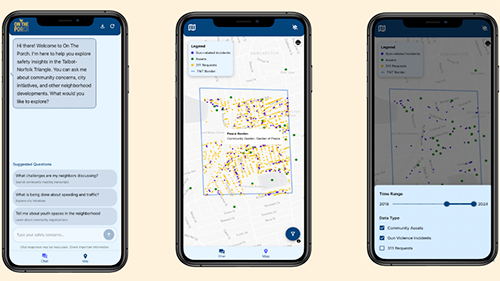
Led by MISI Director Eric Gordon, On the Porch is a student-driven public safety initiative developed for the Dorchester community. The project’s chatbot pipeline brings together official crime data and firsthand accounts from residents, addressing the disconnect between institutional reporting and lived experience. By centering community voices alongside quantitative data, On the Porch offers a more transparent and accessible approach to public safety information.
Fossil Fuel Native Advertising Observatory

The next project, directed by MISI fellow Michelle Amazeen, an associate dean of research and an associate professor of mass communication at the College of Communication, advances the development of the Fossil Fuel Native Advertising Observatory. Tracking how fossil fuel companies use native advertising to shape public opinion, this project lays the foundation for an interactive platform, allowing researchers and advocacy groups to explore trends across news outlets and sponsored media in today’s polluted information environment.
Satellite Mapping Environmental Justice
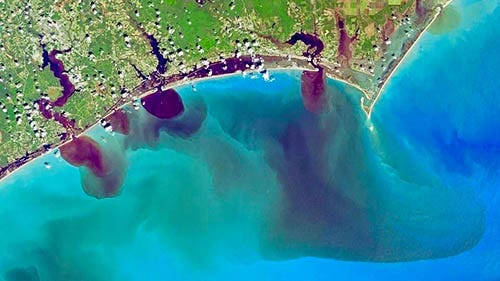
Brooke Williams, a MISI fellow and an Associate Professor of the Practice of Computational Journalism at the College of Communication, is focused on completing the data picture. Using cutting-edge, localized satellite imagery as a means to fill in the gaps in environmental justice data, the project is a resource to measure the quality of water in and around New England. By doing so, activists, journalists, policymakers and citizens can prioritize their work with Satellite Mapping Environmental Justice as a source.