Home
Mental Health Facilities Needed
We need more mental health facilities in the U.S. to prioritize the care and treatment of our growing number of serious mental health issues. The topic of mental health should be socialized clearly and more broadly to remove the still-existing negative stigma. Social media ‘influencer’ culture of the past two decades turned our society into a disposable, transient one where depth of meaning got lost and taking care of humanity became tedious and dull. Today’s society seems more keenly aware of our interconnectedness and that to take care of only our strongest members is a disservice to everyone… I hope we are seeing a return to humanity now.
We are also living in a highly mutable, borderless, boundaryless world. One where a global viral outbreak shut down economies and affected people’s health for generations to come, potentially. The impact of medications we take, vaccines or shots we receive, food and water we consume; everything we ingest can be felt and seen for years to come. The side effects of these elements can also produce general and mental health conditions like heart conditions, depression, anxiety, PTSD, and more. If this can happen to anyone, where would we go for support and help that would be a permanent or semi-permanent solution?
More state run and supported mental health facilities are needed in the U.S., especially now and especially in my home state of California where we have been seeing an increasing number of mental health issues. Policymakers need to prioritize taking care of mentally ill patients. Money is needed for research, development, treatment, outreach, and education. We put money toward other resources like technology, which is critical for society's advancement, but we are leaving our most vulnerable members unattended and untreated. Some of the downstream impacts of this ongoing neglect can range from increased homeless populations to more mass shootings.
A local mental health hospital that used to operate in my local town from the 1970’s until early 2000’s (Agnews) is still referred to on some websites as an ‘insane asylum’ or "The Great Asylum for the Insane". (Moffitt, 2021).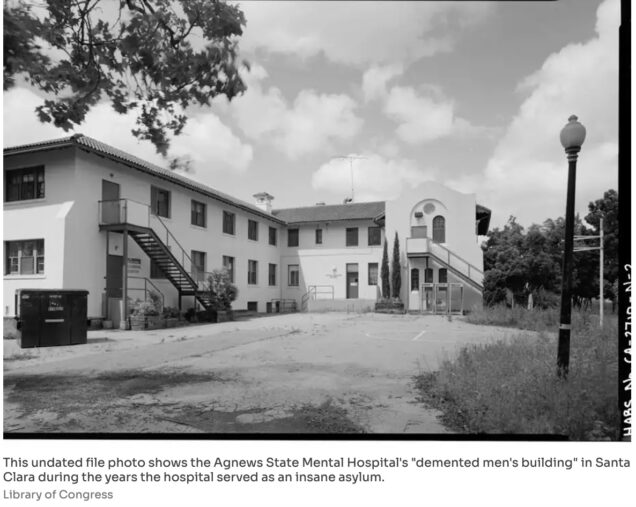 We have reached a higher-level intellectual understanding of mental illness now.
"The treatment of the insane in California dates from the earliest days of the Gold Rush. The first provisions for the insane were to lock them up with criminals in the ship Ephemia, purchased in 1849 by the City of San Francisco, and later to house them at the San Francisco marine hospital in 1850, used primarily for ailing seamen." (NPS, 2018).
This was the language of my generation and priors: “newspapers of the early 20th century routinely described [patients] as "mad," "demented" or the tabloid-friendly "lunatics."” (Moffitt, 2021). These connotations are negative and counterproductive. The slurs do not accurately describe or reflect the myriad of conditions that are identified and considered today. We have come a long way in many other advancements, it is time to progress and provide adequate support for mental health to improve our society, economy, and stability as a people.
References
National Park Service. (2018, Jan 26). Agnews Insane Asylum. https://www.nps.gov/places/agnews-insane-asylum.htm
Moffitt, M. (2021, Oct 26). A last peek inside Bay Area's abandoned 'Great Asylum for the Insane' before it disappears forever. SF Gate. https://www.sfgate.com/local/article/Abandoned-San-Jose-insane-asylum-Agnews-ruins-13527415.php
Recognizing Addiction as a Disease in the Criminal Justice System
Our society's view on crime tends to focus on incarceration rather than rehabilitation. Why is that the case? Additionally, the focus is largely on retribution rather than finding the root causes of a particular crime. We prioritize policies and structures that are tough on crime, but there is a lack of policies that address the drug subculture that exists within the criminal justice system. At the forefront of the criminal justice system is the goal of protecting the public's general welfare. Nevertheless, aren't nonviolent drug offenders part of that population? If so, have we failed them in a sense?
The opioid epidemic has affected the entire country. The Centers for Disease Control and Prevention stated that the number of people who died from a drug overdose in 2021 was over six times the number in 1999. The number of drug overdose deaths increased by more than 16% from 2020 to 2021 (2023). These staggering numbers show that drug usage in our country is only getting worse as the years progress. As it relates to incarceration rates, those who suffered from addiction and committed crimes relating to drugs or alcohol made up 85% of the nation's prison population (Rousseau, 2024). That means the majority of our incarcerated population has committed their crimes due to their disease of addiction. When you think of this population behind bars who are suffering from addiction, keep in mind that being behind bars does not aid the individual in recovery, either, as many inmates still find ways to smuggle substances into prisons (Rousseau, 2024). Even while incarcerated, without being given the proper treatment, those suffering will go to extreme lengths to fuel their addiction because the pain of withdrawals is too intense.
To put it quite bluntly, those who have committed offenses related to drugs get very little help, if any, while incarcerated. Unfortunately, for over 30 years now, conservative policies have dominated how CJ professionals approach people with an addiction within the criminal justice system. These conservative policies have most notably included the use of mandatory minimum laws. Still, critics argue that these laws do nothing but target minority populations and have only contributed to the issue of overcrowding in U.S. prisons (Rousseau, 2024). There are also exceptionally high rates of recidivism for drug-related offenses. The National Library for Medicine states that illegal drug use increases the likelihood of continued involvement in criminal activity, with high rates of relapse and recidivism found among drug-involved offenders; 68% of drug offenders are rearrested within three years of release from prison (Belenko et al., 2013). Most of those who fall into this pattern come from marginalized communities and have no way of receiving any treatment for their struggles.
Yet, there is still scrutiny surrounding non-violent drug offenses. Instead of formulating new policies that would help to ensure that these individuals receive adequate treatment to not only be functioning healthy members of society but while doing so, this would work towards improving the recidivism rates in this country and help to alleviate the opioid epidemic. It should be a goal to move towards a system that recognizes addiction as a disease rather than a choice. In doing so, we can aim towards providing these individuals with the necessary tools and resources to fight their disease.
I will never condone crime or violence in any way. This post is, in essence, not to perpetuate a debate regarding dismantling the criminal justice system and its structure but rather to improve it while giving these individuals who suffer from the disease of addiction a second chance at life. Creating a unified approach within our system so those from the lowest and highest levels are educated on addiction and can come from a viewpoint that is more sustainable to view it as a disease.
References
Belenko, S., Hiller, M., & Hamilton, L. (2013). Treating substance use disorders in the criminal justice system. National Library for Medicine.
Centers for Disease Control and Prevention. (2023, August 8). Understanding the opioid overdose epidemic. Centers for Disease Control and Prevention.
Chapter 55 Data Visualization. The Massachusetts Opioid Epidemic. (2016). https://chapter55.digital.mass.gov/
Rousseau, D. (2024). Module 2 Lecture Notes: Thinking Like a Forensic Psychologist. Boston University.
How Mental Health Hinders Cops and How We Can Best Aid It
Police officers choose to take part in an extremely traumatic career path because of a calling. What we are just not beginning to understand is exactly how traumatic the path is. There have been a number of studies in fairly recent years about the damage that trauma can do to police officers that are constantly thrown into stressful and harmful environments.
The first big study was done in 1999 by Stevens and Long. They found that 12-35% of their participants exhibited PTSD behaviors or do have been diagnosed with PTSD (Craddock & Telesco, 2021). They also found that over 20% of participants suffer from sleep issues including nightmares (Craddock & Telesco, 2021). We are aware of the lasting damages done by getting a lack of adequate sleep, especially when it comes to split-second decisions that are required when in law enforcement.
As the years progressed, police officers were shown to have increased levels of substance abuse and suicide than that of the general population. One of the most traumatic experiences for police officers were for those involved in the September 2001 attacks. There have been numerous follow-up studies done on them and found that they had higher than average PTSD symptoms than other cops across the country (Craddock & Telesco, 2021). They also, if they were physically able to, went back to work which would compound their already experienced stressors into more as more situations arose.
In the research conducted by Tina B. Craddock and Grace Telesco in 2021, they had many research questions and hypotheses they were searching for answers of, but their findings were interesting.
They found that the longer someone is in law enforcement, the worse that their mental health and physical health is (Craddock & Telesco, 2021). These are exacerbated by the decreased perceptions of law enforcement is today's society. Their symptoms of their decreased mental illnesses could present as more violent towards civilians or prisoners they interact with, rash decisions, and increased aggravation and possible violence towards family. These are many things that make a cop unfit for duty. They did not find a correlation between increased years on the job and increased alcohol abuse.
When it comes to aiding the police officers who are suffering from increased mental health disorders, we need to put as many tactics in action as possible. The main tactic is to have places where officers feel safe talking about their experiences (Buckhannon, 2023). This, even though a great idea, is easier said than done. A lot of police officers do not want to be involved with therapy of any kind due to its perception of being broken or weak. Instead of having a therapist at the station or that works with police officers, I think there needs to be a public hangout where police officers can meet up with each other and talk like friends. Some of the best therapy is hanging out with people that understand what you've been through and who you can blow off steam with. On a policy level, there needs to be mandated mental health care provided for police officers if they choose to take them up on the service. With this, there needs to be an additonal budget allotment so that the police officers do not see it as taking away other resources that they could be having. These are just limited examples of all of the things that need to be done to ensure that our police force works at their highest capacity. Until law enforcement, policy makers, and the government all work together to attack this threat to our law enforcement officers, this pandemic will continue to evolve and will continue to harm people in law enforcement, their families, and the communities as a whole.
References:
Buckhannon, C. M. (2023, April 4). How to help officers’ traumatic stress. Police1. https://www.police1.com/wellness-week/articles/how-to-help-officers-traumatic-stress-8tk6JlkiiOForRYE/
Craddock, T. B., & Telesco, G. (2021, November 9). Police stress and deleterious outcomes: Efforts towards Improving Police Mental Health. Journal of police and criminal psychology. https://www.ncbi.nlm.nih.gov/pmc/articles/PMC8575544/
Traumatic Brain Injury (TBI) — A message to the public
Phineas Gage's Traumatic Brain Injury:
In 1848, Phineas Gage, a 25-year-old railroad construction foreman, survived a horrific accident. While using a 43-inch-long, 13-pound iron tamping rod to pack explosive powder into a hole in the rock, the powder unexpectedly detonated. The iron rod propelled through his left cheek and skull, entering near the lower jaw hinge, passing behind his left eye socket, penetrating the base of his skull, and traversing the left frontal lobe upwards. It then exited through the top frontal portion of his skull and landed about 25-30 yards behind him.
Remarkably, Gage was thrown onto his back, had some brief convulsions, but within minutes, he could stand, speak, and walk. Despite the severity of the injury, Gage made an improbable recovery and lived for 12 more years.
The injury to his frontal lobe resulted in profound shifts in his personality and conduct, rendering him almost unrecognizable to those who knew him before. Prior to the incident, Gage exhibited traits of being composed, playful, amiable, and capable, serving as a dependable employee in the railroad industry. However, following the accident, he underwent a stark transformation, displaying hostility, irritability, vulgarity, irrationality, and a marked decline in social discernment. His outbursts of unchecked anger proved detrimental to his employment stability. While it's plausible that any individual enduring such trauma might undergo some personality alterations, the magnitude and drastic nature of Gage's changes were primarily ascribed to the physical trauma inflicted on his brain (Bartol & Bartol, 2020).
Traumatic Brain Injury (TBI) vs. Aggression:
TBI can impair the brain regions and circuits that regulate emotions, impulses, and social cognition, leading to increased aggression in some individuals. The risk and severity of aggression after TBI depend on several factors, such as the location and extent of brain damage, the presence of other psychiatric or neurological disorders, the level of cognitive functioning, the quality of social support, and the availability of rehabilitation services (Bartol & Bartol, 2020).
Traumatic Brain Injury (TBI) vs. Related Antisocial Behavior:
An article published on Medicina (Kaunas) reviews studies that show a positive correlation between TBI and aggressive behavior, especially in the acute and post-acute phases after the injury. Multiple biological and psychosocial factors, such as depression, substance abuse, age at the time of injury, and social support, can influence aggression (Maresca et al, 2020).
Activities that may cause brain Injuries:
Traumatic brain injuries are also linked with certain sports, notably football, soccer, and boxing. These injuries have the potential to cause brain damage, which in turn may trigger shifts in personality and aggressive tendencies (Bartol & Bartol, 2020).
% in Incarcerated Population:
Approximately 60% of the prison population in the United States is thought to have indications of Traumatic Brain Injury (TBI) in their history, in contrast to only 8.5% in the general populace. Certain studies indicate that up to 82% of individuals in the criminal justice system fulfill the criteria for having experienced a TBI at some stage in their lives (Bartol & Bartol, 2020).
Treatment and Prevention:
There are treatments for aggression after TBI: a combination of pharmacological and psychological interventions, such as antidepressants, anticonvulsants, mood stabilizers, cognitive-behavioral therapy, anger management, and social skills training.
Also, prevention of TBI and aggression requires public health measures, such as wearing helmets, reducing alcohol and drug use, enforcing traffic laws, and promoting nonviolent conflict resolution.
Author's thoughts:
Many people, especially those who have suffered head injuries, have encountered difficulties in controlling their behavior. Harm can result from clashes between one person's aggression and another's. I advise individuals with typically functioning brains to pause and step back to avoid being provoked by someone else's aggression.
Reference:
Bartol, C. R., & Bartol, A. M. (2020). Criminal Behavior: A Psychological Approach (12th ed.). Pearson Education (US).
Maresca G., Lo Buono V., Anselmo A., Cardile D., Formica C., Latella D., Quartarone A., & Corallo F. (2023). Traumatic Brain Injury and Related Antisocial Behavioral Outcomes: A Systematic Review. Medicina (Kaunas). 59(8):1377. doi: 10.3390/medicina59081377.
Cultural Competency and Healing Trauma in the Criminal Justice System
The intersection of cultural competency and trauma within the criminal justice system represents a critical juncture where justice, equity, and healing converge. Cultural competency involves more than mere acknowledgement of diversity; it requires a deep understanding of how critical backgrounds influence individuals’ experiences of trauma and justice. This entails recognizing the diverse beliefs, values, communication styles, and coping mechanisms present within different cultural communities.
Trauma is not a monolithic experience; it varies across cultural contexts. Historical traumas, systemic oppression, and community violence are just some of the multifaceted factors shaping individuals’ experiences with trauma within diverse communities. Cultural norms, familial structures, and religious beliefs profoundly influence how trauma is experienced, perceived, and addressed.
Building cultural sensitivity within the criminal justice system is imperative to ensure equitable treatment and meaningful access to justice for all individuals, regardless of cultural background. From law enforcement interactions to court proceedings and rehabilitation programs and access to resources, cultural competency must be integrated at every stage of the justice process.
Challenges abound in fostering cultural competency within the criminal justice system. Limited resources, implicit biases, and institutional barriers often impede efforts to provide culturally sensitive services. Furthermore, misunderstandings and mistrust between marginalized communities and justice institutions have exacerbated and hindered healing.
To overcome these challenges, proactive steps should be taken to promote cultural competency. This includes comprehensive training programs for justice professionals, emphasizing cultural humility, active listening, and trauma-informed approaches. Diversifying the workforce and fostering partnerships with community organizations are also vital in bridging gaps and building trust.
Incorporating cultural perspectives into policy development, program design, and service delivery is essential for creating a more inclusive and responsive justice system. This may involve establishing culturally specific support services, offering interpretation and translation services, and engaging community leaders as liaisons between justice institutions and communities.
Cultural competency is not a static goal but an ongoing journey towards creating a more just and equitable criminal justice system. By centering cultural sensitivity in trauma-informed practices, we can foster healing, promote trust, and ensure that all individuals receive fair and dignified treatment. Embracing diversity, challenging biases, and prioritizing cultural humility are not only ethical imperatives but essential steps towards building a more inclusive society where justice truly serves all.
We Need to Do Better
We need to do better.
We are serving our mentally ill citizens justice by giving them the bare minimum of treatment and then releasing them back into society.
We need to do better.
Just because they received treatment for a certain period doesn’t mean we should expect them to be fully recovered without further assistance.
We need to do better.
When are we going to wake up and realize that these mental health courts that have been set in place just simply aren’t doing what they intended?
In the late 1980s, mental health courts were introduced were introduced in the United States as an alternative to a prison sentence for offenders who suffered from various mental disorders. These were created for those who were thought to better benefit from medical and professional treatment as opposed to being sat in a cell. This alternative was supposed to be beneficial for the offender and their family, the community, and society. However, there have been major downfalls with this with no major improvements to be seen in our near future.
Individuals diverted to mental health courts, while receiving treatment during their time there, and leaving with no additional help. This is where we see recidivism spike in these people. There is a serious lack of continuance of treatment of these programs once these individuals are released from them leaving them nowhere to turn except to old habits (Slate & Johnson, 2008). Furthermore, there is a lack to co-occurring services for certain disorders (Slate & Johnson, 2008). Resources are of the essences for the individuals. In fact, some reports suggest that mental health courts may divert individuals from jail or prison, but they do not solve the systematic problems that cause people with mental illnesses to be arrested and incarcerated in disproportionate numbers (Bazelon Center, 2016). Therefore, they may be helped but then thrown right in jail again. We know that mental health is a major crisis in the country so why, is this day and age, are we having this much difficulty in attaining the necessary tools to help these people? There are serious flaws in our system, clearly. We are not doing justice by the individuals who need mental health help. Helping these people helps them and the community. This needs to stop. We need to do better.
References
Bazelon Center (2016). Examining mental health courts. Present Bazelon Center. https://www.psychiatry.org/news-room/apa-blogs/examining-mental-health-courts
Slate, R. N., & Johnson, W. W. (2008). The criminalization of mental illness. Mental health courts (p. 131-176, Chapter 5). Carolina Academic Press.
I found an article that described three scenarios in which an individual has been wrongfully imprisoned. It then described the immense mental toll it took on that individual. The first story was that of "Mr. X". He is a middle-aged man who was wrongfully imprisoned for a short amount of time but suffered lasting trauma mentally and physically. He suffered high blood pressure before the incident, so once he was imprisoned and going through the process, his blood pressure rose exponentially causing him to be in pain. Once he was released, he continuing had nightmares and trauma from the arrest which had taken place in the middle of the night by surprise. He was also mocked socially, this led him and his family to leave their home to join a new community. Although wrongful imprisonment may be a rarity, once it does occur, that law enforcement body or city should inherit the responsibility for individuals to reach adequate, if not better, standards of living than before. Providing treatment, financial settlement, or public address to clear the individual's name who is not truly guilty would be a great start.
https://citeseerx.ist.psu.edu/document?repid=rep1&type=pdf&doi=26c551bbceded450ee840030e1f61c9dad40fbad
PTSD/Depression
It's imperative to highlight the often overlooked struggles of individuals facing conditions like PTSD and depression in the realm of mental health. These challenges bring unique and profound experiences that require empathy and support. Understanding the impact of conditions such as Post-Traumatic Stress Disorder (PTSD), stemming from traumatic events and characterized by distressing symptoms like flashbacks and anxiety, is crucial. Creating safe environments, recognizing signs of distress, and providing support are essential in aiding those on the path to healing. Depression, a prevalent mental health issue affecting millions globally, necessitates breaking the silence, fostering open dialogue, and reducing stigma for effective support. Connecting individuals with appropriate mental health resources contributes to creating a world that prioritizes and supports the mental well-being of all its members.
Tell Your Story: A Support Hub for Victim-Survivors and Community Members at Boston University
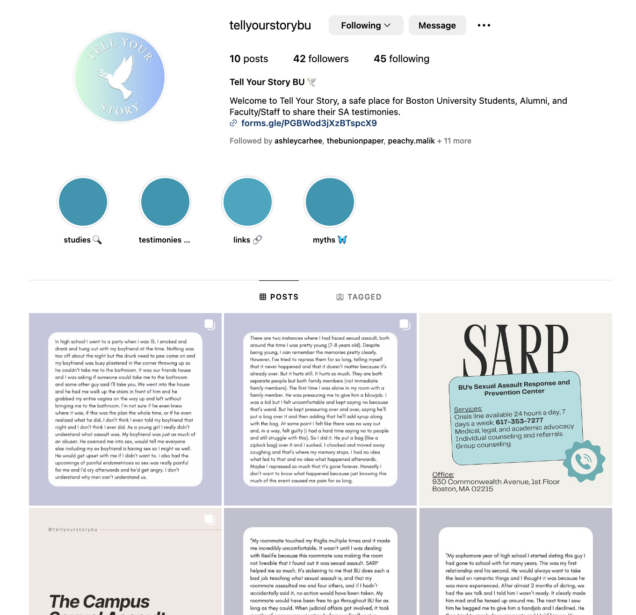
Instagram: https://www.instagram.com/tellyourstorybu/
@TellYourStoryBU, established in October 2023, was born out of a dedication to providing a secure space for victim-survivors to share their experiences with sexual assault, harassment, and any other impactful incidents. My vision was to create a space accessible to students regardless of when, where, or by whom their experiences occurred. The primary focus remained on the victim-survivor's well-being; I wanted an anonymous resource on campus where individuals could express themselves without pressure. These goals soon developed beyond support for victim-survivors, extending to encompass a more comprehensive approach. I wanted to offer resources, educational content, and information tailored to anyone within the Boston University community. This initiative sought to be a hub where students, faculty, staff members, and more could find valuable information on all aspects of sexual violence.
I grew up in the United Kingdom, and my inspiration for this project stemmed from Soma Sara's creation of an anonymous submission site named 'Everyone’s Invited' in June 2020. What began as a platform for testimonies has since grown into an invaluable resource, including not only testimonies but also a wealth of resources for individuals dealing with sexual assault and harassment. As a survivor who found empowerment in similar resources, I founded @TellYourStoryBU to offer that same supportive space to others.
The research process for this account is ongoing and likely to continue indefinitely. Each time I receive a new testimony, I am prompted to read, reflect, and research specific topics related to the shared experience. This allows me to curate resources and links, support hotlines, and more for the individual sharing their story and others who may have undergone similar experiences. Moreover, I aim to eventually use the information collected on sexuality, race, gender, age, and more to provide pertinent insights to SARP and BU SHS. The goal being to facilitate culturally competent and tailored support for all students.
As with anything surrounding this type of topic, there are obviously challenges that I am presented with. One of these challenges is frustration; I find myself becoming frustrated that I am not doing enough, that I could be doing more, and that the work I am trying to do will not be enough until every single individual is being helped. However, when I gave my presentation in my final MET CJ 512 class with Dr. Rousseau, a student reminded me not to try to place stress on the number of people I had helped. Instead to acknowledge that I have been able to provide a resource that is enough for someone, regardless of the number of individuals submitting testimonies or engaging with the account.
Looking ahead, there is ample room for growth and innovation. I aspire to continue creating informative infographics and providing resources through the account. With 42 followers gained and 214 accounts reached in the last two months, I hope the numbers continue to grow, reaching every corner of the Boston University community. Even if only one person finds the needed support or information, I would be content. @TellYourStoryBU has become a personal passion project, and I hope it becomes a valuable resource for individuals.
Finally, I would like to express my heartfelt gratitude to Dr. Rousseau for her unwavering support throughout the semester. Her expertise, exceptional teaching approach, and dedication to every student in our class empowered me to undertake this initiative. It is primarily thanks to her that @TellYourStoryBU exists as a resource for the Boston University community.
The Effect of Trauma on the Brain
The experience of trauma is a complex and arduous challenge that can have long-lasting consequences for individuals. Recent research has uncovered that trauma can significantly modify both the physical structure and function of the brain. These alterations can manifest in changes to critical brain regions, the prefrontal cortex, amygdala, and hippocampus, all of which play essential roles in regulating behavior, emotion, and memory.
The amygdala, a nucleus located in the posterior region of the brain, plays a pivotal role in the processing of feelings, particularly fear and anxiety. Traumatic events often trigger heightened activation of this structure. Consequently, individuals who have been exposed to such traumatic events may present significant emotions such as anxiety or fearful reactions in situations that would not typically elicit such a response. The amygdala functions as the brain's alarm system and, when activated, triggers the fight-or-flight response, which is also known as the fight-flight or freeze mode (Rousseau, 2023). As a result, individuals may otherwise be started and suddenly experience anxiety or fear in situations where these emotions would not typically arise (Rousseau, 2023).
The hippocampus, an integral component of the brain, plays a pivotal task in configuring and retrieving memories. However, traumatic events can lead to this region's shrinking, resulting in memory recall difficulties. Such challenges can impede individuals' ability to remember essential details or events, which can exacerbate feelings of anxiety and stress. The hippocampus is responsible for the development of new connections between neurons and storing memories, and it has a role in regulating stress hormones. Any damage to this brain area can lead to a decrease in the ability to form new memories and can cause higher levels of stress hormones that, in turn, interfere with memory recall (Rousseau, 2023).
The prefrontal cortex is another fundamental region of the brain and is in control of regulating emotions, decision-making, and behavior. When an individual experiences trauma, it can cause a notable reduction in activity within this area of the brain. As a result, individuals who have undergone trauma may experience difficulties with impulse control, decision-making, and emotional regulation. Additionally, they may display a propensity for engaging in risky behavior, exhibiting intense mood swings, and developing addiction issues (Rousseau, 2023).
It is essential to recognize the impact that emotional trauma can have on cognitive functioning and behavior, particularly within vulnerable populations. By understanding the relationship between trauma and the prefrontal cortex's functioning, healthcare providers and mental health professionals can develop more effective interventions and treatment plans (Dr. T Barthelemy).
Acknowledging that changes may manifest in the brain even without physical injury is imperative. Traumatic emotional events may result in the rewiring of the brain, thereby impacting our perceptions of the world, relationships with others, and a person’s decision-making abilities (Dr. T Barthelemy). This rewiring is enabled by neuroplasticity, which is the brain's capacity to restructure itself in response to new experiences. Consequently, our modes of thinking, feeling, and responding to the world may undergo alterations. Trauma may also pave the way for the development of mental health behavioral systems such as anxiety, depression, and PTSD. All of which may exacerbate the challenges confronting individuals who have undergone trauma (UR Medicine).
Extensive research has been conducted recently on how individuals who have experienced trauma can distinguish between safe and unsafe situations. The study published in Communications Biology highlights the impact of trauma on the salience network, a critical part of the brain responsible for learning and survival. The research found that people who have experienced trauma, whether they have psychological disorders including depression, anxiety, or PTSD, have different functioning of the salience network in their brains. This research is crucial by helping these individuals manage their feelings and cope with the traumatic experiences. By recognizing the difference between what is safe and what is dangerous, victims of trauma can take proper actions to protect themselves from further harm and develop healthier coping mechanisms to deal with their trauma (UR Medicine).
Dr. Suarez-Jimenez, a postdoctoral fellow at Columbia University Irving Medical Center, conducted a study to gain insight into how exposure to trauma affects emotions and the brain. The study involved measuring the brain activity of trauma victims using functional magnetic resonance imaging (fMRI) while they were exposed to emotional stimuli. To gain a more in-depth understanding of how trauma affects the brain, he contrasted the brain activity of trauma victims with that of non-trauma victims. As part of his research, he examined the biological mechanisms that affect trauma survivors to gain a greater understanding of how their brains respond to trauma and how their emotional regulation is affected (UR Medicine).
Dr. Suarez-Jimenez's research shows significant importance in supporting individuals who have experienced trauma by facilitating the development of healthier coping mechanisms for their emotions. Through careful examination of the biological mechanisms of trauma, this study aimed to provide valuable insights into how different brain regions respond to such experiences and how these reactions can impact one's emotional regulation. Such insights are critical in formulating effective treatment strategies that can aid trauma victims in managing their emotions and promoting a healthy recovery (UR Medicine).
In a study, individuals were subjected to circles of varying sizes, while their brain activity was observed using functional magnetic resonance imaging (fMRI). Only one side of the circle was associated with a minor shock. The researchers discovered that individuals exposed to trauma without psychopathologies compensated for the changes by engaging the executive control network, one of the brain's most prominent networks. The study also found that individuals exposed to trauma but resilient to its adverse effects had another difference in the salience network. They compensated for these changes by engaging the executive control network, which helped them maintain cognitive flexibility and adaptability, two crucial skills for coping with stress and trauma (UR Medicine).
This insightful study illuminates how the brain reacts to trauma and underscores the importance of the salience network in areas such as learning, survival, and resilience. It offers a deeper comprehension of the complicated nature of trauma and its impact on individuals. The research yields an invaluable understanding of the mechanisms by which trauma affects the brain and emotions, which can lead to more effective treatment methods and improved outcomes for those who have undergone traumatic experiences (UR Medicine).
References
Bartelemy, T. (n.d.). Mental Health. (12.05.2023.)
Rousseau, D. (2023). Module 5: Trauma, Genocide, and the Holocaust. Boston University.
Your home for world-class care. University of Rochester Medical Center | UR Medicine. (n.d.). http://www.urmc.rochester.edu/