INTERVIEW: Peter McPoland
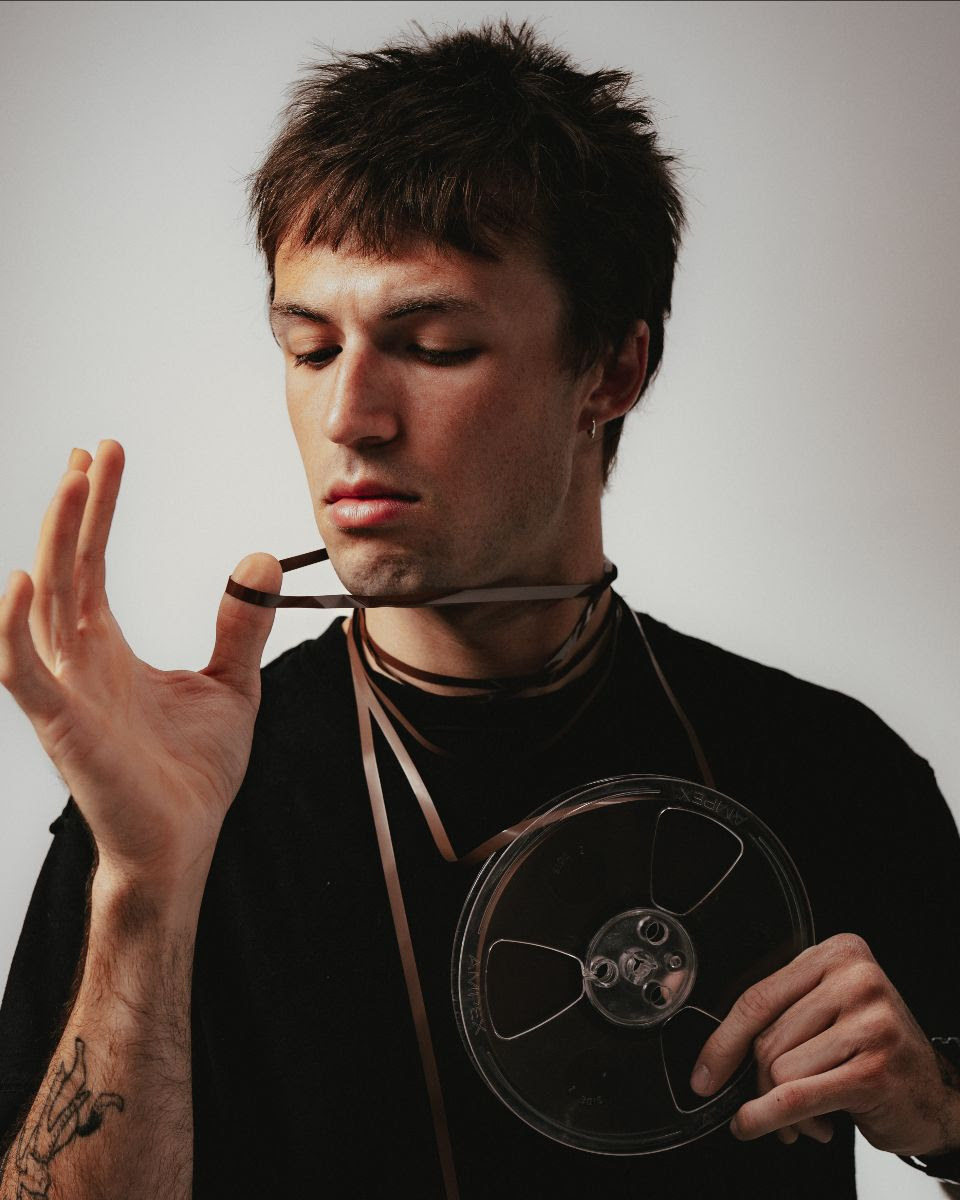
Photo Credit: Cameron Driskill
Interview by Kathy Doan
Peter McPoland is an American singer and songwriter originally from Burlington, Vermont and raised in The Woodlands, Texas. He had a kick start on TikTok in 2021 when he posted an acoustic version of his hit song “Romeo & Juliet” that gained millions of views. Just at the age of 25, McPoland has opened up for artists such as twenty one pilots and Imagine Dragons. In September 2025, he released his sophomore album titled “Big Lucky,” which he is currently on a world tour promoting with a stop in Boston at Royale on February 27. McPoland has a unique discography of indie folk music mixed with alternative rock. He is currently signed under Columbia Records.
Kathy Doan (KD): It is so good to finally get to speak to you. How was playing at the Brooklyn Steel last night?
Peter McPoland (PM): Nice to meet you! Brooklyn Steel was good. How are you?
KD: I’m good; I’m excited to see you play tonight.
PM: I’m glad you can make it!
KD: I heard your tooth got chipped last tour in Boise. This time around, you broke your finger there. How did that happen?
PM: Kathy, honestly, I don’t know…I think that I just get so much adrenaline or something. The finger incident, honestly, I feel like that really woke me up. That sucked and it hurts so bad that it kind of flipped it for me, [but] I always chip a little bit of my tooth. Eventually, I’m sure I’ll just have none, but when I broke my finger, that was the time I decided that I don’t want to break anything anymore.
KD: At least not while on tour! I recently saw TikTok’s of you performing “Swing Low, Sweet Chariot” on tour. It’s one of my favorite hymns to sing at church, and I know that “Roll Away My Stone” from your recent album is also biblically based. I was wondering – what is your religious background?
PM: Yeah, yeah…My dad was a big Catholic. We went to Catholic Mass, like, every single Sunday, since I was a baby. I think there was something kind of cool about it to me in a way. Bob Dylan and I think Bruce Springsteen in their earlier writing always kind of had these Catholic references. There was always, there’s such a grandness…like an allegory. I feel there’s a big (precedence) in traditional folk where it all kind of leads back to the church in a way. I think that when I was younger, listening to traditional folk and then going to church every Sunday, it felt kind of romantic to me. It was the biggest constant in my life for so long, so it’s hard not to reference it, I guess, you know? It just was everywhere. Those songs, I mean, [at] Catholic Mass, they never sing the good songs [like] ”Swing Low, Sweet Chariot.” I always wish that we would sing that…there’s something really beautiful about that hymn.
KD: It’s really nice. Speaking of folk, how did you make the transition from folk at the beginning of your career, with your first few singles, to rock with your debut album “Piggy,” and then with “Big Lucky” where it’s a mix of both?
PM: It stemmed from half-wanting to be able to move with the shows. I felt like I didn’t have anything that was heavy…I kind of missed playing a heavy song once in a while. When I did “Piggy,” I was like I don’t want to play heavy for the whole set. So I think it’s bouncing around trying to find a balance. “Piggy” is nice to play every once in a while on the set. I feel good about that album, but I also think I was a lot angrier back then. I was going through a lot. I was 23, I’m not that much older now, but it’s just a different time. I think I was angry and now I’m not, so it swings back to folk when I’m not as confused, you know?
KD: How did you get the opportunity to open up for Imagine Dragons, knowing that your discography is all alternative and folk [where] Imagine Dragons is really pop-forward.
PM: Honestly, can I be honest? I don’t know how. But it was awesome. Well, we started that tour with a different setlist. We were opening with “Digital Silence,” and we did that for, like, three shows. The audience didn’t like it. It was kind of cool because you realize for some crowds, if you open with “Digital Silence,” you’re opening with the heaviest, biggest song. Some people liked it. But this crowd, they weren’t into that. So we changed [the opening track] to be more singing focused. That was a cool learning experience for me. I think that really informed me. So man, it was cool, playing in big rooms. We played Red Rocks Amphitheater with them and that was insane. So, I’m really grateful for that. Red Rocks is so cool.
KD: That’s amazing. Red Rocks is one of my dream venues to see one day. I know that you’re originally from Vermont and you later moved to Texas. How does it feel like to be back in the New England area? And do you have any special memories of living here?
PM: This whole section, it’s nice. But I feel like I haven’t lived here. I feel like I’m at peace with the fact that I don’t really live here anymore, so it doesn’t feel as nostalgic as it used to. When I’m in New Jersey or New York, there’s a little bit of nostalgia. Yeah, with Boston, I feel close to it, but I also feel like it’s far from me now. There was a time in my life when my sister lived in Somerville, Massachusetts for a while. That was a while ago, but whenever I’m here, I remember that time in my life. So yeah, it’s always cool to come back. I haven’t been to Boston in a while, so it’s cool to be back and think about where I was last time I was here.
KD: You’re in the bus right now it looks like, but have you been inside the venue yet? The Royale, it’s beautiful. I really love it.
PM: We’re at it. Honestly, I woke up about 20 minutes ago. I couldn’t fall asleep last night. We’re parked in an alley, so the light doesn’t really come in. But, I was just in a tomb for the last seven hours. I don’t think I’ve played here [but] it looks like it’s gonna be crazy. So yeah, I’m excited.
KD: Awesome, I’m looking forward to it. I just have one last question for you. A lot of members at WTBU are hoping to work in the music industry one day. Do you have any advice for us?
PM: I don’t know if it’s advice, but I do think the music industry to me is like trying to get into a locked door [when] you don’t know how to open it. Like, no one will tell you how to open the door, and you know what’s behind it, but no, there’s no blueprint at all. There’s a knowledge that comes [from] just sticking with it. I just feel [that] individuality and a belief in your own abilities is the one thing that cuts through in the music industry. There’s a lot of confusion and there’s a lot of paths that you can go down…I’ve tried to fit into a lot of corners of the music industry. What I’ve found is, when I’m just absolutely being my honest self and I’m not thinking about it at all, the doors tend to open a little bit more freely. If it’s even advice…I remember before I was in it, how confusing it was, and I tried to change…to fit the mold, and I found that the most rewarding thing was to believe in your own vision and believe in what you want to do in the music industry. If you have that individuality, I think that it really pays off well.
KD: Yeah, one hundred percent. That definitely makes sense. Thank you so much for taking the time out of your day to talk to me and I am really excited for the show tonight.
PM: Thank you so much. I appreciate it, I appreciate it.
This interview was edited for clarity.