
Course Spotlight: Local to Global Food Values: Policy, Practice and Performance
Local to Global Food Values: Policy Practice and Performance will be offered through Boston University’s Summer Term 2. This class will meet on Monday and Wednesday evenings, beginning on July 6 with a final class on August 10. To register, please visit http://www.bu.edu/summer/courses/gastronomy/ .
What are "good" foods and trustworthy standards and measurements of value? Who regulates or labels claims such as "local," "natural," "sustainable," or "(non)GMO" and why should consumers care? These are the basic policy (government), practice (food-industry), and performance (case study) issues course participants systematically probe and debate during this six-week Summer Term II BU Gastronomy seminar. Each week clarifies and compares distinct environmental, economic, cultural, political, and nutritional frameworks of value. Readings, discussions, and hands-on exercises aim to develop professional and personal knowledge and skills for those working in food research, production, marketing, or advocacy, or more generally interested in understanding the science and technology, language and cultural politics, guiding U.S. and global food systems. The course is open to master's level or advanced undergraduates.
Professor Ellen Messer is a Food and Nutrition Anthropologist heading BU Gastronomy's Food Policy track.
Dinner and Dialogue at the Eucharistic Table
By Kendall Vanderslice
photo credit: Alethia Williams
A new trend is emerging in Christian communities across the country. Modeled after the gatherings of first century Christians and grounded in the language of the Eucharist (a meal of bread and wine instituted by Jesus during his final Passover supper), dinner church communities gather to hold their church service over the course of a meal.
Summer Course Spotlight: Culture and Cuisine of New England
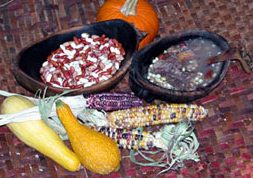
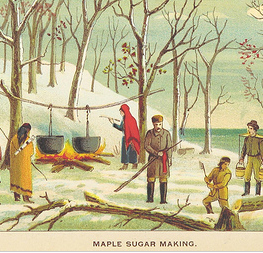
Looking to add another course to your summer schedule, but unsure how to choose? You might consider Netta Davis's course, Culture and Cuisine of New England. Without fail, this course receives rave reviews from all who take it -- from students who have lived in the region for years to those who moved here just for school.

Fast Food: A Global Perspective
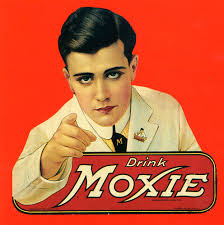
Last night, BU’s Food and Wine program hosted The New School’s Andrew Smith for the final installment of the semester’s Pepin Lectures. The grandfather of culinary historians, and author or editor of 28 books on the subject, Mr. Smith captivated his audience during an hour-long journey through the history of fast food.
Styling: At the Intersection of Photography and Food
By Daryl Mogilewsky
I took a photography course last year while I was living in Austin, Texas. A few classes in, a fellow student asked the instructor if we would be covering “food photography” in the course material. Austin is a food hub, after all. The instructor replied with a slight smirk and a quip to the effect of, “there’s not much to go over.”
A Vegetarian Butcher
by Sonia Dovedy
I suppose I consider myself a flexitarian. Vegetarian most hours of the day, but always willing to expose my tastebuds to something other than what I know. That is, if it feels right.
Growing up in an Indian household, I was exposed to the smell of fresh mustard seeds toasting in the pan, the soothing hand-feel of smooth chappati dough, and lots of chillies! No one was allowed to leave home without nourishment. Food, as I understood it then, translated into love.
Bringing Food History to Nutrition
This is the third post in a series highlighting the ways students utilize Boston University’s many resources to cater the Gastronomy program to fit their own unique interests and needs. Don't miss Carlos' post on Entrepreneurship or Debra's on Technology.
by Kelly Toups
As an eager, young registered dietitian, I quickly realized I’d rather spend my time talking about the “food” aspect of nutrition than insulin and tube feedings. The BU Gastronomy program, which focused on issues of culture, policy, food systems, and cuisine, was exactly the kind of education I that I needed to specialize within my field, and transition to a more food-focused career.
Putting Gastronomy Theories into Action
This is the second post in a series highlighting the ways students utilize Boston University's many resources to cater the Gastronomy program to fit their own unique interests and needs. Read the first post here.
by Debra Zides
As a Gastronomy student who has grown up in a world very far from the foodies, I continually get asked the question, “Deb, what do you do with a Gastronomy degree?” During my time here at Boston University, I have developed two speeches that answer the question. My first answer ties back to why I entered the degree program in the first place – I wanted to turn my interest in starting up a small, artisanal tequila business into a reality. My second answer…well that is the story for this blog. I am going to tell you how I gained an appreciation for the current challenges and issues in our Food System, and how I am in the process of undertaking steps to solve one small problem leveraging technology to make the world a little better than when I found it. In short, how I am developing a capability that will allow households to circumvent “big” agribusiness, bringing decisive information to the people.
Course Spotlight: Cultural Entrepreneurship
This post is the first in a series highlighting the ways students utilize Boston University's many resources to cater the Gastronomy program to their own interests and needs.
by Carlos Olaechea
I’m sure many if not all Gastronomy students have run into a situation in which you are discussing your degree program with family, friends, or relatives and someone brings up this question: “What are you going to do with that degree?” Sure, there are many opportunities to find careers with employers in both the public and private sectors, but a good number of us also have ideas to start our own businesses or projects. Throughout our time as students, we receive a solid foundation in the theoretical aspects of food studies, and some of us supplement the core curriculum with courses in food writing, business, marketing, and culinary arts. Nevertheless, sometimes we need some extra insight into how to take our post-graduation plans from a concept to a viable venture. It was this need that led me to enroll in the Cultural Entrepreneurship class in the Arts Administration Department.
The Meaning of Mise-en-Place
by Claudia Catalano
One of the first lessons students learn in culinary school is the meaning of mise-en-place. French for "put in place", it means that ingredients are prepped, tools are gathered, and everything is organized before cooking begins. It's a grounding philosophy that keeps your head clear and your body poised to make things happen.
After almost a year in the BU kitchen, I have become intimately familiar with the concept. As part of my Gastronomy degree, I completed the Culinary Certificate program last spring, and was honored to be awarded the Julia Child teaching assistant position for the Fall 2015 semester. From September to December (that flew by), I fastidiously 'mise-en-placed' my way through veal stocks, bread dough, handmade pasta, fresh ricotta, Thai green curry, Punjabi greens, tres leches cake and much, much more. I gathered produce for daily recipes, measured ingredients for morning demonstrations, peeled, seeded and chopped tomatoes, and washed caseloads of chicken backs for the stockpot. My corner of the kitchen was rarely without a project.