
Sebastian Crissey’s Article in The Chronicle!
Check out the published work by one of our current graduate students, Sebastian Crissey.
In this ethnographic study, Sebastian Crissey traces the history of cooperative food retail in Willimantic, Connecticut, examining how community-owned grocery models of the 1970s shaped local food culture and consumer identity. Drawing on oral history and archival research, the piece offers a window into the grassroots economics of American food access.
Julia Child Student Writing Award
The Gastronomy Department is proud to announce that Amy Phuong has been awarded this year's Julia Child Student Writing Award. This award is given to matriculating MA students in Gastronomy and honors their outstanding academic work. Below is a Q&A with Amy on her award-winning work that uses food mapping-- a technique that allows researchers to better make sense of their research through physical visualization.

How did you choose Lee’s Bakery as your research site?
Amy: Lee’s Bakery was not my original, intended research site. I found myself here after attending a book lecture by John T. Edge on his new memoir, The House of Smoke. In the conversation moderated by The Splendid Table’s host, Francis Lam, I became nostalgic for Edge’s memories of the global food options found along Buford Highway in Atlanta. Even then, I had planned to visit Northern China Eatery for my food observation visit. But when I typed the destination into GPS, I discovered it was closed. Rather than delay my observation visit, I decided to drive along Buford Highway, record my observations of the drive with a voice memo app, and see where the experience led me.
Buford Highway is home to various immigrant-owned restaurants and markets. For decades, it has served as a cultural bridge through food, where culinary traditions coexist along one of the city’s busiest thoroughfares. Buford Highway is a place I’ve visited a lot during my childhood. Growing up in Atlanta as the youngest of three children, I often tagged along with my parents during weekend shopping trips to Asian grocery stores and bakeries along the corridor. Those trips were less about food and shopping itself and more about being in a community, knowing where we belonged. In retrospect, choosing Lee’s Bakery wasn’t random at all. It reflected the pull of memory and familiarity that often shapes how we navigate food spaces.
Student Work Highlight – Francesca Furey
This week we're highlighting the work of Gastronomy student Francesca Furey who recreated a historical recipe as a part of Dr. Karen Metheny's Cookbooks and History class this past semester.
Recreating Halibut Chowder from 1923
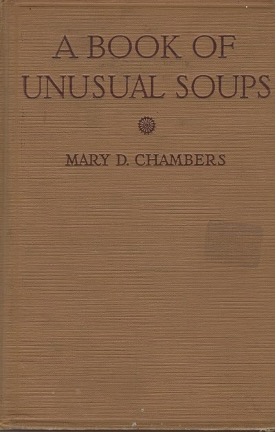 Forget deviled eggs, charcuterie boards, and savory dips this holiday season. Could soup be the star of a social hour? Mary D. Chambers, once the associate editor of “American Cookery Magazine” and a former professor of home economics at Rockford College, Illinois, argued such in A Book of Unusual Soups from 1923. In fact, she believes “no formal dinner, of even the least elaborate kind, deserves name unless there is a soup course (Chambers 1923: 1).
This 130ish-page cookbook dives into all things soup—from a quick primer on soup courses to accompaniments and garnish 101—before offering four chapters on sorts of soups that are considered “unusual.” What does unusual mean here? After flipping through odd and obscure (or perhaps revolutionary, modern, or haute) recipes like Veal and Pineapple, Cream of Raisin, and Hard-Cooked Egg soups, I determined a common denominator. An “unusual soup” doesn’t have to be unusual in ingredients, rather it could be something unexpected. The recipes Chambers crafted were written in hopes to impress diners at intimate luncheons, formal dinners, and parties. Yes, quirky ingredients could make a lasting impact. But so could soups made with French or global techniques, those from near and far (from France’s bouillabaisse to Russia’s borscht to Louisiana’s gumbo), or even if served in outlandish dishes or “pretty china.” Ultimately, the goal of cooking any unusual soup is to “let your friends ask you for the recipe—and find themselves unable to make the soup—for it is your own” (Chambers ix).
For my recreation recipe, I chose Chambers’ Halibut Chowder, which is designated as something “Soups-Plus” (102). A majority of the recipes were international sorts of soups. The author writes: “We have chosen for our section on ‘Soups Which Are Soups-Plus’ a number of the old-world and old-time soups that are really complete dinners” (Chambers 99–100). To Bostonians and New England natives, chowder is a lifeblood. It may even be the first type of soup they think of. And while it’s not extremely unusual by any means—or from somewhere Chambers considers “exotic in origin”—it could be something unexpected on the holiday dinner table. Chowder is a fisherman’s stew, something whipped up with scraps, leftovers, or excess seafood to feed the crew or family. That being said, could 100-year-old halibut chowder originally developed for Golden Age parties wow a crowd today? Let’s find out…
Spring Course Spotlight – Special Topics: Food & Mental Health
METML 610 E1 – Special Topics in Gastronomy: Food & Mental Health will be taught by Chad Bradford (MET Gastronomy alum) in Spring 2026. This online course will have a weekly live classroom session via Zoom (that will be recorded) and can be taken synchronously or asynchronously. 
What are the unconscious motivations for the foods we choose? Is alcohol really linked to creativity? And what does the infamous “Twinkie Defense” really tell us about food, law, and psychology?
This spring, the BU Gastronomy Program is offering a new course, Food and Mental Health, taught by Chad Bradford, MD, MA. A forensic psychiatrist, retired Navy Captain, and BU Gastronomy alum, Dr. Bradford combines mental health expertise with a gastronomer’s perspective to guide students through the dynamic, bidirectional relationship between food and the mind.
This interdisciplinary course challenges students to examine food using psychology, neuroscience, sociology, art, media, and more. They will tackle topics such as the gut-brain axis, food as a performance of identity, cooking as therapy, the psychology of consumer marketing, and mental health in the food industry.
The semester culminates in a collaborative Food & Mental Health Cookbook, where students blend scholarly analysis with creative recipe design. Not just a collection of recipes, it is an exploration of how our cravings, identities, and cultural symbols come together on the plate. Students will leave equipped to apply these psychological insights in culinary, entrepreneurial, and cultural settings.
Food and Mental Health (MET ML 610 E1) is open to BU graduate students from all disciplines. Whatever your background, you will discover new ways to think about food, yourself, and the world.
Keep an eye on the Spring 2025 course listings and join us for a unique exploration of what links mind and meal.
Registration is open now!
Graduate Spotlight- Anthony Zamorra

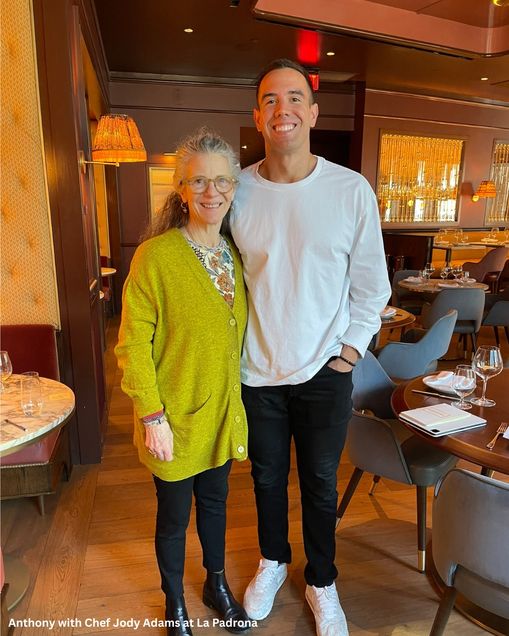
We recently caught up with Anthony Zamora (@anthonyjzamora), one of our Professional Culinary Arts Program alums, who visited Chef Jody Adams and General Manager Harry Asimis to stage at La Padrona (@lapadronaboston) while in Boston. Learn more about his experience below:
How have the BU Culinary Arts programs helped you and how do you still feel connected to the program today?
"The program at BU helped me tremendously by opening up my perspective to all the things I didn't know about food and the industry. The program also allowed me to connect with mentors I still have today! Since earning my certificate in 2016, I keep up with my directors, the program on social media, and have even popped over to the classroom when I've visited Boston."
What does your regular day look like as a nutrition chef for a professional team?
"As the Vice President of Nutrition, Culinary, and Hospitality, I get to work closely with very talented individuals in diverse settings. We cover sports performance nutrition, culinary, and hospitality! When I'm not working hands-on with my teammates, we are usually planning for the next week, month or future seasons. I meet with managers and teammates regularly to review goals, brainstorm ideas, or troubleshoot issues. My team is continuously redefining the definition of hospitality in sports and challenging conventional practices. I am currently designing the kitchen and dining room space of Utah's new NHL practice facility."
Why did you choose to stage at La Padrona with Chef Jody Adams?
"I called Lisa Falso and told her I would be in Boston on a work trip and that I was looking for a stage. I explained to her how I was trying to grow. Hospitality, team building, and delivering high level experiences were all at the top of my list. She recommended La Padrona and Chef Jody, as she thought I would connect well with them and gain a lot of value. Chef Jody's experience in the industry was incredible to learn from, and she shared with me several gems as I continue my career."
Do you have any future plans post-staging?
"Chef Jody and Harry Asimis, GM of La Padrona, both helped open my eyes to see what's possible in hospitality from the inside out. I plan to keep dreaming, building, and to redefine the hospitality experience in professional sports and in the state of Utah. Additionally, I wrote Lisa Falso, Chef Jody, and Harry thank you cards. I believe it's always important to send a card in the mail."
 Zamora is the VP of Nutrition, Culinary, and Hospitality at the Smith Entertainment Group, overseeing chefs and dietitians for The Utah Jazz, The Utah Hockey Club, and @experiencetheunderground. He earned his certificate in 2016, continuing to keep close relationships with past directors and mentors and even popping into the classroom when visiting Boston. He contacted our assistant director Lisa Falso with interest in hospitality and team building before being recommended to La Padrona. Chef Jody is a core instructor for our Professional Culinary Arts Program.
Summer Course Spotlight- Special Topics in Gastronomy: The Language of Wine
METML 610S B1 – Special Topics in Gastronomy: The Language of Wine will be taught by Professor Ariana Gunderson in Summer 2025. This in-person course will meet twice a week from 6/30 to 8/8 on Tuesdays and Thursdays from 6 to 9:30 PM.
This course is in the discipline of Linguistic Anthropology, and we will be doing plenty of fieldwork together! We will, as a class and on our own, find and analyze examples of people talking about wine in many different ways. Students will learn to compose transcripts, closely read samples of natural language, and conduct linguistic anthropological fieldwork to study language in social life. We will go on field trips together to find and analyze wine talk 'in the wild' and students will get to do some of their own fieldwork in the wine worlds they have access to or are most curious about. We will tackle robust theories of language together, with plenty of support and camaraderie, and students will leave this class with a strong sense of accomplishment in having learned an introduction to the major themes, theories, and research methods of linguistic anthropology. We will have units on the prestige of wine talk, winemaking, the natural wine world, and more.
Anyone who is curious about language, how cultural worlds are constructed, and the social life of wine will enjoy this class. Students need no prior experience with linguistic anthropology or wine talk, and you do not need to consume any wine to participate in or enjoy the course. If you are worried that you don't know how to talk about wine the 'right way,' that makes you an excellent outside observer to the phenomenon and your insights will be critical to the class! Join us!
Summer Courses Spotlight
With warmer weather around the corner, we are spotlighting some of the exciting elective courses that students will be able to take this summer semester. Check them out below:
METML 702S E1, Special Topics in Food & Wine: Food, Documentary & Advocacy will be taught by Dr. Potter Palmer in Summer 2025. This online course will meet once a week from 5/6 through 6/23 (meeting times TBA).
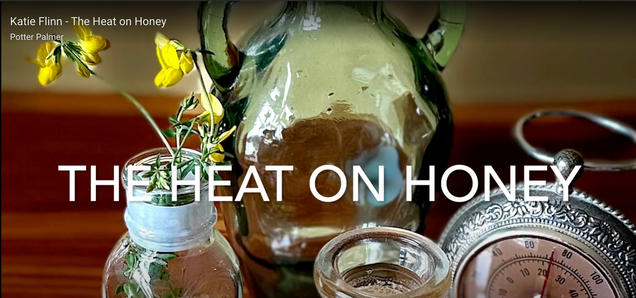
Through an exploration of seminal works in the genre, this course will explore the intricate interplay between food, documentary filmmaking, and advocacy. The course will equip participants with the theoretical frameworks, practical skills, and a deeper understanding of visual storytelling necessary for critically assessing and producing documentaries that serve as vehicles for advocacy and social change within food studies. By the end of the course, students will make their own short documentary.
Course Spotlight- “Bake Like a Pro”
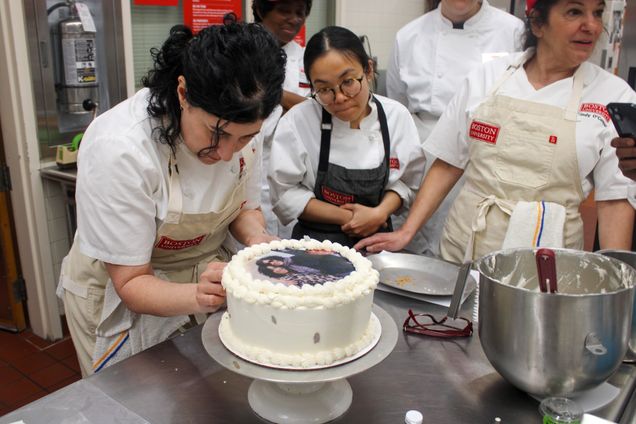 We are thrilled to announce we will be running “Bake Like a Pro” next semester: The hands-on, pared-down version of our professional pastry arts certificate program, designed for home bakers and aspiring pastry chefs alike. No experience necessary! In this class students will tackle the basics of pastry making, master time management skills and learn the functions of ingredients and their role in baking. You’ll gain knowledge about the science of baking and how to master essential techniques, all while developing good kitchen practices and habits.
Classes take place once a week in our state-of-the-art kitchen and are taught by a team of highly acclaimed instructors who also teach in our professional pastry arts program, including Chef Janine Sciarappa and Chef Brian Mercury (instructors subject to change). While completion of this course does not result in a certificate, it offers a scaled-down version of our professional pastry arts program. The course covers all the basic core skills with a focus on key recipes and techniques.
Course Spotlight- World Food Systems & Policy
MET ML 720A1, World Food Systems & Policy will be taught this spring by Ellen Messer, Ph.D. Anthropology.
Global societies in 2025 confront major challenges to ensure that all people can feed themselves sustainable, healthy diets and enjoy basic human security in a warmer, more crowded and interconnected world threatened by climate change, global pandemics, and structural violence.
Through readings and discussions, course participants acquire working knowledge of the ecology and politics of hunger, food security, and nutrition, and the evolution of global-to-local food systems and diets. Overviews of world food situations and international institutions are combined with analysis of more detailed national and local-level case studies that connect global to national and local food situations, crises, and responses.
Course Spotlight- History of Wine
METML 632 A1, History of Wine will be taught by instructor Jacquelyn Groeper, CSW on Tuesday nights from 6:00 PM – 8:45 PM.
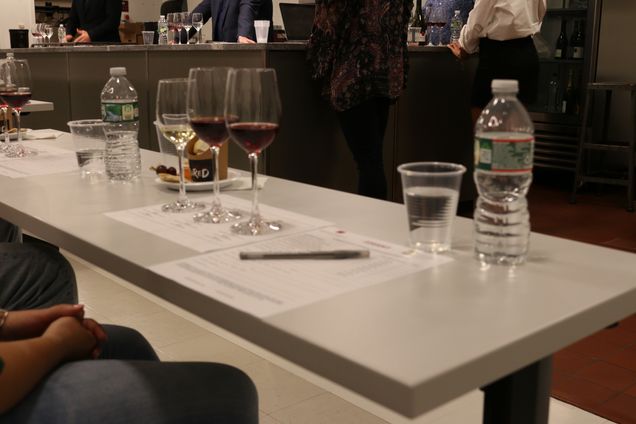 In this course we explore the long and complex role wine has played in the history of human civilization. We survey significant developments in the production, distribution, consumption and cultural uses of grape-based alcoholic beverages in the West. We study the economic impact of wine production and consumption from the ancient Near East through the Roman Empire, Europe in the Middle Ages and especially wine's significance in the modern and contemporary world. Particular focus is on wine as a religious symbol, a symbol of status, an object of trade and a consumer beverage in the last few hundred years.
More about the class from Jacquelyn:
"Wine is not just a beverage. Its pre-historical evolution throughout Western Civilization has influenced history, culture, politics, agriculture, science... This is what I find intriguing about wine. It is a natural product that first fascinated, then became a necessity, until ultimately impacting all facets of society. As we explore this 8,000 year history, we will also taste different styles of wine to understand how and why they developed. We will examine ways in which contemporary issues such as climate change, politics, and labor arrangements are influencing the production of wine today. Overall, when students understand the intricacies of the history of wine, as is similar with food, I believe there is more of an appreciation for all it brings to the table."