Home
Dealing with Trauma and Stress During a Global Pandemic
When COVID-19 first made it's appearance in America in January of 2020, most thought it was just a flu going around and that there was nothing to worry about. Two months later March 2020 came around, and the world literally stopped. Businesses and restaurants were forced to close down, and some have never reopened. Schools made history by shutting down and students learned completely virtually. And the unemployment rate skyrocketed. It's been a year and a half since a global pandemic started and finally, things are opening up. States are lifting their mask mandates as well as their capacity limits, and the job market is plentiful. What no one predicted from a pandemic was the impact it would have on the human psyche.
The stress that adults feel came from the financial stress of either having lost a job or received less hours due to the pandemic, emotional stress from having not seen loved ones since the quarantine started as well as the feelings of being isolated. The stress that children feel are starting to worry children's psychologists. The pandemic has left children feeling unsafe and out of control, and the complete shift in routine such as a disruption in school and family gatherings and an isolation from loved ones can have very dangerous consequences. It is unknown exactly how many people are experiencing symptoms of PTSD, but children who are watching the news a lot are showing more symptoms from the repeated exposure to the trauma of a pandemic. As for adults, their trauma most likely comes from having understood what COVID-19 can do to the human body, with the most common effect being death.
Long term consequences of these traumas and stresses not being addressed are: a decreased physical health, a higher risk of suicide or self harm, and a greater risk of substance abuse. To treat symptoms of dress, psychologists recommend seeking psychotherapy and counseling. When it comes to children, they say the parents really need to prioritize their children and have age appropriate discussions about the pandemic because it is very important for children to know about the virus and what it does. Parents also should teach their children relaxation techniques such as deep breathing.
Loma Linda University Health posted several tips on how to deal with stress during a pandemic such as: 1) Step away from negative news and negative social media. Instead, think about and focus on the positive things. 2) Get enough sleep, exercise, eat well, and avoid too much alcohol or substance use. 3) Find things that make you happy! Video chat with loved ones, plan a virtual game night, paint, or even garden.
The year has been filled with a lot of negatives, with a pandemic taking the lives of thousands, of police shootings, riots, etc. Not everything is negative though; there are still good people out there trying to make the best out of everything. Look around; you can feel the positives in the woods when the breeze blows through the trees and you can even see the positives right in your own neighborhood as the teenagers help an elderly couple mow their grass.
Resources
Campbell, L. (2020, September 8). The World Is Experiencing Mass Trauma from COVID-19: What You Can Do. Healthline. https://www.healthline.com/health-news/the-world-is-experiencing-mass-trauma-from-covid-19-what-you-can-do.
Understanding the long-term collective trauma from COVID-19. News. (n.d.). https://news.llu.edu/health-wellness/understanding-long-term-collective-trauma-from-covid-19.
The Ferguson Effect Leading to Trauma/Stress for Officers
Stress/trauma in law enforcement has been growing throughout the years as many would agree to profession becomes increasingly difficult every single day. One reason discussed is that police officers are potentially less likely to pursue crime and conduct proactive policing due to the ever–growing national scrutiny on police officers during justified or unjustified uses of force. This argument suggests that officers could be less willing to conduct proactive policing, which can create the opportunity for more crime to take place – such as gun violence that leads to murder. Officers are less willing to conduct themselves in this manner for many reasons, but one mainly being the trauma/stress from legal litigation resulting from proactive policing which lead to a use of force incident. This argument has been deemed “The Ferguson Effect,” in reference to the death of Michael Brown in Ferguson, Missouri, (Davey, Smith. 2015).
While I believe that most officers in these high crime rate cities have pure intentions, I believe they could be afraid to pursue crime aggressively due to the chance of possible public pushback and national news coverage, should their pursuit result in a use of force incident. This national news coverage would create massive trauma/stress as well as a chance of PTSD for the officers involved as well as the whole department involved. From this theory officers are conducting less stops and interviews and being less aggressive in their policing in hopes of not being part of situations which would lead to trauma for all involved.
While many states currently have legislation attempting to take away qualified immunity from officers, I believe that trauma and stress in law enforcement is at an all time high and has risen since the incident in Ferguson and the effect it has left. Officers are less likely to conduct proactive policing fearing the trauma and stress that could take place from any routine motor vehicle stop or interaction. The murder of George Floyd led to weeks of rioting and malicous assaults on police officers nationwide. Many departments went into a strictly reactive rather than proactive approach in an attempt to keep their officers safe both mentally and physically. While I do not believe there is a way for police to do their jobs without stress, I believe that officers receive a very large amount of unwarranted criticism from the media and civilians from justified uses of force. When unjustified uses of force occur instead of focusing on the one officer who committed these crimes like in the case of the murder of George Floyd it led to weeks of rioting, violence, and destruction of property. This all has a massive impact on the overall health and wellness of law enforcement officers.
Works Cited:
Davey, Monica, and Mitch Smith. “Murder Rates Rising Sharply in Many U.S. Cities.” The New York Times, 31 Aug. 2015.
Comparison to the Holocaust vs. Incarceration
Genocide is an atrocity on humans. The fact that it is dependent on the complicity of ordinary people was best shared by Zimbardo and Milgram in their experiments. The Stanford Prison Experiment by Philip Zimbardo and Stanley Milgram’s experiments on obedience to authority. Zimbardo’s experiment studied why guards and prisoners become compliant and authoritarian. The participants were 11 guards and 10 prisoners who also were college students, who volunteered for this experiment. The guards were told that they must maintain “Law and order” in this prison. These were the instructions for guards only, and the first thing they did was dehumanize the prisoners by taking their clothes and replacing their names with a number, just like in Auschwitz. “Philip Zimbardo (2007) himself decided that his Stanford Prison Experiment was unethical because it violated two of these principles. Participants “did suffer considerable anguish…and (the experiment) resulted in such extreme stress and emotional turmoil that five of the sample of initially healthy young prisoners had to be released early” (Van Der Kolk, p.68).
In Milgram’s study, “Milgram had recruited community members to participate in his experiment at Yale University. His research was stimulated by the success of Germany’s Nazi regime of the 1930s and 1940s in enlisting the participation of ordinary citizens in unconscionable acts of terror and genocide. Milgram set out to enlisting the participation of ordinary citizens in unconscionable acts of terror and genocide under which ordinary citizens will be obedient to authority figures’ instructions to inflict pain on others” (Van Der Kolk, p.68). Milgram’s experiment was by asking subjects to deliver electric shocks (fake) to students supposedly learning a memory task. Those getting shocked were actually members of the research team and would eventually cry out in simulated pain. Many participants still complied with the authority and he then debriefed the participants and followed up later on their well-being. Nobody has suffered long-term harm, and Milgram’s experiments adhered to the ethical guidelines.
Both experiments showed how ordinary people can be manipulated. “Between those who acted of conviction because they shared values of the regime and its policies on the one hand, and nominal compliers who acted against their will under supervision but did not obey orders when not being watched, there were other possibilities. Many accepted and internalized the role expectation that soldiers must be tough and obedient and carry out state policies regardless of the content of specific orders. Soldiers and police often willingly obey orders and implement policy that they do not identify as commensurate with their own personal values, even when not supervised, in the same way that soldiers and police officers often willingly follow orders and are killed in the line of duty, though they do not want to die” (Browning, p.219). Browning finds Zimbardo more relevant I believe, because his experiment was first dehumanizing the prisoner, which is what they did at the “camps”. The whole experiment was in a prison setting like the camps. The similarity overlaps and It can be believed that humans can become sub-humans under certain circumstances. These were ordinary men, your neighbors, your butcher, your schoolteacher, or any ordinary human in your town. But genocide is the most terrible crime to conceive. God forgive us if it should occur again, but unfortunately it still occurs in other countries to this day.
In continuation there were a group of men barely mentioned in the books, but important enough to be included. These are the “Musselmans” of the camps. They are the ones who moped around. “Experience showed that only exceptionally could one survive more than three months in this way. All the musselmans who finished in the gas chambers have the same story, or more exactly, have no story; they followed the slope down to the bottom, like streams that run down to the sea” (Levi, p.90). We as a society cannot become like those men. We can’t give up on hope, and the good that is in most people, and try not to let this happen again. We have no right to eliminate a race by blaming them for something “we think” they did. This was bullyism in the extreme.
I also wanted to point out the correlation of “the Trauma of the Incarceration Experience”, where Mika’ il DeVeaux spent 32 years as a prisoner. 32 years is a lot longer than 5 or 6 years the Jews had to spend during the Holocaust. DeVeaux stated, “The experience of being locked in a cage has a psychological effect upon everyone made to endure it. No one leaves unscarred” (DeVeaux, p257). DeVeaux stated, “Isolation did not help my state. More than anything else, I recall feeling sad and depressed. I felt caged, alone, and helpless” (DeVeaux, p.267). I couldn’t stop relating concentration camps to our prisons. I also couldn’t stop thinking about the suffering my great grandparents went through each and every day during the Holocaust. They were very fortunate they were able to escape and start a new life here in the United States of America.
Some wise words from Bessel Van Der Kolk, M.D. “When I give presentations on trauma and trauma treatment, participants sometimes ask me to leave out the politics and confine myself to talking about neuroscience and therapy. I wish I could separate trauma from politics, but as long as we continue to live in denial and treat only trauma while ignoring its origins, we are bound to fail. In today’s world your ZIP code, even more than your genetic code, determines whether you will lead a safe and healthy life. People’s income, family structure, housing, employment, and educational opportunities affect not only their risk of developing stress but also their access to effective help to address it. Poverty, unemployment, inferior schools, social isolation, widespread availability of guns, and substandard housing all are breeding grounds for trauma. Trauma breeds further trauma; hurt people hurt other people” (Van Der Kolk, p.350). We have to open our eyes to trauma and talk about the trauma we face, because if not, it might happen again.
Work Cited:
Browning, C. R., & Mazal Holocaust Collection. (1992). Ordinary men: Reserve Police Battalion 101 and the final solution in Poland (1st ed.). HarperCollins, Chapters 1, 2, 5, 7, 8, 10, and 18 and the Afterword.
DeVeaux, M. (2013). The trauma of the incarceration experience. Harvard Civil Rights-Civil Liberties Law Review, 48(1), 257-278.
Levi, P. (1996). Survival in Auschwitz. Touchstone Books.
Van Der Kolk, B. (2015). The Body keeps the score brain, mind and body in the healing of
trauma. Penguin Books.
Implementing Yoga on Military Installations
Throughout a majority of this course, Post Traumatic Stress Disorder (PTSD) has been a significant topic of discussion. After serving in the military for several years, I have personally met many Soldiers who suffer from PTSD. Many of the aforementioned Soldiers, who are clearly suffering from PTSD continue to live their daily lives and leave their symptoms untreated while their personal lives suffer immensely. After reviewing the arousal and reactivity symptoms in Module 4, their symptoms almost serve as a “rite of passage” within the military; which include being easily startled, feeling on edge or tense, difficulty sleeping, and angry outbursts (Rousseau, 2021). Unfortunately, some of the Soldiers who left their symptoms untreated and suffered from PTSD are not around to speak about their experiences today. Upon returning from Afghanistan, several members committed suicide, were arrested from numerous Driving While Intoxicated arrests, involved in Domestic Violence incidents, etc. Similar to many volunteer workers and former military members who have taken the extra steps in order to help veterans who suffer from PTSD, I have sat here wondering; what can we do to help?
Fortunately, we have come a long way from learning about Post Traumatic Stress Disorder, considering in 1917, PTSD was referred to as “not yet diagnosed” (Rousseau, 2021). By World War II, PTSD was referred to as “war neurosis, battle fatigue, or combat exhaustion” (Rousseau, 2021). After reading The Body Keeps the Score, very little was understood about PTSD as Dr. Van Der Kolk explains when referring to the VA (veterans affairs) they originally stated, “It has never been shown that PTSD is relevant to the mission of the Veterans Administration” (Van Der Kolk 2014, page 19). Years later, we know now that the VA spends a significant amount of its time and resources aiding veterans who suffer from PTSD.
I have personally reviewed a significant amount of literature throughout the last several weeks which discusses many of the different programs that are available to active duty and retired military members. I can say from firsthand experience that there are numerous programs available to military members who suffer from PTSD; however, getting the military members to obtain and attend necessary treatment can be an incredibly difficult task. Asking members who serve in the world’s premiere fighting force who are trained to kill the nation’s enemies on a moment’s notice are not exactly quick to obtain treatment and or counseling. Military members who self-report their symptoms are in fear of being viewed as “weak” or may lose their position to one which is less involved (in which we have discussed in Module 6). Often times, military units are often busy focusing on a myriad of other tasks, that the symptoms which affect military members truly becomes an issue within the unit when it is “too late.” As a result, taking a proactive approach and getting far ahead of the potential threat could have extremely positive results.
After watching the film Healing a Soldier’s Heart by Stephen Olsson in 2013 for our course “film review”, which involved Vietnam veterans who spent a majority of their adult lives suffering from intense symptoms of PTSD, the previously mentioned veterans utilized prolonged exposure therapy by returning to their old combat zone thirty-two years later. At the end of the film, one of the Soldiers, Terry Bell, who served as an Infantry Officer in the Vietnam War, was witnessed utilizing Yoga after his trip and stated, “I have significantly improved my relationship with my family, and a lot of my defenses just dropped away” (Olsson, 2013). After watching the film Healing a Soldier’s Heart and from firsthand experience, I believe that utilizing Yoga on military installations could be incredibly beneficial for the military members. Every morning (6:30 AM to be specific) physical training is mandatory for active-duty members. Therefore, making Yoga mandatory for active-duty members, and supervisors holding their subordinates accountable would serve as an effective way to maximize participation. Considering that Yoga, as Dr. Rousseau explains, is “used for pain management, as well as for people with a variety of psychological diagnoses, including PTSD” (Rousseau, 2021), implementing it on military installations could be a very achievable task.
Within the dissertation written by Dr. Robin Cushing titled Yoga for Veterans With Post-Traumatic Stress Disorder, she stated that “15 to 20% of Veterans are returning from deployment with Post-Traumatic Stress Disorder” (Cushing, 2017). Additionally, in Dr. Cushing’s dissertation, she explained that, when comprising a study of 18 veterans with PTSD who participated in a six-week intervention of 60-minute Yoga classes, that, “All of the participants demonstrated significant reductions in PTSD as a primary measure of anxiety, depression, insomnia; and demonstrated significant an overall reduction in PTSD symptoms” (Cushing, 2017). Needless to say, I believe that more research should be completed regarding how to implement Yoga within military installations which can reduce PTSD symptoms and potentially reduce suicide attempts for our combat veterans.
References:
Olsson, Stephen. Healing a Soldier’s Heart. Cultural and Educational Media. 2013, the Video Project. Alexander Street. Retrieved from: https://video-alexanderstreet-com.ezproxy.bu.edu/watch/healing-a-soldier-s-heart/cite?context=channel:the-video-project
Van Der Kolk, B. (2014). The Body Keeps the Score: Brain, Mind, and Body in the Healing of Trauma. Penguin Books.
Rousseau, D. (2021). Module 4 Study Guide (Notes). Boston University Metropolitan College. Retrieved from: https://onlinecampus.bu.edu/bbcswebdav/pid-8917440-dt-content-rid-52443752_1/courses/21sum1metcj720so1/course/module4/allpages.htm
Cushing, R. (2017). Yoga for Veterans with Post Traumatic Stress Disorder. University of Hawaii, Doctor of Public Health. Retrieved from: https://scholarspace.manoa.hawaii.edu/bitstream/10125/62760/2017-05-dph-cushing.pdf
Implementing Yoga on Military Installations
Throughout a majority of this course, Post Traumatic Stress Disorder (PTSD) has been a significant topic of discussion. After serving in the military for several years, I have personally met many Soldiers who suffer from PTSD. Many of the aforementioned Soldiers, who are clearly suffering from PTSD continue to live their daily lives and leave their symptoms untreated while their personal lives suffer immensely. After reviewing the arousal and reactivity symptoms in Module 4, their symptoms almost serve as a “rite of passage” within the military; which include being easily startled, feeling on edge or tense, difficulty sleeping, and angry outbursts (Rousseau, 2021). Unfortunately, some of the Soldiers who left their symptoms untreated and suffered from PTSD are not around to speak about their experiences today. Upon returning from Afghanistan, several members committed suicide, were arrested from numerous Driving While Intoxicated arrests, involved in Domestic Violence incidents, etc. Similar to many volunteer workers and former military members who have taken the extra steps in order to help veterans who suffer from PTSD, I have sat here wondering; what can we do to help?
Fortunately, we have come a long way from learning about Post Traumatic Stress Disorder, considering in 1917, PTSD was referred to as “not yet diagnosed” (Rousseau, 2021). By World War II, PTSD was referred to as “war neurosis, battle fatigue, or combat exhaustion” (Rousseau, 2021). After reading The Body Keeps the Score, very little was understood about PTSD as Dr. Van Der Kolk explains when referring to the VA (veterans affairs) they originally stated, “It has never been shown that PTSD is relevant to the mission of the Veterans Administration” (Van Der Kolk 2014, page 19). Years later, we know now that the VA spends a significant amount of its time and resources aiding veterans who suffer from PTSD.
I have personally reviewed a significant amount of literature throughout the last several weeks which discusses many of the different programs that are available to active duty and retired military members. I can say from firsthand experience that there are numerous programs available to military members who suffer from PTSD; however, getting the military members to obtain and attend necessary treatment can be an incredibly difficult task. Asking members who serve in the world’s premiere fighting force who are trained to kill the nation’s enemies on a moment’s notice are not exactly quick to obtain treatment and or counseling. Military members who self-report their symptoms are in fear of being viewed as “weak” or may lose their position to one which is less involved (in which we have discussed in Module 6). Often times, military units are often busy focusing on a myriad of other tasks, that the symptoms which affect military members truly becomes an issue within the unit when it is “too late.” As a result, taking a proactive approach and getting far ahead of the potential threat could have extremely positive results.
After watching the film Healing a Soldier’s Heart by Stephen Olsson in 2013 for our course “film review”, which involved Vietnam veterans who spent a majority of their adult lives suffering from intense symptoms of PTSD, the previously mentioned veterans utilized prolonged exposure therapy by returning to their old combat zone thirty-two years later. At the end of the film, one of the Soldiers, Terry Bell, who served as an Infantry Officer in the Vietnam War, was witnessed utilizing Yoga after his trip and stated, “I have significantly improved my relationship with my family, and a lot of my defenses just dropped away” (Olsson, 2013). After watching the film Healing a Soldier’s Heart and from firsthand experience, I believe that utilizing Yoga on military installations could be incredibly beneficial for the military members. Every morning (6:30 AM to be specific) physical training is mandatory for active-duty members. Therefore, making Yoga mandatory for active-duty members, and supervisors holding their subordinates accountable would serve as an effective way to maximize participation. Considering that Yoga, as Dr. Rousseau explains, is “used for pain management, as well as for people with a variety of psychological diagnoses, including PTSD” (Rousseau, 2021), implementing it on military installations could be a very achievable task.
Within the dissertation written by Dr. Robin Cushing titled Yoga for Veterans With Post-Traumatic Stress Disorder, she stated that “15 to 20% of Veterans are returning from deployment with Post-Traumatic Stress Disorder” (Cushing, 2017). Additionally, in Dr. Cushing’s dissertation, she explained that, when comprising a study of 18 veterans with PTSD who participated in a six-week intervention of 60-minute Yoga classes, that, “All of the participants demonstrated significant reductions in PTSD as a primary measure of anxiety, depression, insomnia; and demonstrated significant an overall reduction in PTSD symptoms” (Cushing, 2017). Needless to say, I believe that more research should be completed regarding how to implement Yoga within military installations which can reduce PTSD symptoms and potentially reduce suicide attempts for our combat veterans.
References:
Olsson, Stephen. Healing a Soldier’s Heart. Cultural and Educational Media. 2013, the Video Project. Alexander Street. Retrieved from: https://video-alexanderstreet-com.ezproxy.bu.edu/watch/healing-a-soldier-s-heart/cite?context=channel:the-video-project
Van Der Kolk, B. (2014). The Body Keeps the Score: Brain, Mind, and Body in the Healing of Trauma. Penguin Books.
Rousseau, D. (2021). Module 4 Study Guide (Notes). Boston University Metropolitan College. Retrieved from: https://onlinecampus.bu.edu/bbcswebdav/pid-8917440-dt-content-rid-52443752_1/courses/21sum1metcj720so1/course/module4/allpages.htm
Cushing, R. (2017). Yoga for Veterans with Post Traumatic Stress Disorder. University of Hawaii, Doctor of Public Health. Retrieved from: https://scholarspace.manoa.hawaii.edu/bitstream/10125/62760/2017-05-dph-cushing.pdf
Horticulture Therapy: Plant Care as a Means of Dealing with Stress and Trauma?
“It was therapy, and I didn’t know it was therapy” (Wright, n.d., as cited in Chillag, 2018).
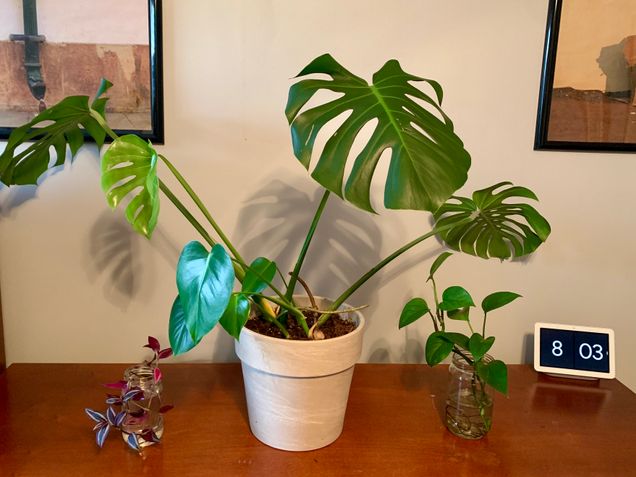
Over the past several months, I have been trying out plant care as a means of self-care in response to the COVID-19 pandemic, and have noticed a huge difference in my mood, my routines, and overall wellbeing. In addition to traditional forms of therapy and self-care, this experience has shown me that there are a number of other approaches to dealing with stress and trauma that can produce powerful benefits, oftentimes without realizing just how beneficial they are. For example, by placing gardening and plant care into a mental health context and analyzing the results, it becomes clear why so many people choose to take up the hobby.
Plant care, also known as horticulture therapy, is most simply summarized as the use of plants to connect with the self, the community, and nature. Perhaps what makes horticultural therapy so impactful is that “a seed’s journey into a plant parallels the recovery process for those with mental health issues” (Chillag, 2018). Trauma recovery parallels the life of a plant – how plants grow, the patience and care that goes into helping it thrive - it all can be reflected back in the recovery process for individuals.
The discussion surrounding plant care as a means of therapy goes all the way back to the 1800s, and the benefits are extensive (Williams, n.d.). According to the American Horticultural Therapy Association, “horticultural therapy helps improve memory, cognitive abilities, task initiation, language skills, and socialization. In physical rehabilitation, horticultural therapy can help strengthen muscles and improve coordination, balance, and endurance. In vocational horticultural therapy settings, people learn to work independently, problem solve, and follow directions.” (Williams, n.d.). It is a form of self-care that can be adjusted to best benefit the participant. For those who are survivors of trauma, plant care can help them “to be more compassionate and empathetic towards those around them” by establishing an easy routine and giving them opportunities to connect with the natural world around them in small ways (DuBois-Maahs, 2019).
Just as it is with our own everyday lives, the realm of criminal justice is not unfamiliar with stress. Within prison and jail populations, there have been noticeably “reduced recidivism rates among inmates who participate in horticultural therapy programs” (Chillag, 2018). The Insight Garden Program was established with a similar goal in mind: to provide inmates with vocational tools, while allowing them to connect with nature and improve their emotional states through plant care (Insight Garden Program, n.d.). The program attempts to reduce some of the pain and trauma that inmates can experience going into and through the prison system, while providing them with the educational and emotional tools to improve their lives when they are released. Through this plant care routine, inmates are given some personal control in their lives in an impactful way that allows them to “engage in healthy lifestyle choices” and that sets them up for a better chance at success in life (Rousseau, 2021).
Starting with tiny plant cuttings that I received from my neighbors, I have been able to grow out vines and beautiful leaves. With each new leaf that unfurls, it feels like a reward for the work that I have put in. With this in mind, for inmates who are given limited time outside, who live under constant stress in a carceral setting, and who are dealing with the impacts of previous trauma in their lives, this use of plant care as a means of regaining control in their lives would be incredibly impactful.
References:
Chillag, A. (2018, August 3). Gardening becomes healing with horticultural therapy. CNN. https://www.cnn.com/2018/08/03/health/sw-horticultural-therapy/index.html.
DuBois-Maahs, J. (2019, December 28). What Even Is Plant Therapy? Talkspace. https://www.talkspace.com/blog/plant-therapy/.
Insight Garden Program – Connection through nature. Insight Garden Program. (n.d.). https://insightgardenprogram.org/.
Rousseau, D. (2021). Module 1: Introduction to Trauma [Lecture Notes]. Boston University Metropolitan College.
Williams, S. (n.d.). About Horticultural Therapy. American Horticultural Therapy Association. https://www.ahta.org/what-is-horticultural-therapy.
Self Care & The WorkPlace
Self-care is very important. After reading through other classmate’s self-care posts I decided to do a deeper dive into Self-care and trauma. Self-care is important in order for individuals to perform their best at work. The article Embedding Staff Self-Care into The MTSS Framework for Those Working in Correctional Facilities looks to integrate self-care practices into a workplace for staff that pours their heart and soul into caring for juveniles and keeping them safe (Jolivette et al, 2019). These staff members are experiencing trauma through the juveniles they work with and them helping the juveniles expose them second-hand to traumatic experiences.
Self-care can help prevent burnout and alleviate some stress (Jolivette, 2019). Employer benefits that help support self-care that were mentioned in the article are gift certificates for the most amount of steps walked, access to recreational equipment and discounted gym memberships (Jolivette, 2019). All of these are a nice perk in a workplace but can be used as self-care because every job can be a little stressful and you don’t want to burnout.
Works Cited:
Jolivette, K., Swoszowski, N., Kumm, S., Sanders, S., & Ansley, B. (2019). Embedding Staff Self-Care into the MTSS Framework for Those Working in Juvenile Correctional Facilities. Journal of Correctional Education (1974-), 70(1), 2-19. Retrieved June 22, 2021, from https://www.jstor.org/stable/26864119
Mindfulness as an Exercise
Mindfulness is a form of therapy used for anyone who wants and needs to understand their surroundings and how to mentally accept it. Practicing mindfulness improves depression and emotional regulation through detachment, changing not thoughts and feelings but the person's relationship to them” (Bateman, 2012). The process of mindfulness includes closing your eyes, focusing on each breath you inhale and exhale, and trying to keep your focus on your breath and not distractions. A favorite exercise in mindfulness is to imagine a creek of water with leaves floating downstream, one by one. While imagining flowers, green grass and a hillside as the backdrop, imagine the sounds of running water and begin to focus on each leaf as it was swept away. The patient is then advised to put a "thought", any thought, on each leaf as it floats away in an effort to clear the mind and feel some relief. By focusing on those leaves, the goal is to take notice of any distractions and then force your attention back to the leaves. The most important phrases in mindfulness is "notice that" and "what´s next"? (Van Der Kolk, 2015) Living in the moment is the key to this therapy.
Trauma leaves victims with feelings of unbearable sensations (2015) and mindfulness allows us to understand body awareness. When a person feels agitated, other similar emotions may arise but when you are aware of that pattern, you have more control over suppressing it and exerting that energy in a different way (2015).
Mindfulness stems from Buddhism – “to alleviate suffering and cultivate compassion” (Ludwig & Kabat-Zinn, 2008). This can include a decreased perception of pain, the ability to tolerate pain, and the enhanced ability to reflect on choices (2008). Mindfulness can be extremely effective for those who need to realize their attachment to certain feelings and emotions so they can change their relationship with it, not their thoughts and feelings (2012).
Research from Britta Holzel and Sara Lazar "has shown that practicing mindfulness even decreases the activity of the brains smoke detector, the amygdala, and thus decreases reactivity to potential triggers" (2015).
References
Bateman, A. (2012). Mindfulness. British Journal of Psychiatry, 201(4), 297-297. doi:10.1192/bjp.bp.111.098871
Ludwig DS, Kabat-Zinn J. (2008). Mindfulness in Medicine. JAMA. 2008;300(11):1350–1352. doi:10.1001/jama.300.11.1350
Van Der Kolk, B. (2015). The body keeps the score: brain, mind and body in the healing of trauma. Penguin Books.
Secondary Trauma: Spouses and Couples of Law Enforcement
Police officers endures highly pressured incidents on a regular basis during their routine. For example, “a sudden death in the line of duty, serious injury from an officer-involved shooting, exposure to intense trauma on a call, a physical or psychological threat to the safety or well-being of an individual or community, regardless of the type of incident.” (Rousseau, 2021). Moreover, as explained in the incident involves any situation or event faced by police officers that causes a distressing, dramatic, or profound change or disruption in their physical. (Rousseau, 2021). Trauma can not only affect the officer themselves, but it can also impact those around them. For example, during daily routines an officer with a heightened sense and trauma may be triggered during an encounter, arrest, or stop and have the trauma affect their decision making. Such decision making can escalate encounters that did not need to result to in excessive or deadly force. There are multiple signs that may attribute to trauma that is fatigue, difficulty breathing, confusion, poor decisions, poor concentration, anxiety and much more. Therefore, it is hard for others to pick up the sense that an individual has encountered a life changing event and may be suffering from it. Specifically, it may be hard for a spouse or significant other to pick up that their loved on is suffering from trauma, especially if they have a career in law enforcement.
Photo by: Police life
Although many research suggests that law enforcement professionals (LEP) are directly affected by trauma, few have focused their attention on the secondary trauma of their loved ones or spouses. A study was conducted, where an in-depth qualitative interview on eight spouse of law enforcement. In a summary, the results had shown that trauma creates a domino effect onto the spouse, however, the upside to this is that it appears that such couples show a strong bond and how they cope with the trauma.
As stated, police officers encounter crime, violence, and life-threatening events on a daily basis. Because of the dramatic exposure such exposure can impact an LE spouse or family. “The investigations that have focused on LE spouses suggest that police work has a detrimental impact on LE spouses and that those in close contact with the traumatized person also experience symptoms of traumatization.” (Landers et. Al., 2020). “Family support is critical for reducing the negative impact” of stressful work in the criminal justice profession. (Landers et. Al., 2020). Moreover, it is noted that family members play a role to support their partner that is in the LE career. Such role may include, but not limited to, additional responsibilities, creating coping mechanisms, social support, and developing a great way to communicate. Interesting, it is encouraged for spouses and family members to be quite involved because the high prevalence of trauma and the idea that the spouse can help assist clinicians to better understand how trauma affects the couple relationship and how to reduce its negative impact. (Landers et. Al., 2020). However, secondary trauma is described as a natural consequence of behaviors and emotions resulting “from knowing about a traumatizing event experienced by a significant other-the stress resulting from helping or want to help a traumatized or suffering person.” (Landers et. Al., 2020). However, when a spouse wants to help their significant, they may to subject themselves to the secondary exposure to trauma. The reason for this is because family members influence the quality of family relationships. Spouses endure the challenges that’s comes with a significant other that works in a highly stressful profession. Behind closed doors, spouses are the ones that see their professional spouse through it all, mental breaks downs, anxiety, distancing and much more.
In a study, interviews of LAE spouses all had to think of an occasion when they had noticed their partner is going through a traumatic event and how it directly affected them. At the end of the study, it was shown that partners are exposed through many different types of traumas i.e. death, injury etc. However, it was also noticed that such trauma may cause a ripple effect as in the LE may begin to have mood swings, changes in behavior and that may affect the spouse. For example, one spouse stated that they fear every time their spouse goes to work and other states that if their LE doesn’t scan the room, then it feels as if she does because she adapted a sense of insecurity. But because of such issues and the domino effect of trauma, spouses have developed a sense to cope.
Coping mechanisms has allowed for spouses to develop better coping mechanism and provide mutual support by understanding each other’s position. For example, “if something bad happens, we get really cohesive.” (Landers et. Al., 2020). Open communication about the traumatic event exposure and the pressure of the trauma appears to be a very important coping mechanisms for a couple’s relationship. By tackling on LE family or spousal health it illuminates the importance of the supportive role that they play.
Landers, A. L., Dimitropoulos, G., Mendenhall, T. J., Kennedy, A., & Zemanek, L. (2020).Backing the Blue: Trauma in Law Enforcement Spouses and Couples.Family Relations, 69(2), 308-319. https://ezproxy.bu.edu/login?qurl=https%3A%2F%2Fwww.proquest.com%2Fscholarly-journals%2Fbacking-blue-trauma-law-enforcement-spouses%2Fdocview%2F2376234440%2Fse-2%3Faccountid%3D9676
Rousseau, D. (2021). Module 6: Trauma and the Criminal Justice System. Boston University Metropolitan College: Blackboard.
“Occupational Hazard”
“An “occupational hazard.” Rape. One of the most violent physical assaults which forever haunts and permanently scars the victim, and our military condones it by simply stating that it is just part of being in the military” (motleynews.net). This has been the culture within the military for years and still continues to be. When someone signs the dotted line to join, they are joining because they believe in what this country stands for and defending it is a great honor. Most would expect if their honor is stripped from them that the same system will be there to protect them and sadly their cries fall on deaf ears. A Department of Defense Report from 2019 showed a total of 7,825 assaults reported and that was a 3% increase from 2018. Rape is a vastly unreported for a number of different factors. In the military one of the largest factors is fear of retaliation. According to a Human Rights watch report, “It is estimated that only one in four victims reports sexual assault to military authorities. In surveys, service members consistently cite fear of retaliation from the perpetrator or the perpetrator’s friends, or concern about their careers, as reasons for not reporting” (HRW, 2015). Many individuals that report sexual assault will experience taunting, teasing, social isolation, demotion and in some cases discharges that are consider OTH(Other than Honorable). If someone wants to make a career out of their military service then reporting an assault can in some situations ruin that career. The perpetrator usually faces no charges and if they do the discipline they receive is minimal and equivalent to a slap on the wrist but the victim lives with this for life. Things may get easier but the pain from a sexual assault never leaves you. Once a victim is discharged they can receive services related to the MST (Military Sexual Trauma) but a lot of the time the services only cover therapy. Depending on the type of discharge they may not be able to get financial support or other veteran benefits because most of the time they are discharged out OTH. It is a legal battle to change a discharge status which is called a discharge upgrade and a lot of the time you need a lawyer to help you and it can take years. Over the years there have been attempts to make reporting easier or receiving services easier but nothing is working to stop the number of sexual assaults that happen each year to the individuals serving in the military. The military is attempting to make changes to policies they have in place and with the death of Spc. Vanessa Guillen in 2020 there has been a push by Senator Gillibrand to change the way the military handles sexual assault cases. The push is for the military to continue handling the cases but it will be a special team that is trained to handle them. This is a change to how the military handles the reporting but there needs to be a change in the culture of the military. What that change needs to look like, I do not know but until something changes individuals will continue to suffer in a system that should be protecting their own.
Embattled. Human Rights Watch. (2018, April 18). https://www.hrw.org/report/2015/05/18/embattled/retaliation-against-sexual-assault-survivors-us-military#.
Rape in the Military is an "Occupational Hazard". Motley News, Photos and Fun. (2012, July 8). https://motleynews.net/2012/05/19/rape-in-the-military-is-an-occupational-hazard/.