Home
Yoga to help treat trauma & PTSD
Breathe in and out. Namaste!
Yoga has been used for quite sometime to help the individual ground themselves back to the central point when life is chaotic and they have lost focus on the important things. We have found that yoga can be,p those that have gone through some type of traumatic event and even for the treatment, individuals in the prison system and even PTSD.
PTSD is a very complex and challenging illness that can take over the lives of those who are affected. The use of Yoga for these individuals helps them by working both mind and body to form a focus point where the individual can feel a sense of safety and belonging. Yoga combines with psychology techniques we are able to see an improvement for these individuals and their recovery from their traumatic events.
I am a believer of Yoga to help not only treat PRSD but also other psychological and physiological illnesses. The way it help the individual focus and recenter allows the brain and body to sort of reset a little allowing the person to pause and gain mindfulness within their daily lives. We have seen the effects of Yoga within the prison system and now we see seeing it with the treatment of post traumatic stress disorder individuals. It was noted that “yoga seemed to be more effective than medicine” (Van der Kolk, 2014, pg. 209). I am sure that is many cases this is true but relying solely on one therapy could give a false sense of outcome and hope for the individuals involved. As I stated, yoga seems to be effective but it should also be used with other modalities to help increase the positive outcome of the therapy.
Rousseau, D. (2022). Module 4: Pathways to recovery: Understanding approaches to trauma treatment. Blackboard, https://onlinecampus.bu.edu/bbcswebdav/pid-9960461-dt-content-rid-63971458_1/courses/22sprgmetcj720_o2/course/module4/allpages.htm
van der Kolk, B. A., MD. (2014). The body keeps the score: Brain, mind, and body in the healing of trauma. Penguin.
The Neurobiology of Trauma
I believe that addressing the neurobiological aspect of trauma is vital in understanding the negative effects of trauma. Firstly, trauma is a term used to describe the experience or circumstances that occur which in turn have a negative effect on an individual. This can be quite devastating as one would imagine. Some may experience trauma on a daily basis while others may not. Regardless of the number of occurrences, trauma remains distressing and taxing for all that experience it. How a person responds can vary person to person, they may be in denial of the situation, they may show symptoms of depression, anger, anxiety, etc. There is no one clear set of boxes that a person must check off in order to state that they’ve experienced trauma.
But what causes all of these symptoms to occur in the first place? There are various areas within the brain that tend to be the most affected by traumatic events. This includes the prefrontal cortex, amygdala, thalamus, and hippocampus. One of the issues that tends to come up when talking about trauma is how complex it is. Paul MacLean, a renowned physician and neuroscientist, explained the brain as being separated into three separate brains. Looking at his work can help us better explain trauma in terms of neurobiology. MacLean coined the term “triune brain”; which consisted of the reptilian brain, mammalian brain, and cerebral cortex. The reptilian brain includes the brain stem, cerebellum, and basal ganglia. This is where our autonomic nervous system comes into play, essentially holding all of our autopilot functioning like breathing, blood flow, etc. The mammalian brain is where one would find the thalamus, hypothalamus, amygdala and hippocampus. Otherwise known as the limbic system. This area of the brain is heavily involved in memory and responses. The limbic system connects with our reptilian brain to churn out an appropriate response. This connection is where our fight, flight, or freeze responses would occur. Then we have the cerebral cortex, this is where the right and left hemispheres, and the medial and dorsolateral prefrontal cortexes of the brain are located. These are the outermost layers of our brains, where our “higher-thinking” comes from. Things like intelligence, planning, organization, language processing/learning are all functions found within the cerebral cortex. Each of these “three brains” as outlined by MacLean are involved in how we respond to traumatic stimuli. 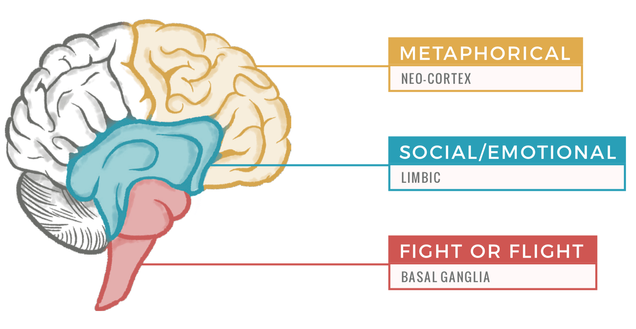
One major argument against this model is it focuses on a hierarchy of the brain. The idea being that the brain developed overtime as a result of evolution. Looking at the outline it would consist of the reptilian brain being developed first, then the mammalian brain and finally the cerebral cortex. Rather than the brain being triune, it has been suggested that it is adaptive and uses “adaptive prediction resulting from interdependent brain networks using interoception and exteroception to balance current needs, and the interconnections among homeostasis, allostasis, emotion, cognition, and strong social bonds in accomplishing adaptive goals” (Steffen et al., 2022). I do still believe that the triune brain model allows us to easily look at how the brain reacts to trauma and stressful situations. Which is why MacLean’s theory is still widely discussed today. Regardless of whether or not you believe in a more adaptive or triune layout of the brain, the information and things that are happening during stressful events remains the same.
I would also argue that if we were to use MacLean’s model to address a specific situation we would be able to do so in a way that was easily understandable to fellow listener’s. For example, let's say we live in a tropical climate like Florida, we’re halfway into a walk in the forest when we hear a rustle and see quick movement by our feet. Our brain perceives this event to be dangerous, there could be a snake nearby. The sensory information that we internalized, the noises and brief visuals were processed and sent to our thalamus and then relayed to the amygdala to rule out whether or not we were in a safe or unsafe situation. In our case it was deemed to be unsafe given prior knowledge of our surroundings. Due to our situation being seen as dangerous our hypothalamus then releases adrenaline and norepinephrine to trigger our fight, flight, or freeze response. Once that event occurs our cerebral cortex receives this information from the limbic system to create a memory based on the event. That way if another event similar to that one occurs the body will instantly flee, fight, or freeze. The information gets stuck. Sometimes this can be useful, like in this example where you would need to do something on the spot to avoid getting bit by a potential snake. On the other hand, this can also be detrimental to the individual in situations such as a Marine coming home after experiencing war trauma. Trying to integrate back into civilian life can be difficult when dealing with trauma related to war. Using this knowledge we can relate it back to real world situations to try and come up with solutions to address these negative effects.
Fortunately there are various options for therapy available to those who have experienced trauma. There is exposure therapy, EMDR, Yoga therapy, and much more. In having so many options available to address trauma, individuals are able to pick treatment best suited to their needs. Even within exposure therapy there are branches of different forms ranging from imaginal exposure, in vivo exposure, and flooding. The treatment that is ultimately chosen depends on the individual and what they’re comfortable with. What is very clear is that the neurobiology of the brain, what is happening behind the scenes, is equally as important and essential to understand.
Sources:
Rousseau, D. (2022). Module 3: Neurobiology of trauma. Retrieved from https://learn.bu.edu/bbcswebdav/courses/22sprgmetcj720_o2/course/module3/allpages.htm.
Steffen, P. R., Hedges, D., & Matheson, R. (2022, April 1). The brain is adaptive not triune: How the brain responds to threat, challenge, and change. Frontiers in psychiatry. Retrieved April 24, 2022, from https://www.ncbi.nlm.nih.gov/pmc/articles/PMC9010774/
Burnouts among police officers
In Module 6, we've been presented an article, Routine work Environment Stress and PTSD Symptoms in Police Officers, that discussed the relationship between work environment and PTSD symptoms among police officers. The results showed that their work environment stress was most strongly associated with their PTSD symptoms and more specifically, variables such as gender and ethnicity resulted in having more negative social interaction and discrimination (Meguen et al., 2009). We further discussed the stigma surrounding police officers with mental illnesses and their concerns regards to requesting treatment due to fear of losing their jobs, having their license to carry a firearm taken away, being reassigned to a less stressful position, or being ridiculed by their peers and being seen as weak. While offering all the necessary resources to help better their mental health is crucial, being able to recognize the underlying cause to their problems is also important. Behind every police officer is a husband, a wife, a father, a mother, a friend, a coworker, and most importantly a human being. These qualities are often overlooked because of their heroic actions in the community, and places so much pressure on them to be the "hero." What we don't see is the emotional and physical exhaustion from responding to countless calls where they are expected to make split second decisions under pressure.
Most police officers, male and female, reported that the most frequent stressor was responding to violent family disputes, and the most highly rated stressor was being exposed to battered children. Though infrequent, another most highly rated stressors were killing someone in the line of duty and experiencing a fellow officer being killed. Male officers reported court appearances off duty and working second jobs as stressors while female officers reported experiencing lack of support from supervisors as a stressor (Violanti et al., 2016).
Reducing the amount of incidents that act as stressors may be impossible, but reducing the amount of time and workload police officers is exposed to stressful situations is more practical. Offering debriefings like CISM and overall organizational support is important for officers as it would help them deal with traumatic events that unfortunately comes with the occupation. On the other hand, reports of female officers feeling under-supported by their superiors reiterates how even though we are seeing an increase in female officers across police departments, some organizations are still having issues of discrimination. For that reason, there needs to be more training and education providing statistics and evidence on the positive aspects of women in policing. Overall, without addressing these stressors, more police officers will experience burnouts and significant mental health deterioration leading to depression and suicide.
Maguen, Metzler, T. J., McCaslin, S. E., Inslicht, S. S., Henn-Haase, C., Neylan, T. C., & Marmar, C. R. (2009). Routine Work Environment Stress and PTSD Symptoms in Police Officers. The Journal of Nervous and Mental Disease, 197(10), 754–760. https://doi.org/10.1097/NMD.0b013e3181b975f8
Violanti, Fekedulegn, D., Hartley, T. A., Charles, L. E., Andrew, M. E., Ma, C. C., & Burchfiel, C. M. (2016). Highly Rated and most Frequent Stressors among Police Officers: Gender Differences. American Journal of Criminal Justice, 41(4), 645–662. https://doi.org/10.1007/s12103-016-9342-x
Yoga is Beneficial for inmates with PTSD
I will be talking about how successful yoga is as a treatment for people in prison with PTSD. Yoga also will help the inmates when they get out of prison. Prisoners see a lot of things during their time in prison. They witness different types of violence such as murder, suicide, rape, etc. Sometimes they may not actually see it with their own eyes, but they hear about it in detail. That can still be traumatizing. Juveniles and mothers may have face also of different traumatic events before entering prison. During their time in prison, the goal should be to help them deal with trauma day to day. This will help become a better person for when they are release. As I have mentioned in my post, yoga is used for pain management and for people with a variety of psychological diagnoses. The type of yoga that was talked about this week is trauma- informed yoga which helps with stress safety, predictability, structure, and repetition. The yoga poses in this type is to focus on their breathing and embodiment. So, in other words they are taking over their mind and body. (Rousseau,2022) Yoga is starting to more recognized in prisons. It is understood that yoga will not fit all problems for incarcerated people, but it is a start and is said to play a major role.
As I have mentioned in a few of my post throughout the semester, my uncle was recently released from prison. He joined the yoga program in his correction facility. He is currently 63 years old so you would not think an elderly black man would be in a yoga class. He told me he really enjoyed it and it helped with his pain and anger. He has been diagnosis with PTSD, and I see him do yoga in his room 3 times a day. I can say that I have seen a big change in him since he has first joined yoga. My family use to call and check on his mental health all the time so hearing and now seeing the improvement yoga has had on him is very good. When COVID hit the USA, yoga classes in prisons were suspended. As far as I know, yoga classes are not being held still but some inmates still practice some of the yoga techniques and share with other inmates that did not get a chance to go. My uncle told me once the state allowed prisons to go outside again in groups and to common area sometimes, there would be some people off to the side doing yoga. Yoga has a major impact on these inmates.
In an article I read about a yoga program at York Correctional Institution in East Lyme, CT, a 41-year-old inmate would usually cut herself to deal with anxiety, depression, and PTSD. It was her way to forgive herself. Now after graduating the program, the marks are barely noticeable. The yoga program in York Correctional Institution is a little different from other in Connecticut. This program is a 200-hour course that will allow inmates to become certified yoga teachers. They are allowed to teacher yoga after they are release. This gives an opportunity to find a job they will like and still help with their mental health while they teach others. Deputy Warden Senerth said, "There's evidence it really works with people who are victims of trauma. You have that fight or flight reaction. It helps them to just regulate and be in that moment." (Florin,2017) I believe all prisons should have yoga programs like this. Yoga is always gaining control of your mind and body.
Reference:
Florin, K. (2017, January 15). Yoga spreading mindfulness inside Niantic Prison. The Day. Retrieved April 2022, from https://www.theday.com/article/20170114/NWS04/170119588
Rousseau, D. (2022). Module 4: Pathways to Recovery: Understanding Approaches to Trauma Treatment. Trauma and Crisis Intervention. MET CJ 720 02. Boston University Metropolitan College.
Art Therapy: Why It Helps With Trauma Healing
It’s surprising how one art therapy course can reshape the way you view introspection and healing. Yet, in my first year of college, I found myself in that same position. As someone who was going through crippling social anxiety and depression at the time, I found myself needing the art therapy course I took.
It started with a singing bowl, a special bowl that creates a calming ringing sound when played. This was always used to help us center ourselves and start a rather meditative art-creating process. In the one hour of the class, we got to first hand try out therapy techniques for ourselves through different art mediums. We were then encouraged to draw what came to mind.
Even without meaning to, my hand found itself drawing my innermost thoughts, desires, and hurts. When it was time to look at what I made and talk about it, I found that what I had created was an abstract version of what I failed to verbalize. Yet, after drawing, and saying what was troubling, it became easier to vocalize and heal from.
When it comes to healing from trauma, there are many methods that can be used, but the goal is essentially the same: to reclaim a connection with the body and teach the mind that they are not in as dangerous of a situation as they instinctually feel they are in. Some methods include yoga, massages, meditation, and sports. In this case, I learned that healing can come from art.
Yes, but to what extent? First-handedly, I experienced that art therapy is capable of helping people with depression or with anxiety like myself, but it is also helpful for other mental illnesses. Studies have shown that veterans with PTSD have benefited from art therapy treatment.
This is primarily because some traumatic memories are stored non-verbally and can be retrieved by recollections of sensory and kinesthetic elements.
Sometimes, it is difficult to express how you feel in words especially if you are still processing it. In some cases, victims of trauma with PTSD will cope by shutting down the areas in their brain that transmit emotions to define their terror. Yet, this is crucial because if you cannot define your trauma, then it is hard to heal from it. Art creates an avenue for patients to open up in a way that cannot be expressed with words. Sometimes, verbalization is difficult, but art creates a way to start with something smaller, like color or line.
In a study done by Melissa Campbell, 11 veterans received 8 sessions of art therapy. All participants showed improvement in their symptoms. By the end of the 8 session course, they were able to focus on themselves before and after the trauma. While they drew, blocked memories resurfaced, or crucial realizations were made about how they could further their healing process.
It’s amazing what Campbell was able to do in 8 sessions. With more art therapy, a person with PTSD may even be able to use art as a healthy outlet to process and cope with the stimulation of the outside world.
Sometimes, it’s easy to believe that the arts don’t have power because they don’t show concrete results like a bandaid over a cut, but it helps to exercise the right side of your brain.
If you have PTSD, or like me, were dealing with depression and anxiety, I would encourage you to enroll in some art therapy classes. Art therapy is a great way to get yourself to reflect especially if, like the veterans, some of your trauma is stored nonverbally. If those are too expensive, turn on a singing bowl sound on youtube, center your mind and begin the process of drawing. When you’re done don’t forget to evaluate your drawing too!
By: Olivia Kim
References:
Campbell, M., Decker, K. P., Kruk, K., & Deaver, S. P. (2016). Art therapy and cognitive processing therapy for combat-related PTSD: A randomized controlled trial. Art therapy : journal of the American Art Therapy Association. Retrieved April 6, 2022, from https://www.ncbi.nlm.nih.gov/pmc/articles/PMC5764181/#:~:text=Art%20therapy%20provides%20a%20safe,Morgan%20%26%20Johnson%2C%201995).
Trauma-Informed Medical Education
As an incoming medical student, I’m interested in understanding the ways in which medical schools are starting to incorporate trauma-informed practices into their training and instruction. Trauma-informed medical education (TIME) is a relatively recent educational approach that can have significant impacts on how practitioners approach patients who have suffered from adverse experiences (McClinton & Laurencin, 2020). Regardless of their medical speciality, a provider who uses trauma-informed approaches can recognize how trauma impacts their patient’s health and behavior. Instead of making assumptions that can violate safety and trust, the provider can work alongside the patient to prevent triggers and the potential for future traumatization (SAMHSA, 2014). Given that at least 50% of the U.S. population has experienced a traumatic event, it’s important that national medical guidelines and educational initiatives encourage trauma-sensitive approaches to providing medical care as a universal precautionary approach (Kuehn, 2020). Implementing these practices can allow for more patient-centered care, improve patient health outcomes, and buffer the long-term negative physical and mental health impacts of traumatic exposures (Goldstein et al., 2018).
Trauma-informed models are guided by five core principles: safety, choice, collaboration, trustworthiness and empowerment (Wolf et al., 2014). In a short patient interaction, it can be difficult for doctors to deliver on all five of these principles if they never received training that utilizes this framework. Trauma-informed care is all about prioritizing the patient’s wellbeing rather than figuring out what’s wrong with the patient. In reality however, the vast majority of medical training is focused on helping students develop the ability to do the latter. Trauma-informed medical education can shift this focus through small changes that can have tremendous impacts. When medical students learn how to do physical examinations, they can be instructed to use certain language and techniques that avoid violating the patient’s safety and trust. Physical exams that involve certain regions of the body can be triggering for patients, however medical students can learn how to ask for permission and preface certain procedures in a transparent manner. Not only does this clearly define the purpose of a given procedure, but it also establishes trust between the patient and provider. In addition to guidance on general physical exams, trauma-informed medical education draws special attention to approaches that should be implemented during discussions and examinations of the genital regions. Sexual abuse is not always apparent during a patient encounter and patients aren’t always willing to disclose this information during a social history. Thus, doctors should not assume that their patients won’t feel vulnerable or unsafe during a genital examination. Medical schools are starting to teach their students specific techniques for these exams so that they’re able to complete it without violating the patient’s safety or re-traumatizing them.
Nonetheless, there are still barriers to implementing trauma-informed approaches in medical school curricula and continued education for current doctors. The process of changing existing curriculum is time intensive and the impact of trauma-sensitive approaches are not routinely addressed. Lots of physicians feel uncomfortable talking about these topics and open spaces to bring these obstacles to the forefront are somewhat new to the medical field. Lack of consistent care is another issue with trauma-informed approaches because not all providers will treat their patients with the same caution and sensitivity. Inherent biases are also routinely discussed in the medical field and this can cause doctors to inflict trauma on patients despite having trauma-sensitive training. Nonetheless, these obstacles can be addressed over time by slowly building trauma-informed approaches into medical education. The benefits of trauma-sensitive care are well-researched and should definitely be discussed more openly amongst educators in medicine.
References
Goldstein, E., Murray-García, J., Sciolla, A. F., & Topitzes, J. (2018). Medical students’ perspectives on trauma-informed care training. The Permanente Journal, 22.
Green, B. L., Saunders, P. A., Power, E., Dass-Brailsford, P., Schelbert, K. B., Giller, E., ... & Mete, M. (2015). Trauma-informed medical care: A CME communication training for primary care providers. Family medicine, 47(1), 7.
Kuehn, B. M. (2020). Trauma-informed care may ease patient fear, Clinician Burnout. JAMA, 323(7), 595-597.
McClinton, A., & Laurencin, C. T. (2020). Just in TIME: Trauma-Informed Medical Education. Journal of racial and ethnic health disparities, 7(6), 1046–1052. https://doi.org/10.1007/s40615-020-00881-w
SAMHSA. (2014). Mental Health Services Administration. SAMHSA’s concept of trauma and guidance for a trauma-informed approach. Rockville, MD: Office of Policy, Planning and Innovation. Substance Abuse and Mental Health Services Administration, HHS.
Wolf, M. R., Green, S. A., Nochajski, T. H., Mendel, W. E., & Kusmaul, N. S. (2014). ‘We’re civil servants’: The status of trauma-informed care in the community. Journal of Social Service Research, 40(1), 111-120.
Complementary and Alternative Medicine Approaches to Trauma
Complementary and Alternative Medicine (CAM) approaches to trauma treatment and prevention are treatment plans outside the realm of clinical approaches. These may include yoga, mediation, acupuncture, homeopathy, oriental medicine, massage therapy, herbal medicine, electromagnetic therapy, hypnosis, art therapy such as dance and music, among so many more. (Johns Hopkins Medicine). These forms of treatment are creative ways of healing trauma without the use of prescription medicine.
"Through the years, a significant amount of progress has been made with nontraditional approaches to trauma treatment. Some of the most researched and supported methods include yoga and mindfulness, but they are not the only options available for people who experience symptoms of PTSD." (Rousseau, Module 4).
I want to talk about how meditation is used to improve PTSD symptoms. According to an article by Healthline, "meditation is a practice that can help you focus your mind and gain greater awareness of yourself, thoughts and inner experience, surroundings, and moment-to-moment needs." There are different kinds of mediations, and some might help reduce stress-induced trauma and PTSD symptoms more than others. One of the leading meditation forms is called "mindfulness". According to Healthline, "mindfulness refers to a state of mind where you can acknowledge your thoughts, feelings, and bodily sensations without judgment." This form of meditation helps one become more aware of the present moment, while staying safe and grounded while recalling past experiences or memories.
According to Module 4 of the course materials, Mindfulness refers to "the unprejudiced noticing of physical and emotional experiences, designed to enhance clarity and reduce rumination and self-critiquing." In both definitions, the key word would be "without judgment" and "self-critiquing". It is important to realize that you are engaging in mindfulness to not only heal, but to remember that your experiences do not define you.
CAM approaches are not for everyone, just like traditional treatment options are not. Finding what works for you is all apart of your own journey to healing. The process is ongoing, but it is important to know that there are many options available to you, all you have to do is choose.

References:
Rousseau, D. (2022). Module 4: Pathways to recovery: Understanding approaches to trauma treatment. https://learn.bu.edu/bbcswebdav/courses/22sprgmetcj720_o2/course/module4/allpages.htm
Swaim, E. (2022, April 20). Can meditation help ease PTSD symptoms? Healthline. Retrieved April 21, 2022, from https://www.healthline.com/health/ptsd-medita
Types of complementary and alternative medicine. Johns Hopkins Medicine. (n.d.). Retrieved April 21, 2022, from https://www.hopkinsmedicine.org/health/wellness-and-prevention/types-of-complementary-and-alternative-medicine
Service dogs can help people who have PTSD
Posttraumatic Stress Disorder (PTSD) is a serious problem in the US, according to the "What is Posttraumatic Stress Disorder (PTSD)?" written by American Psychiatry Association, "PTSD affects approximately 3.5 percent of U.S. adults every year, and an estimated one in 11 people will be diagnosed with PTSD in their lifetime. Women are twice as likely as men to have PTSD." (APA) We can see that PTSD affects so many people, therefore, service dogs are a way to help the people who have PTSD. Service dogs can be soothing the PTSD emotional and physical problems, let's talk about how can service dogs can help people.
First, we know that some PTSD patients cannot take care of themselves and cannot perform tasks that will keep them safe(Rousseau, D, 2022). Therefore, we need to have Psychiatric service dogs, the service dogs are trained to help the patients in their life, for example, "find a person or place, conduct a room search, signal for certain sounds, interrupt and redirect, assist with balance, bring help, bring medication in an emergency, clear an airway, and identify hallucinations. (Rousseau, D, 2022)"
Also, the service dog can help the patient emotionally because the service dog can stay with you and support you when you feel sad and lonely. Most people who have PTSD also will have some psychiatric problems like depression, anxiety, service dogs can help them to relax and service dogs can know that the patients have the symptoms of anxiety, when its know, it will try nudging, pawing, or licking the handler till the patients calm down (6 WAYS SERVICE DOGS HELP PEOPLE WITH PTSD, 2020).
Finally, service dogs can be a reminder of the patients, for example, they can remind the patients that is time to take their medicine and remind them of routine tasks such as eating and sleeping (6 WAYS SERVICE DOGS HELP PEOPLE WITH PTSD, 2020).
However, the service dogs have some weak parts, and that is service dogs cannot cure PTSD, and they just can get simple support before, during, and after the trigger(Rousseau, D, 2022). In my opinion, I think that even though service dogs cannot cure PTSD, they also support the patients a lot when the patients need help. Service dogs can be soothing the PTSD emotional and physical problems, when the patients who in danger, they also will help them to solve the problems.
I think that dogs can help us to relax and my dog lets me know that she will stay with me when I need help. I really love my dog because she helped me across the most difficult experience in my life. On the other hand, I also think that not only dogs can help us to calm down, but also cats or horses can help us to solve the problem.
References Material
American Psychiatry Association. (n.d.). What is posttraumatic stress disorder (PTSD)? Psychiatry.org - What is Posttraumatic Stress Disorder (PTSD)? Retrieved April 20, 2022, from https://www.psychiatry.org/patients-families/ptsd/what-is-ptsd#section_10
Jimenez, J. (2020, December 4). 6 WAYS SERVICE DOGS HELP PEOPLE WITH PTSD. New Life K9s Service Dogs. Retrieved April 20, 2022, from https://www.newlifek9s.org/news-events/blog/service-dog-blog.html/article/2020/12/24/6-ways-service-dogs-help-people-with-ptsd
Rousseau, D. (2022). Module 4: Pathways to recovery: Understanding approaches to trauma treatment. Blackboard, https://onlinecampus.bu.edu/bbcswebdav/pid-9960461-dt-content-rid-63971458_1/courses/22sprgmetcj720_o2/course/module4/allpages.htm
A Self-Care Framework to Maximize Resiliency and Mitigate Trauma
Trauma is any type or series of event(s) that triggers a chronic stress response in your body. While an acute stress response is beneficial for accomplishing goals, like meeting a deadline at work or protecting yourself by initiating a fight/flight response, you become harmed psychologically and physically when the stress becomes chronic in nature (Rousseau, 2022). Trauma can include anything from witnessing a terrorist attack (direct trauma), to listening to a friend or stranger as they share about their experience being raped (vicarious trauma). An example of how a series of events could become traumatic, would be when a corrections officer feels manipulated by inmates, feels unsupported by her fellow officers, and feels highly scrutinized by management. In the short-term, the officer may be resilient and feel determined to succeed, but over months or even years, going to work can slowly become a traumatic experience as resiliency fades and chronic stress develops.
Resiliency in the face of trauma, is the ability to relieve stress through self-regulation (physical and emotional) and self-care (Rousseau, 2022). By combining what I have learned from Dr. Rousseau and Dr. van der Kolk, I propose the following framework as a guide for developing a self-care plan that maximizes resiliency and mitigates trauma:
- Breath & Mindfulness – You need to be able to “feel what you feel and know what you know” without becoming overwhelmed (van der Kolk, 2014). Learning breathing and mindfulness techniques will lay the foundation for being able to emotionally handle the thoughts and feelings that have been suppressed.
- Rhythmic Interactions – Dancing, singing, playing an instrument, and other non-musical rhythmic actions like tossing a ball back and forth, increase pleasure and connection, while decreasing stress (van der Kolk, 2014).
- Feel Your Body – Numbness is a common symptom of trauma, but people have a need to feel their body. Exercise and hugs provide physical sensations that can calm us down (van der Kolk, 2014). On the other end of the spectrum can be body tension that prevents the feeling of calming physical sensations. Massages and floating in a pool can help to ease physical tension in the body.
- Feel What You Feel – Do not try to suppress tears or ignore emotions. Let yourself feel what you feel and think what you think.
- Feel Heard – Find ways to verbally express your thoughts and emotions. This could be done through close friends, a therapist, or even journaling. Finding the words to describe your deepest thoughts and feelings, without fear of criticism or broken confidentiality, is a powerful stress reliever.
- Self-Compassion – It is impossible to heal the self when you hate yourself. Know that you are enough and thrive in that realization. Know that you are worthy of the good in your life, and that your actions and thoughts are reasonable for your circumstances.
- Friends & Family – Surround yourself with people who will accept you as you are and be your true self around them. They should make you feel normal, not like a burden or a rare breed of stupid. They should also make you feel safe.
By ensuring that each of these aspects are thoroughly applied to your life, via a list of activities that are your self-care plan, you will maximize your resiliency and mitigate the potential effects of trauma. This is not a perfect solution for healing from trauma, but it is a great way to become chronic stress resistant.
References
Rousseau, D. (2022, March). Module 1: Introduction to Trauma [Online lecture materials]. Boston University.
van der Kolk, B. (2014). The Body Keeps the Score: Brain, Mind, and Body in the Healing of Trauma. Penguin.
The Value of Journaling in a Self-Care Regimen
“Paper is more patient than man.” – Anne Frank
The use of words to express the thoughts of man marked the seminal invention of civilization. The process of journaling has a history as old as mankind, and its use in the recollection and confrontation of trauma is one of the great art forms of our collective enterprise. Whether the musings of a Roman emperor like Marcus Aurelius, the mundane and brilliant daily thoughts of luminaries like Da Vinci, Curie, or Darwin, or the heartsick memoirs of those whom the world only ever met through their words like Anne Frank, the journal has been a daily outlet by which folks vent their daily stress and personal traumas throughout history.
The beauty of the process of journaling is that it has no innate structure or demands. Although journaling does not work for everyone, for some it is a transformational experience – one which helps them to cope with the struggles around them as they seek balance. For some like Thomas Jefferson, the journal contained observations of the world around them. Others, like Thomas Edison recorded quite humanizing elements in their journal – battles to avoid tobacco addiction, struggles with dandruff, and complaints of indigestion (Edison, 1885). Marcus Aurelius waged philosophical battles with himself, speaking about the difficulties of being the person in charge of the western world on one page of his Meditations, yet personalizing a battle against the desire to curl up under the covers instead of meeting the challenges of the day just pages later. There is no structure – there is no form. For some, days are skipped. Others, whole years passed between the needs to spill their guts out on the pages. Nevertheless, many find the process illuminating, restorative, and constructive enough to continue.
On Valentine’s Day in 1884, the daily journal of future President Theodore Roosevelt recorded the sudden deaths of both his mother and wife with a simple and poignant line: “The light has gone out of my life.” Roosevelt continued to write in his daily diary and several days later he recorded his feelings on the day of the double funeral, stating “For joy or for sorrow my life has now been lived out” (Gerald R. Ford Library, 2022). This low point in Roosevelt’s life, confessed to the pages of his diary, marked the commencement of a five (5) year personal journey through trauma recovery. Roosevelt gave up on his life in the east, turned his daughter over to his sister’s care, and uprooted his entire life – headed to the wide-open spaces of the American West to seek quiet and mindfulness to save his fragmented soul. Roosevelt’s wanderlust, so fraught with self-doubt, personal loathing, and mental resurrection, gave rise to the concept of the National Park – protected spaces where others could go to heal from the ashes of their own life. History tells us that Roosevelt’s life was certainly not “lived out” – but he did not know that story at the time of his sorrow. Journaling was not the miracle cure for Roosevelt, but it was a piece of the puzzle, a place where he could confide in himself, trusting his thoughts to a page when he could trust them to nobody else – and Teddy does not stand alone in the annals of history. We are learning that the use of written thought as a cathartic tool for healing is being revealed by modern research to be a powerful tool in the quest for self-care.
Studies into the efficacy of journaling during times of stress have indicated reductions in depression, reduced long-term physical health problems, and improve social supports (Riddell et al, 2020). It has also been suggested that journaling may help restore self-efficacy and mastery and add meaning to trauma (Ullrich & Lutgendorf, 2002). Mindfulness as a concept, which takes many forms to include meditation, yoga, journaling, expression of gratitude, and other introspective tools – have been shown to help to control emotions (Rousseau et al, 2019), lead to improved post-traumatic growth (Ekström, 2020), have positive impacts on psychiatric symptoms (Van der Kolk, 2014), and mitigate stress levels (Jaco, 2021). For many practitioners, journaling helps to develop consciousness over their surroundings and provide a snapshot of their life to put the events of life in focus against the backdrop of their world. Struggles, both large and small, can be confronted in bite-sized chunks. Figurative dragons can be slain, as the journaler uses the pages to work out their thoughts or to provide introspection to a problem at hand or a traumatic event.
Abraham Lincoln would regularly write vitriolic letters to people vexing him in his life, channeling his feelings onto the page in a way that his political reality would never allow. Relieved from the stress by committing the concept to paper, Lincoln would often file the letters away, simply writing ‘Never Sent; Never Signed’ on the envelopes (Lincoln, 1863). Journaling can form an erstwhile ally in the quest to provide meaningful self-care, helping to keep every trauma in perspective, being available to peruse to see how much the journaler has grown, or to vent off the stress of the day or prepare for the battles to yet come. Most of all, it serves as an outlet, it allows the journaler to be honest with themselves, to admit weakness, self-doubt, and loathing. It allows the practitioner to confront their own weaknesses and vent – developing skills in communications, emotional growth, and trauma recovery that are a worthwhile addition to any self-care regimen which has found success in mindfulness.
“One advantage in keeping a diary is that you become aware with reassuring clarity of the changes which you constantly suffer and which in a general way are naturally believed, surmised, and admitted by you, but which you’ll unconsciously deny when it comes to the point of gaining hope or peace from such an admission. In the diary you find proof that in situations which today would seem unbearable, you lived, looked around and wrote down observations, that this right hand moved then as it does today, when we may be wiser because we are able to look back upon our former condition, and for that very reason have got to admit the courage of our earlier striving in which we persisted even in sheer ignorance.” - Franz Kafka
References
Aurelius, M., Haines, C.R. (trans.) (161-180 AD) Meditations. Harvard University Press. Cambridge, MA.
Edison, T.A., (1885) The Diary of Thomas Alva Edison. Retrieved on 23 April 2022 from: http://ariwatch.com/VS/TheDiaryOfThomasEdison.htm
Ekström, C. (June 22, 2020) Comparing the Effects of Positive Psychology Interventions: Using Gratitude Journaling and Personality Strengths Interventions. Retrieved on 23 April 2022 from: https://www.proquest.com/docview/2436439170?parentSessionId=Z2ugIyraIEFHKNoIIVUxY0AtP0sF%2FyL810sYV8bVO%2B8%3D&pq-origsite=primo&accountid=9676
Gerald R. Ford Presidential Library (2022). The Light Has Gone Out of My Life. Retrieved on 23 April 2022 from: https://www.fordlibrarymuseum.gov/museum/exhibits/TR/light.htm
Jaco, B. (2021) Art Journaling as a Stress Reduction Technique for School-aged Children. Retrieved on 23 April 2022 from: https://www-proquest-com.ezproxy.bu.edu/docview/2593201544?pq-origsite=primo
Kafka, F. (1948) The Diaries of Franz Kafka, 1910-1913. Secker & Warburg Publishing, London, UK.
Lincoln, A. (July 14, 1863) Lincoln’s Unsent Letter to George Meade. American Battlefield Trust. Retrieved on 23 April 2022 from: https://www.battlefields.org/learn/primary-sources/lincolns-unsent-letter-george-meade
Riddell, T., Nassif, J., Hategan, A., Jarecki, J. (June 25, 2020). Healthy Habits: Positive Psychology, Journaling, Meditation, and Nature Therapy. Humanism and Resilience in Residency Training, pgs. 439-472. Retrieved on 22 April 2022 from: https://link-springer- com.ezproxy.bu.edu/chapter/10.1007/978-3-030-45627-6_14
Rousseau, D., Long, N., Jackson, E., Jurgensen, J., Rosenbaum, J. (September 2019) Empowering Through Embodied Awareness: Evaluation of a Peer-Facilitated Trauma-Informed Mindfulness Curriculum in a Woman’s Prison. The Prison Journal. Vol. 99, pgs. 14S-37S.
Ullrich, P., Lutgendorf, S. (August 2002) Journaling About Stressful Events: Effects of Cognitive Processing and Emotional Expression. Annals of Behavioral Medicine, Vol 24, pgs. 244-250.
Van der Kolk, B. (2014). The Body Keeps the Score: Brain, Mind, and Body in the Healing of Trauma. Viking Publishing. New York, NY. USA