Affiliates
BU-SHARP affiliates are listed below by primary research area. If you are interested in becoming a BU-SHARP affiliate, please complete the expression of interest form at the bottom of this page.
Benefits for BU-SHARP affiliates include:
- Pilot grant funding, with published amounts and deadlines
- Support for developing NIA applications: internal review, mock grant reviews, budgeting help, and a center letter of support
- Center affiliation to cite as institutional environment on grant applications
- Data analyst office hours and workshops
- Access to the center’s licensed datasets and shared code
- A venue to present at the BU PopSci seminar series and mini-symposia
- Connection to the NIA D&E center network and its opportunity listings
- Invitations to join multi-PI applications led by the center
- Access to trainees and postdocs working in aging, and a community for one’s own students
- Eligibility for center-sponsored events, workshops, and data hackathons
Affiliates are expected to commit to consistent engagement with BU-SHARP activities, including providing feedback and mentorship to colleagues and trainees regarding their research. Affiliate status is re-evaluated on an annual basis.
Affiliated Researchers
Social Relationships and Cognitive Aging

Dr. Jeffrey E. Stokes, PhD is Department Head and Associate Professor of Allied Health Sciences at the University of Connecticut, and a Research Affiliate of the UConn Center on Aging. He received a PhD in Sociology from Boston College. Before joining UConn, he spent eight years on the Gerontology faculty at the University of Massachusetts Boston. He is also Editor-in-Chief of the peer-reviewed academic journal Research on Aging. He is a sociologist and social gerontologist who studies how close relationships shape health and well-being in mid and later life. His research centers on three complementary themes: (1) intimate, family, and social relationships throughout the years of middle and later adulthood; (2) individual and relational outcomes of bereavement across multiple generations; and (3) neighborhood contextual effects on mental, physical, and cognitive health in midlife and older age. He has a particular interest in the role of loneliness in shaping health outcomes in mid and later life, especially among those who are not necessarily socially isolated (e.g., loneliness among older couples). He takes a biopsychosocial approach to studying health, including among aging couples, exploring links between mental and physical health and the ways in which social relationships and stressors get “under the skin” to impact healthy aging.
Clinical Geriatrics, Multimorbidity, and Whole-Person Care
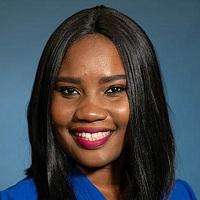
Dr. Hawa O. Abu, MD, PhD is an Assistant Professor in the Division of Geriatric Medicine, Department of Medicine, at UMass Chan Medical School and UMass Memorial Health. She also holds a secondary appointment in Population and Quantitative Health Sciences. She is a board-certified geriatrician and received a PhD in Clinical and Population Health Research from UMass Medical School and an MPH from the Johns Hopkins Bloomberg School of Public Health. She leads the HOlistic Partner Engagement (HOPE) Research Lab, which studies how spirituality and religiosity relate to health outcomes, patient engagement, and shared decision-making among older adults with multiple chronic conditions. Much of her work focuses on older adults with atrial fibrillation. As a co-investigator on the SAGE-AF study, she has examined how cognition, frailty, and multimorbidity affect quality of life and treatment decisions in this group. Her research is funded by the National Heart, Lung, and Blood Institute, the UMass Chan Center for Clinical and Translational Science, and the Louisville Institute. Dr. Abu chairs the American Geriatrics Society’s Faith, Religiosity, Spirituality, and Aging Special Interest Group and is a 2026 NIA Butler-Williams Scholar.