
Project Partner: Speak for the Trees, Summer 2025
Project Summary: In a city, trees improve air quality, cool their surroundings, and boost mental health. However, trees are not distributed evenly throughout urban areas like Boston. This uneven distribution of city trees, or “tree inequity,” is rooted in existing injustices related to race, income, language isolation, and other social factors. As a result, Boston’s communities do not have equal access to the public health benefits that trees provide.
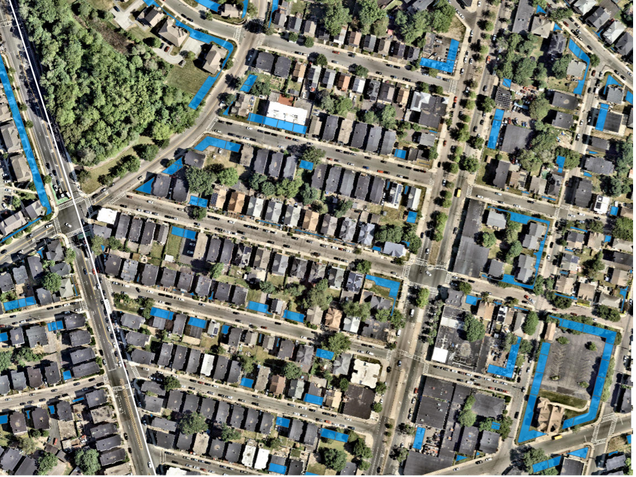
Sophia worked with Speak for the Trees on three projects that address the public health impacts of tree inequity. First, Sophia augmented the decision-making tool that the non-profit uses to visualize possible tree planting sites. They added information about environmental justice, urban heat, and public transportation to the tool, which will be used to prioritize planting in areas that lack shade trees. Second, Sophia began mapping the relationship between tree canopy coverage and public health. This project examines whether Boston’s trees significantly improve air quality, urban heat, and mental health, thus illustrating the impacts of tree inequity on community wellbeing. Third, Sophia started analyzing the history of tree inequity by mapping Boston’s canopy coverage in historical aerial photographs. Together, these three projects will guide the non-profit’s efforts to plant trees and to advocate for tree equity in Boston.

Watch Sophia’s URBAN Internship Lightning Talk here.