Part One: Introduction and Background
As the risks posed by climate change grow, the need for climate-resilient communities grows with them. Climate resilience is defined as the ability to adapt to changes in local weather and the larger-scale climate while maintaining livable conditions. While climate resilience can take many different forms depending on the place, community, location-specific threats, and more, its overarching goal is to manage the problems of a changing climate and rebuild after major events like storms.1 Failure to build climate resilience can have catastrophic consequences; the damage to New Orleans during Hurricane Katrina stands out as a harsh example. Lack of municipal preparedness led to higher death tolls and more extensive damage as levees failed, worsened by the absence of predetermined residential evacuation routes. Approximately 50 of the city’s levees and floodwalls were breached and pumping stations were rendered unusable, leading to the extensive flooding of about 80% of the city. Over 1,100 people were killed.2
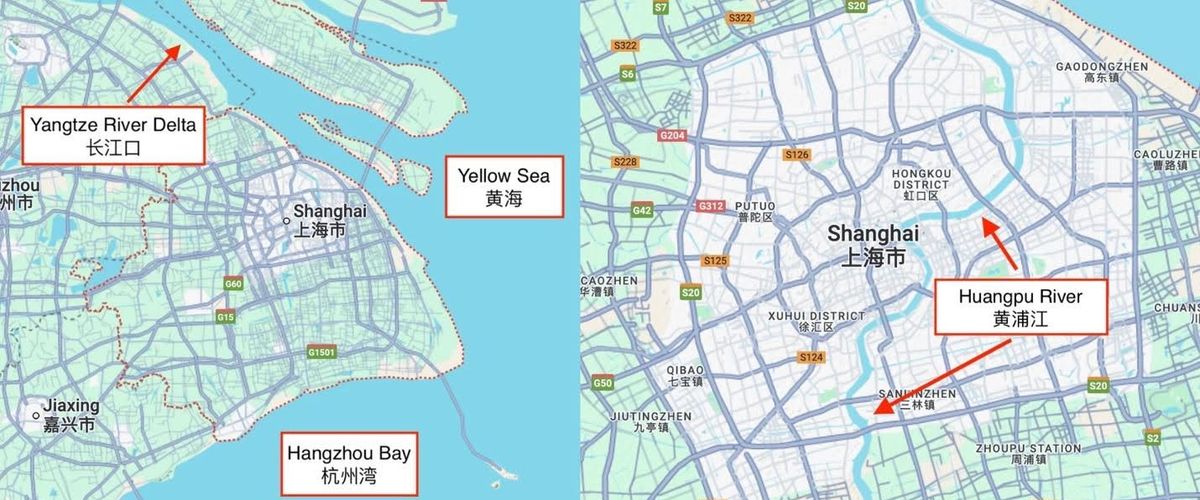
As a major coastal city, Shanghai faces similar threats, albeit on a larger scale. Shanghai’s population reached 24.75 million residents in 2022 across the 6,341 km area. Shanghai is also a major global economic hub, meaning widespread damage from a major climate event would have domestic and international financial repercussions. In 2023, Shanghai alone was responsible for 18.5% of China’s national GDP, approximately CN¥7.73 trillion (US$1.06 billion), and held the world’s highest volume of traded goods, at 3.6% of the global total.3 Given the massive size of Shanghai’s economy and the interconnectedness of global Chinese markets, the city must take steps to prepare itself for incoming climate risks such as rising sea levels, worsening storms, and food insecurity, as these threats can create major problems for the local workforce and global economy.
This discussion advocates for the implementation of stronger sustainable development policies to achieve several goals, including:
- Protection of the city and surrounding area from floodwaters from the Yangtze River Delta and Hangzhou Bay, and rising sea levels from the East China Sea
- Incorporation of Shanghai’s agricultural land into its flood control plan
- Implementation of stronger sustainable development policies via specific project goals.
By incorporating its agricultural land into its sustainable development strategy, Shanghai has the potential to harness the environmental services provided by this green space, both aiding flood control efforts and protecting the city’s food security. Environmental services describe any benefits provided by the environment, which can vary widely and have subtle but impactful effects on the environment.
Part Two: Flood Risks, Infrastructure, and the 14th Five-Year Plan
Flood Risks in a Yangtze River Delta City
As a major city on the Yangtze River Delta, Hangzhou Bay, and the East China Sea, Shanghai has always faced flood risks, especially due to severe storms. However, estimations from a monitoring station just north of the Yangtze River Delta predict that local sea levels could rise from 0.24 meters to 0.44 meters by 2050.4 While this change may seem minor, even the slightest sea level elevation can drastically impact coastal cities where the water table is already close to the surface. Changing oceanic and atmospheric conditions are also responsible for the global increase in severe storms.5 In fall 2024, Shanghai experienced its strongest typhoon since 1949, named “Beibijia.” Beibijia was the equivalent of a Category 1 Atlantic hurricane, with winds near the eye reaching up to 151 mph. While the city was prepared to dispatch repair crews, rescue teams, and volunteers to address wind damage, there were concerns about flood damages to the city’s agricultural sector.6 Storms like Beibijia will become more common as climate change continues to alter oceanic and atmospheric conditions, emphasizing the need for more drastic measures to protect Shanghai’s citizens and improve the city’s climate resilience.

“Green Infrastructure” and Shanghai’s 14th Five-Year Plan
One important sustainable urban development strategy that has gained attention in recent years is “green infrastructure.” Green infrastructure can take a variety of forms, ranging from simple park lawns to elaborately constructed microcosms within city spaces that maximize environmental services for the benefit of residents and the local environment. This type of infrastructure harnesses natural processes in heavily developed areas to achieve typically complex goals, like flood mitigation or ambient air temperature reduction. Green infrastructure is becoming increasingly popular as communities around the world search for practical ways to mitigate the effects of climate change without overdrawing municipal budgets.7
The increased popularity of green infrastructure has given rise to a wave of revitalization projects. These projects typically rely on the transformation of existing space, like making a rarely used lot or courtyard into something more environmentally friendly and useful for the local community, like a park. Revitalization projects in Shanghai have accelerated considerably under an initiative called the “City of a Thousand Gardens.” The initiative has already led to the creation of over 125 green spaces as of October 2024 and an ambitious goal of 1,000 total green spaces by the end of 2025. These projects cost an average of about CN¥220,000 per square meter (approximately US$30,219), including the cost of demolition fees, building materials, wages for construction workers, etc. Despite the price, this is a more cost-efficient investment than relying on existing infrastructure, which must be rebuilt or repaired after every major flood.8

Projects like the City of a Thousand Gardens are the result of Shanghai’s 14th Five-Year Plan, an extensive document outlining the economic, social, and political goals of Shanghai and the surrounding region from 2021 to 2025.9 Sections twelve and thirteen lay out the environmental and developmental goal of transforming Shanghai into a “sponge city.” The sponge city concept blends various infrastructural techniques to prevent flooding,10 including improved drainage infrastructure, ample green spaces, and permeable materials to drastically reduce flood risk and slow the progression of water through the city, when floods do occur.11 Floods occur when too much water is present for the water table in a given area to absorb because the soil is too dry,compact, oversaturated, and inaccessible. Urban areas are especially susceptible to flooding due to the high concentration of traditional paved surfaces like roads and sidewalks, which do not allow for the absorption of water. Natural permeable surfaces like soil and artificial surfaces like sidewalks made of recycled rubber chips allow excess water to drain into the ground and enter the water table, drastically reducing the amount of surface water needing drainage.12 In concordance with efficient, well-maintained storm drain systems, permeable surfaces can make a significant difference in a city’s flood prevention efforts, which is exactly what Shanghai aims to accomplish by the end of 2025. While the plan does not specifically dictate how the city should accomplish these goals, it outlines guidelines for the next few years and demonstrates awareness of the significance of environmental factors in the city’s development.13

“Gray Infrastructure” Shortfalls
While Shanghai’s “green infrastructure” projects are well underway, there has been much less fanfare about the city’s “gray infrastructure,” including plans for improved storm drains and sewer lines. Gray infrastructure refers to structures and materials like roads, buildings, and other typically impermeable surfaces that do not occur naturally. Storm drains and sewage lines also fall into the “gray infrastructure” category. The 14th Five-Year Plan describes a need for improved drainage, but is vague and provides little guidance for future projects. Section 12.3.2 briefly describes drainage project goals but only aims for about 35% of the city center to have more reliable drainage by 2025, where“reliable” is defined as having the capacity to handle runoff from 3 to 5 year storms.14 While this would improve the existing infrastructural capacity, the risk of increasingly severe storms, like Typhoon Beibijia, calls for greater runoff drainage capacity to accommodate rainfall levels associated with 10- to 15-year storms.
Gray infrastructure instead prioritizes interim measures, especially centered around riverfront and oceanfront areas, as the construction of seawalls and pumping systems is specifically named in Section 12 of the Five-Year Plan.15 While sea wall and pumping station construction projects are important provisional measures, they alone cannot address Shanghai’s flooding risks. It would be more effective to combine improved gray infrastructure with green infrastructure projects.
Part Three: Agriculture as Green Infrastructure
The Great Leap Forward, Famine, and the Creation of Shanghai’s “Green Ring”
Shanghai sets itself apart from other urban centers through its food production methods. Since the Cultural Revolution, the city has produced a significant portion of its produce rather than importing it from the countryside. This practice became especially prevalent during the 1950s because of Mao Zedong’s Great Leap Forward, when citizens flocked from the countryside to growing urban areas due to the country’s rapid industrialization.16 As these population centers grew, so did the need for reliable food sources. Policies during the Great Leap Forward favored urban affairs over the welfare of rural communities, which led to the Great Leap Famine from 1959 to 1961. Urban communities consumed a majority of the available food supply. Beijing, Shanghai, Tianjin, and Liaoning together consumed approximately two-thirds of the country’s grain just before the Great Leap Forward, leaving rural communities with very little. By the time the Great Leap began, the four municipalities consumed approximately 90% of the country’s grain imports. This high rate of consumption may have constituted a positive feedback loop, as rural families may have been driven towards cities in search of more reliable food sources, increasing demand even more. The death toll in rural areas was immense, whereas urban areas suffered very little in comparison.17
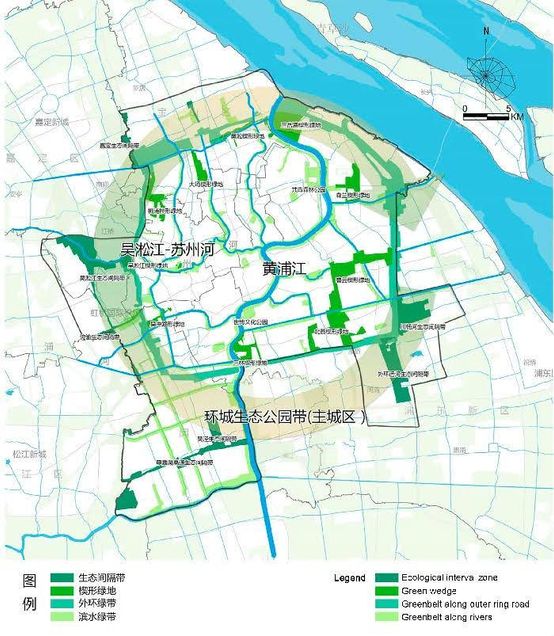
The Great Leap Famine was a source of significant nationwide anxiety surrounding food security in later years. This anxiety likely contributed to ongoing agricultural efforts, even in urban areas, as demand for food supplies continued to grow. Shanghai developed its local agricultural capacity during the Great Leap Forward, providing all the city’s produce and much of its other food items by the 1980s.18 By the 1990s, the region produced 50% of the city’s pork, 80% of its vegetables and fish, and nearly all of its chicken, eggs, and dairy. This agricultural sector became known as Shanghai’s “green ring,” utilizing 300,000 hectares of land, rivers, and canals for irrigation, and various kinds of waste from the inner city as fertilizer, allowing merchants to sell their agricultural goods within 10 km of their points of origin.19 Although Shanghai’s agricultural capacity declined by the end of the 1990s, it saw a resurgence in the 2000s as food security reappeared on the municipality’s radar. Financial incentives were put in place: investment in agriculture increased tenfold, farming subsidies were implemented, and land was more strictly regulated to preserve the green ring.20

By 2012, only about 50% of Shanghai’s produce was grown in the green ring. However, despite the reduction in production, Shanghai still enjoys several advantages associated with such proximity to its agricultural region.21 First, shipping emissions were reduced by reducing the distance agricultural products needed to travel, which is a distinctive benefit as nitric oxide (NOx), sulfur dioxide (SO2), and particulate pollutants were much higher in 2012 than they are today.22 Second, the proximity allows for fresher produce at markets and grocery stores, giving customers more time to eat fresh-grown food before expiration . Third, having agricultural spaces around the city provides environmental services, including flood prevention.
Recent infrastructure developments have helped further expand agricultural initiatives within the city itself, rather than solely relying on the green ring. Notable projects include community gardens with shade plants, herbs, and vegetables for nearby residents, such as the Hongxu Habitat Garden in Changning District and the Chuangzhi Habitat Garden in Yangpu District.23 Similar projects cropping up in new developments include rooftop gardens, which have the added benefit of reducing temperatures in buildings.24
Waterfront Green Spaces and their Environmental Services
In addition to providing reliable sources of food, waterfront green spaces provide environmental services that quietly benefit both local ecosystems and residents. While river water is rich with minerals that act as a natural fertilizer for crops, plant life in river-irrigated areas helps to filter out pollutants that would otherwise need to be removed in water purification processes before being safe for human use.
A major advantage associated with waterfront green space is flood risk reduction. While this is typically attributed to marshland, mangroves, and similar ecosystems, cropland still notably contributes by providing swaths of permeable surfaces to absorb excess floodwater and runoff.25 When accompanied by improved drainage throughout the city’s croplands, the green ring itself could help drain excess floodwater before it reaches the urban center, reducing the strain on gray infrastructure.
Large green spaces also serve as effective carbon sinks. While this benefit may not be noticeable to the local populace, it remains critically important for regional air quality. The smaller green spaces throughout the city also provide this environmental service, albeit on a much smaller scale.26 Carbon storage capacity is improved through composting programs, which are becoming more popular in urban spaces as communities develop smaller-scale sustainability programs. Section 13 of the 14th Five-Year Plan calls for a “circular” waste management strategy, providing a perfect opportunity for expansion of the city’s composting program.27 Shanghai was redirecting 80% of its organic waste to composting centers by 2012, primarily coming from the city’s rapidly-developing Pudong New District. This organic material mostly contains lawn clippings and food scraps, redirected from landfills to create nutrient-rich, carbon-sequestering compost for the green ring. In addition to reducing material placed in landfills and preventing excess methane emissions, this compost increases green ring productivity and provides more fresh produce for the city.28 Utilizing green spaces and composting programs to store carbon, reduces methane emissions and waste, and grows accessible food for residents to specifically address the goals outlined in sections 12 and 13 of the 14th Plan: namely, the promotion of sustainable, low-carbon solutions, circular waste management, and the implementation of the Thousand Parks Plan.29
Part Four: Steps Forward
As China aims to reduce its ecological footprint, the goals outlined in the 14th Five-Year Plan can serve as starting points for future policies in Shanghai and other major waterfront cities. However, the existing initiatives to make Shanghai more climate-resilient, while commendable, are not enough to effectively prevent increasingly intense storms and flooding. These projects are important for short-term development, but future policy should mandate the incorporation of environmental services beyond those mentioned in the 14th Plan. These additions will further strengthen climate resilience and better accomplish Shanghai’s goal of becoming one of the world’s most sustainable cities.
The 14th Five-Year Plan will be completed at the end of 2025, leaving space for new, more comprehensive developmental planning. If Shanghai seeks to become a bastion of sustainable development, it must commit to specific goals. The 15th Five-Year Plan should specifically outline projects, including realistic timelines, budget projections, and other specifics to ensure accountability and keep the city’s climate goals on track. Measures should be proposed to evaluate the progress of these projects as they are implemented. The Shanghai Municipal Bureau of Ecology and Environment already oversees similar evaluative responsibilities. The Shanghai Academy of Environmental Sciences, one division of the Bureau, would fit nicely as the project’s home research institution, while the Shanghai Environmental Monitoring Center would be a valuable resource once the 15th Plan’s projects are underway.30 The new research facilities at centers like the Jiading Science and Technology Innovation Core (The Core) may also play an important role in the future, as a significant amount of funding is being funneled into the center to help it become a global scientific innovation hub. The Core could be a valuable space for more novel research, focusing on new technologies and methods to reduce the risk of flooding in urban centers.31
In summary, to improve the previously discussed issues, the 15th Five-Year Plan’s goals should include the following:
- Implementation of land protection policies for the green ring agricultural area
- Research into the potential benefits and costs associated with the expansion and maintenance of the green ring’s land area
- Continued improvement of gray infrastructure, namely drainage systems
- Continued construction of green spaces, especially in unused lots and courtyards
- Allocate funding and lab space for research into novel flood control strategies at the Jiading Science and Technology Innovation Core and other local research centers
- Establish evaluation methods to ensure sustainability goals are being met and projects are being held to high environmental standards
- Evaluate areas of environmental vulnerability through the lens of climate justice.
To truly become the example of environmental development excellence it aims to be, Shanghai must implement these strategies in the most equitable way possible for its citizens. Climate change mitigation strategies cannot be truly successful without placing the well-being of citizens first, especially considering that underserved populations in urban areas often experience more severe consequences than those in more affluent areas. If Shanghai can successfully and equitably implement its climate resilience policies, it can achieve its overarching goal of environmental development excellence that stands as an example for the rest of the world’s major waterfront cities.
Endnotes
1. Center for Climate and Energy Solutions, “What Is Climate Resilience and Why Does It Matter?”
2. ASCE Technical Council on Forensic Engineering, “New Orleans Hurricane Katrina Levee Failures.”; National Bureau of Statistics of China, “Annual Data by Province, Shanghai.”
3. Shanghai Municipal Statistics Bureau, “2024上海速览 Shanghai Quick Facts.”
4. “IPCC AR6 Sea Level Projection Tool.”
5. Finzi, “CAS BI 306: Biology of Global Change.”
6. Shanghai Municipal People’s Government, “‘最强台风’登陆 申城总体平稳 全市上下齐心协力迎战‘贝碧嘉’ 广大一线基层工作者努力付出 市民理解配合 Shanghai Is Stable after Citizens Worked Together to Combat ‘Strongest Typhoon Beibijia’”; Hall and Woo, “Typhoon Bebinca Lashes Shanghai in Strongest Storm to Hit City since 1949.”
7. Hutyra, “CAS EE 475: Urban Ecology.”
8. Chen, “巧挖存量资源 上海建设‘千园之城’有新智慧 50余处单位附属绿地今年开放 Shanghai Builds ‘City of a Thousand Gardens,’ with over 50 Green Spaces Opening This Year.”
9. Shanghai Municipal People’s Government, “Shanghai’s 14th Five-Year Plan for National Economic and Social Development and Outline of Long-Term Goals for 2035.”
10. Owen-Burge, “What Are ‘Sponge Cities’ and How Can They Prevent Floods?”; Shanghai Municipal People’s Government, “加强面向未来的现代化基础设施建设,提高超大城市服务水平 Section 12: Strengthen the construction of future-oriented modern infrastructure and improve the service level of megacities.”
11. Owen-Burge, “What Are ‘Sponge Cities’ and How Can They Prevent Floods?”
12. Hutyra, “CAS EE 475: Urban Ecology.”
13. Shanghai Municipal People’s Government, “加强面向未来的现代化基础设施建设,提高超大城市服务水平 Section 12: Strengthen the construction of future-oriented modern infrastructure and improve the service level of megacities”; Shanghai Municipal People’s Government, “巩固提升生态环境质量,加快建设生态宜居城市 Section 13: Consolidate and improve the quality of the ecological environment and accelerate the construction of an ecological and livable city.”
14. Shanghai Municipal People’s Government, “加强面向未来的现代化基础设施建设,提高超大城市服务水平 Section 12: Strengthen the construction of future-oriented modern infrastructure and improve the service level of megacities.”
15. Shanghai Municipal People’s Government, 12.
16. World Wildlife Fund, “Shanghai Urban Farming”; Kung and Lin, “The Causes of China’s Great Leap Famine, 1959–1961.”
17. Kung and Lin, “The Causes of China’s Great Leap Famine, 1959–1961.”
18. Kung and Lin; World Wildlife Fund, “Shanghai Urban Farming.”
19. Jia, “Shanghai Ecological Space Sector Plan for 2021-2035”; World Wildlife Fund, “Shanghai Urban Farming.”
20. World Wildlife Fund, “Shanghai Urban Farming.”
21. World Wildlife Fund.
22. National Bureau of Statistics of China, “Annual Data by Province, Shanghai.”
23. Sisan, “A Place for Nature in Shanghai.”
24. World Wildlife Fund, “Shanghai Urban Farming.”
25. Hutyra, “CAS EE 475: Urban Ecology.”
26. ibid.
27. Shanghai Municipal People’s Government, “巩固提升生态环境质量,加快建设生态宜居城市 Section 13: Consolidate and improve the quality of the ecological environment and accelerate the construction of an ecological and livable city.”
28. Hutyra, “CAS EE 475: Urban Ecology”; World Wildlife Fund, “Shanghai Urban Farming.”
29. Shanghai Municipal People’s Government, “加强面向未来的现代化基础设施建设,提高超大城市服务水平 Section 12: Strengthen the construction of future-oriented modern infrastructure and improve the service level of megacities”; Shanghai Municipal People’s Government, “巩固提升生态环境质量,加快建设生态宜居城市 Section 13: Consolidate and improve the quality of the ecological environment and accelerate the construction of an ecological and livable city,” 13.
30. Shanghai Municipal Bureau of Ecology and Environment, “上海市生态环境局 Main responsibilities of the Shanghai Municipal Bureau of Ecology and Environment.”
31. Wu, “‘嘉定科创核’规划发布:集聚5家国家级科研院所230家高新技术企业 打造长三角科技成果转化最便利区域 ‘Jiading Science and Technology Innovation Core’ plan released: Gathering 5 national-level scientific research institutes and 230 high-tech enterprises to create the most convenient area for the transformation of scientific and technological achievements in the Yangtze River Delta.”
About the author

MJ Taylor is a Master of Arts candidate in Global Policy with a specialization in environmental policy and a Graduate Certificate in Asian Studies. They are also an Urban Biogeoscience and Environmental Health (URBAN) trainee for the 2025-2026 academic year. Their research focuses on the evolution of U.S.-China relations and the development and implementation of climate policy in urban centers. MJ utilizes concepts of environmental justice and social equity to analyze how major global power interactions most impact the public and determine potential solutions to support sustainable, peaceful global development.
Bibliography
ASCE Technical Council on Forensic Engineering. “New Orleans Hurricane Katrina Levee Failures.” Failure Case Studies. Charlotte, NC: University of North Carolina at Charlotte, April 7, 2017. https://eng-resources.charlotte.edu/failurecasestudies/dam-failure-cases/new-orleans-hurricane-katrina-levee-failures/.
Center for Climate and Energy Solutions. “What Is Climate Resilience and Why Does It Matter?” Climate Essentials. Arlington, VA: Center for Climate and Energy Solutions, April 2019. https://www.c2es.org/wp-content/uploads/2019/04/what-is-climate-resilience.pdf.
Chen, Xihan. “巧挖存量资源 上海建设‘千园之城’有新智慧 50余处单位附属绿地今年开放 Shanghai Builds ‘City of a Thousand Gardens,’ with over 50 Green Spaces Opening This Year.” 一网通办 Government Online-Offline Shanghai, November 13, 2024. https://www.shanghai.gov.cn/nw4411/20241113/d8bd6862bc9d4765a0700519aa4d9245.html.
Finzi, Adrien. “CAS BI 306: Biology of Global Change.” Lecture, Boston, MA, 2020.
Google Maps. “Map of Shanghai.” Terrain. Shanghai, China: Google, April 9, 2025. https://www.google.com/maps/place/Shanghai,+China/@31.2069869,121.4568775,10.93z/data=!4m6!3m5!1s0x35b27040b1f53c33:0x295129423c364a1!8m2!3d31.230416!4d121.473701!16zL20vMDZ3amY!5m1!1e4?entry=ttu&g_ep=EgoyMDI1MDQwNy4wIKXMDSoASAFQAw%3D%3D.
Hall, Casey, and Ryan Woo. “Typhoon Bebinca Lashes Shanghai in Strongest Storm to Hit City since 1949.” Reuters, September 16, 2024, sec. China. https://www.reuters.com/world/china/typhoon-bebinca-lands-shanghai-strongest-storm-hit-city-since-1949-2024-09-15/.
Hutyra, Lucy. “CAS EE 475: Urban Ecology.” Lecture, Boston, MA, 2022.
“IPCC AR6 Sea Level Projection Tool.” NASA EarthData, August 9, 2021. https://urldefense.us/v3/__https:/doi.org/10.5281/zenodo.5914709__;!!PvBDto6Hs4WbVuu7!OpHVi2dECJIYLt_jtphGBJDsvWgRmB6i6dLrwDWQyA_p3JWr1bHDDOXHCZStxdZHTUIClPwRv8jfhdogOH2WoVGkxrDCETTc-yho0CA$.
Jia, Mengyuan, trans. “Shanghai Ecological Space Sector Plan for 2021-2035.” Urban Planning Society of China, June 25, 2021. https://en.planning.org.cn/nua/view?id=342.
Kung, James Kai‐sing, and Justin Yifu Lin. “The Causes of China’s Great Leap Famine, 1959–1961.” Economic Development and Cultural Change 52, no. 1 (October 2003): 51–73. https://doi.org/10.1086/380584.
National Bureau of Statistics of China. “Annual Data by Province, Shanghai.” Data and Tools. National Data, 2022. https://data.stats.gov.cn/english/easyquery.htm?cn=E0103.
Owen-Burge, Charlotte. “What Are ‘Sponge Cities’ and How Can They Prevent Floods?” UNFCCC Climate Champions, April 11, 2022. https://www.climatechampions.net/news/what-are-sponge-cities-and-how-can-they-prevent-floods/.
Shanghai Municipal Bureau of Ecology and Environment. “上海市生态环境局 Main responsibilities of the Shanghai Municipal Bureau of Ecology and Environment.” Shanghai Municipal Bureau of Ecology and Environment. Accessed December 7, 2024. https://sthj.sh.gov.cn/hbzhywpt1002/.
Shanghai Municipal People’s Government. “Shanghai’s 14th Five-Year Plan for National Economic and Social Development and Outline of Long-Term Goals for 2035.” 一网通办 Government Online-Offline Shanghai, 2021. https://www.shanghai.gov.cn/2035nyjmbgy/index.html.
———. “加强面向未来的现代化基础设施建设,提高超大城市服务水平 Section 12: Strengthen the construction of future-oriented modern infrastructure and improve the service level of megacities.” 一网通办 Government Online-Offline Shanghai, 2021. https://www.shanghai.gov.cn/ghgyqw/20210310/2ac615fa84c546d28e15ee409f3af027.html.
———. “巩固提升生态环境质量,加快建设生态宜居城市 Section 13: Consolidate and improve the quality of the ecological environment and accelerate the construction of an ecological and livable city.” 一网通办 Government Online-Offline Shanghai, 2021. https://www.shanghai.gov.cn/ghgyqw/20210310/447cb0fad8ae445c8505c186d7ff06ca.html.
———. “‘最强台风’登陆 申城总体平稳 全市上下齐心协力迎战‘贝碧嘉’ 广大一线基层工作者努力付出 市民理解配合 Shanghai Is Stable after Citizens Worked Together to Combat ‘Strongest Typhoon Beibijia.’” 一网通办 Government Online-Offline Shanghai, September 17, 2024. https://www.shanghai.gov.cn/nw4411/20240917/8ed3b66c31fd4056bca5739431e56800.html.
Shanghai Municipal Statistics Bureau. “2024上海速览 Shanghai Quick Facts.” Shanghai Municipal People’s Government International Services, 2024. https://english.shanghai.gov.cn/en-BasicFacts/20240304/5ffafbd3f3d74a5aad340c9833c9f989.html.
Sisan, Heather. “A Place for Nature in Shanghai.” The Nature Conservancy, 2024. https://www.nature.org/en-us/about-us/where-we-work/asia-pacific/china/stories-in-china/habitat-garden/.
World Wildlife Fund. “Shanghai Urban Farming.” World Wildlife Fund News, March 1, 2012. https://wwf.panda.org/wwf_news/?204455/Shanghai-urban-farming.
Wu, Yue. “‘嘉定科创核’规划发布:集聚5家国家级科研院所230家高新技术企业 打造长三角科技成果转化最便利区域 ‘Jiading Science and Technology Innovation Core’ plan released: Gathering 5 national-level scientific research institutes and 230 high-tech enterprises to create the most convenient area for the transformation of scientific and technological achievements in the Yangtze River Delta.” 一网通办 Government Online-Offline Shanghai, November 14, 2024. https://www.shanghai.gov.cn/nw4411/20241114/59eb361f448b4e5f91cbd732f8637395.html.