Home
Traumatic Brain Injury (TBI) — A message to the public
Phineas Gage's Traumatic Brain Injury:
In 1848, Phineas Gage, a 25-year-old railroad construction foreman, survived a horrific accident. While using a 43-inch-long, 13-pound iron tamping rod to pack explosive powder into a hole in the rock, the powder unexpectedly detonated. The iron rod propelled through his left cheek and skull, entering near the lower jaw hinge, passing behind his left eye socket, penetrating the base of his skull, and traversing the left frontal lobe upwards. It then exited through the top frontal portion of his skull and landed about 25-30 yards behind him.
Remarkably, Gage was thrown onto his back, had some brief convulsions, but within minutes, he could stand, speak, and walk. Despite the severity of the injury, Gage made an improbable recovery and lived for 12 more years.
The injury to his frontal lobe resulted in profound shifts in his personality and conduct, rendering him almost unrecognizable to those who knew him before. Prior to the incident, Gage exhibited traits of being composed, playful, amiable, and capable, serving as a dependable employee in the railroad industry. However, following the accident, he underwent a stark transformation, displaying hostility, irritability, vulgarity, irrationality, and a marked decline in social discernment. His outbursts of unchecked anger proved detrimental to his employment stability. While it's plausible that any individual enduring such trauma might undergo some personality alterations, the magnitude and drastic nature of Gage's changes were primarily ascribed to the physical trauma inflicted on his brain (Bartol & Bartol, 2020).
Traumatic Brain Injury (TBI) vs. Aggression:
TBI can impair the brain regions and circuits that regulate emotions, impulses, and social cognition, leading to increased aggression in some individuals. The risk and severity of aggression after TBI depend on several factors, such as the location and extent of brain damage, the presence of other psychiatric or neurological disorders, the level of cognitive functioning, the quality of social support, and the availability of rehabilitation services (Bartol & Bartol, 2020).
Traumatic Brain Injury (TBI) vs. Related Antisocial Behavior:
An article published on Medicina (Kaunas) reviews studies that show a positive correlation between TBI and aggressive behavior, especially in the acute and post-acute phases after the injury. Multiple biological and psychosocial factors, such as depression, substance abuse, age at the time of injury, and social support, can influence aggression (Maresca et al, 2020).
Activities that may cause brain Injuries:
Traumatic brain injuries are also linked with certain sports, notably football, soccer, and boxing. These injuries have the potential to cause brain damage, which in turn may trigger shifts in personality and aggressive tendencies (Bartol & Bartol, 2020).
% in Incarcerated Population:
Approximately 60% of the prison population in the United States is thought to have indications of Traumatic Brain Injury (TBI) in their history, in contrast to only 8.5% in the general populace. Certain studies indicate that up to 82% of individuals in the criminal justice system fulfill the criteria for having experienced a TBI at some stage in their lives (Bartol & Bartol, 2020).
Treatment and Prevention:
There are treatments for aggression after TBI: a combination of pharmacological and psychological interventions, such as antidepressants, anticonvulsants, mood stabilizers, cognitive-behavioral therapy, anger management, and social skills training.
Also, prevention of TBI and aggression requires public health measures, such as wearing helmets, reducing alcohol and drug use, enforcing traffic laws, and promoting nonviolent conflict resolution.
Author's thoughts:
Many people, especially those who have suffered head injuries, have encountered difficulties in controlling their behavior. Harm can result from clashes between one person's aggression and another's. I advise individuals with typically functioning brains to pause and step back to avoid being provoked by someone else's aggression.
Reference:
Bartol, C. R., & Bartol, A. M. (2020). Criminal Behavior: A Psychological Approach (12th ed.). Pearson Education (US).
Maresca G., Lo Buono V., Anselmo A., Cardile D., Formica C., Latella D., Quartarone A., & Corallo F. (2023). Traumatic Brain Injury and Related Antisocial Behavioral Outcomes: A Systematic Review. Medicina (Kaunas). 59(8):1377. doi: 10.3390/medicina59081377.
Cultural Competency and Healing Trauma in the Criminal Justice System
The intersection of cultural competency and trauma within the criminal justice system represents a critical juncture where justice, equity, and healing converge. Cultural competency involves more than mere acknowledgement of diversity; it requires a deep understanding of how critical backgrounds influence individuals’ experiences of trauma and justice. This entails recognizing the diverse beliefs, values, communication styles, and coping mechanisms present within different cultural communities.
Trauma is not a monolithic experience; it varies across cultural contexts. Historical traumas, systemic oppression, and community violence are just some of the multifaceted factors shaping individuals’ experiences with trauma within diverse communities. Cultural norms, familial structures, and religious beliefs profoundly influence how trauma is experienced, perceived, and addressed.
Building cultural sensitivity within the criminal justice system is imperative to ensure equitable treatment and meaningful access to justice for all individuals, regardless of cultural background. From law enforcement interactions to court proceedings and rehabilitation programs and access to resources, cultural competency must be integrated at every stage of the justice process.
Challenges abound in fostering cultural competency within the criminal justice system. Limited resources, implicit biases, and institutional barriers often impede efforts to provide culturally sensitive services. Furthermore, misunderstandings and mistrust between marginalized communities and justice institutions have exacerbated and hindered healing.
To overcome these challenges, proactive steps should be taken to promote cultural competency. This includes comprehensive training programs for justice professionals, emphasizing cultural humility, active listening, and trauma-informed approaches. Diversifying the workforce and fostering partnerships with community organizations are also vital in bridging gaps and building trust.
Incorporating cultural perspectives into policy development, program design, and service delivery is essential for creating a more inclusive and responsive justice system. This may involve establishing culturally specific support services, offering interpretation and translation services, and engaging community leaders as liaisons between justice institutions and communities.
Cultural competency is not a static goal but an ongoing journey towards creating a more just and equitable criminal justice system. By centering cultural sensitivity in trauma-informed practices, we can foster healing, promote trust, and ensure that all individuals receive fair and dignified treatment. Embracing diversity, challenging biases, and prioritizing cultural humility are not only ethical imperatives but essential steps towards building a more inclusive society where justice truly serves all.
We Need to Do Better
We need to do better.
We are serving our mentally ill citizens justice by giving them the bare minimum of treatment and then releasing them back into society.
We need to do better.
Just because they received treatment for a certain period doesn’t mean we should expect them to be fully recovered without further assistance.
We need to do better.
When are we going to wake up and realize that these mental health courts that have been set in place just simply aren’t doing what they intended?
In the late 1980s, mental health courts were introduced were introduced in the United States as an alternative to a prison sentence for offenders who suffered from various mental disorders. These were created for those who were thought to better benefit from medical and professional treatment as opposed to being sat in a cell. This alternative was supposed to be beneficial for the offender and their family, the community, and society. However, there have been major downfalls with this with no major improvements to be seen in our near future.
Individuals diverted to mental health courts, while receiving treatment during their time there, and leaving with no additional help. This is where we see recidivism spike in these people. There is a serious lack of continuance of treatment of these programs once these individuals are released from them leaving them nowhere to turn except to old habits (Slate & Johnson, 2008). Furthermore, there is a lack to co-occurring services for certain disorders (Slate & Johnson, 2008). Resources are of the essences for the individuals. In fact, some reports suggest that mental health courts may divert individuals from jail or prison, but they do not solve the systematic problems that cause people with mental illnesses to be arrested and incarcerated in disproportionate numbers (Bazelon Center, 2016). Therefore, they may be helped but then thrown right in jail again. We know that mental health is a major crisis in the country so why, is this day and age, are we having this much difficulty in attaining the necessary tools to help these people? There are serious flaws in our system, clearly. We are not doing justice by the individuals who need mental health help. Helping these people helps them and the community. This needs to stop. We need to do better.
References
Bazelon Center (2016). Examining mental health courts. Present Bazelon Center. https://www.psychiatry.org/news-room/apa-blogs/examining-mental-health-courts
Slate, R. N., & Johnson, W. W. (2008). The criminalization of mental illness. Mental health courts (p. 131-176, Chapter 5). Carolina Academic Press.
I found an article that described three scenarios in which an individual has been wrongfully imprisoned. It then described the immense mental toll it took on that individual. The first story was that of "Mr. X". He is a middle-aged man who was wrongfully imprisoned for a short amount of time but suffered lasting trauma mentally and physically. He suffered high blood pressure before the incident, so once he was imprisoned and going through the process, his blood pressure rose exponentially causing him to be in pain. Once he was released, he continuing had nightmares and trauma from the arrest which had taken place in the middle of the night by surprise. He was also mocked socially, this led him and his family to leave their home to join a new community. Although wrongful imprisonment may be a rarity, once it does occur, that law enforcement body or city should inherit the responsibility for individuals to reach adequate, if not better, standards of living than before. Providing treatment, financial settlement, or public address to clear the individual's name who is not truly guilty would be a great start.
https://citeseerx.ist.psu.edu/document?repid=rep1&type=pdf&doi=26c551bbceded450ee840030e1f61c9dad40fbad
PTSD/Depression
It's imperative to highlight the often overlooked struggles of individuals facing conditions like PTSD and depression in the realm of mental health. These challenges bring unique and profound experiences that require empathy and support. Understanding the impact of conditions such as Post-Traumatic Stress Disorder (PTSD), stemming from traumatic events and characterized by distressing symptoms like flashbacks and anxiety, is crucial. Creating safe environments, recognizing signs of distress, and providing support are essential in aiding those on the path to healing. Depression, a prevalent mental health issue affecting millions globally, necessitates breaking the silence, fostering open dialogue, and reducing stigma for effective support. Connecting individuals with appropriate mental health resources contributes to creating a world that prioritizes and supports the mental well-being of all its members.
Tell Your Story: A Support Hub for Victim-Survivors and Community Members at Boston University
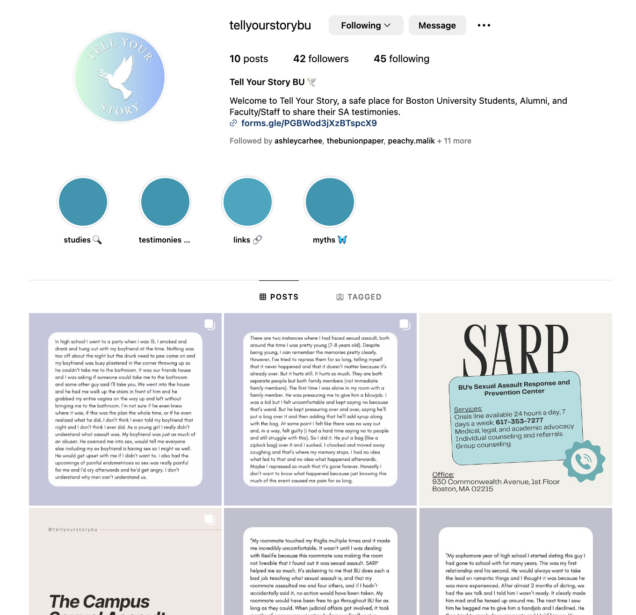
Instagram: https://www.instagram.com/tellyourstorybu/
@TellYourStoryBU, established in October 2023, was born out of a dedication to providing a secure space for victim-survivors to share their experiences with sexual assault, harassment, and any other impactful incidents. My vision was to create a space accessible to students regardless of when, where, or by whom their experiences occurred. The primary focus remained on the victim-survivor's well-being; I wanted an anonymous resource on campus where individuals could express themselves without pressure. These goals soon developed beyond support for victim-survivors, extending to encompass a more comprehensive approach. I wanted to offer resources, educational content, and information tailored to anyone within the Boston University community. This initiative sought to be a hub where students, faculty, staff members, and more could find valuable information on all aspects of sexual violence.
I grew up in the United Kingdom, and my inspiration for this project stemmed from Soma Sara's creation of an anonymous submission site named 'Everyone’s Invited' in June 2020. What began as a platform for testimonies has since grown into an invaluable resource, including not only testimonies but also a wealth of resources for individuals dealing with sexual assault and harassment. As a survivor who found empowerment in similar resources, I founded @TellYourStoryBU to offer that same supportive space to others.
The research process for this account is ongoing and likely to continue indefinitely. Each time I receive a new testimony, I am prompted to read, reflect, and research specific topics related to the shared experience. This allows me to curate resources and links, support hotlines, and more for the individual sharing their story and others who may have undergone similar experiences. Moreover, I aim to eventually use the information collected on sexuality, race, gender, age, and more to provide pertinent insights to SARP and BU SHS. The goal being to facilitate culturally competent and tailored support for all students.
As with anything surrounding this type of topic, there are obviously challenges that I am presented with. One of these challenges is frustration; I find myself becoming frustrated that I am not doing enough, that I could be doing more, and that the work I am trying to do will not be enough until every single individual is being helped. However, when I gave my presentation in my final MET CJ 512 class with Dr. Rousseau, a student reminded me not to try to place stress on the number of people I had helped. Instead to acknowledge that I have been able to provide a resource that is enough for someone, regardless of the number of individuals submitting testimonies or engaging with the account.
Looking ahead, there is ample room for growth and innovation. I aspire to continue creating informative infographics and providing resources through the account. With 42 followers gained and 214 accounts reached in the last two months, I hope the numbers continue to grow, reaching every corner of the Boston University community. Even if only one person finds the needed support or information, I would be content. @TellYourStoryBU has become a personal passion project, and I hope it becomes a valuable resource for individuals.
Finally, I would like to express my heartfelt gratitude to Dr. Rousseau for her unwavering support throughout the semester. Her expertise, exceptional teaching approach, and dedication to every student in our class empowered me to undertake this initiative. It is primarily thanks to her that @TellYourStoryBU exists as a resource for the Boston University community.
The Effect of Trauma on the Brain
The experience of trauma is a complex and arduous challenge that can have long-lasting consequences for individuals. Recent research has uncovered that trauma can significantly modify both the physical structure and function of the brain. These alterations can manifest in changes to critical brain regions, the prefrontal cortex, amygdala, and hippocampus, all of which play essential roles in regulating behavior, emotion, and memory.
The amygdala, a nucleus located in the posterior region of the brain, plays a pivotal role in the processing of feelings, particularly fear and anxiety. Traumatic events often trigger heightened activation of this structure. Consequently, individuals who have been exposed to such traumatic events may present significant emotions such as anxiety or fearful reactions in situations that would not typically elicit such a response. The amygdala functions as the brain's alarm system and, when activated, triggers the fight-or-flight response, which is also known as the fight-flight or freeze mode (Rousseau, 2023). As a result, individuals may otherwise be started and suddenly experience anxiety or fear in situations where these emotions would not typically arise (Rousseau, 2023).
The hippocampus, an integral component of the brain, plays a pivotal task in configuring and retrieving memories. However, traumatic events can lead to this region's shrinking, resulting in memory recall difficulties. Such challenges can impede individuals' ability to remember essential details or events, which can exacerbate feelings of anxiety and stress. The hippocampus is responsible for the development of new connections between neurons and storing memories, and it has a role in regulating stress hormones. Any damage to this brain area can lead to a decrease in the ability to form new memories and can cause higher levels of stress hormones that, in turn, interfere with memory recall (Rousseau, 2023).
The prefrontal cortex is another fundamental region of the brain and is in control of regulating emotions, decision-making, and behavior. When an individual experiences trauma, it can cause a notable reduction in activity within this area of the brain. As a result, individuals who have undergone trauma may experience difficulties with impulse control, decision-making, and emotional regulation. Additionally, they may display a propensity for engaging in risky behavior, exhibiting intense mood swings, and developing addiction issues (Rousseau, 2023).
It is essential to recognize the impact that emotional trauma can have on cognitive functioning and behavior, particularly within vulnerable populations. By understanding the relationship between trauma and the prefrontal cortex's functioning, healthcare providers and mental health professionals can develop more effective interventions and treatment plans (Dr. T Barthelemy).
Acknowledging that changes may manifest in the brain even without physical injury is imperative. Traumatic emotional events may result in the rewiring of the brain, thereby impacting our perceptions of the world, relationships with others, and a person’s decision-making abilities (Dr. T Barthelemy). This rewiring is enabled by neuroplasticity, which is the brain's capacity to restructure itself in response to new experiences. Consequently, our modes of thinking, feeling, and responding to the world may undergo alterations. Trauma may also pave the way for the development of mental health behavioral systems such as anxiety, depression, and PTSD. All of which may exacerbate the challenges confronting individuals who have undergone trauma (UR Medicine).
Extensive research has been conducted recently on how individuals who have experienced trauma can distinguish between safe and unsafe situations. The study published in Communications Biology highlights the impact of trauma on the salience network, a critical part of the brain responsible for learning and survival. The research found that people who have experienced trauma, whether they have psychological disorders including depression, anxiety, or PTSD, have different functioning of the salience network in their brains. This research is crucial by helping these individuals manage their feelings and cope with the traumatic experiences. By recognizing the difference between what is safe and what is dangerous, victims of trauma can take proper actions to protect themselves from further harm and develop healthier coping mechanisms to deal with their trauma (UR Medicine).
Dr. Suarez-Jimenez, a postdoctoral fellow at Columbia University Irving Medical Center, conducted a study to gain insight into how exposure to trauma affects emotions and the brain. The study involved measuring the brain activity of trauma victims using functional magnetic resonance imaging (fMRI) while they were exposed to emotional stimuli. To gain a more in-depth understanding of how trauma affects the brain, he contrasted the brain activity of trauma victims with that of non-trauma victims. As part of his research, he examined the biological mechanisms that affect trauma survivors to gain a greater understanding of how their brains respond to trauma and how their emotional regulation is affected (UR Medicine).
Dr. Suarez-Jimenez's research shows significant importance in supporting individuals who have experienced trauma by facilitating the development of healthier coping mechanisms for their emotions. Through careful examination of the biological mechanisms of trauma, this study aimed to provide valuable insights into how different brain regions respond to such experiences and how these reactions can impact one's emotional regulation. Such insights are critical in formulating effective treatment strategies that can aid trauma victims in managing their emotions and promoting a healthy recovery (UR Medicine).
In a study, individuals were subjected to circles of varying sizes, while their brain activity was observed using functional magnetic resonance imaging (fMRI). Only one side of the circle was associated with a minor shock. The researchers discovered that individuals exposed to trauma without psychopathologies compensated for the changes by engaging the executive control network, one of the brain's most prominent networks. The study also found that individuals exposed to trauma but resilient to its adverse effects had another difference in the salience network. They compensated for these changes by engaging the executive control network, which helped them maintain cognitive flexibility and adaptability, two crucial skills for coping with stress and trauma (UR Medicine).
This insightful study illuminates how the brain reacts to trauma and underscores the importance of the salience network in areas such as learning, survival, and resilience. It offers a deeper comprehension of the complicated nature of trauma and its impact on individuals. The research yields an invaluable understanding of the mechanisms by which trauma affects the brain and emotions, which can lead to more effective treatment methods and improved outcomes for those who have undergone traumatic experiences (UR Medicine).
References
Bartelemy, T. (n.d.). Mental Health. (12.05.2023.)
Rousseau, D. (2023). Module 5: Trauma, Genocide, and the Holocaust. Boston University.
Your home for world-class care. University of Rochester Medical Center | UR Medicine. (n.d.). http://www.urmc.rochester.edu/
Animal-Assisted Intervention and Trauma
There are several different therapeutic approaches available to trauma victims. One of which is called animal-assisted intervention (AAI). AAI is defined as “the utilization of various species of animals in diverse manners beneficial to humans” (American Veterinary Medical Association, 2023). The most common form of this approach seen in everyday life is through the use of service dogs. Psychiatric service dogs are specially trained to assist their handlers in the areas where assistance is needed, especially if the handler is incapacitated (Rousseau, 2023). However, service dogs go far beyond providing physical assistance. They also provide mental and emotional assistance as well. Studies prove that the use of AAI has proved to be beneficial in a number of populations such as trauma victims suffering from post-traumatic stress disorder (PTSD), individuals with dementia and children diagnosed with autism spectrum disorder (O'Haire, et al., 2015).
In regards to individuals suffering from PTSD, researchers found that emotional numbness and isolation are common symptoms. AAI has proven to be beneficial to individuals with PTSD because the presence of an animal such as a dog encourages positive emotions and warmth (O'Haire, et al., 2015). Further, animals have been demonstrated to be social facilitators, which connect and unite people thus reducing loneliness and ultimately isolation (O'Haire, et al., 2015). Animals also require routine care, which can mean daily walks, a trip to the store for food, and bathroom breaks. All of which encourages an individual with PTSD to get out of the house and socialize with the world.
As such, animal-assisted intervention is an effective therapeutic approach worth considering for trauma victims.
References
American Veterinary Medical Association. (2023). Animal-assisted interventions: Guidelines. American Veterinary Medical Association. https://www.avma.org/resources-tools/animal-health-and-welfare/service-emotional-support-and-therapy-animals/animal-assisted-interventions-guidelines#:~:text=Animal%2Dassisted%20intervention%20(AAI),types%20of%20animal%2Dassisted%20intervention.
O'Haire, M. E., Guérin, N. A., & Kirkham, A. C. (2015). Animal-Assisted Intervention for trauma: a systematic literature review. Frontiers in psychology, 6, 1121. https://doi.org/10.3389/fpsyg.2015.01121
Rousseau, D. 2023. Module 4: Pathways to Recovery: Understanding approaches to trauma treatment. Boston University.
The Adverse Childhood Experience (ACE) Study
The Adverse Childhood Experience (ACE) was the biggest study of its kind ever created (Rousseau, 2023). In 1958, Dr. Vincent Felitti and his colleague Dr. Robert Anda of Kaiser Permenente studied more than 50,000 patients, finding clear characteristics or commonalities (Rousseau, 2023). It is highlighted that the most damaging statistic found is how the trauma could later manifest into adults (Rousseau, 2023). Furthermore, as the number of ACE categories higher, the number of conditions also increases (Rousseau, 2023). When there is exposure to one category, there is an 80% likelihood of exposure to another category (Rousseau, 2023). These ACE categories include, alcoholism and alcohol abuse, chronic obstructive pulmonary disease, depression, drug use, heart and liver disease, risk of partner violence, smoking, suicide, and overall decline in quality of life (Rousseau, 2023).
Expanding more about the ACE study, Felitti and Anda spent more than a year creating ten new questions that involved defined categories of adverse childhood experiences which included, physical and sexual abuse, physical and emotional neglect, and family dysfunction like having parents who were divorced, mentally ill, addicted, or in prison (van der Kolk, 2014). Ultimately, the ACE study showed that traumatic life experiences during childhood and adolescence are a lot more common than previously expected (van der Kolk, 2014). It is stated that the study respondents were mainly White, middle class, middle aged, well educated, and financially secure enough to have good medical insurance, highlighting that only one-third of the respondents stated no adverse childhood experiences (van der Kolk, 2014). Additionally, the study revealed that the effects of trauma permeated these patients’ adult lives (van der Kolk, 2014). An example mentioned is that high ACE scores turned out to correlate with higher workplace absenteeism, financial issues, and less lifetime income (van der Kolk, 2014).
Furthermore, Felitti and his team discovered that adverse experiences are interrelated, even though they are usually studied individually (van der Kolk, 2014). For example, people do not usually grow up in a household where one brother is in prison, but everything else is okay (van der Kolk, 2014). Incidents of abuse are never ‘standalone’ events, and for each additional adverse experience reported, the toll in later damages rises (van der Kolk, 2014). Felittti and his team also discovered that the impact of childhood trauma initially became noticeable in school (van der Kolk, 2014). Referring to the ACE study results, more than half of those with ACE scores of four or higher reported having learning or behavioral issues, which was compared with three percent of individuals with a score of zero (van der Kolk, 2014). It is expressed that as the children matured, they did not ‘outgrow’ the impact of their early experiences (van der Kolk, 2014). Felitti highlights, ‘“Traumatic experiences are often lost in time and concealed by shame, secrecy, and social taboo”’ (van der Kolk, 2014). However, the ACE study revealed how the effects of trauma permeated these patients’ adult lives (van der Kolk, 2014).
Moreover, after Robert Anda presented the results of the ACE study, he realized that they had found the gravest and most expensive public health issue in the United States, which is child abuse (van der Kolk, 2014). Anda’s calculations entailed that the overall costs surpassed those of cancer or heart disease (van der Kolk, 2014). In addition, eliminating child abuse in America would lessen the overall rate of depression by more than half, alcoholism by two-thirds, and suicide, IV drug use, and domestic violence by three-quarters (van der Kolk, 2014). Eradicating child abuse in America would also have a huge impact on workplace performance, and greatly lessen the need for incarceration (van der Kolk, 2014). Furthermore, follow up studies and papers are still showing up around the world regarding the ACE study. However, the day to day reality of those who suffered child abuse, as well as children in outpatient clinics and residential treatment centers around the country remains the same (van der Kolk, 2014). The only difference now, is that they receive high doses of psychotropic agents, which makes them more manageable, but will also affect their ability to feel pleasure and curiosity, to grow and develop emotionally and intellectually, and to ultimately become contributing members of society (van der Kolk, 2014).
Expanding more on psychotropic agents, the reason why taking medications could be effective, is because it could be used to lessen extreme or debilitating symptoms as an initial step in trauma recovery (Rousseau, 2023). A few of the symptoms that could be lessened with medication include, sleep disorders, hyperarousal, emotional reactivity, depression, and intrusive or recurring thoughts and images (Rousseau, 2023). However, it is highlighted that an approach that may work for one person, may not work for another, potentially even increasing the other person’s experience of trauma symptoms (Rousseau, 2023). Nonetheless, pharmacotherapy, or the use of medication, is one approach to addressing the impact of trauma, specifically in situations where people will experience symptoms like anxiety, depression, or other mental health problems associated with traumatic experiences. Pharmacotherapy would be a very effective approach, especially in tandem with other therapeutic approaches, like psychotherapy in order to provide a comprehensive treatment plan (Alcohol and Drug Foundation, 2021).
Elaborating more on pharmacotherapy, from a neurology perspective, there are many different neurotransmitters in one’s brain (Rousseau, 2023). All in all, pharmacotherapy works by manipulating neurons and neurotransmitters to gain the desired effect (Rousseau, 2023). In addition, medications can be effective in reducing specific symptoms associated with trauma such as, intrusive thoughts, nightmares, or panic attacks. Furthermore, medicines that target the autonomic nervous system, like propranolol or clonidine, could help in lessening hyperarousal and reactivity to stress (van der Kolk, 2014). This group of drugs works by blocking the physical effectiveness of adrenaline and the fuel of arousal, therefore lessening nightmares, insomnia, and reactivity to trauma triggers (van der Kolk, 2014). Additionally, blocking adrenaline can help to keep the rational brain online and make choices possible (van der Kolk, 2014). Ultimately, a detailed approach by a mental health professional is crucial to identify the most appropriate treatment approach, whether it involves medication, psychotherapy, or a combination of both.
Lastly, referring back to the importance of the ACE study, the implementation of this research could be very beneficial if integrated in one’s workplace. For example, providing training among professionals to recognize and respond to people affected by adverse childhood experiences. This could provide more awareness into one’s potential trauma history, guiding more efficient and sensitive methods. Another implementation could be developing support systems that consider the findings of the ACE study in order to help those affected by childhood trauma. Overall, the goal is to use the ACE study’s findings to apply more informed, understanding, and efficient approaches when dealing with people who have experienced childhood traumatic events.
Resources:
Australian Drug Foundation. (2021). Pharmacotherapy for young people. Alcohol and Drug Foundation. https://adf.org.au/talking-about-drugs/seeking-help/pharmacotherapy-young-people/what-is-pharmacotherapy/#:~:text=Pharmacotherapy%20is%20the%20treatment%20of,with%20a%20legally%20prescribed%20substitute.
Rousseau, D. (2023). BU Learn. Retrieved from https://learn.bu.edu/bbcswebdav/pid-12438217-dt-content-rid-91014393_1/courses/23fallmetcj720_o2/course/module1/allpages.htm
Van, K. B. A. (2014). The body keeps the score: Brain, mind, and body in the healing of trauma.
Existential Crisis Online: Where is the Trauma Hidden?
Contemporary literature defines racism and ethnoviolence as one of the main catalysts for causing traumas in individuals, where racism is a system of oppression based on racial categories and domination considering one group to be superior while the others inferior, and ethnoviolence is violence and intimidation of members of particular ethnic groups who are stigmatized by the dominant culture to maintain their status in society (Helms & Nicolas, 2010: 54). Undoubtedly, a continuous exposure to violent oppression regarding a person’s inherent cultural or racial self- integrity may shape PTSD symptoms. This is happening mainly because both racial and ethnic features are innate, and individuals are victimized due to their identity that under pressure leads to denial of their self-identity and self-hatred or constant fear to be judged and blocked from opportunities. In other words, on a regular basis individuals receive a reminder from a society that they belong to a marginalized group, and this fact shapes a cycle of oppression so the brain stays in the state of constant alert, developing symptoms such as aggression, anxiety, depression, panic attacks, etc.
Now, the dilemma of trauma targeting minority groups is that mostly it involves psychological abuse rather than the physical one, and for this reason, it is easy to overlook the problem since it may be a victim's subjective interpretation of events. Thus, the scholarship has identified that it is important to distinguish the difference between harassment and discrimination. If, indeed, the harassment includes the active person-level discrimination that is more straightforward, the discrimination itself is more passive and may be emotionally avoidant. Helms and Nicolas (2010) revealed the findings that “people’s psychological and emotional reactions to racial harassment were more intense and lasted longer than their reactions to racial discrimination” (Helms & Nicolas, 2010: 56). What’s more, another investigation shows a high correlation between identity-based violence and symptoms as well: the higher levels of such racism-related experiences, the higher levels of general stress, suicidal ideation, state and trait anxiety, and clinical depression are being produced (Helms & Nicolas, 2010: 58). Hence, it is possible to conclude that the more racism or ethnoviolence takes the harassment approach, the more interpersonal it becomes, and receives more adverse impact on an individual's self-reflection and self-recognition in society. Despite the missing traces of physical abuse, psychological abuse involves verbal and non-verbal communication: with racism and ethnoviolence it includes the negative treatment that a victim cannot change (gender, race, ethnicity, religion) causing existential crisis. This is crucial to highlight because it is massive and being characterized with inner conflicts due to confusion of personal identity. Consequently, it destroys an individual’s vision of the world, making him/her vulnerable in every single aspect: self-development, personal relationships, career, etc.
That being said, writing this blog post, I would like to state that even though identity-based traumas are silent, they cause alienation that deeply affects emotional, cognitive as well as behavioral elements of an individual. The revealed fact that passive discrimination does not contribute as much as the individual harassment, does not mean that it does not add to each person individually as a global tendency shaping the overall climate of alienation. Discrimination cannot receive a full acceptance as a matter of fact, rather it is manifested through unreported PTSD symptoms that these individuals tend to deny as a priori position themselves as a failure due to both overall discrimination and individual harassment. However, previously each representative of minority groups could experience discrimination in particular dimensions of life such as job applications, healthcare, criminal justice system, education that are more systemic at this point, while returning to communities they could have regained support from each other to maintain positive attitudes that contribute to the personal growth and reduction of stress. It reminds me of Jane McGonigal’s performance regarding the post-traumatic growth where she has developed a game approach called “Superbetter” with the stages of recruiting allies, battling the bad guys and activating the power-ups (Rousseau, Module 1, 2023: 8). This is why the past is full of motivational stories of success among African Americans starting from sports, music/entertainment industry and finishing with politics. Conversely, today the world has shifted towards the implementation of advanced technology and spread of social media that made us accessible and visible wherever we are, unless we are connected to the Internet. The space without time and territorial boundaries established the new reality where it has become possible to freely express your opinion on everything, while reaching everyone with a distance of one click. While we are at home, in our workplace or in the restaurant with our friends, we are exposed to people’s judgments online via their posted comments. Thus, I claim that racism and ethnoviolence has received a new form of manifestation in the cyber environment: this is the hateful speech online against minority groups or particular ethnic groups that tends to tremendously contribute to the alienation of individuals, developing an existential crisis followed by PTSD symptoms.
The controversy of the given issue is that minority groups are being targeted by users online being exposed to traumatic non-stop experiences without proper protection by law enforcement. This occurs due to the First Amendment in the US Constitution where basically oppressive comments are being covered by the freedom of speech: “Congress shall make no law respecting an establishment of religion, or prohibiting the free exercise thereof; or abridging the freedom of speech, or of the press; or the right of the people peaceably to assemble, and to petition the Government for a redress of grievances”. This fact makes victimized people accept their struggles on a daily basis, while entering a cycle of psychological abuse and accumulating all possible post traumatic symptoms. Now, hateful speech can be considered as “words that wound”, even though as it was stated there is no direct physical violence applied. The amount of hate exposure measures the extent of trauma that we eventually get. Thus, it is necessary to know how this procedure works. First, what provokes the danger to happen is the fact that Internet forums / social media shape a digital relationship between anonymous or pseudo-anonymous users, suitable targets for hateful or defamatory messages and the ISP (the Internet Service Provider) that serves as a gateway (Nel, 2007: 193-195). Interestingly, anonymity in this relationship is a variable that enables one’s identity to be concealed for enjoying the social benefit of privacy and free speech (according to the First Amendment in the US jurisdiction) but simultaneously creates a hole in the protection of an individual’s inalienable rights, in particular, the freedom from discrimination and degrading treatment. Meanwhile, a suitable target as a variable falls into the received gap, precisely, focusing on the category of minority groups. The interaction online starts as a regular comment/post, then grows into a hateful message and finally reaches its climax at subsequent hate speech. This leads to a research question: can we balance the rights of free speech belonging to a user and the rights of equal treatment and personal security that are inherently owned by a targeted victim online (Universal Declaration of Human Rights, 1948: Articles 1-5)? The lack of this balance currently results in the deprivation of individual dignity with a subsequent increase in dehumanizing victims since what exactly is targeted in minorities is their personal profile (sexual identity, race, religion, etc), leading to damage of their psychological state, brain or other irreversible outcomes such as alienation, loneliness, despair and finally, suicidal thoughts.
In the settings of the current unstable political climate, I would like to illustrate how this phenomenon affects not only racial minorities but also larger populations of ethnic groups. Once the Russian-Ukrainian conflict started, a lot of social media such as mainly Facebook and Instagram exploded with the amount of hateful comments regarding Russians being all killers and aggressors, even though from the ongoing events not all the country’s population supported the invasive actions of the government. Comments by users contained violence and threats where the main message was that “Russian nation should be eradicated”. For this reason, the Russian authorities took a decision to prohibit Instagram in the Russian jurisdiction, claiming that it is violence-oriented platform trespassing on the individual dignity of citizens. Personally being of Russian origin, even though I was not directly affected by hateful comments (since I limit my participation in the digital daily routine), I received vicarious trauma from reading the hate from thousands of users. As a regular civilian, I couldn’t understand why they wanted me to die just for being ethnically who I am, while I am not even closely related to the ongoing military actions. My trauma started growing from the fact that I did not want to answer questions regarding my descent because I did not want to be judged and finished with self-blaming why I happened to be born as Russian. This journey of trauma demonstrates that I entered the existential crisis, started being confused about who I am since my ethnic background was questioned. Consequently, racism and ethnoviolence tend to break mentally individuals, and if this experience is uniquely new for them, they may not be familiar with how to handle their feelings and opt for silence.
To conclude, I chose racism and ethnoviolence as an overlooked type of accelerators for trauma among racial minorities and ethnic groups. Even though the scholarship is cautious with these issues due to subjective interpretations, the research revealed that harassment may exacerbate PTSD symptoms compared to passive discrimination. However, I claim that today we experience a new catalyst of traumas which is hateful speech online due to the advent of advanced technology and the Internet. I find the given event anti-spatial and diffusing, meaning that it can contribute to people’s exposure to oppression and trauma anywhere anytime, without any right to escape. I have also commented on the contentious lack of legal protection that makes racial minorities and ethnic groups vulnerable and thus more swiftly exposed to the gain of traumatic experiences and development of PTSD symptoms since they enter an existential crisis that is characterized as the confusion of identity. Thus, identity is the main targeted asset that perpetrators aim for to humiliate victims. With assistance of the personal example of online ethnoviolence, I demonstrated how the given relationship operates and which directions trauma may take if being overlooked. To combat the given issue, I think we should find the balance in how to ensure “digital security” on a legal level by avoiding excuses such as freedom of speech since this phenomenon cannot cross somebody else's boundaries, otherwise it takes the form of injustice. Furthermore, I believe that we should invest more resources in educating people’s digital literacy because sometimes the reason why individuals do not report their PTSD symptoms is because they do not realize that they have them just because of constant exposure to stress, violence and discrimination online. The more awareness is being shaped on this problem, the more people or their relatives, community members may recognise the need for help to prevent the development of the given symptoms in advance.
References
- Helms, J., Nicolas, G., & Green, C. (2010, January 01). Racism and Ethnoviolence as Trauma: Enhancing Professional Training. Traumatology, 16(4) 53-62.
- Nel, S. (2007). Online Defamation: The Problem of Unmasking Anonymous Online Critics. The Comparative and International Law Journal of Southern Africa, 40(2), 193–214. http://www.jstor.org/stable/23252662
- Rousseau, D. (2023). Trauma and Crisis Intervention. Module 1. Introduction to Trauma. MET CJ 720. Boston University.
- U.S. Constitution - First Amendment | Resources | Constitution ... (n.d.). https://constitution.congress.gov/constitution/amendment-1/
- United Nations. (n.d.). Universal Declaration of Human Rights. United Nations. https://www.un.org/en/about-us/universal-declaration-of-human-rights