CJ 725 Forensic Behavior Analysis Blog
Examining Solitary Confinement in the United States
Earlier this semester, I completed a documentary review on Solitary Nation, an episode of Frontline which documented the experiences of inmates in solitary confinement in Maine State Prison. The episode, which was the seventh episode of the 32nd season of Frontline, first aired on April 22, 2014 and was directed by Daniel Edge. Ultimately, this documentary uses gruesome images and emotional case studies to show the need to drastically reform solitary confinement in the United States. It also documents the journey of the new prison warden, Rodney, in his mission to reduce the use of solitary confinement and implement other strategies to deal with violent inmates. I thought the film was incredibly well-done; however, it was limited in the fact that it only focused on a few inmates in one prison. After watching, I was prompted to read some broader, more recent research on solitary confinement in the United States today.
Conditions differ depending on the state and prison, but in general, solitary confinement means that the inmates are confined behind a steel door 22-24 hours a day with extremely limited human contact. There are an estimated 80,000-100,000 people in solitary confinement in the United States (Edge, 2014). Common factors of living in isolation include: limited access to rehabilitation or educational programs, limited mental health and medical treatment, and, in some cases, forms of torture such as permanent bright lighting, extreme temperatures, or stun grenades (“Solitary Confinement Facts”).
In terms of reform, there have been recent efforts to limit the amount of solitary confinement allowed. In 2017, some bills were introduced in Massachusetts, including one that restricted the use of solitary to 180 days a year rather than a decade (Zoukis, 2018). Additionally, in 2018, The American Bar Association passed a resolution for state officials to limit its use as a “last resort” and “for no longer than is necessary.. Typically not to exceed 15 consecutive days” (Zoukis, 2018). There have also been efforts to restrict the use of solitary on juveniles and the mentally ill, including the Solitary Confinement Reform Act introduced in 2018 (115th Congress, 2018).
The Texas Department of Criminal Justice eliminated the use of solitary confinement as a form of discipline, effective in 2017. However, this only affected 76 prisoners; the other 4,000 prisoners in isolation were reportedly there for the protection of themselves and others (Zoukis, 2018). The case in Texas is similar to an issue faced by Rodney, the prison warden, in the documentary. While he is trying to reduce the use of solitary in his prison, to do so ultimately means putting other prisoners and staff at risk. In one scene, Rodney is at a meeting with other prison staff and trying to pick an inmate to pull out of the isolation unit. The other staff members, particularly the ones who have to directly deal with these inmates, express their concern and fear of getting hurt, as some of them have been in the past. The documentary also states at the end that one inmate who they released from solitary ended up murdering another inmate after being back in the general population.
These scenes in the documentary demonstrate that while solitary confinement is certainly in need of reform, the actual process of pulling people out who have been in there for years can be very dangerous. Thus, in terms of reducing solitary, reformers face a dilemma in which they must decide between trying to help people who have been isolated for years or ensuring the safety of prison staff and other inmates. Furthermore, while I had originally thought of solitary confinement as merely a form of punishment within prisons, doing this research helped me realize that in many cases, the inmates are just too dangerous (or in too much danger) to have around other people. This is why some prisons, lacking the proper resources for psychological treatment, turn to what seems to be the only option: isolation.
Using solitary confinement for prisoners who are deemed dangerous is referred to as administrative segregation (Weir, 2012). In fact, prisons began using solitary as a means of protecting people in response to growing gang violence within prisons (Weir, 2012). However, segregation for safety purposes has never actually been proven to make prisons safer (Weir, 2012). Instead, it seems that placing people in solitary for years on end only makes it more difficult for them to return to the general population, because being there causes so much trauma. This is shown in the documentary I watched, which follows one inmate, Adam, as he enters solitary for the first time. In the beginning, Adam tells the director that he is confident he can handle solitary confinement, and even expects to enjoy the extra downtime. However, by the end of the documentary, Adam is regularly self-harming, starts riots in the unit, and is even shown pushing feces under his door and flooding his cell. Eventually, Adam is sent to the mental health unit in the prison.
While some progress has been made in recent years to reform solitary confinement in prisons, more still needs to be done to reduce its use, especially as a punishment. In my opinion, there must be more of a focus on mental health treatment for ‘problematic’ prisoners. Even in the documentary, prisoners who are sent to the mental health unit are shown to be in a much better place afterward. However, for many of them, they are only sent there for a few months after self-harming, only to return back to solitary immediately afterward. We need to start looking at long-term solutions that can help integrate these forgotten prisoners back into regular social interactions.
Sources:
Edge, Daniel (Director). (April 22, 2014). Solitary Nation (Season 32, Episode 7) [TV Series Episode]. In D. Fanning (Executive Producer), Frontline. PBS.
115th Congress (April 19, 2018). “S.2724 - Solitary Confinement Reform Act.” Congress.Gov. Retrieved from: https://www.congress.gov/bill/115th-congress/senate-bill/2724/text?format=txt
“Solitary Confinement Facts.” American Friends Service Committee. AFSC.Org. Retrieved from: https://www.afsc.org/resource/solitary-confinement-facts
Weir, Kristen (May 2012). “Alone, in the hole.” American Psychological Association. Retrieved from: https://www.apa.org/monitor/2012/05/solitary
Zoukis, Christopher (October 8, 2018). “Solitary Confinement Reforms Sweeping the Nation But Still Not Enough.” Prison Legal News. Retrieved from: https://www.prisonlegalnews.org/news/2018/oct/8/solitary-confinement-reforms-sweeping-nation-still-not-enough/
A Further Examination: Sue Klebold’s case study of her son, Dylan Klebold
A few weeks ago, I reviewed Sue Klebold’s memoir A Mother’s Reckoning: Living in the Aftermath of Tragedy, about her experience as the mother of Dylan Klebold, one of the Columbine High School shooters. While I was able to share the manner by which she communicated her ideas and insights, I wasn’t able to actually share those insights and ideas. Her recounting of the details of Dylan’s life, combined with what we learned about school shooters in general, paints a picture of how this particular child ended up committing one of the most infamous massacres in American history.
I’m going to start by reviewing what Bartol & Bartol (2017) have to say about school shooters (and shootings) as a group, though they also state there is no single school shooter profile. In general: School shootings happen most at high schools, with a student at the school acting alone as the shooter. The perpetrator often has faced peer or social rejection, endured bullying, has anger about the bullying, and lacks the social or coping skills to deal with these issues. They may show cruelty to animals, or alternatively a high degree of affection or attachment to animals. They often have an interest in guns and weapons, with easy access to firearms, and have often repeatedly made clear their violent intentions to others (usually peers). Attacks seem planned in advance, with the shooter expecting to be killed or planning to commit suicide in conjunction with the attack. (p. 311-312) Synthesizing the many factors, it’s argued that most school shooters have a history of social rejection, along with either psychological problems, an interest in weapons, and/or a fascination with death (p. 314). School shooters often show little attachment to their school. There are also certain traits that lead to a school itself being more or less at risk for a shooting event: an inflexible culture, inequitable discipline, tolerance for disrespectful behavior, and a code of silence (p. 315). With these many, many factors in mind, I turn to A Mother’s Reckoning.
Sue (as both she and her son share the same surname, I’m going to refer to them by their first names for the sake of clarity) begins by emphasizing that she and her husband, Tom, truly had no idea what Dylan was planning. From many angles, Dylan was the average kid any parent would want. He was kind, gentle, smart, and happy. He “was easy to raise, a pleasure to be with, a child who had always made us proud” (Klebold, 2016, p. 61). He was fiercely independent, insisting his mother teach him how to bathe himself at the age of 5 or 6, and how to do his own laundry at age 10. His negative traits weren’t out of the ordinary either, really: he was very sensitive to embarrassment, which sometimes led to anger; and he was perhaps a little too independent, where he wouldn’t ask for help even if he needed it - like when he had to take a break from baseball after pains he never mentioned became so bad they caused his arm real damage. He felt a need to be in control.
His parents raised their two boys as many others did, following “that close-knit, suburban family model” (p. 62). Sue acknowledges that before Columbine, she would have reacted to news of some horrific act by wondering what that person’s parents must have been like to allow someone to turn out like that. But she came to realize the truth was far more troubling. Dylan’s parents were “hands-on parents who limited the intake of television and sugary cereals. We monitored what movies our boys could see, and put them to bed with stories and prayers and hugs” (p. 61). They made sure to know who their kids were spending time with, and made sure they knew and felt that they were loved. In a video-diary-style recording, Dylan stated his parents had been good to him. Yet, despite a happy upbringing, Dylan still did what he did.
As Dylan entered adolescence, he became a bit more complicated. He still was the boy his parents joked seemed to be “on autopilot” (p. 65), but Sue notes that this may have been particularly dangerous in his case. For happy, easy-to-raise, and successful kids like him, it was easy “to fly under their parents’ radar precisely because they were the shiny pennies, hiding the terrible pain they were in from their parents as capably as they did everything else” (p. 65). I must say, that rings true to me - I’d personally say it was because I was so self-sufficient and trustworthy as a child that my parents had no idea when I was going through (relative) difficulty in adolescence.
As a teen, Dylan’s aversion to embarrassment became more severe, his self-consciousness more pointed. His grades fell to average. Even still, he seemed happy and had a handful of close friends. Sue would later find out through his journals though that by sophomore year he was battling depression and suicidal thoughts. He had friends, but felt as if he were a burden; he wanted love, but the girl he was interested in didn’t know he existed. Though posthumous diagnosis isn’t possible, “that Dylan was seriously depressed is not up for debate” (p. 160), and his behaviors might have also fit the criteria for other diagnoses such as avoidant personality disorder, schizotypal personality disorder, and/or borderline personality disorder. While in class we have made abundantly clear that most people with mental health issues are non-violent, Dylan’s depression and suicidality fits the school shooter pattern.
His parents didn’t understand the full extent of it, but high school wasn’t turning out to be a kind place for him. He started getting in trouble, and complained of how certain groups of kids were ruthless bullies, yet the school did nothing to stop them. One particular incident was uncovered where Dylan and Eric (the other shooter) were surrounded by a group, pushed around, called slurs, and had ketchup sprayed on them. Teachers did nothing. Sue suggests that for someone as sensitive to humiliation and loss of control as Dylan, these types of events may have made a big influence on him, and created a bond between the boys. Not only had Dylan experienced bullying in school, his school fit some of the factors that meant it was most at risk for a shooting by ignoring certain behaviors and otherwise unevenly enforcing the rules. Sue received a number of letters from people who’d gone to Columbine who were more surprised that a shooting hadn’t happened sooner than that one had happened at all.
By his junior and senior years, Dylan’s parents knew something was wrong. Dylan was behaving differently, getting in more trouble, not always acting like himself. He became more paranoid, forcing them all to flee a McDonald’s because he believed a group of teens on the other side of the store were laughing at him. (They weren’t.) But Sue and her husband didn’t know what the signs they were seeing meant. Sue “had no idea it was a life-and-death situation. I was just worried Dylan was unhappy” (p. 227). Indeed, up until he died, he had been going to school, working a part-time job, hanging out with his friends, planning for college - all behaviors of a normal teenager. Just three days before the shooting, he went to prom with a friend. Talking about the home video they took of that day, “It’s absolutely stunning how normal Dylan seems” (p. 235). These things outweighed their concerns about him. They’d never seen his rage, nor ever felt scared of him.
Looking back on the textbook’s suggested traits of school shooters, we’ve already seen above how Dylan does actually map onto many of them. Sue provides details that help us address some of the other considerations as well. Guns and weapons? Sue and her husband were vehemently opposed, but Dylan still asked for a gun for Christmas his final year. (They said no.) Making intentions known ahead of time? Dylan wrote an essay about a school shooting that disturbed his teacher enough that it was referred to the school counselor. It wasn’t deemed something that needed further attention. Planning? It was obvious that the attack had been in the works for a long time, and the plan carefully thought out. Dylan was also drinking at the end of his life, likely complicating his mental health issues, though had once said that marijuana was a waste of time and so perhaps wasn’t involved in drugs. While I’d argue that violent media doesn’t cause people to act violently if they’re not otherwise inclined, it seems Dylan was vulnerable to the violent games and movies he consumed outside the home. His parents didn’t yet know to monitor his internet usage. The attack on Columbine is almost a prototypical school shooting, but one way in which it stands out is that it was committed by two people together.
Outside Dylan’s journals, most of the information Sue got about Dylan’s frame of mind for the shootings came from a series of videotapes he and Eric had secretly made together. In them, it’s obvious to see how his anger and rage turned from being directed toward himself to directed toward others. In this case, the other shooter played a pivotal role in stoking Dylan’s rage and allowing him to break out of his own passivity and actually take steps toward the suicide he craved. Unfortunately, Eric was able to channel Dylan’s experiences and psychology into a violent act that would take not only his own life, but the lives of many others.
As we ourselves have often concluded in class, it seems Sue also came to the understanding that the massacre was the culmination of a number of different factors for Dylan, none of which on their own would have created such an act. As she says, “The rest of the world could explain away what he had done: either he was born evil - a bad seed - or he’d been raised without moral guidance. I knew it wasn’t nearly so simple” (p. 146). By the time of the shooting, facing his intense feelings of alienation, she says his journals show the only emotions Dylan could connect to were anger and hopelessness. But she focuses greatly on the lead-up to that day, hoping to shed light on what happened to her son in order to help someone else see signs in their own child while they still have a chance to intervene. As I often do, I’ll leave the author the last word on why understanding the process her son went through is important:
Dylan was vulnerable in many ways - unquestionably emotionally immature, depressed, possibly suffering from a more serious mood or personality disorder. Tom and I failed to recognize these conditions and to curtail the influences - violent entertainment, his friendship with Eric - that exacerbated them. Asking “how” instead of “why” allows us to frame the descent into self-destructive behavior as the process that it is. […] Asking “why” only makes us feel hopeless. Asking “how” points the way forward, and shows us what we must do. (p. 277)
References:
Bartol, C. R., & Bartol, A. M. (2017). Criminal behavior: a psychological approach. Boston: Pearson.
Klebold, S. (2016). A Mother's Reckoning: Living in the Aftermath of Tragedy. New York: Crown.
Blog Post – Child Trauma
A traumatic experience is a terrifying, perilous, or violent event that represents a risk to a child's life. Seeing a traumatic event that undermines the life or physical security of a friend or family member can likewise be traumatic. This is especially significant for small kids as their feeling of wellbeing relies upon the apparent security of their connection figures.
Traumatic experiences can start strong emotions and aversive physical responses that can continue long after the event. Children may feel dread, defenselessness, or fear, just as physiological responses, for example, heart palpitations, vomiting, or loss of bowel control and incontinence. Children who experience a failure to shield themselves or who lacked safeguarding from others to be shielded from the outcomes of the traumatic experience may likewise feel overpowered by the physical and emotional reactions.
Despite the fact that parents make a continuous effort to protect children, dangerous and traumatic events despite everything still can occur. This risk can emerge outside of the family, (for example, a cataclysmic event, car crash, school shooting, or even internet bullying) or from inside the family. (for example, abusive behavior at home, physical or sexual maltreatment, or the sudden passing of a friend or family member.)
In spite of the fact that people frequently make statements like, "He was so young when that occurred. He won't even remember it as he grows up," childhood trauma can have a deep-rooted impact in their life even long after the event is over. And keeping in mind that children are resilient, it does not mean they are made of stone. It's critical to perceive when your child may require proficient assistance with managing a trauma. Early intervention could prevent your child from encountering the continuous impacts of the trauma growing up and even in adulthood.
I myself have an interesting relationship with childhood trauma. Just over 20 years ago, my dad, manifested his passion for mountaineering chasing peaks, along with Marcus Tobía and part of the Proyecto Cumbre team (some of the biggest names and teams of mountaineering in Venezuela). My mom did the same from motherhood, with three small children and a fourth who was on the way (me).
So, pregnant with me, she received that first alarm signal. My dad was undergoing medical examinations, in preparation like every professional mountaineer does before an expedition. And just beginning the stress test the alarmed doctor asked him to stop: "You're going to die here! You have the highest blood pressure!" He said. Now I wasn’t born yet so I don’t know exactly what the doctor said but for the purpose of storytelling, I will tell it as my mother told it while I was growing up.
After this encounter with the doctor, my father got a bunch of tests to figure out what was wrong but the answer was worst than he could imagine. He needed a new kidney. This is when my whole family was forced to climb a whole mountain with cero preparation and no warning (a metaphorical one obviously) He had just started his own company with every penny he had saved up since college, had three children and one on the way. It seemed like the worst possible time for him to get sick but life doesn’t really care about convenience does it?
Only months after his diagnosis and weeks after I was born we got a burst of luck, and we crowned the first peak: My dad’s uncle expresses his willingness to help by donating one of his kidneys, and the transplant is done, and it is a complete success. But this is just the start (but you knew that since this couldn’t be my traumatic experience if it was over when I was a month old).
The path to follow since then has not been easy, but he faces a backpack loaded with the most valuable for those who suffer from a disease like this. Hope. His uncle gave him hope. But my dad has to take immunosuppressants for life. And if for just three days he stops taking the medicine, it turns out that his body would begin to reject the new organ, and you immediately return to zero, or to the base as mountaineers call their point of departure.
Now I can’t say I remember this but I do believe it shaped my relationship with my family for many years. The first 3 years after a transplant getting sick is a no-go. It is hard having school-age children that have school-age friends who are basically germ and snot producing machines. My mom had to make a choice and that meant my three siblings basically lived with our cousins those first three years, spending months at a time away from home. The worst part is that my dad was taking a cocktail of medications that are not only tough on your body but have serious side effects, one of which was irritability. Every time my siblings came home my dad would go into a screaming fit and get aggressively angry that they were being noisy and hyperactive.
I was three the first time my dad screamed at me that I recall (though I suspect there were many others before this one since having a child who doesn’t even sleep through the night and cries all day must be incredibly tough without those pesky side effects.) I was being homeschooled at this point because preschool is worst than a school for germs and sickness, I was outside with my mom learning my ABCs and there was a dog being walked near us.
My dad walked outside and screamed at me for not singing the song correctly and the dog got spooked, it jumped at me and bit my face, I had to get facial reconstruction surgery every year until I was 9 to make sure my face was not deformed. It made my dad so guilty he stopped interacting with me altogether. Wouldn’t come to school events, or kiss me goodnight, or even acknowledge I was home when I got home from school. My siblings had formed such a strong bond being in different houses all together they didn’t really acknowledge me either and so I started to feel lonely and sad. My mom loved me but she was so busy with my dad and keeping us alive that she didn’t have time to make me feel like I belonged in my own family.
I started to become anxious and had a lot of self-doubt. Why didn’t my own family want me? What is so horribly wrong with me that my dad won’t even talk to me? I harmed my friendships, my grades until it got to a point where I just thought I was a burden. I didn’t want to be a part of my family anymore. One night my mom talked to me about going to boarding school and I completely broke down. “You care about me so little that you just want to ship me off and never see me again?” she was confused because she thought this was an opportunity for me to learn new languages and see new cultures like my cousins had done. She never thought id remember my dad’s transplant or that I would be so traumatized by events that transgressed when I was barely a toddler but thankfully she got me help.
She took me to a psychologist who helped me understand my pain and to get through it. I owe everything I am today to having a mom who understood that I needed help. Some people are not so lucky. This is why it is so important to know the signs and get children the help they need, because thinking they won’t remember or that they won’t be affected for being so young is unfortunately not the case.
Trauma, Substance Abuse and Crime

For a time in my early twenties, I lived in a small city in Missouri. Having recently graduated, the move there was based on convenience rather than desire. I spent a varying amount of time walking around the downtown, where I would sit about and wonder fickle and errant about topics that were of little concern or interest to anyone but myself. One day after work I was walking downtown when a person experiencing homelessness came up to me and asked for money. I gave him more than his usual, so it seemed, because he insisted on shaking my hand and talking to me. He introduced himself as Chuck and told me that he was a Vietnam veteran. I introduced myself and we got to know one another. After our meeting, I’d see Chuck downtown. Usually in the summers. I’d stopped giving him money and instead took him out to lunch or dinner. We’d talk. I suspected he had a problem with alcohol, but we’d never talk about it. Over time I noticed the track marks. He told me that he’d never found what he could do in America after he came back from Vietnam. He told me about his failed marriage that broke up while he was away, told me about his parents. How he couldn’t sleep and the kind of people he’d be with. At the time I didn’t understand much of what he’d gone through, especially in relation to how powerful the substance abuse cycle invigorates itself by the power of traumatic experiences, in Chuck’s case the Vietnam War and his succeeding lack of support upon his return. It is a common experience for veterans in the U.S., but felt especially poignant during certain conversations with Chuck.
The accompanying sketch is meant to be a memory of Chuck. Mostly, a depiction of my misunderstanding of Chuck’s needs and what he was not getting, even as I sat with him and did what I thought was a good deed. The figure in the picture is not Chuck. I never took a picture of him. But the figure reminds me of him, sitting as he is as Chuck first sat when he asked me for some money. Seeking something we both knew not what and like birds on a wire commiserating in broad and sometimes unclear terms indicative of a steadfast and puerile misconception of attributable trauma.
The intersection of crime and trauma is a tragic misstep of circumstance, and realizing this quickly dismantles the frightening image of the hostile criminal who acts on some whim in service of evil deeds and vile acts. The substances we deem illicit are branded upon those who use them so that the act itself is demonized, so that the people themselves are dehumanized, in order to suit an order that seeks to rectify crime not with practices derived from study, empathy and rehabilitation but with the fundamental error of ignoring the human needs of people impacted by, in many ways, the tragic misstep of circumstance.
Terrorism
I chose to write about terrorism because it hits close to home for me. In the summer of 2016, the summer before I went off to college, a dark wave hit my city: Dhaka, Bangladesh. I remember being in the car with my sister and my father on our way for our weekly Thursday night dinner outing. While we were stuck in traffic, I was texting with a friend who lived near the restaurant we were going to and she said she heard gunshots from her balcony. She then said that her father spoke to the guard in their building and he thought there might be a terrorist attack at a restaurant called Holey Artisan, which was the next street over from her house. Holey Artisan was a high-end restaurant/cafe frequented by mostly expatriate residents who lived in the area. Local kids who attended international schools also used to hang out there a lot. This area of the city, Gulshan, is widely a residential area but has many restaurants and so it doesn't have much security around. I relayed this information about the potential terrorist attack to my father and he suddenly became very quiet. He turned on the radio and looked up the news on his phone but at the time there were no reports about anything. We were almost approaching the restaurant when various traffic police started blocking the roads to Gulshan and turning cars away because there was an ongoing terrorist attack. We were anxiously waiting to get home while hearing the news about how 6 to 8 young men stormed the restaurant and held 33 people hostage, including chefs and working staff. Some of the hostages were people I knew personally, people my age whom I would even call my friends. The militants were part of ISIS and held these hostages for about 10 hours, through out the night. When the military finally stormed the restaurant strategically, 20 of these hostages had already been killed. From the reports that came out later, the hostages were made to recite verses from the Quran and were killed if they could not. Many women were killed because they were dressed in Western clothes like jeans and t-shirts instead of covering their head and wearing traditional clothing like "good Muslims do." In the end, 6 of the terrorists were gunned down and the rest were arrested. My city was trembling, and still is.
When reading about terrorism in class, it particularly interested me how young and well-educated people from good family backgrounds get roped into extremist groups such as ISIS. Bartol & Bartol outlined culturally motivated terrorists as those who are driven by fear of irreparable damage to their way of life or culture by an organization or foreign country. Religion generates the most passion in these types of groups and these groups are largely defined by a system of faith that remains vigilant for forces that may suppress their religious way of life. This is absolutely what ISIS is like. In this particular attack, the terrorists targeted those who didn't seem "Muslim enough" and saw them as threats who were brain washing others with Western ideals.
So why do they join? Bartol & Bartol explain that when one has next to nothing working out in life, they will still always have their religious, political, or philosophical faith. Young people who lack self esteem and a sense of self may be primary targets for joining terrorist groups. The text also talks about social learning theory and how those who are exposed to or live in places of political or religious strife, may directly witness terrorist behaviours and may learn from it. Bangladesh is a Muslim country and while we say we're secular, many of the political and religious leaders preach otherwise. So, exposure to Islam, and more importantly extremist Islam, is common and thus maybe social learning applies here.
The process of radicalization is so bewildering to me. How can someone be brain washed to such an extent without even realizing? Turns out, it's not that difficult. The boys who were recruited were socially isolated from friends and family for months. Many times it is our peers or even our family who can influence us into certain ways of thinking. In this case, I believe many of these boys were recruited by their peers in class and were gradually drawn into the group. As stated in Bartol & Bartol, individuals gradually adopt the beliefs of the extreme members in a psychological process called risky shift. Risky shift refers to the tendency of groups to develop beliefs and make decisions that are more extreme than they would have initially. The recruits become so deeply immersed in the ideology of the group that they don't even realize it. These recruits go through a training process that gives them a sense of eliteness and provides social rewards and thus entices these people to go through with it.
In sum, while it's been 4 years since this attack, I still think about it. It makes me uneasy to think that someone I go to school with could be so easily transformed into a terrorist. The research about why one joins these extremist groups fascinates me. It's similar to joining a cult and even that fascinates me. How can one be brain washed so intensely in so far as they put the groups ideologies above their family or friends?
Bartol, C.R., & Bartol, A.M. (2016). Criminal Behavior: A Psychological Approach (11th ed.). Boston, MA: Pearson.
Domestic Violence Amid COVID-19
I created an infographic to bring awareness to the sudden surges of domestic violence cases around the world, and more specifically the United States, due to the COVID-19 pandemic.
Sources:
Abuse Defined. (n.d.). Retrieved from https://www.thehotline.org/is-this-abuse/abuse-defined/
Bremner, J. (2020, April 1). U.S. Alcohol Sales Increase 55 Percent in One Week Amid Coronavirus Pandemic. Retrieved from https://www.newsweek.com/us-alcohol-sales-increase-55-percent-one-week-amid-coronavirus-pandemic-1495510
Bucchino, R. (2020, April 13). Domestic violence cases surge amid stay-at-home orders. Retrieved from https://thehill.com/homenews/news/492506-domestic-violence-cases-surge-amid-stay-at-home-orders
Gavin, K. (2020, March 11). Flattening the Curve for COVID-19: What Does It Mean and How Can You Help? Retrieved from https://healthblog.uofmhealth.org/wellness-prevention/flattening-curve-for-covid-19-what-does-it-mean-and-how-can-you-help
Geller, A. (2020, March 23). In global fight vs. virus, over 1.5 billion told: Stay home. Retrieved from https://apnews.com/d1ddda5b644a9cdd6b844a196377b88e
Godin, M. (2020, March 18). How Coronavirus Is Affecting Victims of Domestic Violence. Retrieved from https://time.com/5803887/coronavirus-domestic-violence-victims/
NCADV: National Coalition Against Domestic Violence. (n.d.). Retrieved from https://ncadv.org/statistics?gclid=EAIaIQobChMI7-qsnOry6AIVxp6zCh0Z8gC6EAAYAyAAEgJ4dvD_BwE
Neuman, S. (2020, April 6). Global Lockdowns Resulting In 'Horrifying Surge' In Domestic Violence, U.N. Warns. Retrieved from https://www.npr.org/sections/coronavirus-live-updates/2020/04/06/827908402/global-lockdowns-resulting-in-horrifying-surge-in-domestic-violence-u-n-warns
Secon, H. (2020, April 7). About 95% of Americans have been ordered to stay at home. This map shows which cities and states are under lockdown. Retrieved from https://www.businessinsider.com/us-map-stay-at-home-orders-lockdowns-2020-3
Taub, A. (2020, April 6). A New Covid-19 Crisis: Domestic Abuse Rises Worldwide. Retrieved from https://www.nytimes.com/2020/04/06/world/coronavirus-domestic-violence.html
Advocating For The Visual Arts In Prison
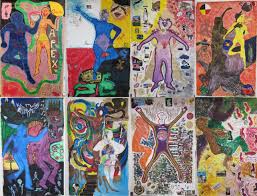
(Boumedda, 2018)
I remember walking by a particular kiosk in the Cancun airport last spring while waiting for a flight back to the U.S. and thinking, “how could something so beautiful be created in such a horrible and traumatic place?” I learned that this was one of 11 boutiques across Mexico called Prison Art, an art training foundation established in 2012 by Jorge Cueto, a formerly incarcerated artist who found healing through creative expression. Jorge’s goal was to create a training program for incarcerated individuals that offered skills necessary for jobs in the fashion industry and visual arts upon reentry, and to promote their work (Cueto, 2020). He also works to teach and employ both incarcerated and formerly incarcerated individuals in the foundation, which focuses on custom-designed leather products, to assist with rehabilitation while incarcerated, and reintegration into their communities.
This was my first, first-hand experience with prison art, a recreational, therapeutic, and rehabilitative activity with a rich history and base of empirical literature. The earliest known organized form of an art-based activity while imprisoned (albeit it was theater) was that of Cervantes in the 1600’s, and the first documented arts program in American corrections was in the Elmira Reformatory in New York in 1870 (Gardner et al., 2014). The state of California has always been at the forefront of advocating for art programs in prisons; as early as in the 1940’s in San Quentin State Prison individuals were given the opportunity. In 1977, the first federally-funded program, known as Project Culture by the American Correctional Association, was created to provide adults in state prisons with higher-quality activities and opportunities for growth, hoping to reduce behavioral disturbances at facilities (Colorado College, 2016). Large-scale art programs sponsored and administered by facilities themselves are a more recent development in corrections (Gardner, 2014).
Why should we promote exposure to the visual arts in prisons and carceral settings?
The American criminal justice system is based on a punitive, rather than rehabilitative view of human behavior, resulting in over 2 million people behind bars. Each year, more than 600,000 people are released from state and federal prisons, and more than two-thirds are rearrested within 3 years of their release (ASPE, 2019). That is a significant number of individuals returning to families, communities, and society who need to reintegrate, often with significant barriers in securing housing and employment. As a way to provide cognitive, emotional, and practical skills, improve quality of life, and reduce recidivism, among other benefits, providing visual arts activities can be viewed as a form of tertiary prevention or treatment in carceral settings (Bartol & Bartol, 2016, p. 166). Activities such as painting, drawing, ceramics, sculpture, design, and printmaking, among others, constitute visual arts. Although art is frequently not viewed as a necessity or a priority compared to more traditional forms of education or therapy, I would argue that the benefits are clear and worthy of resource allocation.
 Photo from New York Times, 2019
Prison art as a recreational, therapeutic, and rehabilitative activity.
Carceral settings can be traumatizing, re-traumatizing, and intensify preexisting mental health conditions, a setting in which serious mental illness and experiences with trauma are highly prevalent. Art therapy is a structured program typically directed by a particular person with skill in an artistic medium, and is trained to address certain psychological needs of participants (Colorado College, 2016). While this is not the only method of delivery for prison art, art therapy, particularly that which addresses trauma, grief, transition, etc. in those in prison is viewed as the most therapeutic. Art can also be recreational and rehabilitative, where individuals are freely creating in leisure time without necessary supervised direction (Gussak, 2007).
Dr. David Gussak, Ph.D., Professor and Chairman of the Florida State University Department of Art Education is a leading researcher in the field of forensic art therapy. He conducted various studies in prisons measuring the effectiveness of art therapy in decreasing depressive and other symptomatology. (Gussak, 2007). One study found that after 8 sessions of art therapy in a prison, participants had significantly decreased depression, improved overall mood, regulated sleeping patterns, and socialized more with peers. Participants were also more compliant with staff and facility rules and taking medications (Gussak, 2007).
Professor Larry Brewster is an expert in public policy, administration, and management, and he studied and evaluated the California Arts-in-Corrections program for 30 years. His 2014 study of the 12-week arts program in 5 state prisons revealed a reduction in disciplinary reports, greater participation in academic and vocational programs, and increased self-confidence, emotional control, time management, and social competence (Brewster, 2014).
Summary of benefits from empirical studies and national prison art programs.
- Increases and improves:
- Overall mood and wellbeing
- Locus of control and emotional stability From Blogspot by Scott Taylor
- Socialization and competence

- Problem solving
- Time management
- Self-discipline and self-examination
- Creativity
- Self-satisfaction, self esteem, and confidence
- Collaboration
- Accountability
- Hope
- Status, respect, and friendship
- Technical skills that can be applied to a career
- Helps to establish or reestablish identity above that of an incarcerated person
- Promotes non-verbal communication
- Disclosing feelings in a prison environment can be dangerous and/or threatening
- Reduces recidivism and enables successful reentry
- Decreases the number of disciplinary reports
- Form of self-care in a traumatic environment
- Yields feelings of accomplishment and success
- Instill confidence and motivation in pursuing other activities including academics
- Reaffirms that humans are capable of change, empathy, and improvement
- Enhances ability to use leisure time constructively
- Uniquely able to reach inner feelings as an opportunity for reflection
- Provides an “escape” from prison life
- Permits self expression in a prosocial manner
- Decreases symptoms of depression, anxiety, and PTSD
How can we improve access to visual arts for those in carceral settings? It seems as though the benefits may certainly outweigh the costs.
References:
ASPE, Office of the Assistant Secretary for Planning and Evaluation. (2019). “Incarceration and Reentry.” U.S. Department of Health and Human Services. Accessed April 18, 2020 at: https://aspe.hhs.gov/incarceration-reentry
Bartol, C.R., & Bartol, A.M. (2016). Criminal Behavior: A Psychological Approach (11th ed.). Boston, MA: Pearson.
Boumedda, S. (October 2, 2018). “Empowering Indigenous Women In Prison.” The Link. Accessed April 18, 2020 at: https://thelinknewspaper.ca/article/empowering-indigenous-women-in-prison
Brewster, L. (2014). The impact of prison arts programs on inmate attitudes and behavior: A quantitative evaluation. Justice Policy Journal, 11(2), 1-28.
Colorado College History Department. (2016). “Past, Present, Prison- Art Therapy.” Colorado College. Accessed April 18, 2020 at: https://sites.coloradocollege.edu/hip/art-therapy/
Cueto, J. (February 25, 2020). “The Prison Art Project- About Us.” Prison Art. Accessed April 18, 2020 at: https://www.prisonart.com.mx/about-us/
Gardner, A., Hager, L., & Hillman, G. (May, 2014). “Prison Arts Resource Project: An Annotated Bibliography.” Arts.gov. Accessed April 18, 2020 at: https://www.arts.gov/sites/default/files/Research-Art-Works-Oregon-rev.pdf
Gussak, D. (2007). The effectiveness of art therapy in reducing depression in prison populations. International Journal of Offender Therapy and Comparative Criminology, 51(4), 444-460. Doi: 10.1177/0306624X06294137
Sobek, J. (March 3, 2020). “Beginnings.” The Justice Arts Coalition. Accessed April 18, 2020 at: https://thejusticeartscoalition.org/blog-2/page/2/
Burnout
Professional burnout is a state of emotional, physical, and mental exhaustion caused by excessive and prolonged stress. Burnout can occur when an individual feels overwhelmed, emotionally drained, and unable to meet constant demands. Prolonged stress can cause an individual to lose the interest and motivation that led you to take on a certain role in the first place. Burnout is a serious concern among those working in the criminal justice and social services field. When burnout occurs, it reduces productivity, drains energy, and can leave a person feeling resentful and hopeless.
Burnout not only effects an individual work life but can spill over to include home life, social life, and other personal areas. It can change a person’s body and make them more vulnerable to illness, colds, and the flu.
How to know if you are on the road to burnout?
- Everyday is a bad day
- Caring about your work or home life seems like a total waste of energy
- You’re exhausted all the time
- You feel like nothing you do makes a difference or is appreciated
- Most of your day is spent on tasks you find either dull or overwhelming
Having a bad day or feeling overloaded, even unappreciated, doesn’t necessarily mean an individual is burned out or on the road to burnout. However, meeting all these symptoms is a good indicator to reach out and get additional support.
Burnout occurs over a long period of time and can easily creep up. Knowing the signs and symptoms can help an individual address burn out symptoms and red flags sooner. For example, trying to reduce overall stress.
Psychical signs and symptoms of burnout?
- Feeling tired and drained most of the time
- Lowered immunity, frequent illness
- Frequent headaches or muscle pain
- Change in appetite and sleep habits
Emotional signs of burnout
- Sense of failure and self-doubt
- Feeling helpless, trapped, defeated
- Detachment, feeling alone
- Loss of motivation
- Increasingly cynical and negative outlook
Behavioral sign
- withdrawing from responsibilities
- isolating yourself from others
- procrastinating
- using food, drugs, or alcohol to cope
Understanding the early signs and symptoms of burnout can help an individual reduce their overall stress by addressing these concerns through counseling, self-care, or other services. Working in high stress fields everyday can be hard and burnout occurs frequently. Its important for professionals to understand the risks and try to address any early symptoms as soon as possible.
Burnout Prevention and Treatment. (2019, November 7). Retrieved December 12, 2019, from https://www.helpguide.org/articles/stress/burnout-prevention-and-recovery.htm.
The Ted Bundy Tapes
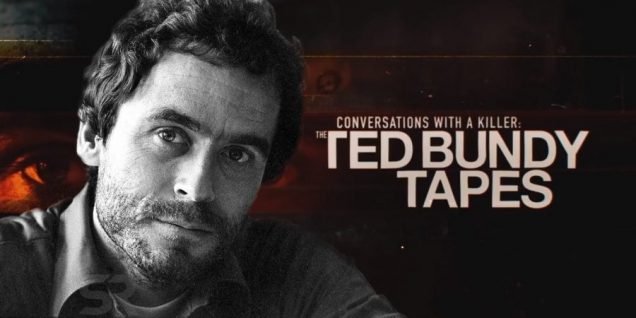 True crime and forensics had never really been my cup of tea before taking this class. Ever since, I feel like I have a weird obsession with learning more about the minds of serial killers and their motives, and what kind of people they are. Mind you, I have boundaries for learning more. The documentaries and dramatizations I watch have to be about those who are either dead or in jail for the rest of their lives. I don't like unsolved cases or knowing about murderers who were never caught because I have too much anxiety for that, as I'm sure most of us do when we find out there could be a serial killer sitting right next to us. Anyway, I've been particularly drawn to the famous ones; Aileen Wuornos, John Wayne Gacy, Jeffery Dahmer, and of course Ted Bundy. I watched the "Conversations with a Killer: The Ted Bundy Tapes" on Netflix, and here's what I learned.
I think everyone was a little perplexed by Bundy because of his demeanor and how he presented himself to the media. His trial was the first to be publicly televised which was huge, and his background was like no other, coming from law school and thinking he was his best defender. He was found guilty and given the death penalty so clearly, he wasn't a very good defender, but at least he tried. I watched this docuseries after learning about psychopaths and typical behaviors they exhibited and I could've seen him coming a mile away. He was a psychology major after all, and I think he knew exactly what he was doing. He was extremely manipulative, he knew his audience always, he was condescending, and narcissistic. I can go on and on about these character traits he exhibited throughout the trial and on the confession tapes. Towards the end of his life, he was diagnosed with manic bipolar disorder, which may have contributed to some of these exhibits of odd, antisocial personality characteristics. Either way, it doesn't change the fact that he was a serial killer, and never showed remorse for the things he did even up until the day he died.
Though I can analyze Bundy and point out key characteristics that may explain why he committed the heinous crimes he did, I cannot understand it. Sure, I can understand bipolar disorder or major depression, because that can be scientifically explained with chemical imbalances. But using that for a reason as to why you'd murder 30 innocent young women doesn't do it for me. I cannot understand that.
I hate to say this about any human being but I'm glad he is no longer with us and no longer out there causing destruction in the lives of so many. He was a sociopath, a psychopath, and a serial killer, and none of his victims deserved to be hurt by him. I hope they are at peace, and I'm glad the judicial system did not let him off easy for his crimes.
The Criminalization of Mental Illness
https://create.piktochart.com/output/43096522-criminalization-of-mental-illness
Use the above link to access the Infographic I created on the criminalization of mental illness. We have taken steps back as a society, locking up individuals who need help simply because we either do not understand how to help them or there is lack of funding for the aid. Our jails and prisons have become modern day asylums, a holding cell for individuals with mental illness where they decompensate at significant rates under the guise of rehabilitation. The lack of community resources, funding, and accessible treatment has been a disservice that has gone on far too long. Steven Liefman, a Miami Judge, stated, ‘We have failed people with mental illness miserably. We have seen homelessness increase, seen shootings of people with mental illness increase, wasted critical tax dollars and have made mental illness a crime in this country.. This is a shameful American tragedy and it is one that must be reversed’ (2019). These powerful words hold the conviction that change is essential. Individuals with mental illness comprise a vulnerable population that should be protected, not shamed and punished.