6th Biennial Boston Speech Motor Control Symposium
3rd–4th June 2027, Boston, MA, USA
Conference Timeline
|
About the Conference
The Boston Speech Motor Control Symposium (BSMCS) is a regional conference in speech motor control. We started BSMCS as a welcoming space for people near Boston to share research in speech motor control, but we’d love to see you even if you’re coming from farther away. Join us for the two-day event, or turn it into an excuse for a summer trip to Boston! Our goal is simple: bring together students, researchers, and clinicians working across the many facets of speech motor control, share what we’re each working on, and see where the conversations lead. We hope that some of those conversations spark new collaborations, ideas, and faster paths from research to the clinic. |
This year, BSMCS will be co-located in partnership with AQL 2027, giving attendees an additional opportunity to engage with new colleagues and the latest advances across the field!
Call for Abstracts
BSMCS’27 invites submissions of original research on speech motor control, spanning acoustic, kinematic, neural, and computational approaches to speech production, perception, and disorders. We welcome work at any stage, from preliminary findings to completed studies. Submissions will be considered for either a podium or poster presentation.
Topics of interest include (but are not limited to):
- Speech motor control and coordination
- Sensorimotor impairment in acquired and developmental communication disorders
- Speech acoustics and kinematics
- Computational and neural models of speech production
- Clinical translation of speech motor control research
Abstracts must be submitted through Microsoft CMT: Click Here to Submit an Abstract
Abstract Requirements: Abstracts must formatted using the BSMCS abstract template. There is no limit on the number of abstracts an author may submit. Each submitted abstract will be peer-reviewed by members of the program committee and evaluated on scientific merit, clarity, and relevance to speech motor control. At least one author of each accepted abstract must register for the conference by the registration deadline.
Disclosure Requirements: All submissions must be accompanied by a disclosure form; submissions without a disclosure form will not be reviewed. Please download and complete the disclosure form in your preferred format: PDF Format | Word Format.
How to Submit:
- Create a free Microsoft CMT account, or sign in if you already have one.
- Navigate to the BSMCS’27 conference page (link above).
- Click “Create new submission” and enter the title and authors.
- Upload your abstract as a Word document.
- Upload your disclosure form as a Word document or PDF.
- Fill out the additional questions and select the preferred* presentation format (podium or poster).
- Review and confirm your submission, then submit by December 3, 2026.
Abstract submissions will close on December 3, 2026 at 11:59 PM AoE (UTC-12).
*Final assignment is at the discretion of the program committee
Travel Fellowships
The Boston Speech Motor Control Symposium will be awarding travel fellowships to undergraduate students, graduate students (including doctoral candidates), and post-doctoral trainees. Fellowship recipients will have an opportunity to attend a free networking lunch on the second day of the conference, in addition to a $750 travel award (includes registration). Interested applicants may apply for a travel fellowship; selected applicants will be notified by February 4, 2027.
Click Here to Apply for a Travel Fellowship
Questions regarding travel fellowships should be directed to the BSMCS organizing committee (bsmcs@bu.edu).
Invited Speakers
 |
Keynote Speaker: Srikantan Nagarajan, PhD Professor, Department of Radiology and Biomedical Imaging, University of California, San Francisco Dr. Srikantan Nagarajan, is a Professor in the Department of Radiology and Biomedical Imaging at the University of California, San Francisco. Dr. Nagarajan has multiple research interests, including understanding human brain plasticity associated with learning and disease, and determining neural mechanisms of speech motor control. He focusses on the development and refinement of computation models and algorithms for multimodal structural and functional brain imaging, to help with diagnosis, prognosis, and monitoring in various patient populations. Dr. Nagarajan’s current translational research program includes conducting multimodal brain imaging studies in Dementia, Voice Disorders, Brain Tumors, Epilepsy, Movement disorders, Tinnitus, Schizophrenia, Autism, and Stroke. |
| Invited Speaker: Amanda I. Gillespie, PhD, CCC-SLP Professor, Department of Otolaryngology, Emory University School of Medicine Dr. Amanda Gillespie is an ASHA Fellow, Director of Speech Pathology, Co-Director of the Emory Voice Center, and Associate Professor of Otolaryngology at Emory University School of Medicine. Dr. Gillespie leads a clinical research program that investigates the efficacy and efficiency of voice and upper airway treatments, and explores factors that influence therapeutic learning. Her research is funded by the NIH, the Georgia Research Alliance, the Udall Foundation and the McCamish Parkinsons Foundation, among other sources. |
 |
 |
Invited Speaker: Satrajit Ghosh, PhD Senior Research Scientist, McGovern Institute for Brain Research, MIT Dr. Satrajit Ghosh is a Senior Research Scientist at MIT’s McGovern Institute for Brain Research (Director of Open Data in Neuroscience Initiative) and an Assistant Professor at Harvard Medical School (Otolaryngology – Head and Neck Surgery). A computer scientist and computational neuroscientist, he leads the Senseable Intelligence Group (https://sensein.group), focusing on spoken communication, brain imaging, and informatics. His research addresses the neural basis and translation of spoken communication, machine learning for precision psychiatry and medicine, and preserving information for reproducible research and knowledge generation. He is a PI on several NIH projects (BRAIN Initiative – BICAN knowledgebase, DANDI, BBQS Data Coordination and Artificial Intelligence Center; Bridge2AI-Voice) and advocates for open, collaborative science. |
| Invited Speaker: Erika S. Levy, PhD, CCC-SLP Professor of Biobehavioral Sciences, Program in Communications Sciences and Disorders, Teachers College, Columbia University Dr. Erika Levy is a Professor in Communication Sciences and Disorders at Teachers College, Columbia University. Her research aims to optimize intelligibility in clinical populations from various language backgrounds, with recent work focusing on the use of speech cues and speech treatment (e.g., her Speech Intelligibility Treatment) for increasing intelligibility and communicative participation across languages in children with dysarthria due to cerebral palsy. She is also examining speech treatment for bilingual children born with cleft palate. Prof. Levy has received funding from sources such as the NIH, the US Dept. of Education, and the ASHFoundation. She was named a Fellow by the American Speech-Language-Hearing Association and Distinguished Alumna by the CUNY Graduate Center. |
 |
 |
Invited Speaker: Daniel B. Rubin, MD, PhD Division of Neurocritical Care, Department of Neurology, Massachusetts General Hospital and Assistant Professor of Neurology, Harvard Medical School Dr. Daniel Rubin is a critical care neurologist at Massachusetts General Hospital and an Assistant Professor of Neurology at Harvard Medical School. He directs the MGB Brain Computer Interface Clinic, the first in the nation focused specifically on the clinical application of brain-computer interface (BCI) technology. As a principal investigator on the BrainGate and Connect-One clinical trials, his research focuses on translating neurotechnology into clinical practice, with an emphasis on restoring and maintaining communication for people with paralysis due to ALS, spinal cord injury, and stroke. He also co-leads the Clinical Practice Guidelines Working Group of the iBCI-CC, an international collaborative focused on the development, safety, efficacy, and accessibility of implantable BCIs. |
| Invited Speaker: Kara Smith, MD Division Chief, Movement Disorders Division, Department of Neurology, Boston Medical Center and Clinical Associate Professor of Neurology, Boston University Chobanian & Avedisian School of Medicine Dr. Kara Smith is a neurologist, movement disorders specialist, Division Chief of the Movement Disorders Division, and Associate Professor of Neurology at Boston Medical Center and the Boston University Chobanian & Avedisian School of Medicine. Her research focuses on identifying and understanding speech markers associated with motor and cognitive symptoms in individuals with Parkinson’s disease. In addition to her clinical practice serving patients with neurodegenerative disorders, she leads research exploring vocal analytics as potential objective indicators of disease trajectories and subtle motor fluctuations. Her broader work seeks to integrate accessible diagnostic technologies into clinical care and multi-site research initiatives to optimize outcomes for patients with movement disorders. |
 |
Conference Schedule & Information for Presenters
Coming soon!
Registration
BSMCS’27 will be a hybrid event. Scheduled talks will take place in person and will be simultaneously livestreamed to a virtual audience to maximize research dissemination. Virtual attendance is passive viewing only; interactive components such as the poster session and networking breakout rooms are reserved for in-person attendees. Registration is rolling and will remain open until the May 28th, 2027 at 11:59 PM AoE (UTC-12), or until the conference venue reaches capacity, whichever comes first. All refunds will be processed three weeks prior to the symposium date and will subtract 25% of the registration cost for the administration fee. Questions regarding registration should be directed to the BSMCS organizing committee (bsmcs@bu.edu).
| Registration Type | General | Trainee* |
| Early-bird (In-Person) – 4th February thru 17th March | 75 USD | 30 USD |
| Regular (In-Person) | 150 USD | 50 USD |
| Virtual | 30 USD | 10 USD |
*A “trainee” refers to undergraduate students, graduate students (including doctoral candidates), and post-doctoral scholars.
Venue & Area Information
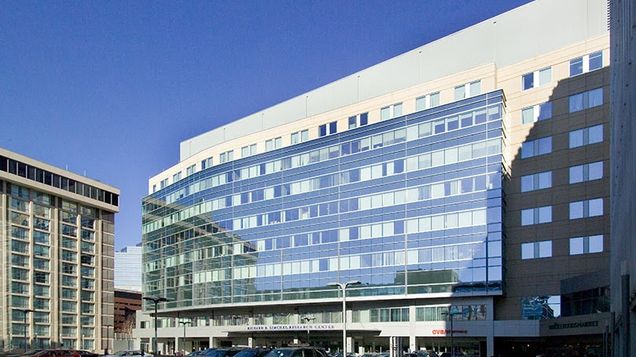
BSMCS’27 will be held at the Richard B. Simches Research Center on the Massachusetts General Hospital campus, in the West End/Beacon Hill area of downtown Boston. The Simches Center is part of Charles River Plaza and houses several MGH research centers. The venue is a short walk from the Charles/MGH MBTA station and close to several hospital parking garages. The address of the venue is:
| Richard B. Simches Research Center
185 Cambridge Street |
 |
Commuting to BSMCS
The Simches Research Center is easily accessible by MBTA and located within walking distance of several downtown Boston neighborhoods. Several MGH parking garages are also available for those choosing to drive.
Public Transportation:
- Red Line: Exit at Charles/MGH station, one stop from Park Street. Follow the exit toward the hospital, turn onto Cambridge Street, and Charles River Plaza is a short walk ahead on the left.
- Blue Line: Exit at Bowdoin station and walk down Cambridge Street toward the hospital; Charles River Plaza is on the right.
- Green Line/Orange Line: Exit at North Station, head down Causeway Street, then continue onto Staniford Street and right onto Cambridge Street.
- Flights: Boston is served by Boston Logan International Airport, about a 15-minute drive from the venue.
- Biking: Boston’s bike share system (Blue Bikes) has several stations near Charles River Plaza and Cambridge Street.
- Taxi/Car Service: Visit the City of Boston website to view a list of authorized taxi cab associations in Boston
- For more information about local bus or subway service, visit the Massachusetts Bay Transit Authority
Driving & Parking:
- Follow Storrow Drive to the Government Center exit, then proceed up Cambridge Street to reach Charles River Plaza. From the South and North, take Route 93 or Route 1 to Storrow Drive and follow the same route.
- Nearby garages include the Charles River Plaza Garage (207 Cambridge Street), and the Fruit Street and Parkman Street garages near the main MGH hospital entrance.
Hotels: Several hotels are within walking distance* of the venue, in the Beacon Hill and West End neighborhoods.
| Hotel | Distance from Venue |
| Wyndham Boston Beacon Hill | Adjacent to MGH campus, a few minutes’ walk to Charles River Plaza. |
| The Liberty, a Luxury Collection Hotel | Adjacent to MGH campus, short walk to the venue. |
| The Whitney Hotel Boston | Across the street from MGH, on Beacon Hill. |
| Hotel Indigo Boston Garden | Near North Station/TD Garden, roughly a 10 to 15 minute walk to the venue. |
| citizenM Boston North Station | Near North Station/TD Garden, roughly a 10 to 15 minute walk to the venue. |
*Walking times are approximate. We recommend checking a mapping service closer to the date for current conditions.
BSMCS Inclusion Policy
The Boston Speech Motor Control Symposium strives to be an inclusive event for all, regardless of race, gender, sexual orientation, or physical ability. If you have any comments or concerns throughout the symposium, please contact us at bsmcs@bu.edu.
Organization & Contact
- Jenny Vojtech, PhD (Chair) – Boston University
- Cara Stepp, PhD – Boston University
- Daryush Mehta, PhD – Massachusetts General Hospital and Harvard Medical School
- Frank Guenther, PhD – Boston University
- Emily Stephen, PhD – Boston University
- Anastasia Haubrich – Boston University
- Daphne Toglia – Boston University
- Turley Duque – Boston University
Questions? Feel free to contact us at bsmcs@bu.edu with any inquiries.
Learning Objectives
As a result of attending this symposium, participants will be able to:
- List current questions in speech motor control.
- Identify the role and impact of sensorimotor impairment in a variety of acquired and developmental communication disorders.
- Describe factors that influence sensorimotor control and learning in speech.
We are pursuing continuing education credit (partial credit) for this course, whether attending in person or virtually. If approved, attendees wishing to claim credit will be required to submit a course completion form at the end of the symposium documenting which presentations they attended, along with their course evaluation and intent-to-change statement.
Hosted By
 |
 |
Sponsors & Acknowledgements
 |
The Microsoft CMT service was used for managing the peer-reviewing process for this conference. This service was provided for free by Microsoft and they bear all expenses, including costs for Azure cloud services as well as for software development and support.