Mind and Heart
I have some news that might be a bit disappointing to…well, pretty much anyone who would find themselves on a blog dedicated to the mind and brain. Bear with me (or not, if you’d like, really), but this is a post primarily about the heart.
I was recently introduced via a grad student in the (yes, neuroscience) lab I work in to the latest advancement in the race to perfect an artificial heart. That link is to an NPR article that really tells you everything you need to know…and you should absolutely read it. But to summarize the details you need to know for my purposes here, the design is completely novel, and unlike previous designs, it doesn’t use nature as its inspiration. More
Neither free nor completely determined
Free will is a hackneyed topic. Science seems to be telling us that free will doesn’t exist because behavior is governed by the brain and the brain operates on physical rules of cause and effect. There is no such thing as uncaused cause, which free will requires. For some people this is an unbearable notion; these folks hang on to their perceived volition as evidence that they are in fact free to do as they choose, without being constrained by their biology. Others swallow what science has espoused long ago; of these folks, some tend to be pessimistic, thinking that their lack of free will means that everything is pointless and that the best thing they can do for themselves is to blur the line between their behind and a comfortable couch, until scientists discover the new species Homo sofus. More
The Limits of Neuroscience
Time and time a gain college students are up all night writing a paper they should have started a week ago or cramming for an exam they are going to take the next day. How many times have you compromised your sleep to get things done? How many times have you found that you couldn’t concentrate on what you were doing, making the whole process longer? What if I were to offer you a pill that would let you use your brain at its full capacity?
In Limitless, the protagonist, Eddie Morra, finds this pill and it changes his life. He goes from being a recently-dumped, struggling writer into being a superhuman that no longer needs to sleep. Not only does he finish his novel in the matter of four days, he also manages to win a ridiculous amount of money from the stock market and to get back with his ex-girlfriend, Lindy. By the end of the movie, he is running for United States Senate, being considered for presidency, and has become superhuman due to the change in his brain chemistry after his use of the drug.
Unfortunately, I must inform you that this movie is far from being based on a true story. Not only is the fact that we only use twenty percent of our brains a myth, but neuroscience, as a field, is not developed enough to be able to use what we know about the brain in order to make a pill that allows us to do even half of what Eddie Morra did in the movie.
James Kakalios, a physics professor from the University of Minnesota comments on the movie, saying that even though there are chemicals available known to improve brain functioning and that medical science may soon develop drugs that make us smarter, “Taking a pill and becoming a supergenius? Mmmm, that's kinda crazy. That understanding of neurochemistry far eludes us at this stage.” He goes on further to support that the claim that we only use twenty percent of our brain is a myth. He says, "We use all of our brains. We don't understand a lot about how the brain works, but evolutionarily, everything in the three-pound hunk of meat on the top of your head is there for a reason."

It is suggested that the way that the media depicts neuroscience is problematic because it uses distorted data in order to back up false claims. A study by Diane Beck, a psychology professor at the University of Illinois suggests that this is because neuroscience studies explain human behavior in a seemingly simple way by citing biological data, which is considered more reliable than other types of data concerning human behavior. This study is further supported by another study done by researchers at Colorado State and UCLA that asked a group of undergraduate students to assess the validity of an argument based on data given to them. The argument was that, because both watching television and doing math problems activate the temporal lobe, watching television improves our mathematical ability. Participants of the experiment who were shown bar graphs “supporting” the data were less likely to find the claim convincing than were participants who were shown a brain scan, even though both pieces of data were cryptic. The assumption that what we know about the brain is directly related to what we know about the mind and human behavior suggests that the field of neuroscience is far more developed than it actually is. Although we have made great strides in the field of neuroscience and the field is rapidly developing, movies like Limitless imply that there is no gap between the science of the mind and the science of the brain.
“Limitless Brain Power Plot isn’t All That Crazy” MSNBC
“Neuroscience: Is it All In Your Mind?” Miller McCune
What the Freud is Up with Dreams?
Ranging from the Eastern Mediterranean in the 7th century, to China in the 16th century, and finally to Europe in the 17th century, dream interpretation has been viewed as a decryption of supernatural communications and symbolic messages. Sigmund Freud, the academically (in)famous founder of the field of psychoanalysis, whole-heartedly supported the hypothesis that dreams contain deeper meaning. He consequently produced one of the seminal works on the subject, quite obviously named, The Interpretation of Dreams. Today, revelatory and efficient techniques, such as MRI and EEG, have far surpassed Freud’s interpretive dream journal methods, and allow scientists to look at dreams from a very different perspective. Although these advancements lend more credibility to the field of oneirology, it is still somewhat tainted by its psychoanalytic past. Some even go as far to say that studying dreams is “academic suicide”. Nevertheless, modern neuroscience has forced Freud’s ideas to the background, making room for new theories of memory consolidation, experience organization, and emotional stabilization.
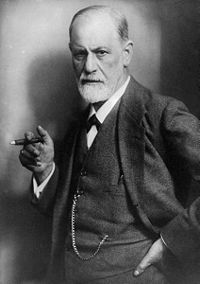
Let's hope he doesn't show up in your dreams.
Since dreaming occurs while sleeping, it is no surprise that the sleep cycle, during which the brain experiences patterns of varying electrical activity, has been implicated in dream theories. Each cycle consists of five stages – two stages of light sleep, followed by two stages of deep sleep, and completed with a stage of rapid eye movement sleep (REM). Unfortunately, there is no representative electrical pattern associated with dreaming, but REM and non-REM sleep have both been connected to the brain’s analysis of waking experiences. Pierre Maquet at the University of Liege, Belgium, observed deep non-REM sleep and found that the brain’s electrical activity mimicked the electrical activity elicited during waking experiences.
Not only do we replay events in our dreams, but we also seem to process, integrate, and store the information for future use. Robert Stickgold of Harvard University found that those who had non-REM dreams about a task that they were asked to complete, proceeded to do better on it. Stickgold proposes that “non-REM dreaming might be more important for stabilizing and strengthening memories, while REM dreaming reorganizes the way a memory is stored in the brain, allowing you to compare and integrate a new experience with older ones”. On a different, albeit related note, daydreaming activates a part of the brain called the default network. This region has previously been shown to be associated with memory processing. Be sure to mention this to your professor next time you’re caught not paying attention in class.
Matt Walker of the University of California acknowledges that dreaming has an important role in memory, but argues that the main function is emotional homeostasis. Walker has found that REM sleep facilitates the strengthening of negative memories. He believes that experiencing the negative emotion in a dream state can diminish the intensity of the emotion, making it easier to deal with. In those with post-traumatic stress disorder, however, this process seems to fail. Boston University’s Patrick McNamara agrees with Walkers’ speculation. He believes that “non-REM dreams help us practice friendly encounters, while REM dreams help us to rehearse threats”.
While dreaming, the brain rewires itself and forms new connections. It seems that this curious kind of consciousness does not reveal our secret desires or open windows into our hidden selves, but instead plays an integral role in making us who we are. Sorry, Siggy.
To view the original article from New Scientist, click here!
My Dear Friend Charlie Sheen
My average morning: My alarm clock blasts the stereotypical sound associated with 7 a.m. mornings. I awake from what I wouldn't even call sleep, and I stare at the ceiling wondering how I'm going to survive today's chemistry exam when even the TA insists that this is his "cherry on the top." Glancing over at my roommate as he snores louder than Yawkey Way on opening day at Fenway Park, I think to myself why couldn't you just close your mouth and breath through your nose? Looking back at the clock, I guesstimate how much time I have left to savor the comfort of my own bed before jumping up to begin my whole routine. Well, at least this isn't the worst day I've ever had...LOSING. More
From Skin Cells to Brain Cells
As much fun as I had exploring psychology last time I set out to write a blog post, this article from Science Daily caught my eye last week and I had to revert to my biology-related posting habit. Evidently, researchers at Oxford in the UK are using skin cells to grow induced pleuripotent stem (IPS) cells to use in their study of Parkinson’s Disease. What’s so useful about this technique is that skin cells are easily accessible, in contrast to the hard-to-reach tissues of the brain. With the skin cells obtained, the scientists plan to grow dopaminergic neurons and work on techniques for early detection of PD, perhaps finding ways to diagnose it before patients start showing symptoms. The skin cells will be from early-stage Parkinson’s patients, so they can be compared to the dopaminergic cells of healthy individuals to determine where things go wrong in the neurons affected by the disease. More
Hey Scientists, Where’s My Jetpack?! : The future is here; it just looks a little different than expected
In almost every major futuristic science-fiction work of the last century, jetpacks and flying cars are seemingly as ubiquitous as today’s oversized SUV’s, lining the closets and garages of every hardworking American. Understandably, in the year 2011, this has lead many disenchanted Trekkies and purveyors of assorted geek cultures to ask, “Well, scientists, where’s my jetpack?!” While I commiserate with my fellow fans of Asimov and Adams, several recent innovations have led me to believe that we all might be overlooking just how “futuristic” the time we live in really is. Accessing Google on the iPhone is certainly as close to the Hitchhiker’s guide to the galaxy as we may ever come. We have the ability to beam blueprints of intricate plastic objects and now even organs anywhere in the world and literally print them out. We have computers that can beat us in Jeopardy! And last but not least, Ladies and Gentlemen, I present to you Brain Driver, the thought-controlled car. On behalf of scientists everywhere, I accept your apologies, geeks. More
More Shirts…
Here are two more renditions of shirts for BU Neuroscience. Please VOTE!!

D.C. Somers

Devyn Buckley
The Psychology of Facebook
Psych Central’s April Fool’s Day Joke for 2011 was an article that read: “Facebook Revealed to be Psychology Experiment Gone Wrong.” The author used a fake source of Harvard University and several quotes from ‘professor of psychology’ Mark Zuckerberg. This article seemed pretty believable...for about a day.
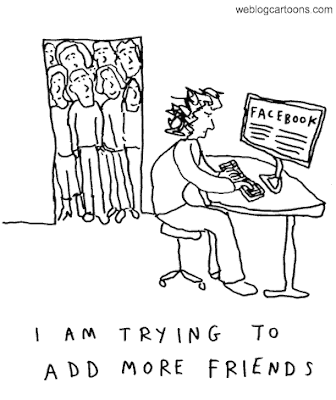
The researchers behind this project claimed to be interested in “whether or not people in the class would immediately become competitive and try and gain as many friends as possible.” And though this research experiment is far from the truth, the psychological implications of Facebook are certainly a reality.
Rishi Bandopadhay of PsyBlog equated Facebook networking to a competitive sport. He listed 7 rules to ‘get ahead’ using Facebook.
- Get between 100 and 300 friends. (You don’t want to look like a loner, or like you are trying too hard)
- Court attractive friends (Walther et al. (2008) found that attractive friends boosted the perceived attractiveness of participant's profiles)
- Understand the 7 motivations (Joinson (2008) found 7 basic motivations for using Facebook: connecting with old or distant friends, social surveillance (see what old friends are up to, but without talking to them), looking up people met offline, virtual people watching, status updating and content)
- Don’t let your partner use Facebook (Muise et al. (2009) found that the more time spent on Facebook, the more jealousy)
- Guard your privacy
- Display your real self
- Use Facebook to get a job
Is Facebook really this competitive? I can’t remember the last time I noted how many Facebook friends someone had or judged their popularity by their friends’ good looks. Facebook can also tell you a lot about someone’s personality.
Buffardi and Campbell of the University of Georgia found that individuals’ level of activity on their social networking website is strongly correlated to their level of narcissism; this finding is relatively obvious. It’s easy to see which friends of ours, whose ‘activities’ constantly show up on our newsfeed, are self-centered.

Next Orr, Sisic, Ross, Simmering, and Arseneault set out to study correlations of shyness to various aspects of social networking websites. They found that shy people spend considerably more time on Facebook than people who are not; however, these shy people also had considerably fewer friends, despite their increased time spent on Facebook. So the quiet kid who sits in the back of your Statistics class has probably Facebook stalked you, but you’ll never be receiving a friend request because that person does not have the guts to hit “Send Request.”
Psych Central- Facebook Revealed to be a Psychology Experiment Gone Wrong
PsyBlog- Facebook: 7 Highly Effective Habits
The Layman's Guide to Psychology- The Psychology of Twitter, Facebook, and other Social Networking Devices
