Home
Juvenile Detention Centers: The Importance of Assessing Childhood Trauma
Childhood trauma has a profound impact on victims’ lives as they grow up and can continue well into adulthood. Children are vulnerable; trauma at a young age can influence their future behavior and cause them to get into trouble with the law. If this behavior lands adolescents in the criminal justice system it is important they receive help. Addressing their traumas and providing these individuals with treatment can give them the tools needed to change their lifestyle and rejoin society. Many victims of childhood trauma exhibit criminal behavior because they have not coped with what happened to them. They are not necessarily bad people, they are just angry and out of control. Assessing adolescents in juvenile detention centers for childhood trauma and offering help to those who are affected by trauma can prevent a lifetime of crime, incarceration and resentment. A center’s failure to asses and treat incoming adolescents can inflict further trauma and lead to serious consequences. The environment and treatment in juvenile detention centers can put victims of childhood trauma in distress; without treatment adolescents are more likely to become repeat offenders and/or commit suicide.
Victims of childhood trauma have experienced pain at their most vulnerable state; they were too young to defend themselves and adults nearby failed to protect them. Children are more sensitive to trauma because of their size, age, and dependence (Rousseau, 2019). After a traumatic event it is likely a child will experience traumatic stress. Traumatic stress influences a child’s behavior and can cause fear, anger, withdrawal, trouble concentrating, digestive problems, and nightmares (Rousseau, 2019). The most common symptoms displayed by children experiencing traumatic stress are the symptoms exhibited by children with behavior disorders (Rousseau, 2019). If traumatic stress is not treated, these behaviors are adopted and severity of misconduct escalates as time passes. This explains how adolescents with childhood trauma find themselves in trouble with the law. There has recently been a focus on delinquent behavior that stems from unresolved post traumatic symptoms (Rousseau, 2019). Some juvenile detention centers require the assessment of incoming adolescents to determine if they suffer from PTSD or need mental health services (Rousseau, 2019). Knowing if a delinquent behavior was a result of post-traumatic stress is important because it points to which adolescents in the center need treatment, are at risk for suicide and have high probabilities of rehabilitation.
It is important for juvenile detention centers to know who to offer treatments to and which individuals need to be closely monitored. While it would be ideal to offer these services to all teens in the criminal justice system, it is not financially realistic. Teens in juvenile detention centers are more likely to commit suicide and it is imperative that they receive treatment and monitoring. Chapman states that, incarcerated youths with traumatic stress history or PTSD could be exposed to conditions that exacerbate the risk of suicide, like the use of restraints for discipline, and locked cells (Chapman, 2008). Data is needed to guide juvenile detention programs in early identification of youths who are at risk for suicide (Chapman, 2008). To avoid wasting resources, these services should only be offered to individuals experiencing trauma. There are two ways to determine who needs treatment, Screening and Assessment (Rousseau, 2019). It is more effective and important for juvenile detention centers to use assessment. A screening is a brief evaluation for safety; they are of short duration and can be applied universally (Rousseau, 2019). Assessment evaluates people in depth; it is a clinical evaluation designed to establish whether a youth meets criteria for a diagnosis or needs mental health services (Rousseau, 2019). Assessing incoming adolescents and providing treatment for those experiencing post-traumatic stress can save and change lives. Treatment can prevent adolescents from becoming repeat offenders, teach them how to forgive and give them the tools needed for coping and self-regulating. A juvenile detention center that exemplifies the policies and programs described is, Woodfield Detention Cottage in Westchester, New York.
Woodfield Detention Cottage uses assessments to test for childhood trauma and determine whether or not individuals need assistance from Rising Ground. Rising Ground is an organization that offers many different programs throughout New York City; the program that works with Woodfield Detention Cottage is called Justice for Youth & Families. It focuses on giving youth who have suffered childhood trauma a second chance. They believe that these individuals performed crimes due to unresolved problems associated with trauma, not because they are bad people. Their website states, “Life can throw up roadblocks that seem insurmountable. Abuse, neglect, or serious trauma may lead young people to make poor choices and to involvement with the juvenile justice system. Both our residential and our community-based juvenile justice programs give them a chance to rise above the obstacles they face so they can change the trajectory of their lives” (risingground.org). This program aims to teach individuals how to cope with their trauma correctly, examine their choices and prepare them for re-entry.
Woodfield Detention Cottage tries to adjust behavior but takes into consideration the fact that some children were stuck in toxic situations that deeply impacted their behavior. As pointed on in the lecture notes, the development of the prefrontal cortex is sensitive to psychological environments, and children who have experienced severe trauma may have developmental issues with their prefrontal cortex. This can lead to hypersensitivity towards stress and make it more difficult to self-regulate emotion (Rousseau, 2019). In an article written about the Woodfield Detention Cottage and other similar Juvenile Detention Centers, a psychiatrist working in these facilities stated that, “It was not unusual to see a 200-pound, 16-year-old who was deeply enraged because he was deprived of parental care but who had only ‘the emotional maturity of the terrible 2's’” (Brenner, 1997). The Rising Ground organization also takes into consideration how damaging family issues can be for children. Van der Kolk explains that sometimes parents are so preoccupied with their own traumas, that they are too emotionally unstable and unreliable to offer comfort and protection to their children (Van der Kolk, 2015). Rising Ground tries to help children understand their relatives and rebuild relationships. This is clearly indicated in their mission statement, “Many of the youth we support come from families and communities that face challenges with poverty, violence and lack of educational resources. But the cycle doesn’t have to continue. Youth in our juvenile justice programs discover their inner strengths and demonstrate tremendous resilience” (risingground.org). Woodfield Detention Cottage’s procedures have been working for many years. Rocco Pozzi, Probation Commissioner for Westchester County even stated that, ''Most kids in trouble with the law never graduate upstairs. Most of them, we won't see again. A lot of them do respond to rehabilitation efforts, and they don't go on to become adult criminals” (Brenner). This shows how effective an assessment and treatment policy is for adolescents with childhood trauma. It is important that this policy be incorporated into as many juvenile detention centers as possible, it has a positive effect on adolescents and changes their life.
Resources
Brenner, E. (1997, August 03). Trying to Avoid Giving Up on Young Offenders. Retrieved from https://www.nytimes.com/1997/08/03/nyregion/trying-to-avoid-giving-up-on-young-offenders.html
Chapman, J. F., & Ford, J. D. (2008). Relationships between suicide risk, traumatic experiences, and substance use among juvenile detainees. Archives of Suicide Research, 12(1), 50-61. http://dx.doi.org/10.1080/13811110701800830
Our Juvenile Justice programs mean better solutions for youth. (n.d.). Retrieved from https://www.risingground.org/program/juvenile-justice-programs/
Rousseau, D. (2019). Lesson 2.1: The Minds of Children [PDF]. Retrieved from Boston University MET CJ 720 Online Campus Dashboard.
Van Der Kolk, B. (2015). The Body Keeps the Score. New York: Penguin.
Incarcerated Children: Reformatting Treatment and Avoiding Re-traumitization
Throughout our course something that has really stuck with me is the treatment of incarcerated persons and the propensity for unavoidable re-traumatization in the way that the prison systems are set up. This has especially stuck out to me when thinking about children. Juvenile detention systems should be safe spaces that promote hope and growth and instill a motivation to make a difference and build a positive life after release. According to a study done at the University of New Mexico, most children incarcerated have had multiple Adverse Childhood Experiences and traumas before even entering the system. “Research shows that intervention is needed in these children’s lives before they get to the system.” Although this shouldn’t have to be the case the system needs to be a place of nurturing and allow for room for improvement. The study also states that the findings indicate that there needs to be programs of support accessible for these children when they return to society as well as statewide systems and prevention models for their time inside(Knopf, A. 2016).
This is strong evidence of the need for many changes while children spend their time within the system. It is possible and it is imperative for changes to be made. There are so many classifications for trauma Acute Stress Disorder, Adjustment Disorder, Reactive Attachment Disorder etc. There are also many existing modes of treatment as Cognitive Behavioral Therapy, Pharmacotherapy, and many more(Rousseau, 2019). What is missing is looking at survivors of trauma holistically and as their own separate cases. What is needed is a personalized patient centered care approach in prisons for each and every incarcerated child. There is evidence of this in The Art of Yoga Project, a project created by the California Juvenile Justice system for incarcerated young girls. This powerful program integrated art, mindfulness meditation, and yoga to act as an activity and healing tool for incarcerated girls. Programs as this in prisons are a massive step forward in caring for and nurturing incarcerated children treating them holistically. The results of the study revealed that something as simple as gender responsive programming has the power to instill self discipline and respect, improve overall self confidence and care, and provide guidance and therapy all at the same time.
I feel that if we begin to place trauma treatment at the forefront of public health, interventions will become much higher quality. This is important for trauma treatment overall but especially for those incarcerated. It is so easy to provide aromatherapy, yoga classes, art and music therapy, maybe even an infrared sauna or trampoline or a gym. Treating those that have undergone trauma with a holistic approach and holistic modalities is the future for trauma informed care and is fairly easy to implement in prisons too.
Citations
Harris, A. H., Fitton, M. L. (2010). The Art of Yoga Project: A Gender Responsive Yoga and Creative Arts Curriculum for Girls in the California Juvenile Justice System. International Journal of Yoga Therapy. Palo Alto, CA.
Knopf, A. (2016). Incarcerated children more likely to have experienced trauma. Alcoholism & Drug Abuse Weekly,28(13), 3-4. doi:10.1002/adaw.30522
Rousseau, Danielle. (2019). Module : Pathways to Recovery: Understanding Approaches to Trauma Treatment [Class Handout]. Boston, MA: Boston University, CJ702.
Benefits of Eye Movement Desensitization and Reprocessing
In the book The Body Keeps the Score: Brain, Mind, and Body in the Healing of Trauma, Bessel Van Der Kolk discussed the therapeutic approach of Eye Movement Desensitization and Reprocessing (EMDR). EMDR is a form of psychotherapy that was originally created to “alleviate the distress associated with traumatic memories” (emdr.org). EMDR consist of an eight-phase treatment in which eye movements or other bilateral stimulation are used during one part of the eight sessions. The eight-phase consist of:
Phase 1: The first phase is a history-taking session(s). The therapist assesses the client’s readiness and develops a treatment plan. Client and therapist identify possible targets for EMDR processing. These include distressing memories and current situations that cause emotional distress. Other targets may include related incidents in the past. Emphasis is placed on the development of specific skills and behaviors that will be needed by the client in future situations.
Initial EMDR processing may be directed to childhood events rather than to adult-onset stressors or the identified critical incident if the client had a problematic childhood. Clients generally gain insight on their situations, the emotional distress resolves and they start to change their behaviors. The length of treatment depends upon the number of traumas and the age of PTSD onset. Generally, those with single event adult onset trauma can be successfully treated in under 5 hours. Multiple trauma victims may require a longer treatment time.
Phase 2: During the second phase of treatment, the therapist ensures that the client has several different ways of handling emotional distress. The therapist may teach the client a variety of imagery and stress reduction techniques the client can use during and between sessions. A goal of EMDR therapy is to produce rapid and effective change while the client maintains equilibrium during and between sessions.
Phases 3-6: In phases three to six, a target is identified and processed using EMDR therapy procedures. These involve the client identifying three things:
- The vivid visual image related to the memory
- A negative belief about self
- Related emotions and body sensations.
In addition, the client identifies a positive belief. The therapist helps the client rate the positive belief as well as the intensity of the negative emotions. After this, the client is instructed to focus on the image, negative thought, and body sensations while simultaneously engaging in EMDR processing using sets of bilateral stimulation. These sets may include eye movements, taps, or tones. The type and length of these sets are different for each client. At this point, the EMDR client is instructed to just notice whatever spontaneously happens.
After each set of stimulation, the clinician instructs the client to let his/her mind go blank and to notice whatever thought, feeling, image, memory, or sensation comes to mind. Depending upon the client’s report, the clinician will choose the next focus of attention. These repeated sets with directed focused attention occur numerous times throughout the session. If the client becomes distressed or has difficulty in progressing, the therapist follows established procedures to help the client get back on track.
When the client reports no distress related to the targeted memory, (s)he is asked to think of the preferred positive belief that was identified at the beginning of the session. At this time, the client may adjust the positive belief if necessary and then focus on it during the next set of distressing events.
Phase 7: In phase seven, closure, the therapist asks the client to keep a log during the week. The log should document any related material that may arise. It serves to remind the client of the self-calming activities that were mastered in phase two.
Phase 8: The next session begins with phase eight. Phase eight consists of examining the progress made thus far. The EMDR treatment processes all related historical events, current incidents that elicit distress, and future events that will require different responses
(emdr.org)
Van Der Kolk conducted a study and he established that EMDR was determined that trauma-specific therapy for PTSD like EMDR might be more effective than medication and if patients take medications like Prozac or any other related drugs like Celexa, Paxil, and Zoloft, “their PTSD symptoms often improve, but only as long as they keep taking them” (Van Der Kolk, 2014, p. 256). According to the study, the group who took the Prozac did slightly better than the group who took the placebo, but not that much better. But, the group who partook in the EMDR treatment did way better than the other two groups. “After eight EMDR sessions, one in four were completely cured (their PTSD scores had dropped to negligible levels), compared with one in ten of the Prozac group” (Van Der Kolk, 2014, p. 256).
In the study, it was concluded that EMDR “produced a greater reduction in depression scores than taking the antidepressant” (Van Der Kolk, 2014, p. 256). The good thing about EMDR is that it spends little time revisiting the original trauma. The study showed that drugs mute the images and sensation of terror but they will always remain in the mind and body (Van Der Kolk, 2014, p. 256) but a person who receives EMDR “no longer experiences the district imprints of the trauma” (Van Der Kolk, 2014, p. 256). EMDR is proven to actually be highly effective and empirically supported.
The statistics on EMDR treatment has shown that the individual receiving the treatment has overcome past trauma. EMDR Institute, Inc. stated that “84%-90% of single-trauma victims no longer have post-traumatic stress disorder after only three 90-minute sessions” (emdr.org).84%-90% is a great outcome for any form of psychotherapy. A study conducted by HMO Kaiser Permanente found that “100% of the single-trauma victims and 77% of multiple trauma victims no longer were diagnosed with PTSD after only six 50-minute sessions. In another study, 77% of combat veterans were free of PTSD in 12 sessions” (emdr.org). A lot of research has been conducted on EMDR therapy and it is now recognized by the American Psychiatric Association, the World Health Organization and the Department of Defense as an effective for of treatment for trauma.
EMDR has had a lot of positive results and it is an effective treatment. EMDR will be the treatment I will strongly suggest anyone who want to overcome any kind of trauma. Knowing that 100% of the single-trauma victims no longer were diagnosed with PTSD is something I was very shocked and fascinated about. It is amazing to see that there are ways to overcome trauma without having to be medicated. Medication as Van Der Kolk stated “mute the images and sensation of terror but they will always remain in the mind and body” (Van Der Kolk, 2014, p. 256), while EMDR can 100% illuminate the trauma. EMDR is an amazing treatment that should be suggested to all patients first before medication.
References
What is EMDR? (n.d.). Retrieved from https://www.emdr.com/what-is-emdr/
Van der Kolk, M.D., B. A. (2014). The Body Keeps the Score: The Brain, Mind, and Body in the Healing of Trauma. New York, New York: Penguin Books.
Forgotten Innocence: Plight of War Victims
Many believed that the great wars ended during the 40s, but for others, war is their truth. Wars are transpiring in every part of the world which resulted in death, destruction, and displacement for many hopeless citizens. Wars have robbed children of their childhood experience and separated families. Wars yield no champions, only failures. Both sides squander more than gain any. A record generated by the UNICEF infers that children are the primary victims of the war with as many as “2 million killed, 4.5 disabled and injured, 12 million left without homes, more than 1 million orphaned and about 10 million children are suffering from psychological trauma”. Wars endure in the modern day and modern times; it is an inevitable fact that we have to face.
The increasing numbers of casualties confirm the existence of wars. Disputes are still taking place, and the innocent are entangled in between these frictions. Children are the most vulnerable to abuse and exploitation. Wars create trauma and stress, and other mental and psychological issues for children. Lasser and Adams (2007) argue that war has “profound psychosocial stressor on child and adolescent development, for it has the potential to inflict loss, disruption of stability, deleterious health effects, and family/community disorganization” (p. 5).
Wars separate families, with men and women being transferred to the front lines leaving behind their families. War upsets family dynamics and strips children of essential family values and knowledge about the significance of relationships. Alongside family interruption, war becomes a breeding ground for aggression. Despert and Symonds (1944) reiterate “when aggression is released on such a large scale as a war requires, it becomes increasingly difficult for the child to accept the need for overcoming his aggressive instincts” (p. 206). Constant exposure to brutality increases an individual’s likelihood of violence. In this case, children begin to adopt aggressive and volatile tendencies. Increased destructive inclinations can lead to significant effects such as crime and delinquency.
A study conducted by Despert and Symonds (1944) revealed that children who witnessed wars had increased anxiety than those who grew up in stable homes. Aside from stress, other problems that were of concern included “lack of self-confidence, a lassitude and vapidness, a sort of deadness unnatural to children, an unfed appetite for beauty, and a terrible need for physical affection” (p. 207). Children who have witnessed the horrors of the war undergo severe trauma and stress. Majority of these children develop Post-Traumatic Stress Disorder or PTSD. Bhutta, Keenan, and Bennett (2016) acknowledged that the effects of exposure to war and conflict on young children include “post-traumatic stress symptoms, psychosomatic symptoms, disturbed play, and behavioral and emotional, and sleep problems” (p. 1275).
Wars results in negative repercussions for all, especially children. Children are said to be the future generation but what do we offer them aside from meaningless brutality and violence? Wars were crafted for personal reasons; therefore it is essential that we promote comradeship instead of tyranny. Wars deprive children of their families, their lives, and their innocence. As leaders of tomorrow, what can we do to help children suffering from the traumas of the war?
Reference
Bhutta, Z. A., Keenan, W. J., & Bennett, S. (2016). Children of war: Urgent action is needed to save a generation. The Lancet, 388(10051), 1275-1276.
Despert, J., & Symonds, J. P. (1944). Effects of war on children's mental health. Journal of Consulting Psychology, 8(4), 206-218.
Lasser, J., & Adams, K. (2007). The Effects of War on Children: School Psychologists' Role and Function. School Psychology International, 28(1), 5-10.
UNICEF. Children in War. Retrieved April 23, 2019 from https://www.unicef.org/sowc96/1cinwar.htm
Rape Culture in Hispanic Communities
"Rape culture" is a hard pill to swallow for most communities but it is in fact alive in thriving in places closer to home than we might fully understand. Growing up in a primarily Hispanic community, there is a certain level of masculinity that is perpetuated in an unhealthy, and an increasingly common way - this is the mentality that they can take what they want, when they want, regardless of permission. As a disclaimer because this will obviously be a very sensitive and specific topic to discuss, this is not a generalization of all men in Hispanic culture; it is an observation supported in data and does not isolate Hispanic communities as the only men with these issues, nor does it say that all Hispanic men are of this character substance.
The photo below is that of Irinea Buendia, displaying a sign to call out the real killer of her daughter - her abusive husband. Buendia's daughter hung herself after years of trauma, both mental, physical, and sexual and was given no justice for the abuse that she suffered at the hands of her partner. This is not an uncommon story.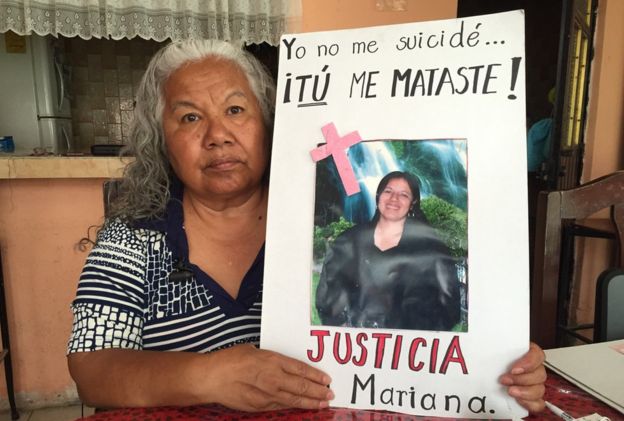
According to the Existe Ayuda, a nonprofit research and outreach program for women, especially victims of sexual violence, women of Latina descent and culture are increasingly more likely to be victimized by sexual violence in their lifetime than white women (Existe Ayuda, 2019) and because of this, Latina women are reportedly more likely to leave school and extra curricular activities to avoid being sexually harassed or assaulted. According to the same source, married Latina women are less likely to report the violence they experience at home which is sexual, as rape because it is their partner.
According to an article in 1993, Lefley says that of three surveyed groups (white, African American, and Latina), Latina women were more likely to face sexual assault but were also more likely to receive ostracism from their communities for the attack/violence (Lefley, 1993). The concept the article discusses is known as "victim-blaming" and is toxic in nature but also severely common in popular culture. Women are subject to scrutiny in the face of sexual abuse by naysayers who insist that somehow the woman attacked is to blame for what has happened to her. The Latino culture, especially the machismo (toxic masculinity) complex is partly to blame for victims of sexual violence having no outlet to discuss what has happened to them safely. This is how we get cases like Buendia who had to bury her daughter because nowhere she went was safe for her.
According to Latina.com, there are numerous laws in place to ensure that women are continually victimized by their attacker - laws for instance that force them to carry pregnancies which are the result of rape, to full term. There are also many cases like that of Buendia's daughter, women who kill themselves because they have experienced injustice not only at the hands of their attacker but at the hands of their legal system which continues to support the men (attackers) versus the women (victims.) The cry is being made that slut shaming needs to end in the Latina community and that there needs to a new practice of teaching consent rather than teaching women to behave a certain way in order to avoid being raped. There also is a demand to end the pop culture support of sexual harassment in the streets (i.e cat-calling, obscene comments, etc.)
Per the same source, Latina women insist that sexual harassment in the workplace is a consistent and major problem. There is an inability to feel safe in the workplace which could prove to be problematic when it comes to moving up with any sort of job/career. The data I uncovered while researching this topic was shocking because it is made very clear that for almost 70% of Latina women surveyed, there is consistently a theme occurring - whether its the home or the workplace or trying to get to and from the grocery store, there are limited places for Latina women to feel safe and comfortable.
This research is significant to me because I was assaulted at age 13/14 by a Latino man and it was very clear because I knew his family and the community we came from, that not everyone in the social network we were a part of, behaved in this way. In fact, the man who caused me harm was raised by men who were respectful to a fault. What I see through my research now is that these may have been cases of secret abuse in the home or, a cross-contamination when it came to the raising of the young gentleman. In any instance, there is a serious stigma placed on being a young woman in a Latino culture, probably nothing based on race, but more on the behaviors of these communities. I am a white woman raised in a primarily Latino community up until September of 2018 and I say with confidence that while not all the men I encountered are like that, there is a substantial difference in treatment of women closer to Mexico versus closer to the Atlantic ocean. I would be interested to see how the culture changes throughout the U.S and more so, how it looks when you're in Latin countries.
References
Existe Ayuda Fact Sheet. (n.d.). Retrieved from https://www.ovc.gov/pubs/existeayuda/tools/pdf/factsheet_eng.pdf
Lefley, H. P., Scott, C. S., Llabre, M., & Hicks, D. (1993). Cultural beliefs about rape and victims response in three ethnic groups. American Journal of Orthopsychiatry,63(4), 623-632. doi:10.1037/h0079477
What Rape Culture Looks Like in the Latino Community. (n.d.). Retrieved from http://www.latina.com/lifestyle/our-issues/rape-culture-examples?page=0,1
The Controversy Surrounding Animals & Trauma Treatment
The use of animals in therapeutic approaches for patients who have suffered a trauma is becoming increasingly common: we can all attest, anecdotally, to the increased popularity of this approach and the frequency with which we see animals employed in a helping role in our daily lives. However, despite the recent rise in popularity, this is not actually a terribly “new” concept. The earliest documented case involved the use of farm animals in a mental health institution in England in the 1790s, and the earliest recorded case in the United States was in 1919, where dogs were used as companions for psychiatric hospital patients (Jackson, 2012). There is also speculation that cases may have occurred even earlier, but were not meticulously documented, or that the documentation simply did not survive over the years.
But a century after the first U.S. case of animal-assisted therapy, the actual evidence for this treatment approach is still disappointingly murky. Molly Crossman, a psychological researcher at Yale, summarized the empirical evidence with the observation that “The clearest conclusion in the field is that we cannot yet draw clear conclusions” (Resnick, 2018). She further notes that within the already-limited dataset, the research is focused almost exclusively on dogs, and certainly would not generalize to peacocks, hamsters, a bear cub, or any other species that has already been used to relieve stress or provide support (Resnick, 2018). There is simply no evidence that cuddling a bear cub before final exams, or boarding a flight with a peacock, would provide any actual benefit to anyone.
Part of the confusion may stem from the distinction between an “emotional support animal” versus a “service animal.” The Americans with Disabilities Act, a civil rights law that was enacted in the 1990s, defines service animals as “dogs that are individually trained to do work or perform tasks for people with disabilities,” a definition that can occasionally be extended to include miniature horses rather than dogs (Maynard, 2019). ADA-compliance involves making public spaces available to anyone with a service animal that meets this definition. By contrast, emotional support animals are not entitled to the same rights as service animals under ADA, nor are their handlers (Brennan & Nguyen, 2014).
For example, when I was an undergrad at Brandeis University, I received permission to have an emotional support animal stay in my dorm, even though pets were not typically permitted in on-campus housing. I had been clinically diagnosed with PTSD, which came with a range of other complications, including clinically significant insomnia and depressive episodes. I was given permission to have a hamster. Hamsters are nocturnal, so she was a wonderful companion on the nights when I couldn’t sleep, but also could not take my prescription sleep-aid for various reasons (it would disrupt my ability to function in an early morning class the next day, for example). I found that interacting with her and caring for her brought me joy and gave me a sense of purpose to get out of bed on days when my depressive symptoms were particularly severe.
But my hamster certainly did not qualify as a service animal. While her status as an emotional support animal (and the documentation I provided from a psychiatrist and psychologist) allowed me to house her in my dorm room, I would not have been permitted to bring her into the dining hall, or to bring her to class with me, or anything along those lines. I did not “train” her. She did not support me with specific tasks. Any establishment that had a “No Pets” policy would absolutely have still applied to me as a handler, and I would not have been allowed to bring my hamster inside (nor would I have attempted to do so, since frankly, the hamster would not have appreciated it very much!).
However, many people do not understand this distinction, and they assume that if a mental health professional has signed off on their ownership of an emotional support animal, that this documentation entitles them to bring their animal- any species, with any level of training (including no training at all)- into any space that could be considered public. The owners of the establishment may be hesitant to enforce the rules in order to avoid a discrimination lawsuit, especially if the animal’s owner/handler pushes the issue and insists they are allowed to bring their animal inside (Maynard, 2019). This may occur because the owner/handler is intentionally exploiting the establishment maliciously while knowing that discrimination is such a sensitive issue. But they also may simply be lacking education about their own rights. The discrepancies between terminology (service animal, emotional support animal, pet, animal-assisted therapy, etc.) as well as the variations in state, local, and federal laws can lead to significant confusion.
One key distinction is that while an emotional support animal may provide ‘comfort’ in a very general sense of the term, a service animal has received highly specialized training to perform very specific tasks. The most well-known example of a service animal is a “seeing eye” dog, who has been trained to assist someone who is blind or visually impaired (Maynard, 2019). There are a number of tasks that a service animal can perform for someone with PTSD. Our online module lists the following examples: “although they are trained in universal tasks, they can be and are tailored for the handler that they will be in service of. The basic tasks that service dogs can provide are: guide a disoriented handler, find a person or place, conduct a room search, signal for certain sounds, interrupt and redirect, assist with balance, being help, bring medication in an emergency, clear an airway, and identify hallucinations” (Rousseau, 2019). Put more simply, service animals do not provide comfort in a vague sense but through specific actions, i.e. comforting a PTSD patient who suffers from hypervigilance by helping clear a room/apartment when the person returns home.
Thus, while the owner of a public establishment should not ask for specific details about a person’s disability, nor can they ask for documentation that “proves” a person is disabled, they should feel empowered to ask a) whether the animal is a service animal, and b) which tasks the animal is trained to perform (Brennan & Nguyen, 2014). They are well within their rights to make these basic inquiries.
Many who oppose the use of service animals may also lack an understanding of their own rights as a member of the general public. For example, I have encountered the complaint that someone might be afraid of dogs, or have a dog allergy, meaning that an animal which makes one person more comfortable could cause distress for someone else. It is important to note that “allergies and fear of dogs are not valid reasons for denying access or refusing service to people using service animals” (Brennan & Nguyen, 2014). However, if a person is at risk of having a significant allergic reaction to an animal (even without contacting it), it is the responsibility of the business or government entity to find a way to accommodate both the individual using the service animal and the individual with the allergy (Brennan & Nguyen, 2014). This could be as simple as keeping the two parties further away from each other in a waiting room, or perhaps getting creative with barriers or changing the seating chart on a flight, such that the parties are as far away and physically separate as possible. The point is that the individual with allergies is not expected to suffer in order for the other person to benefit.
Similarly, the general public is protected against service animals that would disrupt their enjoyment of a public place. If the presence of an animal “would fundamentally alter the nature of the goods, services, facilities, privileges, advantages, or accommodations” provided by the business entity, they must be removed. A recent article gives a helpful example: “A consistently barking dog would fundamentally alter the services provided by a movie theater or concert hall. At that point, an employee may ask that the dog is removed. However, an employee may not preemptively bar entry to a service dog team based on the concern that the dog might bark. Service dogs may also be required to leave if they are not housebroken, or if they are out of control and the owner has not effectively regained control of the animal” (Maynard, 2019).
Airlines are afforded a bit more flexibility than the rules governing the general public. A 2014 report from Brennan and Nguyen summarizes their options:
“[Commercial airlines] are free to adopt any policy they choose regarding the carriage of pets and other animals (for example, search and rescue dogs) provided that they comply with other applicable requirements (for example, the Animal Welfare Act). Animals such as miniature horses, pigs, and monkeys may be considered service animals. A carrier must decide on a case-by-case basis according to factors such as the animal’s size and weight; state and foreign country restrictions; whether or not the animal would pose a direct threat to the health or safety of others; or cause a fundamental alteration in the cabin service. Individuals should contact the airlines ahead of travel to find out what is permitted. Airlines are never required to transport unusual animals such as snakes, other reptiles, ferrets, rodents, and spiders. Foreign carriers are not required to transport animals other than dogs.”
Essentially, the bottom line is that a letter from a medical professional is not a free ticket to do whatever you want, with any animal you choose, in any public space. There have been a number of unfortunate incidents in recent years which did not turn out well for other passengers or the animal itself: “A college student wanted to bring a hamster on a plane and then flushed it down an airport toilet after Spirit Airlines told her she wasn’t allowed to board with it. A United Airlines passenger attempted to get on a flight with a peacock. ...Earlier this month, a Delta passenger complained that his seat was covered in dog feces” (Resnick, 2018). But these strange scenarios are not an unfortunate side-effect of ADA compliance, as some would suggest. These animals would not be considered service animals under ADA at all, including the dog, because any animal who is not controlled (i.e. house-broken) by the handler simply would not qualify.
Still, even though a deeper understanding of ADA and the various rights it protects could benefit all parties- and promote a more peaceful reception to service animals everywhere- it is important to also recognize that “there is little empirical research regarding service dogs for PTSD” (Rousseau, 2019). The data, or the studies proving a positive relationship, simply do not exist. As Crossman points out, “A lot of people have this impression that [the evidence] is very well established and we really know that [animals] are beneficial. But what is surprising is that we actually don’t know that at all” (Resnick, 2018). Many of the studies she examined lacked a control group, failed to analyze all the relevant variables, consisted of a small participant size, or failed to produce clinically significant results.
In one interview, Crossman was asked a compelling question: “Do we really need rigorous empirical evidence to know that pets bring comfort to people? Isn’t that kind of obvious? Many, many people have pets. It seems obvious that they bring joy” (Resnick, 2018). But as she convincingly argues, believing something based on anecdotal evidence or ‘knowing it in our hearts’ is not the same as having scientific evidence to support a claim. “I get that question a lot,” she notes, explaining that she has several different answers. “One is that there are different standards of evidence. So if you want to say that “my pet makes me feel good and it’s fun,” that’s great. You don’t really need lots of evidence for that. But with these emotional support animals, we’re talking about what is essentially a prescription from doctors to people with clinically significant symptoms. When we talk about that, there are very specific standards of evidence for psychiatric and psychological treatment, and these have not met that standard” (Resnick, 2018).
Clearly, the debate regarding the use of animals in treatment for patients with PTSD is just beginning, and more research is needed before scientifically valid conclusions can be drawn. In the meantime, we can rely on case studies and success stories to include service animals as an option for patients with PTSD, even though we cannot empirically argue that is the “best” or “safest” choice, or that positive benefits are the product of the animal alone, and not other combined influences.
For now, in cases where we can demonstrate that no harm will be done (to the patient or to the animal), seeing the joy on their face and the healing power of their relationship might be the only standard we need to meet.
Works Cited
Brennan, J. & Nguyen, V. (2014). Service animals and emotional support animals: Where are they allowed, and under what conditions? Southwest ADA Center. Retrieved from https://adata.org/publication/service-animals-booklet
Maynard, E. (2019). The problem with service dogs, the ADA, and PTSD. Very Well Mind. Retreived from https://www.verywellmind.com/the-problems-with-service-dogs-the-ada-and-ptsd-2797679
Resnick, B. (2018). The surprisingly weak scientific case for emotional support animals. Vox Science & Health. Retrieved from: https://www.vox.com/science-and-health/2018/2/23/17012116/emotional-support-animal-airplane-psychology-research-dogs
Rousseau, D. (2019). Module 4. Boston University. Retrieved from: https://onlinecampus.bu.edu/bbcswebdav/courses/19sprgmetcj720_o2/course/module1/allpages.html
Mindfulness Based Stress Reduction for Veterans with PTSD
A significantly greater awareness of the prevalence and effects of post traumatic stress disorder (PTSD) has become a reality thanks in no small part to the wars in Iraq and Afghanistan and the over 2 million veterans who were a part of those conflicts. According to the Veterans Affairs Administration (VA), it is widely accepted that approximately 20% of those returning veterans meet the criteria to be diagnosed PTSD (National Center for PTSD, 2018). Due to this, there has been a significant amount of research dedicated to recognizing the symptoms as well as the different ways to treat these symptoms in order for the veteran to live a healthy life. The leading modes of treatment are traditional talk therapy and medication programs that combined, have shown significant results in reducing the symptoms these veterans face. In addition to traditional methods, emerging treatments are making headway that seek to satisfy the same results through alternative means.
One major area that is gaining prominence as part of a multi-disciplinary approach is Mindfulness Based Stress Reduction (MSBR) which focuses on ways, “…to notice not only the things that surround you, but also to pay attention without judgment to sensations that happen within the body, regardless of how painful they seem,” (Rousseau, 2019, p. 25). This non-judgmental acceptance of in the moment thought allows the client to focus on the small moment between stimulus and action, and rather than reacting, accept the stimulus. MSBR utilizes breathing techniques, meditation and activities like yoga which promote mental stability and a peacefulness within oneself (Whole Health for Life, 2017).
This approach has shown positive results in the decline of symptoms within veterans during active participation in MSBR (Polusny, 2015). When successful, MSBR removes the judgement or expectation the veteran has from the stimulus, which would normally trigger a reaction, by helping them stay in the moment rather than refer to previous experiences to formulate future expectations. Studies on the effects of MSBR in PTSD symptom reduction has shown positive results, with one particular study achieving a 50% reduction in symptoms in its patients (Polusny, 2015). This same study further revealed that after 2 months of not practicing MSBR, the same patients saw their symptoms return to pre-study levels. While this study shows that MSBR cannot act as a stand-alone treatment, there is significant promise in its effect to enhance traditional forms of therapy and should be considered for incorporation into the overall treatment of veterans with PTSD.
References:
National Center for PTSD. (2018, July 24). Retrieved April 22, 2019, from https://www.ptsd.va.gov/understand/common/common_veterans.asp
Polusny, M. A., Erbes, C. R., Thuras, P., Moran, A., Lamberty, G. J., Collins, R. C., . . . Lim, K. O. (2015, August 04). Mindfulness-Based Stress Reduction for Posttraumatic Stress Disorder Among Veterans: A Randomized Clinical Trial. Retrieved from https://www.ncbi.nlm.nih.gov/pubmed/26241597
Rousseau, Danielle. (2019). Module : Pathways to Recovery: Understanding Approaches to Trauma Treatment [Class Handout]. Boston, MA: Boston University, CJ702.
Whole Health For Life. (2017, December 11). Retrieved April 22, 2019, from https://www.va.gov/PATIENTCENTEREDCARE/Veteran-Handouts/Introduction_to_Mindful_Awareness.asp
After the War
One of the first topics of discussion in this course was the PTSD soldiers experienced after coming back from deployment. This is a sad topic to study, but widely known as something veterans deal with after voluntarily serving our country. I decided to look into the treatment of PTSD for veterans as my topic for the documentary review. After watching Frontline: The Wounded Platoon, I was appalled at how veterans were being treated once they came home. It wasn't just the treatment at home that needed to be repaired, but the treatment abroad as well (Buchanan & Edge, 2010).
After watching this documentary, I felt a sense of discourse between the healthcare I believed soldiers and veterans were receiving and the healthcare that they are actually receiving. I was under the impression that soldiers abroad got the medical care they needed, whether it be from a physical injury during battle or with difficulty processing traumas that they had endured. Unfortunately, that wasn't the case. Many times, soldiers were given a few antidepressants and sleeping pills and sent back out. The way it was depicted in the documentary was that there weren't enough soldiers fighting; they had to keep every single one that they had on the battlefield, no matter what the cost or emotional toll was. It was awful seeing what traumas the soldiers were going through while abroad, all for the safety and the freedom we have here (Buchanan & Edge, 2010). What I saw were practitioners and a healthcare system that cared more about the war than the individuals fighting it.
Not only were they not properly treated abroad, when they got back things didn't get much better. Many of the veterans in this specific platoon were unable to receive military benefits due to the amount of time they spent enlisted. If they remained enlisted and working on base, they'd get benefits that often did not meet their mental illness needs; having to wait weeks to get an appointment or not being able to get their medications. Since they couldn't get the help they needed, they started to self medicate. For many men from the Platoon that were still active duty military, the self medication spiraled into addictions they couldn't get out of. They'd end up being dishonorably discharged for continuously failing drug tests, not showing up for work, or being under the influence at work (Buchanan & Edge, 2010). Now, this would be understandable if the men had been given treatments for their addiction, or treatments for the PTSD that ultimately caused the incidence of addiction, or even offered any sort of mental health treatment. But the fact that these men weren't given any sort of accessible treatment at all over the course of their service, after asking for it while abroad and at home, is disgraceful. They served their country because they wanted to, and they ended up with two disorders that they now cannot properly heal from due to the ignorance and oblivion by their system and providers.
If men on the Platoon were granted veteran's benefits after serving, they had better odds of being able to dodge the addiction that came with untreated PTSD in their dis-benefited counterparts. The VA does not employ nearly enough mental health professionals to aid in the combat of mental illness' post-war (Brancu, et al., 2014). Part of this is a broader mental health practitioner deficit, but the VA should be creating incentives to educate and employ those who wish to become mental health professionals.
This mental health practitioner and professional deficit is detrimental for the country, but more importantly struggling veterans. They want help, but when they go to seek it through their benefits received by the government, it is inaccessible. This is a giant issue, and I hope to one day be able to help fix it by becoming a practitioner. It makes me sick to my stomach to think that these men and women aren't able to get the help they need after they have sacrificed so much for our country. The military healthcare system needs a major overhaul if it wants to take care of it's members like those members are taking care of our freedom.
References
Brancu, M., Thompson, N. L., Beckham, J. C., Green, K. T., Calhoun, P. S., Elbogen, E. B., . . . Wagner, H. R. (2014). The impact of social support on psychological distress for U.S. Afghanistan/Iraq era veterans with PTSD and other psychiatric diagnoses. Psychiatry Research,217(1-2), 86-92.
Buchanan, C. (Producer), & Edge, D. (Director). (2010, May 18). The Wounded Platoon [Television series episode]. In Frontline. Arlington, VA: PBS. Retrieved from https://www.pbs.org/video/frontline-the-wounded-platoon/
The Real Cost of Diamonds
They are a status symbol that Americans love most particularly in engagement rings. But the people who are mutilated in order for these diamonds to be mined often have no ring finger upon which to place any ring, because amputations are rampant as a method of torture and mutilation among countries fighting for control of diamond mines. A particularly horrific practice that took place during the civil war in Sierra Leone, a conflict that was funded by the sale of diamonds mined by enslaved civilians, was the act of asking a victim whether they would like to wear short sleeves or long sleeves for the rest of their lives. Called “short sleeved and long sleeved amputations…victims were asked to choose between short sleeves, meaning amputation of the arm at the shoulder, or long sleeves, amputation of the hand at the wrist” (Al Jazeera, 2009). The mutilations did not end there: “By the time Sierra Leone’s civil war ended in 2001, thousands of people had been killed and tens of thousands more had had their arms, legs, noses or ears cut off” (Al Jazeera, 2009). Although conflicts over diamonds may have ended in Sierra Leone, they continue in many other countries, including the Central African Republic, Zimbabwe, and Angola. To date, approximately 3.7 million people have been killed to put that special sparkle in America’s favorite jewelry (Brilliant Earth).
Called “conflict diamonds” or “blood diamonds,” diamonds that are mined in situations violating human rights are combated by the Kimberley Process, which classifies as illegal any diamonds that are sold in order to generate funds for rebel groups fighting their governments (Baker, 2015). However, there are still many diamonds being sold legally that have a history of bloodshed. “Unfair labor practices and human-rights abuses don’t disqualify diamonds under the protocol, while the definition of conflict is so narrow as to exclude many instances of what consumers would, using common sense, think of as a conflict diamond…when, in 2008, the Zimbabwean army seized a major diamond deposit in eastern Zimbabwe and massacred more than 200 miners, it was not considered a breach of the Kimberley Process protocols. ‘Thousands had been killed, raped, injured and enslaved in Zimbabwe, and the Kimberley Process had no way to call those conflict diamonds because there were no rebels’” (Baker, 2015). Clearly, the Kimberley Process is not an effective way to prevent groups from profiting from conflict diamonds.
The major concern with conflict diamonds is human suffering. The trauma endured by those innocent civilians who are enslaved, tortured, mutilated, raped, and killed in order to keep these diamond mines operating is incalculable. And yet many people still have not heard of conflict or blood diamonds. Every year, millions of Americans flock to jewelry stores to purchase diamonds for loved ones, friends, family members, and significant others. Barely any of us stop to think about whether or not people were killed in order for us to wear these diamonds around our necks and on our fingers. Throughout this course, we have explored the many negative ways that trauma impacts the lives of various victims. We have devoted time to victims of genocide, sexual assault, child abuse, war, and terrorism, but we have not touched on the topic of the men, women, and children who are killed or abused every day in order to sell an item that many of us probably own. To so many of us, diamonds are a symbol of love. We refer to them as “a girl’s best friend,” and shower the women in our lives with them. But to the people who are tortured, abused, and killed every day to mine these stones, diamonds are a symbol of suffering and hate. So many people are unaware of the tragedy that creates so many diamonds.
I have seen my classmates oppose trauma and human rights abuses all semester, and I believe unequivocally that they would all be opposed to paying for a piece of jewelry that is the cause of so much suffering. Yet I do not believe that we are all aware of the tragic history behind these stones. I cannot walk down the street without seeing someone wearing a diamond, yet when I bring this topic up, the majority of diamond owners have never heard of a conflict diamond or a blood diamond, and cannot say whether they are wearing a conflict-free diamond, or whether people were killed and abused to create their beloved piece of jewelry. I implore you: it is the duty of those of us who do know to spread the word about conflict diamonds. In his famous Nobel Peace Prize acceptance speech, Auschwitz survivor Elie Wiesel said: “What all these victims need above all is to know that they are not alone, that we are not forgetting them, that when their voices are stifled we shall lend them ours, that while their freedom depends on ours, the quality of our freedom depends on theirs…Our lives no longer belong to us alone; they belong to all of those who need us desperately” (Wiesel, 2006, pp. 120). So let us do our research before buying a diamond for a loved one to ensure that no one suffered to create this symbol of love, and let us tell all those who may not be aware to do the same. We owe it to our fellow human beings, and by doing so we will be letting these victims know that their suffering is intolerable to us, and that we will not stand by silently and encourage it to happen.
References:
Al Jazeera. (2009, April 9). Sierra Leone ex-rebels sentenced. Retrieved April 19,
2019, from
https://www.aljazeera.com/news/africa/2009/04/2009481329795926.html
Baker, A. (2015, August 27). Blood Diamonds. Retrieved April 19, 2019, from
Brilliant Earth. (n.d.). Blood Diamonds and Violence in Africa. Retrieved April 19,
2019, from https://www.brilliantearth.com/conflict-diamond-trade/
Wiesel, E. (2006). Night. New York: Hill and Wang.
Cyber Sexual Assault and Trauma

When one thinks of trauma the classic definition comes to mind, deeply distressing or disturbing experience or physical injury (Webster Dictionary, 2018). Our first thoughts usually goes to major violent events like war trauma, sexual assaults, etc. We, as a society, have historically always viewed physical violence as the most severe and rightfully so but we lose sight of the emotional costs and what that in turn does to an individual. I think of what my grandmother would say to me, “sticks and stone may break my bones, but words will never hurt me”. In some aspect this is correct, we treat those physical breaks with medicine but infrequently treat the emotional breaks caused by the words, so although we receive physical injury from physical abuse, we cannot belittle the emotional injury of abuse like cyber sexual abuse.
I believe this to be the mindset when we think of cyber sexual abuse or as it has been labelled previously, “revenge porn”. The idea is that the abuse is not physically happening to the individual, so therefore it cannot be creating too significant of a trauma. But the prevalence of intimate partner violence is more closely correlated to emotional or psychological abuse than act
ual physical abuse. One in seven relationships for physical abuse and close to two-thirds of all partnerships for emotional or psychological abuse. (Bartol & Bartol, 2017)
When Dr. Shelley Clevenger presented before congress as a member of American Society of Criminology's Division of Women and Crime to share with them recommendations towards the Enough Act, she was trying to address this under reported fact of emotional and psychological abuse. In her presentation Dr. Clevenger addressed the issue of cyber sexual abuse, the reason this is such an important topic to be discussed is because there is a lack of knowledge around it. When Dr. Clevenger was reporting her qualitative research results, she noted that all of the 500 survivors of intimate partner violence also experiences cyber sexual abuse. People misinterpret the actions of the offender as just, based off the fact that someone may have given them access to the sensitive material. An example of an abuse and the mindset of one police officer is Betty, a 60-year-old woman, who broke up with her abusive boyfriend, he reacted by sending an intimate photo to multiple men who then tried to contact Betty online. The situation escalated until Betty had to quit her job as a nurse out of fear that her abuser would continue to send the photo to her coworkers. A New York police officer told her that this was her fault for sending the photo in the first place. (Atlas, 2018) This mindset is shifting with every bit of knowledge that is put out there for policy makers to help guide them.
In New York City, it is now (as of February 15, 2018) a crime to share, or threaten to share, an intimate photo without the subject’s consent or with the intent to cause harm to the subject. 41 states and Washington DC also have laws against cyber sexual abuse; however no statewide law currently exists in New York. (Atlas, 2018) This is a huge step in the right direction, it is showing that our policy makers are recognizing the harmfulness of cyber sexual abuse and its traumatic effects and are willing to do something about it.
The traumatic outcomes that can come from this type of abuse are ones that can last a long time. Even though there maybe protect orders in place, it still does not erase the judgement some people may have towards the victims based off of what they had seen or heard. Also, once images are on the web they can be taken down but there is no guarantee they weren’t copied before they were taken down. It leaves the victims of cyber sexual abuse is a very vulnerable situation of not knowing if those pictures or video will surface again.
Atlas, Lauren. (June 11, 2018). What You Didn’t Know About Cyber Sexual Abuse. Sanctuary for Families. Retrieved on December 18, 2018 from https://sanctuaryforfamilies.org/what-you-didnt-know-about-cyber-sexual-abuse/
Bartol, Anne, and Bartol, Curtis. (2017). Criminal Behavior: A Psychological Approach. 11th Edition. Pearson. 2017.
Clevenger, Shelley. (October 2018). Cyberabuse of Women and Girls. American Society of Criminology's Division of Women and Crime. ASCDWC VIDEO, Published on Oct 12, 2018. Retrieved on December 18, 2018 from https://youtu.be/_wTMHoyUrhc