CJ 720 Trauma & Crisis Intervention Blog
Trauma of Success
The Trauma of Success
On April 5, 1994, Kurt Cobain, rock legend and lead-singer for famous band, Nirvana, committed suicide in his Seattle home. In the final years of Cobain’s life, he was greeted with tons of success. So many do not understand what drove him to end his own life so soon. It seemed like every time he reached a great achievement, he would actually end up suffering. Cobain’s band, Nirvana, finally signed a deal with a major label, Geffen Records, in 1991. Soon after this time, he began using heroin (Biography.com, 2015). In 1993, Nirvana released the highly celebrated album, In Utero, which jumped to the top of the music charts immediately. Less than a year later, Cobain put shotgun in his mouth and fired the weapon. Prior to his death, Cobain wrote a lengthy suicide note expressing his significant mental and emotional troubles. A prime excerpt from his suicide note was him saying, “sometimes I feel as if I should have a punch-in time clock before I walk out on stage. I’ve tried everything within my power to appreciate it (and I do, God, believe me I do), but it’s not enough” (Guise, 2015). Why did success have such an adverse effect on Cobain’s psychological state?
Success can be traumatizing. As stated in Module 1 of this class, “trauma is an inescapably stressful event that overwhelms people’s existing coping mechanisms” (Rousseau, 2018). Once people finally achieve success, everything that comes with it can be tremendously overwhelming for their psyche. The problem resides not in the actual success itself, but from the perception that comes with success. Continuing the module quote from above, “trauma represents exposure to a threat or perceived threat of some kind” (Rousseau, 2018). Once you finally make it to the top, the fear (threat) of losing it all and returning to the bottom becomes unfathomable.
This fact is evident in a number of real-life cases of child-stars. This is why a lot of them end up getting into drugs and spiraling out of control after they finally taste success. Not only do they face the incredible pressure of having all eyes on them all the time, but they are also constantly dealing with the possibility that all of the money and fame could be gone very soon. They develop this overwhelmingly stressful perception that everything they produce from now on needs to maintain that same level of magic. The best example of this situation is the famous former child-star, Macaulay Culkin. Throughout the 1990s, Culkin was on-top of the world! He was undoubtedly the most well-known child-star on the big screen. He cranked out box-office-bangers such as Home Alone, Home Alone 2, and Richie Rich. But as he transitioned into adulthood, he began regularly using heroin, and eventually became addicted. He fell out of the spotlight and has recently been jumping in and out of rehab for his drug addiction. This is essentially the same story for a number of other child-stars, as well, including Orlando Brown, Lindsey Lohan, Jaimee Foxworth, and more. The fame and the pressures that come along with success traumatizes individuals and corrupts their mental and emotional sanity.
 Macaulay Culkin photo. Retrieved from https://net-worths.com/wp-content/uploads/2013/08/Macaulay-Culkin-Actor-Wallpaper-Image.jpg
Now obviously, success is not an evil, unmanageable entity. It can be effectively dealt-with, even at an early age, such as described above. A lot of people of all ages have been able to accept everything that success comes with, and resist succumbing to its adverse effects. These individuals range from late stars such as Morgan Freeman, and Taraji P. Henson, to child-stars such as Zac Efron and Demi Lovato. But, as we learned in this class, what makes a huge difference in these situations is the foundation and support system that these individuals have at the time of the arrival of success. The level of the person’s resistance to trauma and having positive people around them to help them through the process plays a huge role on the impact of the trauma (Rousseau, 2018).
One of the readings for class, read that “trauma leaves traces on our minds and emotions, and on our capacity for joy and intimacy…” (Van der Kolk, 2015). Once success, fame, and fortune arrive, it is sometimes difficult to continue to feel the same joy for it, as initially. It comes with all of the pressure to maintain it, which can be devastating on an individual’s psyche, especially for that of a child. However, provided the person has a solid foundation and supporting cast surrounding them, as for any type of trauma, they can get through it.
References
Daily Mail Reporter. Macaulay Culkin looks back to his healthy best at NYC comic con after ‘battling drug addiction. Daily Mail. Retrieved from http://www.dailymail.co.uk/tvshowbiz/article-2455568/Macaulay-Culkin-looks-healthy-battling-drug-addiction.html
Editors. (2015). Kurt Cobain Biography. Biorgaphy.com. Retrieved from https://www.biography.com/people/kurt-cobain-9542179
Guise, Stephen. (2015). How to be an Imperfectionist. Selective Entertainment, LLC. Charlotte, NC.
Rousseau, Danielle. (2018). Trauma. Module 1. Retrieved from https://learn.bu.edu/webapps/blackboard/execute/displayLearningUnit?course_id=_44854_1&content_id=_5544529_1&framesetWrapped=true
Van der Kolk, Bessel. (2015). The Body Keeps the Score: Brain, Mind, and Body in the Healing of Trauma. Penguin Books. New York, NY.
Active Duty Military, Veterans, First Responders & their Families, & Yoga Warriors Int’l
For my final project I am a writing a proposal to present to the Providence Police Department, in conjunction with the International Critical Incident Stress Foundation used by the PPD Peer Support Unit, to collaborate with Yoga Warriors International, for the treatment of First Responder depression, anxiety, PTSD, psychological stress, and the stigma of mental illness, all of which are normal reactions to the abnormal situation of routinely being exposed to threats, actual or perceived, and the prolonged and/or chronic stress associated with a career in Law Enforcement. Just as YWI successfully helps Veterans get 'unstuck' from the moments in the past which are preventing them from living in the present, and planning for the future, through active Yoga Warriors methodology, where classes integrate concepts of traditional hatha yoga with modern knowledge of the mind/body connection, First Responders are taught that moments in their careers do not define them, their present, or their futures. The JOB can become the thing that used to take precedence; a facet of their complexity, and not their entire persona. The JOB is filled with chronic routine work environment stress, and the very nature of police work includes regular and ongoing exposure to confrontation, violence, and potential harm. Evidence based hatha yoga and mindfulness are used to prevent or alleviate symptoms of Post Traumatic Stress Disorder PTSD or combat stress (COSR), by actively taking the collaborative 'first breath'.
Evaluation of Someone Else’s Work in the Field
About a year ago, I worked as a Therapeutic Mentor/Therapeutic Training and Support in which I worked with kids and teens on a 1:1 basis. With my Therapeutic Training and Support (TT&S) role, I worked alongside a master’s level clinician during family sessions. There is a specific case that had a strong impact on me that I still frequently go back to when thinking about trauma. For a year I worked with a 6 year old little girl who had endured severe trauma from her biological mother before being adopted into a loving more stable environment. I had the opportunity to work with two different clinicians on this case and was able to get a glimpse into how different clinicians work when it comes to handling trauma cases and to see just how educated they are when teaching and helping families who are going through it.
When the case first opened in November 2015, it was myself as the Therapeutic Training and Support (TT&S), and the master’s level clinician. This clinician stayed on for only a few months. Throughout those months, I observed the way she took approaches to the child and the family and began to notice that the family and child were unresponsive, the approaches were not well thought out, there were some things in regards to trauma that she herself was unsure of but never took the time to learn and figure it out so that she could inform the family. Every week, I had supervision with my supervisor in which we would discuss all of my cases, how I’m dealing with my caseload, and if there was any cases they were beginning to take an effect on me. More often than not this one specific case would come up. I explained to my supervisor that I would go to the sessions an hour early to work with my client 1:1 and it seemed to go okay, but the family sessions were very messy, the client’s behaviors were escalating, and there was only so much I could do on my part. As a TT&S you are to work directly under the clinician and follow their lead, but there was no lead to follow. The family began to look at me as the sole clinical provider in the sessions due to the fact that I was doing more work than the clinician. I was fairly new to being trauma informed in was in the middle of a training class the company offered. It eventually got to the point where the family decided they no longer wanted this clinician working with their family, but wanted to keep me. The clinician was taken off the case, and my supervisor had begun to take over. I watched and observed very carefully how attentive my supervisor was to the family needs and admired and respected the approach that she took to first educate the family on exactly what trauma is, how they need to help their daughter through it, and how they can help themselves through it.
As previously mentioned, myself, as well as my supervisor was apart of an ARC training in which it taught us about kids with trauma and how to approach it with both the child and the family. The clinician taught mainly out of the book that we used from the training, Treating Traumatic Stress in Children and Adolescents: How to Foster Resilience through Attachment, Self-Regulation, and Competency by Margaret E Blaustein and Kristine M. Kinniburgh. There was a section in the book that was reflected on for reference when approaching topics that needed to be taught to the parents during parent sessions:
- Trauma Experience Integration
- Executive Functions
- Self Development and Identity
- Affect Identification Modulation
- Affect Expression
- Caregiver Affect Management
- Attunement
- Consistent Response
- Routine and Rituals
Each of these topics were discussed first with the parent, and then again during family sessions in which the clinician used a more age appropriate approach so that the 6 year old would be able to understand.
Some of what was taught during the training was mentioned throughout this course, and was used during our family sessions. Module 4 of the course reminded me a lot of what was taught during the ARC training as well as what was used during both family sessions with the clinician and during my 1:1 sessions with the client. In module 4, we learned about Reactive Attachment Disorder (RAD), which is something that my client was diagnosed with.
“When children are raised in an environment with grossly negligent or abusive care, especially in the first five years of their life, they may develop RAD. The development of attachment is a normal process in infancy, and dictates a person’s ability to love, trust, develop awareness and empathy for others feelings, to regulate their own emotions, to develop healthy relationships as well as a positive self-image. Healthy attachment can only occur when an infant is consistently attuned to, comforted, and when their needs are repeatedly met. The lack of these factors in the first few years of their life can negatively impact their entire future” (Rousseau, 2017).
For about 8 months I was able to watch and observe first hand my supervisor/clinician walk the parents of my client through exactly what RAD is, the impact that it has on children, the importance of consistency, why our client acted the way she did, and the required steps moving forward. It was expressed that one of the most important things to do as a parent with a child with RAD and a trauma history is to come to a complete understanding of what trauma does to a child on every aspect. She began parenting sessions with a teaching guide and incorporated fun learning activities for when it came time to include our client and it was then that the family and client began to thrive.
Working with two different clinicians on this case I was able to fully evaluate each of their work and how it impacted the family. It became a learning experience of what works for a family and what does not. The most important thing that I took away from my supervisor was to understand the many types of trauma that a child can endure and more importantly how to approach it with clients so that they can learn to understand what a trigger is, what it does to their body, and understanding age appropriate tactics. In our case, with a 6 year old little girl, we used music, dance, art, basically any kind of play therapy to work with her and it turned out to be affective.
PTSD, Post-Traumatic Growth, and PFA
A Post-Traumatic Stress Disorder (PTSD) diagnosis and post-traumatic growth are not mutually exclusive events. Nor is the opportunity for post-traumatic growth null in the event of a PTSD diagnosis. The fundamental difference between these two events is the reaction of the individual and their support system, or lack thereof, after the trauma has occurred. Society has been conditioned to believe that trauma is a rare occurrence and not that the “trauma response is a normal response to an abnormal situation” (Rousseau, 2017). Due to this conditioning, many individuals who experience trauma are overwhelmed with a sense of shame due to their actions or inactions in the face of a traumatic event (Van der Kolk, 2014).
One of the hardest aspects of recovery for trauma survivors is the fact that “people can never get better without knowing what they know and feeling what they feel” (Van der Kolk, 2014, p. 27). It takes a tremendous amount of trust and courage for a survivor to allow themselves to remember (Van der Kolk, 2014), but that can be the key difference between suffering with PTSD and engaging post-traumatic growth. With the proper social connections, a survivor can develop the necessary physical, mental, emotional, and social resilience to positively impact their sense of self, social interactions, and philosophy of life (Rousseau, 2017).
A key transition point in determining whether post-traumatic growth would be successful could be directly, or shortly, after the event itself. Psychological First Aid (PFA) could provide the necessary support and encouragement that makes the difference between a lone-PTSD diagnosis that someone struggles with and their ability for post-traumatic growth. PFA is a strength-based model of support and intervention designed for immediate use after a traumatic experience. PFA can be implemented by almost anyone in the presence of someone who has experienced trauma or distress: mental health workers, disaster responders, emergency workers, law enforcement officers, crisis counselors, or even a parent with their child. PFA should occur in a natural setting where the survivor will be most comfortable and least influenced by stressors (2011a). Two of the most important things to remember when implementing PFA is to ensure that “what [providers] do does no harm” (2011a), and that disaster and other trauma survivors are having a “normal reaction to an abnormal situation” (2011a; 2011b).
The goals of PFA include establishing a calm environment, human connection, and trust, providing practical assistance, safety and comfort, and promoting adaptive coping while ensuring the survivor’s immediate needs are being met and that they are being linked with necessary services (2011a). To achieve these goals, providers are encouraged to observe the survivor without intruding, model healthy responses, maintain confidentiality, and acknowledge the survivor’s successes to encourage strengths-based healing (2011a). It’s important that providers working with survivors are direct, do not speculate, and are willing to admit that they don’t have the answers to some of the questions that may be posed by the survivor (2011b).
The immediate moments after a trauma has occurred can become extremely sensitive for the survivors. Van der Kolk (2014) asserts that “after trauma the world becomes sharply divided between those who know and those who don’t. People who have not shared the traumatic experience cannot be trusted, because they can’t understand it” (p. 18). This is parallel to the assertion of the presenters in Psychological First Aid (2011a) that providing PFA to survivors is a careful balancing act to establish trust, largely due to this assertion that those who have not survived trauma cannot understand what their clients are going through. It can be extremely triggering for a survivor to receive support from a provider who claims to understand how they are feeling; one of the presenters in Psychological First Aid (2011b) expressly warns the audience to avoiding using such terms as “understand” when supporting individuals because of this risk.
I strongly believe that training in PFA for individuals who are at the forefront of trauma- and first-response would be the best practice for trauma survivors. It is the responsibility of the community and the organizations who are trusted to care for these individuals to provide the best options for treatment and growth after a traumatic event has occurred. The social mindset surrounding trauma and the regularity of appropriate treatments have much room for growth, however with the appropriate education and advocacy, we as growing professionals can ensure this best practice is achieved.
References:
Cavalcade Productions (Producer). (2011a). Psychological first aid I: Goals and guidelines [Documentary]. Available from http://bu.kanopystreaming.com.ezproxy.bu.edu/video/psychological-first-aid-i-goals-and-guidelines
Cavalcade Productions (Producer). (2011b). Psychological first aid II: Caring and coping strategies [Documentary]. Available from http://bu.kanopystreaming.com.ezproxy.bu.edu/video/psychological-first-aid-ii-caring-and-coping-strategies
Rousseau, D. (2017). MET CJ 720 Trauma and Crisis Intervention - Module 1: Introduction to Trauma
Van der Kolk, B. A. (2014). The body keeps the score : Brain, mind, and body in the healing of trauma. New York: Viking.
Prospective Research
Crystal Harris
Blog Post/ final
CJ Trauma 720
Research of “60 days In” contestants:
In 2016, A&E began broadcasting a television show entitled 60 Days In. This program, produced by Gregory Henry, Kimberly Woodard and Jeff Grogan, was created as a response to some issues occurring inside of the Clark County Jail in Indiana. It consisted of several average people, with criminal justice backgrounds, entering into the jail as prisoners, unbeknownst to the guards and other prisoners. These “inmates” job was to obtain insider information on how the prison was being run. They were to witness the occurrences in the jail and report back to the sheriff.
The following is a list of specific questions I would attempt to answer in my research in order to better understand the trauma of incarceration. As these individuals do not have a stake in my research and can leave the prison anytime they wish, I believe their answers will be more forthcoming. They will lack much of the blame tactics that we would find if we were to ask regular prisoners the same questions. These questions would also help to understand the different personality changes that occur due to incarceration. While writing my research questions, I became more enthralled in finding out their answers and have determined that this is what my final project for this class will be on. I am very excited by this prospect and what ideas I can come up with.
How did their family dynamics change?
Did you become more patient or less patient with your family?
Did you become more or less domineering?
Did they experience any feelings of being a real prisoner?
Did they forget they had volunteered for this?
Did they exhibit any prisoner like behavior?
Did they gain a gang mentality?
Did they participate in criminal behavior?
Did they participate in the bullying of other prisoners?
When they were released, did they feel shame for their actions in the jail?
Did they experience any trauma by the loss of freedom, even though they chose that loss?
Did the belief of “not being weak” roll over into their normal lives?
Did it affect their interactions with others around them?
What changed their thoughts about how prisons are run?
Did their thoughts change?
Did the spying, that they had to do in the jail, roll over into their regular lives?
Did they feel guilty about spying on the inmates?
Did they feel guilty about spying on the guards?
The Overlooked Victims
The Overlooked Victims
She grew up in a wonderful home. Her parents were college graduates with advanced degrees. They had been married for over 25 years. They vacationed together, spent holidays with extended family and spent week-ends doing fun things together. High School was over and she was a freshman in one of the most prestigious schools in the state and on one of the most beautiful campuses in the country. In a few short weeks her first year would be behind her.
She was sitting in her foreign language class when they heard a popping noise. The instructor stepped out into the hall and looked the shooter in the eye. She rushed back in; the students attempted to barricade the door. There were no locks. They shoved a large desk against the door and laid on the floor trying to hold the desk against the door. He pushed on the door and shot through the small gap. Without a word, without showing any emotion, he walked away. More popping sounds. Then quiet. They moved the desk. The stairwell was just outside the door. The professor stepped out and checked the stairwell. There seemed to be no way out. The popping started again and she ran back in. They had barely pushed the desk against the door when he was back. Pushing and heaving against the door. They lay on the floor, praying, keeping the pressure on the desk, holding the door closed. He gave up trying to open the door. Pop, pop, pop. The bullets are shot through the door. It seemed there were thousands of them. It seemed to go on forever. Bullets flew over her head. He was shooting about waist high. Stay on the floor. Don’t panic. He walked away again. More pops. Then silence. Someone is trying to push the door open again. Don’t let the desk move. Don’t let them in. Please go away. Someone is saying something. He says he is the police. Don’t move the desk. How can we be sure? He walks away. In a few minutes, he comes back. Please open the door. It is the police.
The police come in. No one in our room is hurt. Not physically. We can’t go down the stairwell close to the room. We have to walk to the other end of the hall. Don’t slip. The floor is wet. Cell phones are ringing. Dozens of cell phones won’t stop ringing. Why are we having to walk this way? Police are everywhere. Where are they taking us? Be careful, don’t slip. The phones are ringing. It’s only a little after nine in the morning. They take us to another building. They want to talk to us. But it will be a little while. It’s noon. No one is talking to us. No one has questioned us. Why can’t we leave? The t.v.’s are on. It’s all over the news. I’m so tired. It’s one-thirty. Finally they want to talk to me. I’m not physically hurt. I’m not shot. No one in my class was shot. I don’t get counseling. I don’t get an advocate. I’m not a ‘victim’.
She buried herself in school work, majoring in mathematics. She earned a Master’s in Operations. She earned a second Master’s degree in Economics. Math, numbers, calculations, thing’s she can control. Control, she needs to feel like she is back in control. Her menstrual cycle stops. She is only 24. She needs to feel like she is in control. She marries. She is happy. But she is not in control. She is vigilantly watching doorways. With hypervigilance she people watches. She is never comfortable in a crowd. She can’t control the crowd. Crowds are terrifying. Small rooms more so. She lost weight. Too much weight. But it’s been eight years since the shooting.
Post-Traumatic Stress Disorder can come from a single traumatic event, such as a criminal act, as well as from chronic exposure as in the military. For crime victims their level of trauma comes not only from the event itself but it can be exacerbated by the way they are treated following the event. Law enforcement officers must be trauma informed. “With a foundational knowledge of trauma they are better armed to address victims at crime scenes… in a way that is beneficial and can possibly begin to reduce the incidences of PTSD following and event” (Rousseau, 2017).
Victims, like this student, “must also battle with the ‘secondary’ injuries that occur when there is a lack of proper support” (Trauma of Victimization, 2017). To reduce the levels of trauma, and reduce the incidences of PTSD, victims of such a traumatic event such as a school shooting are in need of immediate crisis intervention. Dr. Marlene Young, in Victim Assistance Frontiers and Fundamentals, described a Three Phase Model for Crisis Intervention. The first phase is safety and security. Even though this victim was taken to another building and was removed from the danger, her comfort needs were never met and she sat for hours with no information, other than that provided by the t.v. news, and was never placed in contact with victim service providers. The second phase of the model is ventilation and validation. During this phase, the victim should be allowed to share their account of the event and should be reassured that their reactions, no matter how intense or mild are normal. Some of this may have occurred when she was questioned about the event. And lastly, the victim should be provided prediction, preparation and information. The victim needs to know what happens next and their safety needs must be addressed and resolved. This phase also did not happen for this victim.
The brain of a 19 year old college student is still developing and growing. Trauma changes the brain. “After trauma the world is experienced with a different nervous system. The survivors energy now becomes focused on suppressing inner chaos, at the expense of spontaneous involvement in their life. These attempts to maintain control over unbearable physiological reactions can result in a whole range of physical symptoms” (VanDerKolk, 2015). For this victim her trauma and PTSD manifested itself in an eating disorder (another facet of her life she could ‘control’) and well as the cessation of her menstrual cycles. She would not realize she was suffering from PTSD until she entered counseling for the first time, some eight years after the event. She never went to counseling because those in the criminal justice system told her she was not a victim. She was not shot, she did not die, so she was not considered a victim. It was not until she and her husband wanted to have a child that she realized she must consider mental health counseling to get her physical health back. Fortunately, she was able to find a trauma informed clinician, who was able to treat her PTSD, and she and her husband have a beautiful baby girl. We must never overlook the fact that someone who witnesses such horror, even though they escape unscathed physically, they have not escaped without the physical and psychological injuries of trauma. And they should never be subjected to the horror of ‘secondary injuries’ incurred from a lack of proper support.
Enhancing Law Enforcement Response to Victims. (2009). Retrieved from International Association of Chief's of Police: http://www.ncdsv.org/images/IACP_Enhancing-LE-Response-to-Victims-Training-Supplemental_revised_2009.pdf
Rousseau, D. (2017, March). Module 3 Lecture Notes. Retrieved from MET CJ Trauma and Crisis Intervention:https://onlinecampus.bu.edu/webapps/blackboard/execute/displayLearningUnit?course_id=_34642_1&content_id=_4896066_1&framesetWrapped=true
Trauma of Victimization. (2017, April 23). Retrieved from The National Center for Victims of Crime: https://victimsofcrime.org/help-for-crime-victims/get-help-bulletins-for-crime-victims/trauma-of-victimization
Van Der Kolk, B. (2015). The Body Keeps the Score: Brain, Mind, and Body in the Healing of Trauma. New York: Penguin Books.
Baking Therapy
Nine months ago I moved to Washington, DC in search of a job in the criminal justice field, which is why I am currently baking full-time for a local cafe. I hope you furrowed your brow at the end of that sentence; if not, re-read it. After weeks upon weeks of networking and writing cover letters, I've taken a job search hiatus to throw myself into menu designing and early-morning baking at a struggling coffee shop down the street. It's in my nature to want to revive things that are broken. Before, the shop was sparsely stocked; the dwindling customer base would came in disappointed to see stale, dry muffins and no desserts. It's my goal to turn this around. It's also in my nature, and at times it is a fatal flaw, to put my entire soul into something that ignites my passion and makes me feel I'm making a difference, even if it doesn't entirely make sense. Maybe the difference I make is only one muffin at a time, but it is gratifying to see my food nourish others and brighten their days as they grab their morning coffee.
Now here's the real reason I was willing to take a detour on my career track: I believe baking has the power to heal, and some ambitious part of me envisions creating a self-sustaining nonprofit that provides mental health treatment and peer-to-peer support, as well as employment in a bakery, to citizens returning from prison.
In this course, we have talked about the healing powers of yoga, EMDR, and other traditional medical approaches that don't necessarily fit into the Western "boxes" of psychotherapy. Yoga, for instance, teaches centeredness, self-awareness, spiritual awareness, and bodily awareness. Likewise, baking for others has the power to heal, to demand mental and bodily focus, and to restore the creative senses.
In a Huffington Post article I recently read on the psychological benefits of baking, a professor at Boston University is quoted explaining: “There’s a lot of literature for connection between creative expression and overall wellbeing. Whether it’s painting or it’s making music [or baking], there is a stress relief that people get from having some kind of an outlet and a way to express themselves.” (The brackets were not conveniently added by me, by the way, if that's what you were thinking!).
One therapist has even created a Culinary Art Therapy program and describes the following benefits:
- Gaining insight into one's behavior
- Learning about social skills/cues
- Increased awareness about health and nutrition
- Improved communication skills
- Stress management
- Time management
- Increased self-esteem
- Brain development through using the senses
Another nonprofit, The Depressed Cake Shop (take a look -- their baked items reflect the name just as you'd expect) works in assisting individuals overcome anxiety and depression. It creates popups of high-quality baked goods around the world as a means of combatting the stigma of mental illness.
Beyond what baking can do for the individual, it can also be a method in restorative justice. Baking can be a means of caring for others. A nonprofit that allows formerly incarcerated people to bake for elderly homes, the homeless, or sick community members, for instance, could create a space where returning citizens give back to their communities in a very positive way. In turn, this boosts their own self-image and allows them to feel the effects of restoring their immediate community.
I'm gradually forging my career path, including considering another degree. But I have a feeling my lessons from baking will never leave me. I've never had a job where every day I come home happy and creatively motivated, no matter how tired I am. I think this would be a positive thing to share with returning citizens: change comes with patience and it comes with diligence; we can't be afraid of the messes we make even when trying to measure ingredients precisely. Baking is about love, thinking of other people; it is creation over destruction, even in just a minor way.
I remember a novel I read as a kid that used this as a metaphor -- each baking ingredient, by itself, does not taste very good. Flour is dry, baking soda bitter, buttermilk is sour, and salt is...well, you get the idea. When you look at the ingredients piece by piece, there are far more bitter ones than saccharine. But the finished product is somehow beautiful, sweet, and satisfying. Such is life. Often we have bitter ingredients to work with, but we can try to balance those out and create a product worth putting our names on. Even for those who have lived through serious trauma and insurmountably negative experiences, it doesn't mean the final products - who we are - have to be the sum of all the bad things.
People With Disabilities, Willowbrook, and Trauma
Abuse and trauma among people with disabilities is something that I have deal with for seven years I have been in the Human Services field. People with all types of disabilities are considered a vulnerable population, especially those who have limited intellectual capacity. History is wrought with stories of abuses against individuals who have intellectual and developmental disabilities. Thankfully, there are now laws and agencies in place to offer protection from abuse and neglect. However, the trauma of the past is still apparent in many of the individuals who have survived.
Prior to about 1800, people with disabilities were seen as problematic. Individuals were cast away from their families, locked away in prisons or sanitariums, or completely ignored by general society because of their differences. It was not until the 19th century that disabilities began to be studied and people began to take notice of the issues surrounding the treatment of the disabled. Institutionalism became increasingly popular and remained so until the 1970s. Willowbrook State School on Staten Island was one of these institutions that housed developmentally disabled children and became one of the major reasons for the institutionalization overhaul in the United States. Geraldo Rivera headed an exposé into the horrific living conditions of the 5000 children in Willowbrook (Office for People With Developmental Disabilities, n.d.). The severity of abuse and neglect in the institution was so awful that it prompted investigations into other institutions. The disabled children were kept in cribs constantly or housed in a single open area with no privacy. They were naked and sitting in their own excrement. To make matters worse, they were the subjects of state-sanctioned experiments that included feeding the children live hepatitis viruses. The effects of the abusive and neglectful treatment made already vulnerable and fragile individuals regress even farther into their disabilities, while others did not survive their time at the school. Those exposed to the despicable living conditions have had to overcome speech and language issues, behavioral issues, as well as serious medical implications from contracting hepatitis (Geraldo Rivera, 2017). The exposé by Rivera was only done in 1972, and many of the individuals from Willowbrook are still alive and living throughout New York State and other parts of the country (Office for People With Developmental Disabilities, n.d.).
One of the best achievements that came out of the tragedy of the institutions was the enactment of legislation to protect individuals with developmental and intellectual disabilities. In particular, the Developmental Disabilities Act of 1963, The Developmental Disabilities Assistance and Bill of Rights Act of 1975, and the Civil Rights of the Institutionalized Persons Act of 1980 (The ARC, n.d.). One of the most recent protections put into place in New York State was the establishment of the NYS Justice Center in 2012. The NYJS is designed “to protect the health, safety, and welfare of vulnerable New Yorkers.” (The New York State Senate, 2015). Special accommodations are also made for the survivors of Willowbrook, including intensive case management. This case management has much stricter guidelines for monitoring and protecting the Willowbrook individuals than non-Willowbrook. These guidelines were put into place to help ease some of the effects of the trauma that the individuals were exposed to.
Protecting the rights and lives of individuals with intellectual and developmental disabilities is an ongoing process and the programs that serve these individuals are ever-changing to reduce the risk of abuse and neglect. Trauma can impact those with disabilities in different ways than people without disabilities and it is important to ensure that they have the necessary supports to both address trauma and to prevent it from happening as much as possible.
Office for People With Developmental Disabilities. (n.d.). Retrieved April 22, 2017, from https://opwdd.ny.gov/
Geraldo Rivera. (2017), From Geraldo's book, Willowbrook: A Report On How It Is And Why It Doesn't Have To Be That Way. Retrieved April 22, 2017, from http://geraldo.com/folio/willowbrook
The ARC. (n.d.). Public Policy and Legal Advocacy. Retrieved April 23, 2017, from http://www.thearc.org/what-we-do/public-policy/know-your-rights/federal-laws
The New York State Senate. (2015, October 05). Senate Passes Legislation to Protect People With Special Needs and Disabilities From Abuse and Neglect. Retrieved April 24, 2017, from https://www.nysenate.gov/newsroom/press-releases/senate-passes-legislation-protect-people-special-needs-and-disabilities
Resiliency
Resiliency is an amazing thing--one's ability to bounce back from an event that had a traumatizing effect on them. The power to overcome an incident meant to break us and instead grow from it. The capability to rise above what would shatter others.
A friend of mine, Tristan, was in a car accident 6 weeks ago. He is only 19 years old. Tristan was hit by a drunk driver on the wrong side of the highway--both drivers were going 70 miles per an hour. He was med-flighted to the closest hospital where his parents were told they should hurry to see him--they were preparing his organs for donation. The accident broke his nose, cheek and jaw bones, along with his ribs, sacrum, pelvis and femur. He lost teeth and shattered an eye socket. His family was told to prepare for the worst.
Six weeks later and Tristan is not only alive, but he is thriving. He has been released from the hospital and is home, walking on crutches. His jaw has been unwired shut and he is already able to eat food that doesn't come from a syringe. The doctors say that he is nothing short of a miracle. The first responders say they have never seen anyone survive an accident as horrific as his. No one can believe the tremendous progress that he has made in just over a month.
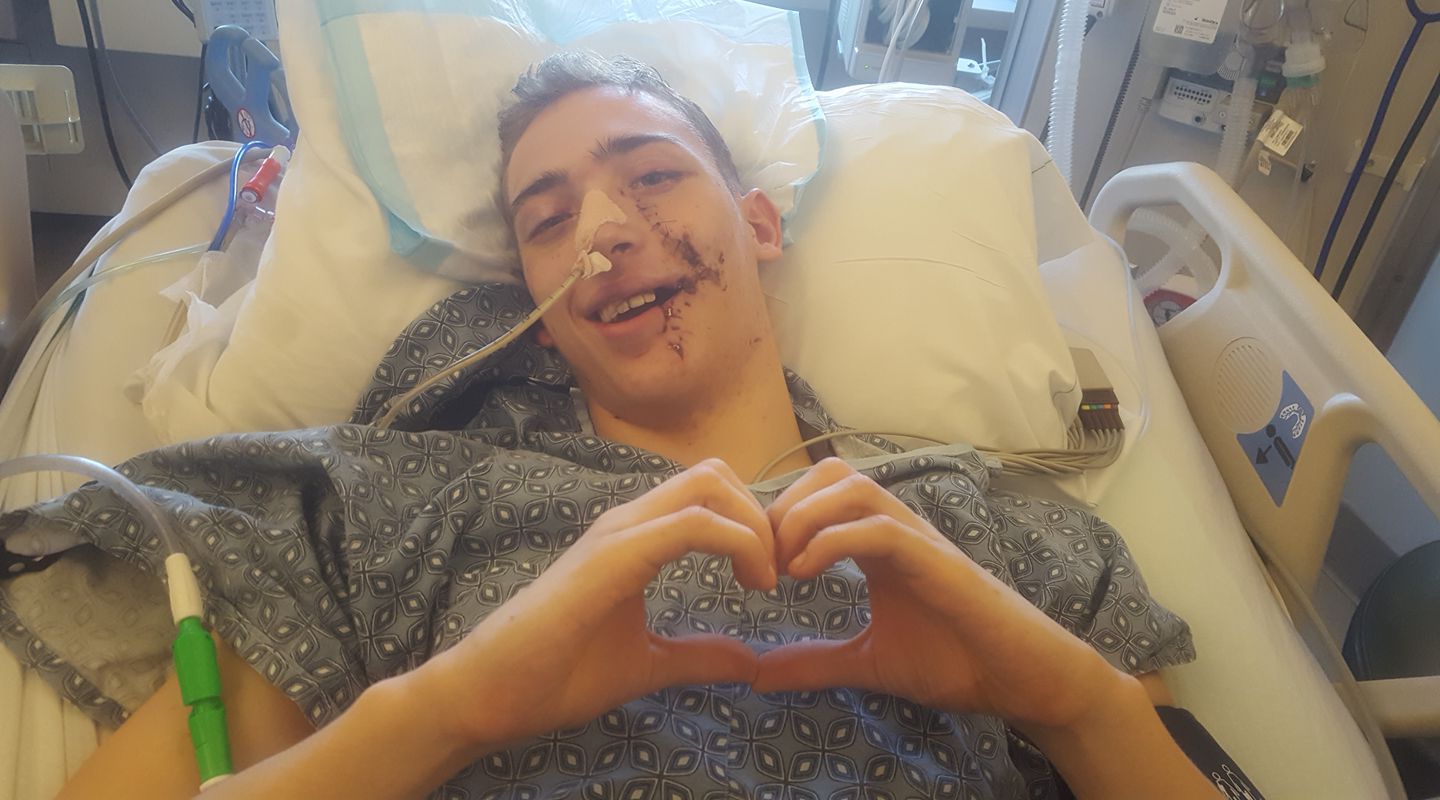
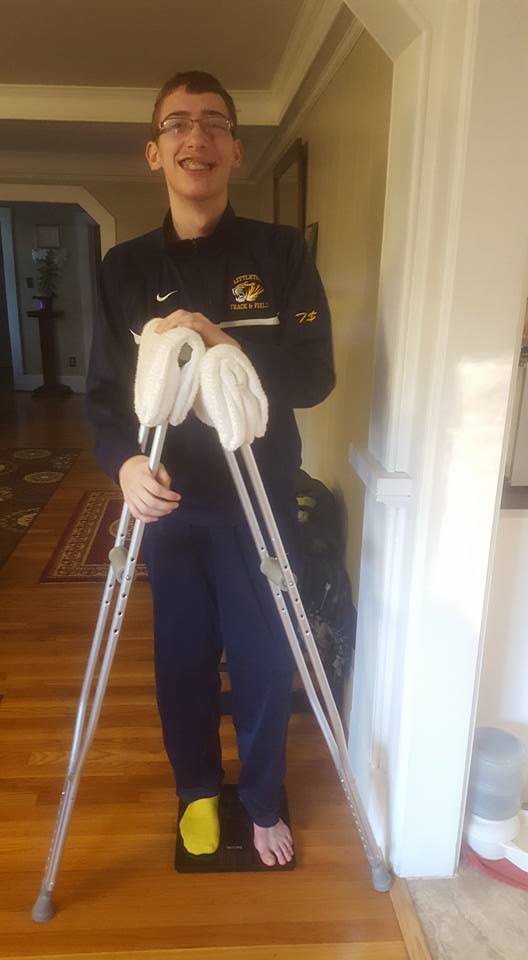
Everyone's questions is HOW? How can he be making such strides given everything that has been thrown at him? The answer is resilience.
"I have a positive attitude, a positive outlook on life. And I never blamed the other guy or questioned why this all had to happen. Instead I concentrated on getting to my next achievement," Tristan told me when I asked him what gave him his motivation to push to get better. First he wanted to stand. Then he wanted to walk with a walker. Then he wanted to walk with crutches. Then he wanted to be taken off the feeding tube. Then he wanted to go home. His drive is amazing and he has had thousands of people cheering him on as he has met every one of these goals.
Through this whole ordeal, I have never seen Tristan without a smile on his face. He could still be laying in a hospital asking "Why me?" But instead of focussing on all the bad that has happened to him, all he can talk about is the good that will be happening and the positive things that have come from his trauma. At one point he even said to me, "I'm glad it was me and not someone else. I know a few of the girls from my school passed him on the way up the highway. I'm just glad it wasn't them he hit instead."
Focussing on the future and not the past is what has made Tristan so resilient. He has a drive to be the best that he can possibly be and he knows that in order to do that, there is no room for dwelling or pointing fingers. "It came from everything I grew up knowing and believing in," Tristan said with a smile on his face. A real life example of the power of resilience.
Escaping Employment Stressors
People who hold positions in law enforcement are not alone in dealing with a multitude of work related stressors. However, those working in a law enforcement capacity can more frequently be exposed to traumatic situations. It is how a particular person is able to deal with these experienced traumatic situations that will determine the ultimate longevity of their career. In the past, police departments did not place as much effort into the mental well being of their officers as they do now.
The implementation of critical incident stress debriefings (CISD) and peer support groups have changed the ways officers can deal with stress and exposure to trauma. Prior to the recent push in ensuring the mental well being of officers, officers would deal with their stress and experiences alone and on their own terms. For example, officers could find themselves drinking more often than usual, becoming agitated more easily, isolate from their family, experience moodiness, have trouble sleeping or concentrating, and also experience other physical ailments that could be attributed to dealing with stress or trauma. As the use of CISDs and peer support groups continues to increase, officers now have a start to dealing with their stress and trauma without having to internalize it and deal with it alone. CISDs and peer support groups allow officers who have experienced traumatic events the time to discuss with other officers the event and their individual actions along with the reasons they acted as they did.
In order for law enforcement officers to remain at the top of their game they must be aware of both their physical and mental health. While many departments provide gyms for officers to work out and maintain their physical health, the discussion about mental health well being has been hidden behind closed doors and not really discussed until recently. As time progresses more and more law enforcement agencies across the country are implementing employee assistance programs, CISD teams, and peer support groups to further benefit officers. These programs provide access to resources in order for officers to maintain a healthy mental state and to assist in the processing of traumatic experiences that happen while on duty.
There has long been stigma associated with mental health illness both in law enforcement and the general population. The education regarding mental health illness it's treatment is vital in the reduction of attached stigmas. Within law enforcement, officers fear losing their job, losing their ability to carry a weapon, or be transferred within a department to a different position. These fears although real possibilities can prove beneficial to an officer's healing process after a traumatic experience where one feels the effects of PTSD. It is imperative for law enforcement agencies to continue educating officers and department managers in the importance of seeking mental well being as much as physical well being. Mental well being can be sought both through self-care and reaching out to others for help. In order for an officer to decide to use physical strength, they must have the proper mind set to make such a decision and determine if that is the right course of action. If one is not of the proper mindset, they may jump to an irrational decision creating the potential for discipline that could have been avoided. The awareness that officers possess in regards to their own self both mentally and physically is extremely important to performing their duties to the best of their ability and creating the safest mind set to perform such duties.
Davis, Joseph A. 1998. Providing Critical Incident Stress Debriefing (CISD) to Individuals and Communities. The american Academy of experts in Traumatic Stress, Inc.