Paws for Resilience
Nearly every police officer at somepoint in their career has been asked to share the worst, most horrific call they’ve been on. The unfortunate truth is, officers experience far more than just a handful of critical incidents, with an average of 178 for mid-sized police departments (Jaeger, 2023), compared to the general population, which usually encounters two to four critical incidents in their lifetime. Studies have repeatedly shown that police officers have higher rates of Post Traumatic Stress Disorder (PTSD), at two to four times the rate seen in the general population. While the statistics are alarming, they are not meant to frighten, but to remind us that trauma exposure is part of the job, and wellness must be prioritized alongside it (Santre, 2024). In addition to numerous traumatic exposures, extended hours and excessive workload are significant sourcesof job stress that impact police officers’ mental health (Purba & Demou, 2019).
As a police sergeant and Critical Incident Stress Management peer, I have seen firsthand the traumas we face and the long-lasting negative impacts they can leave on both the officer and their families. Addressing the negative stresses in law enforcement agencies requires leaders to think outside the box and go beyond the traditional cultural norms that suggest officers can just handle post-traumatic issues on their own.
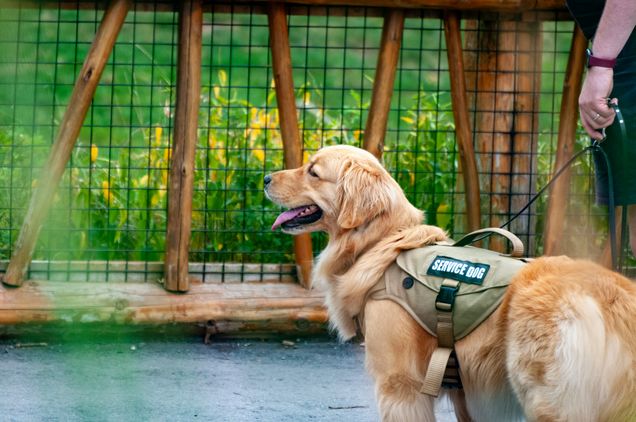
I’m leading the launch of something new for my agency: a facility canine embedded with our Critical Incident Stress Management (CISM) peer team. This isn’t your typical police patrol dog, nor a personal therapy dog, but a professionally trained service dog designed to support people during stressful moments. Organizations like Mutts With A Mission in Virginia Beach, Virginia, have been providing facility dogs to police agencies and courtrooms to “assist multiple people in coping after a traumatic event or overly stressful environment” (Mutts with a Mission, 2019). Moments such as a Critical Incident Stress Debriefing (CISD), roll calls after a bad call, family notifications, and even victim interviews are settings where these dogs can help those in the aftermath of a traumatic event.
Why Bring a Facility Dog to a Police Agency?
There is a substantial amount of research showing that a brief, positive interaction with dogs is linked to lower cortisol levels (a stress biomarker) and higher oxytocin levels (associated with bonding and calming) (Petersson et al., 2017). Combined with organizational peer support and crisis-focused interventions, such as a CISM Team, studies indicate that a more targeted intervention like a CISM team is associated with better outcomes than organizational interventions without a structured team (Anderson et al., 2020).
An agency with an already established peer team can incorporate facility dogs into these teams to serve as a powerful force multiplier. Just like an officer has a utility belt with various tools for different tasks, a facility dog is another versatile tool in the peer team’s toolkit.
An Example of a Facility Canine in Practice
A major post-incident debrief took place after the fatal crash where a child lost their life. The room feels heavy, almost thick enough to cut with a knife, filled with anxiety and adrenaline. Attendees are caught between feeling numb and jittery. A facility canine lies beside the handler and acts as a social bridge to those he/she approaches. Even those who are crossed-armed and came in refusing to speak will reach down to scratch an ear. This is often followed by the individual beginning to speak. The facility dog served, for lack of a better term, as a breaching tool so the peer team could enter and work from there.
Expectations
Facility dogs will not fix organizational trauma, but they can open the door for trained peers to make a connection. By pairing this connection and providing evidence-based peer support, like those in the CISM model, we can help shift the culture and become more resilient.
Reference –
Jaeger, S. (2023, July 11). Perspective: The Impact of Life Experiences on Police Officers. FBI: Law Enforcement Bulletin. https://leb.fbi.gov/articles/perspective/perspective-the-impact-of-life-experiences-on-police-officers
Santre, S. (2024). Mental Disorders and Mental Health Promotion in Police Officers. Health Psychology Research, 12(93904). https://doi.org/10.52965/001c.93904
Purba, A., & Demou, E. (2019). The relationship between organisational stressors and mental wellbeing within police officers: A systematic review. BMC Public Health, 19(1). https://bmcpublichealth.biomedcentral.com/articles/10.1186/s12889-019-7609-0
Mutts With A Mission. (2019). Mutts with a Mission. https://www.muttswithamission.org/facility-dogs-1
Petersson, M., Uvnäs-Moberg, K., Nilsson, A., Gustafson, L.-L., Hydbring-Sandberg, E., & Handlin, L. (2017). Oxytocin and Cortisol Levels in Dog Owners and Their Dogs Are Associated with Behavioral Patterns:An Exploratory Study. Frontiers in Psychology, 8. https://doi.org/10.3389/fpsyg.2017.01796
Anderson, G. S., Di Nota, P. M., Groll, D., & Carleton, R. N. (2020). Peer Support and Crisis-Focused Psychological Interventions Designed to Mitigate Post-Traumatic Stress Injuries among Public Safety and Frontline Healthcare Personnel: A Systematic Review. International Journal of Environmental Research and Public Health, 17(20), 7645. https://doi.org/10.3390/ijerph17207645
The Impact of Dogs on Resilience: Facility and Therapy Dog Programs to Enhance Officer Wellness Relationship Between Dogs and Resilience. (n.d.). https://www.theiacp.org/sites/default/files/278439_IACP_TherapyDogs_508c%5B1%5D_0.pdf