Spring 2013 Commencement: Congratulations New Grads!

The Boston University Gastronomy Program is thrilled to congratulate our new Spring 2013 graduates.
After completing multiple semesters of core course work in subjects like theory and methodology, history, food and the senses, and anthropology, along with various electives or numerous hours spent in the onsite Culinary Lab course, these new grads walked the stage prepped for their next adventure.
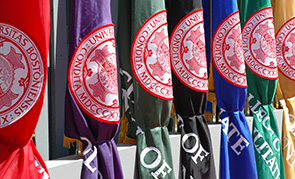
The following students graduated with an MLA in Gastronomy at the University’s May Commencement ceremonies:
- Lucia Austria
- Marty Brennan-Sawyer
- Valentina Cordero-Caruso
- Aubree Duplessis
- Anthony Filippone
- Alison Gross
- Jessica Habalou
- Robert Haley
- Michelle Hastings
- Liane Herrick
- Kyra James
- Kate Hamman Knapp
- Molly Kravitz
- Kelsey Laws
- Valerie Ryan
- Allison Schultz
- Christine Seible
- Lori Vail
- Sarah Warmus
- Rachel Wegman
Congratulations to all!
to cure: interview with Chris and Brad
 By Noel Bielaczyc
On a recent Thursday, over pints and delicious thin-crust pizza at Otto Pizza (courtesy of executive chef and fellow BU Gastronomy student Sebastian Neva), Brad Jones and Chris Maggiolo discussed their upcoming cross-country road trip and combined passion for food, people, and culture.
Noel: Tell me about the inspiration for the to cure: project? Was there an A-HA moment?
Brad: Chris and I were independently brainstorming topics for our theses... I was thinking about going back to Italy and taking an ethnographic approach to look at WWOOFing. Chris was looking at breweries in northeastern French there on the Belgian border. We both had a moment where we thought, "We've been to Europe and Europe interests us, but there's a vibrant artisanal food movement that happening right in our own backyard!" There's a whole vast America, and many new (and old) food producers out there with experiences to share.
 Chris: Another large part of it was our participation last October in the Cuisine and Culture of Québec course with Professor Rachel Black. There was a defining moment for a lot of people, and especially for us, when we had dinner at Côté Est, in Kamouraska, Québec. The 14 of us crowded into a tiny dining room that was half of the first floor of this couples house. The other half of the house was a "market" for artisanal products like jewelry, crafts, and foodstuffs. The remarkable thing was that the producers of every piece of food on our plates, raw and cooked ingredients, was present at this dinner. Cheesemakers, eel-fishers, charcuterists, produce growers, you name it. It was the highlight of the trip for me.
B: The pride and excitement for the food was amazing. There's a huge expression of identity through these products. It inspired us and we realized these are stories that need to be told, these are individuals that need to be met, and these are foods that need to be tasted. And so we made it our mission to see how this is transpiring in America.
N: What part of the road trip are you most excited about? Is there is specific place, person, or product you just wait to reach?
 C: I'm hopeful that we'll get a chance to work with Sandor Katz (author of the acclaimed Wild Fermentation) at his homestead in the Smoky Mountains of Tennessee. I'm also personally really excited for the Louisiana Bayou. To me it's the epitome of what it means to be artisanal and self-sufficient. It's also a way of life and a biome that I've never encountered.
B: I'm most excited for the Pacific Northwest. I've never visited it or experienced it and there's such an interesting food and makers community in that region. It's also very productive agriculturally and ecologically. Sounds like there's strong notions of craftsmanship and local production, and I'm excited to observe it first-hand.
N: Will the end result be a mixture of visual anthropology and writing?
 B: Decidedly. Yes, the project will include interviews, memoirs, personal recipes, videos, photos,audio, we're just going to collect it all. The idea is to use all that data to create a series of digital, multimedia journals that really feature and highlight these food craftspeople in America.
N: What do you see as the biggest challenge? Are there specific aspects of the trip that worry you?
C: Fund raising! This project is totally out-of-pocket. We are hosting an indiegogo campaign, and that is what will really make this trip possible. There's a lot a cool and thoughtful rewards offered for contributions too, so we hope people visit the site and check it out.
B: Yes, fund raising is by far our biggest challenge... But personal hygiene on the road is going to be a big challenge too! That and being without fresh coffee every morning! But just like the craftsmanship of artisans, this trip is combination of leisure and labor. It's hard work, but it sustains you. That's the approach we're taking.

Chris and Brad depart from Boston in their old blue Ram 3500 in just a few short days on May 13th. To contribute or learn more about this project, visit their indiegogo campaign or find to cure: on Facebook. Happy trails and good luck intrepid gastronomes!
Noel Bielaczyc recently finished his first year in the Gastronomy Program and was the spring 2013 editor of the Gastronomy at BU blog.
Valerie Ryan Successfully Defends Her Thesis

Congratulations to Gastronomy candidate Valeria Ryan. She successfully defended her thesis "Umami, Evolution and Nutritional Inequality" on May 7, 2013.
CookWise, Shirley Corriher, and the ACS National Conference
By Audrey Reid
Ever wonder where Alton Brown got the inspiration for his hit TV show Good Eats? The answer: Shirley Corriher, a biochemist and author of the James Beard Foundation award winning book CookWise: The Hows and Whys of Successful Cooking. CookWise looks at the science of the kitchen, like why you should never put acid on green beans if you want to keep them green or why potato starch puffs more than any other starch. Adding to her list of accolades, on April 8th, Mrs. Corriher was honored with the James T. Grady - James H. Stack Award for Interpreting Chemistry for the Public at the American Chemical Society’s national conference in New Orleans.

As a Gastronomy Student with an avid interest in food science, I was fortunate enough to attend the conference and observe first-hand. From her presentation, it was clear that Mrs. Corriher is a very energetic, spirited woman with endless stories to share about her experience, career and the writing of her book. I will briefly summarize the impressive list of speakers that praised Mrs. Corriher and her work, and discuss more generally the field of food science.
Arch Corriher (Mrs. Corriher’s husband) was the first to talk, focusing on the research and editing that went into producing a food chemistry cookbook. His main advice was to be wary of the surplus of misinformation available online and stick to reliable, peer-reviewed databases – Advice all good Gastronomy students should heed!
The next speaker was Ken Chang, a science writer for the New York Times whose science articles are occasionally presented in disguise in the food section. For Mr. Chang, the goal of his food writing is to introduce science to the public in a way that won’t scare them off too quickly. For example, he wrote an article in 2004 titled “Flour, Eggs, Sugar, Chocolate...Just Add Chemistry,” which discussed the scientific explanations behind Corriher’s “tunnel-of-fudge” cake (a chocolate ring cake with a liquid fudge core).

Sally Mitchell spoke next, bringing her perspective as a high school teacher who uses food labs to increase the efficacy of math and chemistry lessons. In one class, she has her students make recipes for molasses cookies and peanut butter fudge with the units in grams and moles ( Chemistry 101, the basic unit of molecular measurement). The tangible and tasty end result helps students learn basic lab methods and understand the value and application of chemistry.
Harold McGee, author of the more chemically focused kitchen science book On Food & Cooking: The Science & Lore of the Kitchen, gave a brief history of food science starting with the Renaissance Period and working his way through Haute cuisine, Nueva Nouvella cuisine, and ending with Soft Matter Science. He pointed out that even Julia Child used the methods of a food scientist, taking apart recipes and reconstructing them to understand what each ingredient did in the recipe and why it worked (or didn’t) – a method that Mrs. Corriher is known to use as well. Despite misconceptions, Molecular Gastronomy (a bogus term invented in 1992 with its own colorful story) isn't the first culinary movement to apply of scientific theory in cooking.
Sara Risch, wrapped up the session with a supportive speech about the importance of communicating chemistry to the non-scientific community through food. As a principal at Science by Design, a program that introduces home school students to science, Ms. Risch attested to the fact that food is universally relatable and can keep an audience interested, even if a topic seems dry.

Shirley Corriher’s Grady-Stack Award honors both her contribution to the field of food science and her great ability to communicate and teach chemistry through her cookbooks. Mrs. Corriher has a sequel to CookWise titled, BakeWise: The Hows and Whys of Successful Baking, which evaluates the science behind baking. Whether a cook is science-minded or not, these books will entertain, educate, and inspire. Whoever thought organic chemistry could be so delicious?
Audrey Reid is a first year Gastronomy student, Culinary Arts graduate, and lover of food related science.
BU Gastronomy Garden Club: 2013 Spring Work Day!
By Nora Conroy
Depending on the source you consult, the average last frost date in Boston is anywhere from April 20th to May 5th. This date is an important guideline for avid gardeners, but the real indicators are only found in day-to-day weather trends. After a long, cold winter, the first legitimate days of spring seemed to finally arrive mid-April. Sensing that the threat of snow had mercifully past, the BU Gastronomy Garden Club rallied to organize our first workday coinciding with the Fenway Victory Gardens (FVG) annual Spring Meeting. The plan was to attend the meeting then proceed to the garden plot and tackle a few spring projects in preparation for planting.

The FVG meeting was held at the MassArt Tower, and was preceded by a coffee and pastry social (catered by an FVG member owned business). During the two-hour meeting, many questions and concerns were voiced, some of which related to safety issues in the FVG. Bruno Rubio, the FVG VP of Safety (also a BU Chemistry lecturer), provided details about his dialogue with Boston police, relaying the message that police presence will only increase if crime is more consistently reported. While I havenʼt personally encountered any crime during the past year working at the garden, FVG is located in a highly traffic part of Boston, and care must to taken especially around dusk or dawn.
The VP of Communication and Social Media, Mario DʼAmato, recognized the unique partnership that has formed between the BU Gastronomy Program and FVG in organizing events (like movie screenings) and generally spreading the word about FVG. Mario also mentioned plans for a new, updated FVG website that will be compatible with smart phones and other mobile devices. In addition to general FVG info, the new website will be used to promote The Legacy Project, which is a media compilation that celebrates the FVG’s 71 years in service, and will include interviews with gardeners, some of whom have been members for decades.

After an eventful meeting, fellow Gastronomy Garden Club members and I trekked behind the MFA and through the Fens to our plot at FVG. Such a beautiful day needed to be savored, so we took a few minutes to sit and chat. Joking about how the Gastronomy Gardeners often like to talk more than do, we eventually decided to get some work done! The first order of business was retrieving salvaged wooden pallets (courtesy of Taza Chocolate) that will be re-appropriated as planting containers. After a short panini break, we were back to work repairing the fencing around the gate, eager to use our newly purchased wire cutters and zip ties.
 When we turned our attention to cultivation, it seemed our mulching and weeding late last fall had paid off. We cleared some weeds and fall leaves, but in general the plot was weed free and in good shape. We ended our leisurely work day around 5pm, already planning our next moves. The spring task list is always long, but it’s balanced by the excitement of a new growing season: once the soil is prepared we'll begin direct seeding hardy vegetables and eventually transplanting seedlings. Stay tuned for more garden updates throughout the season. To learn more about the BU Gastronomy Garden Club, look us up on Facebook. Happy planting!
Nora Conroy is a recent BU graduate and employee in the BU CAS Computer Science Department as the Staff Coordinator. Her interest in food sustainability and food policy issues led her to discover the BU Gastronomy Garden Club. Nora is currently considering the BU Gastronomy MLA Program for future studies.
Janet Poppendieck Caps Off Spring 2013 Gastronomy Lecture Series
By Bethy Whalen
Janet Poppendieck opened her dynamic lecture on universal free school meals last Tuesday, April 2, by telling her audience that the total number of meals provided by school breakfast and lunch programs in America tops 7.5 billion every year. As it stands now, the cost of these meals is stratified and falls into one of three categories: free, reduced price, or full price. Poppendieck’s ultimate goal would be the establishment of universal free school meals, available to all, that integrates food into children’s school day curriculum and coursework. As a student in public elementary school in the early 90s, I began to think back to my elementary days – did I remember what the food was like? Did I know who had free or reduced price meals? As kids, would anyone know the difference?
 Poppendieck didn’t discuss what was on the lunch tray as much as she talked about the function of the school meal within the school day. The talk outlined the themes from Poppendieck's most recent book, Free For All, and focused on how we could reorient the policies and programs we currently have to create a different attitude around lunch period in schools. Using a mnemonic device of her creation (“The Seven Deadly In-s”), Poppendieck outlined the many reasons why the tiered school food payment/ reimbursement policies are not working. For example, the “in-dignity” of having free or reduced lunch, the “in-accuracy” of the current system, and the “in-efficiency” of using staff time to ensure the reams of paperwork are filled out correctly. Perhaps the most important point here is that financial means testing for families is out-of-place in public educational settings and interferes with students ability to learn and develop.
Poppendieck described the school cafeteria and kitchen as an intersection. “A place where concerns about poverty, hunger, and health intersect concerns about education and student development, and concerns about the environment, sustainability of our food system, and the economy.” By serving food instead of selling it, universal free lunch program could promote a better diet, food education, and health awareness among kids. Poppendieck gave one example of a Social Studies class that worked with the school kitchen to serve a variety of grains (wheat, rice, teff, quinoa) from different regions of the world as part of their school project. Curriculum like these that integrate foods in the cafeteria with lessons in the classroom could make eating school lunch a more purposeful part of the day and connect food with the broader learning experience.

At the end of the lecture, there was an extensive Q & A, illustrating the interest and connection that many in the audience had with school lunch programs. Poppendieck was frank about the challenges faced by dining directors who must satisfy the appetites of children, achieve nutrition guidelines, negotiate with vendors, and maintain budgets. Even still she insisted we can and should change the experience of eating at school from one that is necessary (but underappreciated), to one that is integral to each child learning experience. When facing the vastness of problems with our food system, diet, and health today, Janet Poppendieck may not have all the answers, but she’s got some pretty good ideas on where to start.
Bethy Whalen is a first year gastronomy student with a strong interest is food policy and national school lunch reform.
Gastronomy Lecture Series: Janet Poppendieck discusses her most recent book
Please join us for the final installment of the Gastronomy at BU Spring 2013 Lecture Series Tuesday, April 2 at 6pm. Lectures are free and open to the public...

Québec Webinar & Information Session Today at 4:30 PM
Follow this link to learn more, sign up, and attend this webinar online.
ML713 Agricultural History: A Gastronomy Student’s Perspective
By: Susan Brassard

This spring 2013 semester, the Gastronomy Program is offering a seminar course focusing on the agricultural history of America, taught by Professor Sarah Phillips. The format of the course is built around several core readings that take an in-depth, historical look into the agricultural heritage within settlements in the American Northeast, Midwest, and South. The broad relevance of the course gives it appeal not only students of the gastronomy program, but also those majoring in history, policy, and the environment. The diversity of students promotes a wide range of discussion during weekly course gatherings.
The opening reading for this course was Brian Donahue’s The Great Meadow: Farmers and the Land in Colonial Concord. The book offers an interesting look into the growth of agriculture and subsequent development of the land in Massachusetts. Readings expand from Concord’s wheat production to the tobacco fields of Virginia, from meat and grain industrialization in Chicago, to the cotton complex of the Mississippi Delta. Through readings and discussions, the course explores many interrelated themes including industrialization, expansion, crop selection, human labor, commodities, and government policy.

Students with an interest in current trends of organic foods, “green” business, and back-to-basics farming methods will thrive in this course. Deborah Fitzgerald’s Every Farm a Factory: The Industrial Ideal in American Agriculture describes how the American farm evolved into the industrial apparatus that we are ambivalently familiar with today. This text also reveals how small independent farms became susceptible to excessive financial risk through increased dependence on modern agricultural technology.

Whether you are interested specifically in agriculture, or more generally in food systems, US history, policy, or sociology, ML713 Agricultural History offers an excellent opportunity for a range of students to explore the interconnection of these topics. I’m looking forward to the remaining discussions of course topics as well as the prospect of delving into my final research assignment.
Susan Brassard is a first year MLA Gastronomy student, culinary arts and business instructor at Salter College in West Boylston, and the owner of The Violet Rose Cakes, Catering & Pastries (www.facebook.com/thevioletrosecakes).
Gastronomy Lecture Series – Diana Garvin talks about Italian Food Advertising
Please join us for the third installment of the Gastronomy at BU Spring 2013 Lecture Series Thursday, March 21 at 6pm. Lectures are free and open to the public... 