Natalie Shmulik: From Classroom to Community
Natalie Shmulik: From Classroom to Community
Written by: Lauren Greco
Professor Natalie Shmulik, who teaches MET ML 655: Launching a Food Business at Boston University’s Metropolitan College, was recently featured in The Boston Globe for her insights on the Boston Metropolitan area’s growing food entrepreneurship scene. She bridges academic guidance and real‑world innovation, helping students with their entrepreneurial culinary ideas while highlighting how local bakers and makers are reshaping Boston’s food landscape.
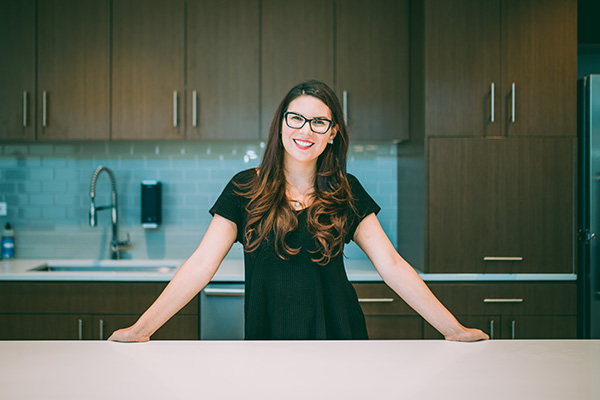
The article reported that cottage bakers are transforming porches, sheds, and kitchens into small-scale bakeries, evolving past pandemic pastimes into sustainable livelihoods. Shmulik sees this movement as much more than just a simple business trend, though. After earning her master’s degree in gastronomy in 2013, she went on to shape the food ecosystem far beyond the classroom. In 2018, Shmulik became the Chief Executive Officer of The Hatchery, a Chicago-based nonprofit food and beverage incubator that helps entrepreneurs overcome barriers to entry within the industry. The Hatchery became a hub for community‑based innovation, supporting founders and creating pathways for sustainable food businesses. Today, as Head of Innovation and Partnerships at JPG Resources, Shmulik continues to shape the intersection of creativity and commerce. Her work in industry informs her teaching, and she brings that same focus on access, empowerment, and cultural storytelling into her role as an adjunct professor here at Boston University.
When interviewed by The Boston Globe, she described the rise of cottage bakeries as “outlets of self-expression” to find purpose beyond their day jobs. Shmulik’s perspective reframes these bakers as more than small business owners chasing novelty; they are individuals seeking meaning through creation, people who can turn ordinary ingredients into acts of self-definition.
That idea leads toward a larger truth: food itself is a powerful language, one that communicates identity and belonging, reinforced by the recent boom in cottage bakeries. Homemade bread, according to Shmulik, carries an air of nostalgia—one that prevails through the constant, overwhelming noise of information. For younger generations, the appeal of participating in cottage bakeries lies in the experience itself: the limited drops and exclusivity of the different small-batch baked goods, the process of making them, and the community connection that forms around it. Through porch pickups, handwritten labels, and home‑baked goods, baking becomes a way to connect through craft and care. These bakers go beyond the bounds of entrepreneurship and, in turn, cure cultural stagnation within their communities. Each loaf is a reminder that purpose can rise from the simplest ingredients. Together, they remind us that real success is found in the quiet work of rebuilding what connects us all.
The articles’ stories of each baker show how community and culinary creativity can coexist and thrive in domestic spaces. For them, baking started as small gifts and experiments and has grown into a community that treats baked goods as more than just products.
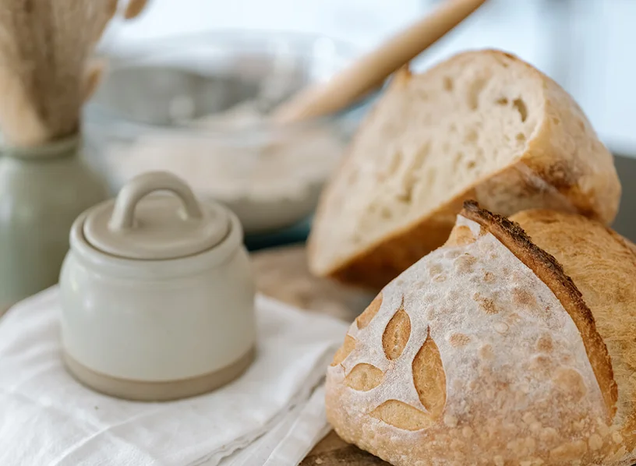
Jacqui Viscarello began baking sourdough with a friend in 2024, googling recipes and sharing loaves with Lynnfield neighbors. What started as a casual experiment became Fire & Flour, a weekly operation where she rises at 3 a.m. She makes ~100 loaves before logging into her full‑time job at Harvard. Her husband built a full basement bakery for her so she could keep up with demand while staying compliant with cottage‑law rules.
Zohar Kafri Shushan began even smaller: an honor‑system bread stand in her Wilmington driveway, to earn extra money as a single mother. Demand surged so quickly that she built an enclosed, bright pink bread shed stocked with her products. Her online menus sell out in minutes, drawing hundreds of customers and a database of around 6,000 people.
Alyssa Gargano, founder of Kneady Mama, came to bake sourdough through necessity. Living with gluten intolerance, she discovered she could tolerate sourdough if it had been slowly fermented. That revelation led her to create bread for others with dietary sensitivities. She ferments her dough for over 24 hours, uses regenerative organic flour, and bakes 600–700 loaves a week and 300 other sourdough items. Gargano and her husband expanded their Bridgewater home to install a bread oven, and she now sells at farmers’ markets, teaches sourdough classes, and supplies multiple different retail shops. For her, baking is both science and an art, a way to build community around food that feels good.
Ashley and Marisa Roth of Busy Bee Bakery began by making sourdough as Christmas gifts, but their lives changed overnight after a Boston-based influencer posted about their loaves online. Ashley now bakes 50–70 loaves a week and dozens of cinnamon‑roll packs. Marisa, who works full-time as an EMT, describes the bakery as a source of freedom for Ashley, who left her job as a licensed therapist to keep up with demand.

Thomas Generazio started baking as a hobby to help unwind from his work as a corporate lawyer. By 2018, he had converted a barn on his property into a full baking space. His business tripled overnight when the pandemic struck. He now sells 250 loaves a week, but pastries are his main income.
Together, these bakers have found a way to slow down and participate in something deeply human through mixing ingredients and kneading dough. Their work shows how these spaces transform into places of connection, creativity, and renewal; it’s proof that even the simplest ingredients can carry meaning when shared. In many ways, their stories complement the spirit of Professor Natalie Shmulik’s MET ML 655 course, where students learn how to build a venture and to build purpose through realizing a business idea — a process that, much like baking, begins with imagination and rises through community, craft, and care.
Sources:
Gastronomy (Food Studies) Graduate Courses | BU MET. 2021. Bu.Edu. 2021 https://www.bu.edu/met/courses/gastronomy-food-studies/#course-METML655
Image Courtesy of Fire & Flour. https://www.fire-flour.com/
Natalie Shmulik. Professional Profile. – Image Source
https://www.linkedin.com/in/natalie-shmulik/
The Boston Globe. “Cottage Micro‑Bakeries and Shushan Sourdough.”
https://www.bostonglobe.com/2026/09/07/lifestyle/cottage-micro-bakeriers-shushan-sourdough/
The Hatchery Chicago. Food Entrepreneurship and Innovation Hub.
https://thehatcherychicago.org
Photo by Thomas Generazio / The Boston Globe. Caption: Mainstay Bakery in Scituate tops flatbreads. Submitted Photo.