2025 Early Childhood Keynote: Challenges to Child Health and Well-Being
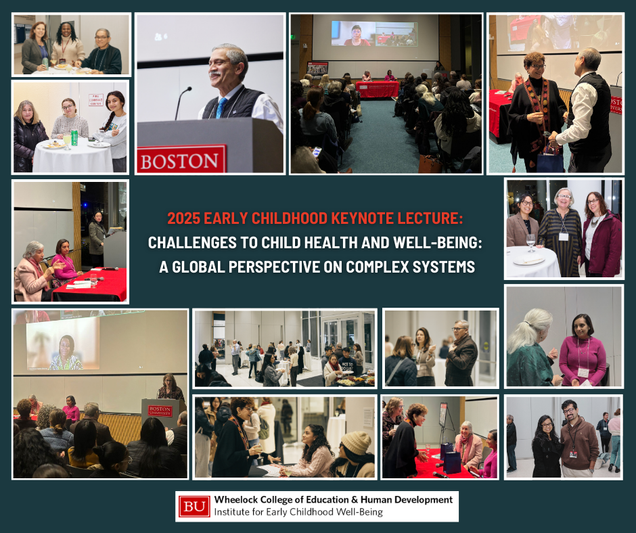
The Boston University Wheelock Institute for Early Childhood Well-Being hosted its 2025 Early Childhood Keynote Lecture, featuring Dr. Adnan A. Hyder, Dean and Robert A. Knox Professor at the Boston University School of Public Health. Dr. Hyder, an internationally recognized scholar with over 25 years of experience in health systems and policy, delivered a compelling address titled “Challenges to Child Health and Well-Being: A Global Perspective on Complex Systems.” His presentation urged attendees to recognize that the landscape of global child health has fundamentally shifted, requiring a new approach to research, policy, and care.
A central theme of the lecture was the “systemic challenge.” Dr. Hyder argued that current health systems are still designed for the “old burden” of acute infectious diseases. They are ill-equipped to handle the new reality, which requires long-term care for chronic conditions, disability management, and trauma rehabilitation. He also addressed the “policy challenge,” noting the dangerous lag between innovation and implementation. He pointed out that while car safety seats were developed in 1962 and smoke alarms in 1965, it has taken decades for these life-saving tools to become universally implemented standards.
Presenting data from the Global Burden of Disease 2023, Dr. Hyder highlighted that while traditional threats like respiratory infections are declining, injuries—specifically road traffic crashes and firearms—are rising causes of death, particularly in the United States. He noted that in the U.S., firearms and motor vehicle crashes have now surpassed cancer and suffocation as leading causes of death for children and adolescents. Concluding with a forward-looking strategy, Dr. Hyder proposed five key responses for the future of child health:
1. Redefine Child Health: Move beyond survival statistics to include morbidity, disability, and overall well-being.
2. Create New Models of Care: Shift focus from acute visits to functional outcomes and social reintegration.
3. Promote Transdisciplinary Research: Engage sectors outside of medicine, such as urban design and political science, to solve complex health problems.
4. Enhance Decision Analysis: Bridge the gap between research data and policy-making.
5. Improve Governance: Strengthen leadership within institutions and governments to ensure sustainable health delivery.
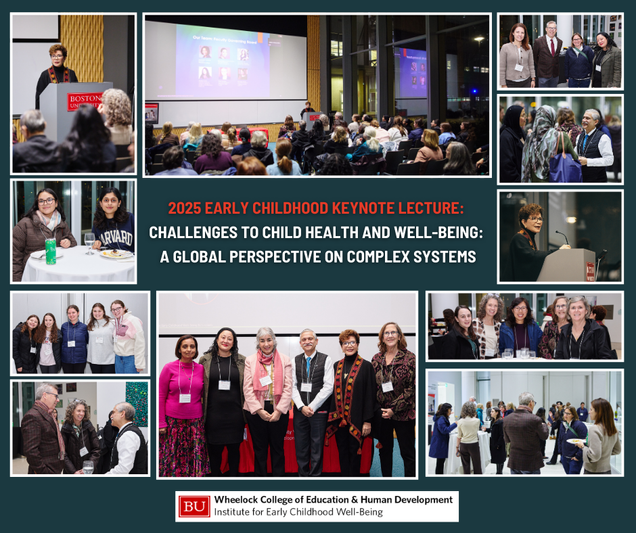
The lecture was followed by a panel discussion moderated by professor Lindsey Locks, faculty atof Sargent College, featuring Dr. Betzabe Butron-Riveros, Dr. Aisha Khizar Yousafzai, Alice Tenjiwe Kabwe, and Dr. Eleonora Villegas-Reimers. Panelists discussed the practical challenges of shifting global systems from a focus on mere survival to one of holistic thriving. Dr. Aisha Khizar Yousafzai noted that while child mortality has dropped significantly since the early 2000s, a “development crisis” persists. She highlighted that 45% of children in the “majority of the world” are failing to meet developmental milestones. To address this, she argued for a workforce trained not just in medical interventions, but in behavioral support and counseling for families. Dr. Eleonora Villegas-Reimers emphasized the ethical responsibility of educators and policymakers to respect local knowledge. She shared examples of how indigenous communities have successfully integrated traditional healing with Western medicine when approached with respect. Expanding on this, Dr. Betzabe Butron-Riveros stressed that child health is fundamentally relational. She cautioned against “homogeneous” policie. Tenjiwe Kabwe challenged the audience to reimagine systems where variability is the norm rather than the exception. She advocated for “brave partnerships” that acknowledge historical inequalities and prioritize inclusive environments where children with disabilities are integrated from the start.
Ultimately, the event highlighted a critical shift: we must move from a ‘survival’ mindset to one of ‘thriving.’ Whether through urban design, policy reform, or inclusive education, the path to better child health outcomes requires a brave, systemic reimagining of how we protect and support the next generation.
Watch the Full Lecture You can watch the complete recording of the keynote lecture and panel discussion here: https://youtu.be/z-yvfQPUtZ4?si=32R97EfnmFris2F2