Home
Cultural Competency and Trauma in Criminal Justice
Cultural competency is an important factor in dealings with any populations with racial, ethnic, or religious considerations. “Cultural and linguistic competencies is a set of congruent behaviors, attitudes, and policies that come together in a system, agency, or among professionals that enables effective work in cross-cultural situations.” (Rousseau, 2018). Though I cannot speak specifically regarding all cultures, I can speak about the unique cultural considerations of the Indigenous people in the United States and Canada.
Indigenous people in the U.S. and Canada have a long history of abuse and traumatic events but what many people do not realize is that this trauma has impacted all generations. Historical trauma is the “cumulative emotional and psychological wounding across generations, including the lifespan, which emanates from massive group trauma.” (delVecchio, 2015). The trauma is passed down from one generation to the next through storytelling, physical and emotional abuse, and addiction. Many people are aware of some of the more prominent instances of injustices to the indigenous people, including colonialism, the Trail of Tears, and Wounded Knee. However, history books often overlook one of the darkest and most impactful periods in Native history – the residential school era.
Residential schools came about as a way to assimilate indigenous communities to a more European lifestyle. One of the more famous schools was the Carlisle Indian School whose founder, Lt. Richard Pratt, came up with the motto “Kill the Indian to Save the Man” (Pember, 2017). Native children were taken away from their families, usually by force, and housed in the residential schools for most of the year. The long hair of the boys, an important symbol in Native culture, was cut short, the children were forbidden to speak their language, abused physically and sexually, forcefully sterilized, and malnourished. Many children died, their deaths often not being reported to their families until long after, and they were buried in unmarked graves. It is estimated that about 6,000 children died in the residential schools in Canada alone (Pember, 2017). The last of these schools did not close until the early 1990s and the effects of colonialism and assimilation are very present in indigenous communities today.
Today’s Native communities are suffering from domestic violence, mental health issues, high suicide rates, addiction, and poverty. Many people have lost their language, culture, and identity. Michelle Obama put the suffering of the indigenous communities into perfect context. She said “Folks in Indian Country didn’t just wake up one day with addiction problems. Poverty and violence didn’t just randomly happen to this community. These issues are the result of a long history of systematic discrimination and abuse. We began separating children from their families and sending them to boarding schools designed to strip them of all traces of their culture, language and history.” (Pember, 2017). In order to better support indigenous people throughout the criminal justice system, it is vitally important to understand where these problems come from and how to use the positive aspects of the culture, such as traditional medicine, sweat lodges, family support, and traditional teachings, to rehabilitate offenders.
Here is a link to a recent story about how my own community (Akwesasne) is rebuilding the foundations of language after the significant losses from the residential school era (please forgive the reporter’s mispronunciation of Akwesasne):
As Native American history month comes to a close, a rare and intimate look at New York’s Mohawk tribe and their fight to restore their culture.For more information and to support the Akwesasne Freedom School visit the Friends of the Akwesasne Freedom School (https://www.foafs.org).
Posted by MetroFocus on Friday, November 30, 2018
References:
Rousseau, D. (2018). Module 4: Implementing Psychology in the Criminal Justice System. Retrieved from https://onlinecampus.bu.edu/webapps/blackboard/execute/displayLearningUnit?course_id=_50742_ 1&content_id=_6167937_1&framesetWrapped=true
delVecchio, P. (2015). The Impact of Historical and Intergenerational Trauma on American Indian and Alaska Native Communities. Retrieved from: https://blog.samhsa.gov/2015/11/25/the-impact-of-historical- and-intergenerational-trauma-on-american-indian-and-alaska-native-communities
Pember,M.A. (2017). When Will U.S. Apologize for Genocide of Indian Boarding Schools? Retrieved from: https://www.huffingtonpost.com/mary-annette-pember/when-will-us-apologize-fo_b_7641656.html
PTSD… A “Hood Disease”
When folks think of Post Traumatic Stress Disorder (PTSD), the first thing that usually comes to mind is veterans. However – there is a very close parallel to the atmosphere of war to the atmosphere of living in the inner city. The things that some individuals who live in urban areas, are exposed to can often be traumatic. From poverty to gang-violence, people in inner cities witness events that do not typically transpire in suburbs. These experiences lead to this notion of a “hood disease” (Cole 2017).
Many studies have been conducted that come to the conclusion that the connection between inner city youth and PTSD can lead to violence. Not only is this a criminal justice issue but a public health one as well. What is being done to address it?
I have seen how PTSD affects both populations – veterans (my father) and inner city youth (my clients). There are many commonalities in their behavior and how it manifests in them. What is also interesting to me is that my father was an inner city kid. Did being in the Vietnam War exacerbate his PTSD? Constantly looking over your shoulder and not being able to sit with your back towards the door are two things that my father and my clients have in common.
Inner city violence “has insidious effects on the psychological health of urban civilians”, whether you are a direct victim or are merely exposed to it (Gilkin et. al. 2016). Imagine walking down the street and on every corner there are lit candles, teddy bears, and empty liquor bottles in memory of a homicide victim. The scene is morbid. The aura is often the same. Constantly hearing that your friends or your neighbors were shot at or killed. Innocent peoples lives being taken in a mistaken identity.
Fight or flight. The smartest decision would be flight. But if your family is already experiencing poverty, packing up and leaving is not even an option. So again I ask, what is being done to address it?
Gillikin, C., Habib, L., Evces, M., Bradley, B., Ressler, K. J., & Sanders, J. (2016). Trauma exposure and PTSD symptoms associate with violence in inner city civilians. Journal of psychiatric research, 83, 1-7.
http://chicagopolicyreview.org/2017/06/02/breaking-the-cycle-of-inner-city-violence-with-ptsd-care/
https://www.ncbi.nlm.nih.gov/pmc/articles/PMC5107154/
https://www.thoughtco.com/hood-disease-is-a-racist-myth-3026666
Is All Psychopathy Bad?
This question arose after an interesting discovery from neuroscientist Dr. James Fallon. Dr. Fallon’s studies involved Alzheimer’s and brain scans of serial killers/psychopaths through Positron Emission Tomography “PET” imaging. The scans of serial killers sparked an interest and led to more studies, this time a control was involved and Dr. Fallon’s brain scan was part of the control. It wasn’t until this that he discovered he is a psychopath.
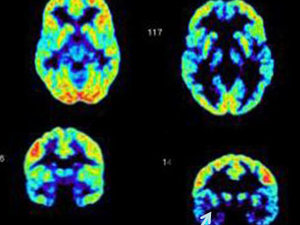
(Left brain scans are of Dr. Fallon’s son and this is what a normal brain scan looks like. The brain scans on the right belong to Dr. Fallon and you can see that the orbital cortex is dormant. Photo courtesy of James Fallon and NPR's Barbara Hagerty.)
A history of violence was later revealed by Dr. Fallon’s mother that includes descendants like Thomas Cornell (hung for murdering his mother) and the infamous Lizzie Borden (acquitted for the murder of her two parents).
This of course led to further research and most of the studies were conducted on the “12 genes related to aggression and violence.” (Hagerty, 2010). Out of the 12 genes, the MAO-A (monoamine oxidase A) a.k.a. the “warrior gene,” caught his attention “because it regulates serotonin in the brain” which is known as a calming agent that affects one’s mood. (Hagerty, 2010). “Scientists believe that if you have a certain version of the warrior gene, your brain won’t respond to the calming effects of serotonin.” (Hagerty, 2010). Additional studies conducted by other researchers led to the nature v. nurture effect that suppresses the MAO-A gene. The research determined that children with the warrior gene that were abused and/or experienced significant traumatic moments sparked the warrior gene, but children with the warrior gene that were brought up in a positive environment did not become violent psychopathic killers. An example of this is none other than Dr. Fallon.
Well, the PET scans, PCL-R along with Dr. Fallon’s therapist indicate that he is a true psychopath, but he is not a serial killer – so is all psychopathy bad?
Let’s think about this one with an open mind the way Dr. Fallon did. In one of Dr. Fallon’s live presentations at the World Science Festival that can be viewed through YouTube, he fearlessly explored this inquest.
Dr. Fallon asked his audience a couple of questions: do you really want a surgeon that is too emotional/empathic or do you want someone that is more detached from all the feelings and more focused on performing the calculative surgery? Do you want a green beret that gets emotional or one that can go in and complete the mission successfully? Do you want a CEO that doesn’t want to win and make the big bucks?
All of this sparked a new way of thinking and that not all psychopaths are monsters or serial killers. A good depiction of this is the film “I Am Fishead,” which revealed the studies from Paul Babiak and Robert Hare which explored the corporate psychopath based on their research and book “Snakes in Suits.” They derived that the corporate psychopath may not be easy to get along with since they lack empathy, they’re charming, egotistical, and they are manipulative to name a few (20 total traits).


(Photos courtesy of pixabay.com)
These corporate psychopaths do not kill (well, at least that we know of), and they may be horrible team players, but they do play a big role in business economy.
All in all, research on the intricacy of psychopathy is still in its infancy and we hope to find more answers as research continues.
Not all bad is bad and not all good is good.
References:
Hagerty, Barbara Bradley. (2010, 29 June). A Neuroscientist Uncovers a Dark Secret. NPR. Retrieved December 7, 2018, from https://www.npr.org/templates/story/story.php?storyId=127888976
Hare Psychopathy Checklist. The Gale Encyclopedia of Mental Health. . Retrieved December 01, 2018 from Encyclopedia.com: https://www.encyclopedia.com/medicine/encyclopedias-almanacs-transcripts-and-maps/hare-psychopathy-checklist
Vortruba, Mishba, and Dejcmar, Vaclab. (2011, 11 Sep.) I am Fishead. Retrieved November 26, 2018, from http://www.fisheadmovie.com/watch1
World Science Festival. (2014, 21 Oct.) The Moth: Confessions of a Pro-Social Psychopath – James Fallon. YouTube. Retrieved December 8, 2018, from https://www.youtube.com/watch?v=fzqn6Z_Iss0
ZeitgeistMinds. (2014, 16 Sep.) James Fallon, Neuroscientist - A Scientist's Journey Through Psychopathy. YouTube. Retrieved December 7, 2018, from https://www.youtube.com/watch?v=lOjykLQAdaE
Separation beyond Borders
Separation beyond Borders
It was September 12, 2011 when I left my home country and settled in another. 7 years have passed and I have never been more thankful to Canada for allowing us to have the life that we have now. At the beginning, I questioned my parent’s decision but every time I ask, they would reply “we did it for you”. It took me while before I could have understood what they meant. Now, I wouldn’t change it for anything.
As an immigrant myself, I do know the hardships that come with leaving your home and starting a new life. However, my situation was clearly different from those who are fleeing their countries to save their lives and their families. For a few months now, I have been watching stories about families being separated under the newly imposed Zero Tolerance Immigration Policy of President Trump. Looking at the story from both sides, I could understand the logic between the policy as it aims to protect its border, its laws, and citizens. However, I do feel that the forcible separation of families pose traumatic effects on the development of children and family relationships.
Poverty is one of the biggest factors for immigration. Families are leaving their home countries to seek better lives in thriving countries such as the United States. According to Blair and Raver (2012), “it is well established that the material and psychosocial contexts of poverty adversely affect multiple aspects of development in children” (p. 309-318). Families have risked their lives to ensure a better future for their children but they have experienced the opposite. As reported by The Intercept (2018), “children separated from their parents are at a higher risk of developing long-term health problems from toxic stress”. Aside from health factors, trauma can impact an individual’s mental, emotional, and psychological aspect (Bartol and Bartol, 2016). Traumatic experiences in childhood such as family separation can lead to adverse effects such as violence and delinquency (Thornberry, Smith, Rivera, Huizinga, and Stouthamer-Loeber, 1999).
I have brought up this topic to give my opinion on both sides of the story. To gain entry and residence in another country, one needs to go through the legal process. At the same time, is it justifiable to punish children and parents by separating them? Instead of resorting to unethical means, we should consider a solution that will benefit both sides. Before we do, there should be public discussion regarding the pros and cons of separating families before passing the zero tolerance immigration policies. With that, I do believe that separation goes beyond borders.
Reference
Bartol, C. R., & Bartol, A. M. (2016). Criminal behavior: A psychological approach. 11th Edition. Boston: Pearson.
Blair, C., & Raver, C. C. (2012). Child development in the context of adversity: Experiential canalization of brain and behavior. American Psychologist, 67, 309–318.
The Intercept (26 Aug 2018). Children separated under Trump’s “Zero Tolerance” Policy say their trauma continues. Retrieved Dec 9, 2018 from https://theintercept.com/2018/08/26/children-separated-under-trumps-zero-tolerance-policy-say-their-trauma-continues/
Thornberry, T. P., Smith, C. A., Rivera, C., Huizinga, D., and Stouthamer-Loeber, M. (1999). Family Disruption and Delinquency. Juvenile Justice Bulletin, 1-5.
We never leave you on read
Hi, my name is Randi. Thank you for texting in tonight. It takes courage to reach out. Tell me more about what is that has led you to text in. I am here to listen to you and support you in any way that I can.
According to Mental Health America, more than 44 million adults have a mental condition and 1 in 5 reporting that they have unmet needs ("The State of Mental Health in America", 2018). Some are uninsured, some do not have the means to access care such as transportation or lack of services offered within the area. Regardless of the reason, many Americans are suffering daily with approximately 123 committing suicide a day making suicide the 10th leading cause of death regardless of age in the United States ("Suicide Statistics and Facts – SAVE", 2018). One visionary, Stephanie Shih saw the need for a place to go for those experiencing trauma and mental illness that was quick to respond and listen, be supportive, and point others in the right direction so they can receive the help that they need. Shih, working for a nonprofit DoSomething.org, a group that sends texts to local youth encouraging them to become active volunteers within their community, received a text stating “He won’t stop raping me”, a few hours later another text “R u there?” (Gregory, 2015). There was no protocol for these messages. Shih brought this to her C.E.O. Nancy Lublin and two years later Crisis Text Line became the first and only free national 24/7 crisis-intervention hotline that operates exclusively through text message. What started in two cities (Chicago and El Paso) quickly spread to reach all 295 area codes within four months with zero marketing and faster growth than when Facebook first launched (Lublin, 2015).
The idea is simple, a texter texts the number 741741 and within minutes a trained crisis counselor will respond through an online platform with a casual greeting and a willingness to help that surprises many texters. There is no judgment, no problem too small. The system has grown drastically since its birth five years ago in August 2013 and has sent out more than 88, 217,385 text messages ("Crisis Trends - Crisis Text Line", 2018). The beautiful thing about a text-based system is that it is private and nobody will hear you talking. The texters identify remains anonymous, texters can talk to a trained crisis counselor in a crowded room and nobody will know, and they receive the immediate help they need. A girl can sit down at lunch and text in about her eating disorder and her friends are none the wiser. A teen can text in their room at night about their father physically abusing them and the father won’t know, but that teen is reminded that the violence isn’t their fault and are given resources to help them fight their way out of a terrible living situation. There are resources for veterans, homelessness, free legal help, mental services, LGBTQ+ based services, bullying, anxiety, depression, grief, substance abuse, the list goes on.
Many of the texters text in saying things like “I don’t want to live anymore,” “I want to die.” The crisis counselor quickly builds rapport with the texter and does a risk assessment to identify how close the texter is to take their own life. According to 2015 TED talk, Nancy stated that on average there are 2.41 active rescues a day, meaning that the texter was in the process of taking their own life or was planning on doing so within the next 24 hours and the crisis counselor could not get the texter to guarantee their safety (Lublin, 2015). Nancy goes on to say “The beautiful thing about Crisis Text Line is that these are strangers counseling other strangers on the most intimate issues, and getting them from hot moments to cold moments…” (Lublin, 2015). These crisis counselors are volunteers that complete a 40-hour training and dedicate a minimum of 200 hours to helping others. They are trained to bring texters from a hot moment to a cool calm through active listening, and collaborative problem solving (“Crisis Text Line”, 2018). They log in from their own personal computers and handle multiple conversations at one time to make sure that each texter receives all the care and love they need.
Not only is the Crisis Text Line directly impacting individual lives, but the data that is being collected and publicly shared is also making a huge difference in the way we think about and track crisis. The personally identifiable information is scrubbed and the data is shared to assist other professionals to write policy and increase awareness nationally. The data is being used to make the world a better place and using social media platforms to reach as many people as possible. Algorithms in the system take keywords such as “depression” and “suicide” and bump them to the top of the queue so they can reach a crisis counselor faster than a texter who may just be having a bad day and needing an ear to listen. Regardless, each texter will receive a crisis counselor as fast as the counselors can. Many times, it may take time depending on how big of a ‘spike’ the server is seeing. Recently a post on social media went viral: “Did you know that if you text "Home" to 741741 when you are feeling depressed, sad, or going through any kind of emotional crisis, a crisis worker will text you back immediately and continue to text with you? Sometimes it’s best to just talk it out with someone who has no personal bias. Many people, especially younger ones, prefer text to talk on the phone. It's a free service to anyone; teens, adults, etc. who live in the US. Depression is real, you're not alone. 💚 You just have to copy & paste” and the amount of texters has reached a number with 4 December 2018 being the second highest traffic day in the system has ever seen ("Crisis Trends - Crisis Text Line", 2018).
It is good to hear that you are feeling calmer and that you have the confidence to make it through today. Remember, we are here 24/7 if you are ever in crisis again. Take care.
Crisis Trends - Crisis Text Line. (2018). Retrieved from https://crisistrends.org/
Lublin, N. (2015, May). How data from a crisis text line is saving lives
. Retrieved from https://www.ted.com/talks/nancy_lublin_the_heartbreaking_text_that_inspired_a_crisis_help_line?language=en
Suicide Statistics and Facts – SAVE. (2018). Retrieved from https://save.org/about-suicide/suicide-facts/
The State of Mental Health in America. (2018). Retrieved from
http://www.mentalhealthamerica.net/issues/state-mental-health-america
No Need to be Afraid
Early morning in 1988, the sun had raised, and it was time to prepare for the 30-minute walk to school. The neighborhood kids would be seen walking together and congregating along the way, except for one boy who appeared to be walking alone. He was a shy kid and talked to people only when approached by other kids. He was a well-dressed and well-mannered boy that it did not seem like he caused any trouble or trouble followed him. While the young boy was walking to school and about five minutes from the entry of the school, some young boys teased him, called him names, and shoved him continuously. The young boy was so frightened that he started to cry. The other kids laughed at the boy because he was crying. The young boys who had shoved him stated that they would see him after school. The young boy went throughout the day terrified and scared at what they would do to him. Rather than being able to focus on any lessons taught to him that day, he was strategizing how to avoid the other young boys. He watched the clock every minute thinking that it would have slowed down or stopped. But then the end of the day had approached, and the kids were excited to see the fight, except for the young boy. That little boy was, ME!
Unfortunately, school violence has been around for decades and has become more relevant in recent years. What has become of kids who see violence as a way of empowerment or sense of loyalty from friends? According to Bartol & Bartol (2017), violence in schools is more than school shootings. Violence in schools includes aggravated and simple assaults, sexual assaults, robbery, and some forms of bullying (p. 310). While over the years we have seen mass shootings in schools, statistics from the National Center of Education has conducted studies of school violence. Like the young boy from the illustration above, according to studies conducted, during the 2009-2010 school year, there were 49 million students enrolled in prekindergarten through 12th grade, of which 828,000 reported being victims of a crime (Bartol &; Bartol, 2017, p. 310). As a result, many students did not report a crime. These kids are bullied, therefore, causing them to be fearful and potentially traumatized victims for the rest of their lives.
It is important to develop programs and treatments for kids who undergo school violence. I think that there should be more emphasis on getting children who are bullied or tormented the counseling they need in order to overcome the traumatic event that they may have experienced. I also think that there should be a more stringent program for kids who are the aggressor. This type of work requires teamwork (i.e. parents, teachers, counselors, and community support). We cannot control every situation that may arise, but we can tackle an issue one at a time.
Reference
Bartol, C. R., & Bartol, A. M. (2017). Criminal behavior: A psychological approach. (11th Ed.). Boston, MA: Pearson.
More Than Just Mans Best Friend
It is inevitable, people will experience trauma throughout their lives. Working through the trauma is important. One of the newest and growing areas to help people work through the trauma that they have experienced is the use of animals. Now this is not a new concept in the world, it even goes as far back as the 1700s when they were used in asylums. Matuszek, S. (2010, July). Animal-Facilitated Therapy in Various Patient Populations:... : Holistic Nursing Practice. Retrieved from https://journals.lww.com/hnpjournal/Fulltext/2010/07000/Animal_Facilitated_Therapy_in_Various_Patient.3.aspx.
When it comes to treating trauma with animals there are two different categories, Animal-assisted activities or “AAA” and animal-assisted therapy or “AAT”. Animal Therapy for PTSD. (2016, October 06). Retrieved from https://strengthtoheal.org/animal-therapy-for-ptsd/. When describing AAA, the dogs are used in casual activities that involve dogs being around people that are going through trauma. Animal Therapy for PTSD. (2016, October 06). Retrieved from https://strengthtoheal.org/animal-therapy-for-ptsd/. There is no target for people that take part in AAA, there are just events with animals for people going through trauma. (Animal Therapy for PTSD). While on the other hand AAT is a program to help people work through trauma with the assistance of a dog that has been trained and it is targeted to improve a person in the physical, social, emotional and/or cognitive functioning. (Animal Therapy for PTSD).
I think that animal based therapy could be extremely beneficial to people who have experienced serious trauma in their lives. One area that has seen some beneficial results is the interviewing of child victims in sexual assault cases. Walsh, D., Yamamo, M., Willits, N. H., & Hart, L. A. (2018, February 23). Job-Related Stress in Forensic Interviewers of Children with Use of Therapy Dogs Compared with Facility Dogs or No Dogs. Retrieved from https://www.frontiersin.org/articles/10.3389/fvets.2018.00046/full. Now the result is not just based on the children, but on the people, who have to conduct the interviews. (Walsh, 2018). Obviously this area is a very delicate subject to be discussing with children. So, anything that can help the kids relax and answer questions about a terrible experience in their life. In the study the 32 people that used dogs in their practice none of them reported that the dog was less helpful in their interviews than working without a dog. (Walsh, 2018).
Now the benefits of using animals to help with trauma experienced by people is not only beneficial for people working with children that are sexual assault victims. One of the other areas that has seen a benefit is veterans dealing with PTSD. Animal Therapy is Making Strides in the Treatment of Post Traumatic Stress Disorder |. (2011, December 19). Retrieved from https://www.elementsbehavioralhealth.com/trauma-ptsd/animal-therapy-ptsd-treatment/. There are a lot of veterans who deal with PTSD after they come back from overseas. These dogs help people express feelings and emotions as well as do things without using aggression.
These ideas to use animals especially dogs is something that should be used more and more. Speaking from personal experience when you come home and your dog is there and happy to see you it makes any bad day just a little bit better. Now, I have not been in combat or sexually assaulted, but working in the Public Defender’s Office in the domestic violence courtroom has created some more stress in my life. Having a dog would help bring that stress level down without having to do things like drink. Having another being that is relying upon you can make you forget about your own stresses.
At the end of the day dealing with trauma is a personal journey. There are some things that will work for people and some things that will not. The important part is that people who do go through a traumatic experience acknowledge that they are going through something and learn to work through it. I think that the use of animals is something that all people need to consider. I think that it is beneficial because you could have a service animal without it really having it known to everyone. Having issues is not something that everyone wants to have out in the open so having an animal that helps take care of those issues quietly is beneficial.
Animal Therapy for PTSD. (2016, October 06). Retrieved from https://strengthtoheal.org/animal-therapy-for-ptsd/
Animal Therapy is Making Strides in the Treatment of Post Traumatic Stress Disorder |. (2011, December 19). Retrieved from https://www.elementsbehavioralhealth.com/trauma-ptsd/animal-therapy-ptsd-treatment/.
Matuszek, S. (2010, July). Animal-Facilitated Therapy in Various Patient Populations:... : Holistic Nursing Practice. Retrieved from https://journals.lww.com/hnpjournal/Fulltext/2010/07000/Animal_Facilitated_Therapy_in_Various_Patient.3.aspx.
Walsh, D., Yamamo, M., Willits, N. H., & Hart, L. A. (2018, February 23). Job-Related Stress in Forensic Interviewers of Children with Use of Therapy Dogs Compared with Facility Dogs or No Dogs. Retrieved from https://www.frontiersin.org/articles/10.3389/fvets.2018.00046/full.
Teens and Trauma
Growing up, I was always around the topic of mental health. In the state of the North Carolina, my mother worked with individuals who suffered from mental health issues and helped them find jobs that properly fit them and their mental health status. My father owned a couple of group-homes for delinquent children who often found themselves in trouble with the law, school, and family. I did not pay much attention to my parents and their jobs at the time, but after taking this course a lot of memories of conversations, terms, and even people came back to me.
Around my pre-teen years, my father owned and managed a group-home for troubled teenagers in the area. Soon after my father opened his first group-home he realized that these young men were not dangerous, harmful, or delinquent. He found them to be the opposite of that. He did mention that there is a barrier at first but once they trust in someone they are caring, helpful, respectful and fun to be around. Although these teens were able to behave for the majority of the time, they did suffer from PTSD. They had triggers and when they were triggered you could see the bad habits and emotions surface. My father was the only one could calm them down, and I believe its due to the fact that they trusted him and he knew how to reach them. Despite their short-comings when triggered, my father still had faith and trust in the young men. He trusted them enough to where he was comfortable bringing me around them to do small activities like play video games, or play basketball. Out of respect for my father they had a high level of respect for me as well. What made them like me, even more, was the fact that I was not rude, judgmental, or treated differently from them. My father treated us all the same; he treated us like we were people.
Basketball seemed to be the common ground for all of us and most importantly, a safe haven. My father made going to the gym to play basketball a reward for the boys. They had to do their homework before going, they had to behave fairly well in school, do their chores around the house, and make sure they were respectful and grateful for the opportunity to be able to go play basketball and of course, it was good exercise and fun for everyone. NAMI (National Alliance on Mental Illness) of North Carolina would provide opportunities for the young men to participate in things outside of basketball like game nights, venting seminars, and therapy sessions; all in which the young men usually did not enjoy. In my opinion, the state provides these opportunities to actually help with the young men’s trauma issues. The young men typically did not know the people that were trying to help them very well, which led to a lack of trust, which led to the young men not engaging and listening to the therapist or activity at hand.
The group-home keeps the young men out of trouble, helps them with school, helps them develop good habits, and allows them to be in their safe haven; doing what they love to do all with the guidance of an individual who truly cares about them. The group-home situation is great for the young men but there is one problem. The state ends funding for these young men at the age of 18, disallowing them to continue living in the group-home. At the age of 18, these young men end up moving back home. Home is where these young men were physically, sexually and verbally abused along with being traumatized by poverty, crime, and abandonment. I had the opportunity to interview Joe McCauley, owner and founder of a group-home in North Carolina, YouthExtension, to get some insight on how he feels about the cut off age. He stated, “I have seen numerous young men make progression throughout their time period in my [group-]homes, and when they turn 18 I really worry. They are released back into the wild where they starved, beaten up, cursed out, and got in trouble. Years of training these young men to do the right things and putting them in a safe environment goes down the drain as soon as they arrive back on their doorstep.” My father agrees with this statement and says he can do nothing but pray and hope the young men have changed their ways by the time they turn 18-years-old. When they are out on their own, they are not going to be able to go to their local gym and just play with friends. They have to pay to get in most indoor gyms, they are not protected by their group-home leader, and they could easily find themselves in trouble. All in which they did not have to worry about prior to being 18. After taking this course and understanding how PTSD works, there is not a lot of hope for these young men because they never overcame their trauma; the group-homes only pushed their trauma aside. Group-homes have trouble trying to help the young men face their trauma because they do not want the young men to feel uncomfortable, do not want to touch sensitive subjects, and they do not want to trigger them. Group-homes employees are not required to be therapists so, therefore, to keep the peace, they do the best they can with avoiding the mental issue of PTSD.
After brainstorming I came up with an idea that I thought could work long-term for the young men for when they are in the group home and when they are 18 and have to be back home. The simple idea of planting came to mind. It is a skill that has to be learned and developed throughout time and experience. To further my idea, I did some research on the health effects of planting. Turns out there are a lot of positive effects for mental health that are useful especially for this group of young men. According to Psychology Today, there are 10 great reasons why planting is good for a person’s mental health, but there are five that stood out to me the most:
- “Looking after plants gives us responsibility"
- “Gardening allows us to be nurturers”
- “Some aspects of gardening allow us to vent anger and aggression…”
- “Working in nature releases happy hormones.”
- “...whilst others [Gardening] allow us to feel in control”
These five statements listed are vital in a group-home young man’s life and could act as a form of CBT. If they are able to learn how to plant and have some enjoyment for it then they are a little better off than they would be without it. I asked Joe McCauley about the idea of his clients planting as an extra-curricular activity and he absolutely loved it. For his group-home, he could easily set-up a small garden in the back and provide each young man with their own section to plant. Another option for Joe McCauley and his group-home could be community gardens. Depending on the city, there are usually community gardens where the public is allowed to come and plant different things, which would be great for the young men to be able to get away from the house and be involved with the community. To push the idea even further I thought about how planting could benefit the young man outside of their mental health. There are plenty of job opportunities in the agricultural field. If they continue to learn about gardening and the science of it, they could not only grow their own foods and feed themselves, but they can also make a living out of it. Most importantly, this is a skill or opportunity they can take beyond the group-home that could be there safe haven or place of comfort.
Overall, I believe there is no ultimate answer to fix everything for these group-home young men. I also believe there are good intentions from both the group-home side and NAMI. The group-home is there to make these young men feel as comfortable as possible by placing them outside of the place of trauma, teaching them beneficial traits, and guiding them along the way. The best example of how a group-home fulfills these qualities is through basketball. Basketball was a reward which implemented structure and discipline, it is also a way the young men can have fun, exercise, compete, and bond. NAMI has more of the approach to help their PTSD. Providing therapists, and seminars are all in an attempt to help these young men face their trauma in hopes of overcoming it. Even though both branches have good intentions, these young men still end up heading down the wrong path because of their inability to function outside of their trauma in their home circumstances. These young men usually do not pursue higher education or find stable jobs, but find themselves in trouble with the law instead. Planting, however, will provide a skill set in which they can benefit from during their time at a group-home and beyond. In a perfect world, these young men could make a living out of the agricultural world, but the most important part of this skill is to help their mental illness as well as keeping them occupied, thinking, productive and out of trouble all as a form of cognitive behavioral therapy. Planting may not completely resolve their trauma, but it provides them with an activity that can allow them to make something of themselves and have a positive impact on the community. In my opinion everyone, even successful people, live with some type of trauma, whether it is something minor or major, but they made the best out of their situation; these young men can do the same. Again, planting may not cure their trauma, but it for sure can be the foundation to a life worth-while.
Works cited:
Rayner, S. (n.d.). Petal Power: Why Is Gardening So Good For Our Mental Health? Retrieved September 5, 2018, from https://www.psychologytoday.com/us/blog/worry-and-panic/201505/petal-power-why-is-gardening-so-good-our-mental-health
Joe McCauley, Founder of YouthExtension. Personal Interview
Debriefing post critical incidents
In the field of law Enforcement, we are no strangers to stress. Day in and day out we encounter calls to service that the common person truly can not understand at times. Officers patrol their beats and typically deal with individuals every single day who are having their WORST day. Anyone can look at that thought and understand that this job is stressful and could potentially be taking a toll on the individual. Individual, I believe that is a word that the public might forget when thinking of police. Behind the uniform and badge is a person who has thoughts, feelings and emotions just like everyone else.
An article from PoliceOne that I have recently reviewed titled, How critical incident stress debriefing teams help cops in crisis, made me think of how we as police officers help individuals day in and day out but seem to forget about some people. Those people our ourselves and our brother and sister officers. Time and time again after these critical incidents we typically never debrief about the situation in regards to emotions. Humor and get togethers like "choir practice" or drinking after work seems to be our release.
This is where the idea of Critical Response Teams come into play. My department for example has one, but it seems that these are only used for major incidents such as an officer involved shooting. Although those types of incidents are extremely critical, the monotonous grind of shift work can also take its toll. As stated by Mcgill, "The officers can take back control over their emotions and flashbacks that may be interfering with their lives, and they are forced to admit that they do not have total control over all situations. In addition, these debriefings can be used to educate family members of the normal reactions that may occur in the officers as their minds recover from a traumatic incident." (Mcgill 2015) We know how important this topic is. We need to begin to take care of ourselves now more than ever in today's society. It is an interesting time for Law enforcement and the men and women who carry out these duties not only need to worry about the public's well-being, but our own as well.
https://www.policeone.com/health-fitness/articles/8554063-How-critical-incident-stress-debriefing-teams-help-cops-in-crisis/
Preventing vicarious trauma from leading to compassion fatigue in trauma workers.
Patrick Potter
08-14-18
Vicarious traumatization describes the pervasive changes that can occur within a trauma worker over time as a result of their intimate work with a traumatized population. The changes in the workers can include change in self, spirituality, world views, interpersonal relationships, and overall behavior. The common term used for suffers of this vicarious trauma experienced in their profession is compassion fatigue. (Way, 2004) Its crucial to the well-being of the traumatized person that the trauma worker, no matter in what capacity doctor, clinician, police officer, or EMT, recognizes the symptoms of vicarious trauma and begins to resolve the symptoms to ensure that they are effective in handling the traumatized population that they are entrusted with.
Compassion fatigue compromises the trauma workers capabilities to care for persons who are victims of traumatic events. Avoidance of the traumatized population, intrusive thoughts or dreams of distressing symptoms may affect the trauma worker facing compassion fatigue. These symptoms may parallel the post traumatic stress symptoms that many of the traumatized clients they are dealing with are facing. If the symptoms of compassion fatigue in their career field go unchecked and the trauma worker faces additional stress in the home environment burn out may occur. Burn outs main symptoms are emotional exhaustion, sense of ineffectiveness, work dissatisfaction, detachment, sleep disorders, difficult concentrating, social withdrawal, poor judgment, and interpersonal conflicts. (Gallagher, 2013) Compassion fatigue therefore revolves around the traumatized person and the trauma worker while burnout results from the stress of the trauma workers interaction with their environment.
When examining vicarious trauma and its effects on trauma workers its important to look at the constructivist self-development theory. This theory suggests that individuals construct their realities through the development of cognitive structure or schemas. Schemas include a trauma workers beliefs, assumptions, and expectations about themselves, others and the world. These preconceived schemas are then used to interpret events and make sense of new experiences. When new information, such as working with a recent trauma victim, is experienced and the new information gathered from the interaction is incompatible with the trauma workers original schemas they can become invalidated or shattered. In this case the schemas must be modified to incorporate the new information into the workers belief system by a process of accommodation. This accommodation to the new information can come in the form of both negative and positive accommodations. Negative accommodation can lead to distress while positive accommodation to new experiences can lead to post traumatic growth. If the trauma worker makes positive accommodations to the new experience they are having they may come out of their interaction with a new appreciation for their own good fortune and a strengthened sense of optimism. The predictors of vicarious post traumatic growth are a higher level of coherence and empathy in the trauma worker as well as social support and organizational support surrounding them. (Cohen, 2012)
Trauma workers need to understand that they must be able to simultaneously monitor their own needs while also dealing with the emotions and needs of the families and subjects they are assisting through a crisis. There are multiple strategies which may work in order to prevent compassion fatigue and lead to post traumatic growth in a trauma worker. Some of these strategies for managing stress involved with dealing with emotionally demanding trauma include practicing mindfulness, making personal connections with the traumatized person, rewarding self after completing a task, shedding role when leaving work, utilization of team approach for support, knowing limits, learning from experience, relieving stress through exercise, reflective writing, and developing a special place where you can get away. (Gallagher, 2013)
Vicarious traumatization is a process that requires continual self-assessment and monitoring by the trauma worker themselves. Organizational support should also be available to assist in both prevention of vicarious trauma in the first place and intervention when needed. Education provided to trauma workers should identify that vicarious trauma is a normal response to working with traumatized populations. By identifying strong self-care strategies and being able to depend on assistance at the organizational level trauma workers will be able to avoid negative accommodations from their interactions with trauma victims and even experience post traumatic growth.
References:
Cohen, Keren. Et. Al. (2012) The Impact of Trauma Work on Trauma Workers: A Metasynthesis on Vicarious Trauma and Vicarious Post Traumatic Growth. American Phycological Association.
Gallagher, Romayne (2013) Compassion Fatigue. Canadian Family Physician.
Way, Ineke. (2004) Vicarious Trauma: A Comparison of Clinicans who Treat Survivors of Sexual Abuse and Sexual Offenders. Sage Publications