Home
Profiling
 Profiling has been an interest of mine for a long time. The section that was on profiling listed various checklists and qualities that were associated with each category. Many people do not realize that profiling has only been around for about forty years, starting in the mid-1970s. The 1970s saw an increase in serial crimes across the US, so John E. Douglas and his partner Robert Ressler set out across the country to interview incarcerated serial killers such as Charles Manson and Edmund Kemper. Both FBI agents felt that through these comprehensive interviews, they would gain a better understanding of the motives that drove these men to commit their violent acts. They hoped to create a centralized database for serial offenders in the nation that would have a precise breakdown of crime scene information and shared with other authorities in different states.
After all the information came together, the Violent Criminal Apprehension Program was formed but not official until 1984. By using ViCAP, the authorities can look for an unknown subject and compare case details to open or closed cases to find any patterns that might exist. Although Howard Teten and Jack Kirsh made strides within the FBI as profilers, the ViCAP helped them create a branch in the agency referred to as the National Center for the Analysis of Violent Crime (NCAVC). Authorities in the US or Canada can submit a request to NCAVC, which has a connection to the ViCAP. The application will go to NCAVC to analyze a sequence of unsolved murders, suspicious cases, or unidentified bodies. While this analysis is going on, the ViCAP computer software runs through various scenarios a human profiler would think of reflecting any particular behavior. Douglas provided us a faster way to profile criminals nationwide. As the serial killer “whisper,” Douglas was able to dive into the minds of serial killers that led to trailblazing accomplishments at the present day.
The skill and ability of criminal profilers is the background to several books, television shows, and films like Silence of the Lambs. Mindhunter's debut on Netflix a couple of years ago highlights the early struggles of the FBI to comprehend and profile serial killers. Mindhunters is created from the writings of best-selling author Mark Olshaker and legendary FBI profilers John Douglas.
What exactly is criminal profiling or psychological profiling as it is sometimes called?
Profiling, or criminal investigative analysis, as the FBI calls it, involves the investigation of a crime with the hope of identifying the responsible party, that is, an unknown perpetrator, based on crime scene analysis, forensic psychology, and behavioral science (201712). The APA mentions that criminal profiling combines law enforcement and forensic psychology but with somewhat new parameters and definitions. The experts in criminal profiling might not always agree on things like basic terminology. Still, they all have a common goal of examining evidence taken from the crime scene, and statements provided by victims to cultivate a narrative for an unknown offender.
During the inquiry stage, numerous things are determined, such as if crimes are linked, predicting the personality and lifestyle characteristics of the unknown perpetrator; moreover, the possibility of the perpetrator escalating their crimes. When investigators are ready to make an arrest, profilers foresee where to look for an unknown serial criminal as well as pinpoint the information that should be in a warrant to make the criminal react. When a criminal is finally apprehended, the criminal profilers act as subject matter experts in court linking the crimes and forensic evidence to the alleged perpetrator of the series of crimes.
Jack the Ripper case is known as the first application of criminal profiling and the methods of autopsy reports and crime scene evidence. In the fall of 1888, London physicians George Phillips and Thomas Bond made well-versed guesses about Jack the Ripper’s personality and behavioral characteristics. Dr. Bond’s report determined that “all five murders no doubt were committed by the same had… the women must have been lying down when murdered, and in every case, the throat was cut first.” Furthermore, he went on to say that Jack the Ripper had no medical training even though the killer had a particular way of cutting and mutilating his victims.
Dr. Bond’s report was in direct opposition to what the authorities had concluded about Jack the Ripper. They believed that the perpetrator had some medical training due to the method of how the internal organs were removed. Dr. Bond’s report went against the majority because of the gaping wounds that were inflicted on the victims but did not demonstrate medical training. Dr. Bond describes the murders as erratic and a man of isolated means. Unfortunately, we will never know the truth because the crimes committed by Jack the Ripper remain unsolved.
https://www.criminaljusticeprograms.com/articles/the-history-of-criminal-profiling/
https://www.psychologytoday.com/us/blog/wicked-deeds/201712/criminal-profiling-the-original-mind-hunters
Substance Abuse and the Criminal Mind

The criminal mind has many different factors that play into the creation of each individual. The same goes for how drugs and alcohol affect each person differently. To me, it seems as though certain drugs or alcohol, cause different types of criminal activity. Our lecture notes show that heroin addiction tends to have a correlation with money-producing crimes such as robberies, burglaries, shoplifting, and larceny. I can definitely understand why heroin tends to contribute to these types of crimes because heroin is one of the most addictive drugs, so most addicts need to steal to help feed their habit if they do not have it readily available to them. Our notes also point out that research shows GHB, Ketamine, and Rohypnol are linked to sexually related crimes and OxyContin is linked to pharmacy robberies, thefts, and health-care fraud. In an article by Maia Szalavita, it states "brain imaging studies of violent criminals are difficult to interpret because the most persistent among them — those who are responsible for a disproportionate amount of all crime — are not only violent but also overwhelmingly addicted to alcohol and other drugs...A new study aimed to tease out the differences by comparing four groups of volunteers: violent offenders who were addicted to drugs; the rare violent offenders who were not; nonviolent people with alcohol or other drug problems; and those who were neither violent nor addicted" (Szalavita, 2). The results of the study show that these brain scans suggest that drug misuse is correlated with reduced brain volume in areas of the cortex that are involved with self-control. In other words, these subjects showed less control and were weaker in areas such as violence, aggression, desire, craving, pleasure and motivation.
It has been proven that criminogenic drug users often recidivate back into the system. Once they get out, it is usually in their nature to go back to drugs because of learned behavioral patterns. Now some people may ask, why should society even bother treating these “hopeless” causes or addicts if they will only be cycling back into the system? Unfortunately, many people think this way because they don’t understand an addict, their disease, and what struggles they go through every day. It is actually very important to try and find people in the system and people who have just recently been let out of the system, a way to get treatment and help for their addictions because it actually ends up saving the state money in the long run. In an article by David Deitch, he states that “along with the cost of tracking illicit sales activity, a tremendous burden rests on the taxpayer for the dollars to build and maintain prisons. This becomes exceedingly poignant as prisons are increasingly used as a way of responding to this problem. As the costs of investigating, prosecuting and incarcerating addicts mount, the highest cost comes from recidivism” (392).
Drug culture in this country does seem to have a strong correlation to criminal behavior. Now, obviously not all criminals are drug or alcohol abusers; but from the readings, it does seem to have some correlation to criminal behavior. Our text states that, “in 2004, nearly a third of state and a quarter of federal prisoners committed their offenses under the influence of drugs” (pg. 473). Of course, every case is different, but I find it very interesting that researchers are exploring more and more the link between alcohol/substance abuse and the correlation to crime.
The article by David Deitch states, “So, the question may be, which comes first, crime or drug use? The answer is both. Many recent studies and interviews with offenders suggest that in approximately two-thirds of clients, criminal behavior precedes the onset of drug taking. This is particularly true when disruptive behavior with elements of violence has been observed in early childhood. In the remaining one third of these offenders, the drug taking came first. Many studies indicate that in 50% of youth, criminal behavior comes first, in 25% of youth the onset of drug taking precedes the first criminal act, and in the remaining 25%, substance use and criminal behavior started simultaneously” (394). It is interesting to say whether the drugs come first or the crime, but depending on the circumstances it can be both. The article goes on to state that there is an intimate connection between crime and drug use. There is definitely a relationship between high rates of recidivism and substance abuse criminals as was stated earlier.
One of the more interesting statements our textbook mentions is, "the belief that alcohol is a major cause of crime appears to be deeply embedded in American society" (Bartol, 496). We as a society I believe tend to forget that alcohol can be just as addictive or harmful as any other drug. Our lecture notes state that according to research, alcohol tends to be associated with violent crimes. It also shows that at least 40% of convicted murders being held in jail had alcohol play a factor in their crime (which was homicide), and about 3 million violent crimes occur each year where alcohol was perceived to have played apart. The acts of rape, assault, robbery, or aggravated/simple assaults are mostly likely to be committed by a criminal under the influence of alcohol. Alcohol alters a person’s mind much like any other drug, which is why alcohol tends to influence the way people act. Some people tend to act differently from how they normally would because of the consumption of alcohol; and depending on a person’s cognitive factors, they may act out violently.
References:
Deitch, David. Ph.D. (The Relationship Between Crime and Drugs: What We Have Learned in Recent Decades. Retrieved from: https://www.cnsproductions.com/pdf/Deitch.pdf
Szalavitz, Maia. (June 11, 2011) The Criminal Mind: How Drugs and Violence May Affect the Brain. Retreived from: http://healthland.time.com/2011/06/10/the-criminal-mind-how-drugs-and-violence-may-affect-the-brain/
Image is also from this article.
Bartol, C and Bartol A (2017) Criminal Behavior: A Psychological Approach, 11 Edition, Pearson Press.
Rousseau, D. (2019). Forensic Behavioral Analysis: Online Module 2. Boston University. Retrieved from: https://onlinecampus.bu.edu/bbcswebdav/courses/19fallmetcj725_o2/course/w6/metcj725_ALL_W6.html
The Second Assault
Rape and sexual assault are some of the most under-reported crimes in the United States. It is estimated that one in three women and one in six men living in the US experience some form of sexual violence in their lifetime, yet only 37% of these crimes are reported to the police (https://www.nsvrc.org). Due the sensitive, personal, and humiliating nature of sexual assault, it is understandable that victims of these crimes would feel reluctant to come forward, and the current system does not make this process any easier. In fact, victims that do end up reporting their crimes describe their experience with the reporting process as a "second assault," this time at the hands of the police and medical professionals.
Victims that do come forward often experience victim blaming; victim blaming occurs when the victim is wrongfully held accountable for the crime(s) committed against them. When interacting with police or medical professionals, victims may be asked what they were wearing when they were assaulted, if they were under the influence, if they are sure that they didn't want it to happen, and other similar questions that imply that the victim is at fault. This line of questioning can be incredibly traumatizing for the victim and promote self-blame. Coupled with the intense interrogations and derogatory remarks from police officers, victims are also subject to a 'rape kit exam,' an invasive 4-6 hour long medical examination needed to collect evidence for the criminal investigation. Throughout this examination, the victim is asked a series of questions about the attack and is essentially re-victimized.
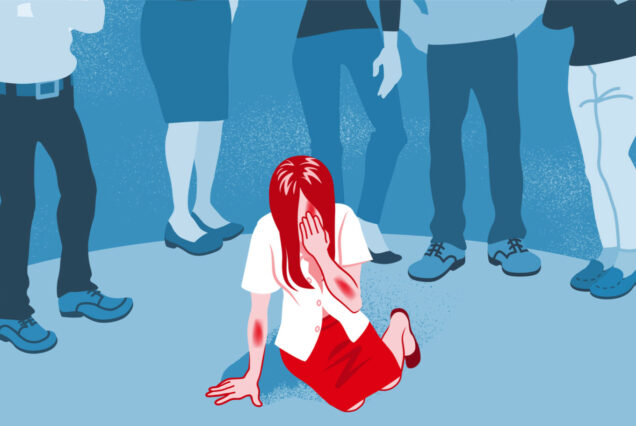
Whether or not victims choose to report their crimes, they are subject to the victim-blaming culture that exists within the US. With the rise of the #MeToo movement, more and more people are coming forward and exposing the hidden epidemic of sexual assault and rape within the US. But as this movement gained momentum, more and more examples of victim blaming came along as well. Both within society and law enforcement agencies, it is common to hear things like "well, she was wearing X, Y, and Z, so she should have known this was going to happen" or "maybe this wouldn't have happened if she wasn't drunk." Statements like these sow the seeds of self-blame within the victims and have debilitating psychological consequences. Of those who have experienced sexual assault within their lifetime, "81% of women and 35% of men report significant short- or long-term impacts such as Post-Traumatic Stress Disorder (PTSD)" (https://www.nsvrc.org), and the constant re-victimization and victim blaming only exacerbate these issues.
It is estimated that "the lifetime cost of rape per victim is $122,461" (https://www.nsvrc.org). This hefty price tag may quantify the medical and therapeutic expenses that come along with being a victim of sexual assault, however, the price of a victim's life can never be quantified. Rape and sexual assault and severely traumatic events that change a victim's whole outlook on life. The devastating psychological impact could effect all other aspects of a victims life and the trauma is something that they will live with forever.
To fix this broken system and encourage more victims to come forward, we would need a complete overhaul. At an institutional level, law enforcement and medical professionals should receive proper training on how to handle victims of sexual assault and incorporate trauma-informed interviewing methods. At a societal level, much more effort needs to be put in to alter society's perception of rape victims. With time and proper media exposure, society's views may change, but for now, it is important for people to remember that anyone can be victimized and people are not be able to always control what happens to them. By propagating these views throughout society, it will allow for people to be both more compassionate to those who are suffering and self-compassionate if they are victimized in the future (Schroeder, 2016).
References
Get Statistics. (2019). Retrieved December 8, 2019, from https://www.nsvrc.org/node/4737.
Schroeder, M. O. (2016). The Psychological Impact of Victim-Blaming – and How to Stop It. Retrieved December 8, 2019, from https://health.usnews.com/wellness/articles/2016-04-19/the-psychological-impact-of-victim-blaming-and-how-to-stop-it.
Vagianos, A. (2017, October 25). Why These Women Are Tackling The 'Second Assault' Of Reporting Sexual Violence. Retrieved December 8, 2019, from https://www.huffpost.com/entry/why-these-women-are-tackling-the-second-assault-of-reporting-sexual-violence_n_59ef76fae4b0bf1f88363c04.
What is a Rape Kit and a Rape Kit Exam? (n.d.). Retrieved December 8, 2019, from http://www.endthebacklog.org/information-survivors-dna-and-rape-kit-evidence/what-rape-kit-and-rape-kit-exam.
The Trauma of Rape and the Criminal Justice System’s Response
Fear, terror, anger, grief, trauma, never feeling safe again, violation, death of part of your soul, PTSD, flashbacks, rage, depression, anxiety, nightmares, and pain. These are the words my college roommate has used over the years as she moved forward from the darkness after a stranger broke into her home while she was sleeping, tied her hands with the shoestrings of her running shoes, put a pillow over her face, held a knife at her throat, and raped her. She fought for her life and he cut her hands with the knife, severely. After the assault was over, the rapist told her if she was a good girl, he would come back to visit her, and then he left. She called 911 and a local friend and was taken to the hospital. There were no victim assistance personnel to help and the only people who showed up to talk to my friend were two detectives from the local police department.
Eventually, her assailant was caught and it took over two years to bring him to trial. He was convicted of rape and also assault with a deadly weapon. He was sentenced to life plus 25 years in prison. It was not the rape that garnered the lengthy sentence, it was the use of deadly weapon. His defense attorney later argued his sentence and his sentence was reduced to life in prison, which meant he would be eligible for parole after 25 years. He became eligible for release in 2016 and she was notified of his petition for parole. The PTSD from which she has suffered daily since the attack was amplified and it felt as though she was being victimized again. Unfortunately, her story and her experience with the medical and criminal justice system as a victim, is not unique.
“It is often said that victims of sexual assault are victimized twice, once by the perpetrator and again by the criminal justice system during the investigation of the crime and, if a suspect is arrested, during the prosecution phase.” (Bartol & Bartol, 2017) This statement was proven to be true time and time again in the case of my friend both during the prosecution of the assailant and after she was notified of his petition for parole.
Although many improvements have been made in how a victim of rape is treated (since the time of the attack on my friend) by the public, medical, and criminal justice systems, but there is still much to be done. Changes need to be made on all fronts, and the most basic change is how the public perceives rape, how it should be investigated/prosecuted, and how those found guilty should be sentenced. The ideas that only women can be raped, that someone’s attire makes someone a target, that someone’s drinking also makes them a target are myths that need to be dispelled. “Rape myths and misogynistic attitudes appear to play a major role in the sexual assault of women.” (Bartol & Bartol, 2017) Rape is about power and rage, and no one is asking to be raped, regardless of their attire, sobriety, perceived social cues, or whether or not they are male of female. The change in the FBI’s definition of rape is more inclusive and all encompassing than that of previous definitions and is a step in the right direction. According to the FBI, rape is now defined as the “Penetration, no matter how slight, of the vagina or anus with any body part or object, or oral penetration by a sex organ of another person, without the consent of the victim.” (FBI, 2014)
The next improvement which must be addressed is that of the availability of victim services for a victim from the time of the first report until the trial (if there is a trial) is adjudicated. When my friend was raped, there were no victim services available to come to the hospital, nor to the eventual trial. The only two people with whom she had contact were the two male detectives. Victim services personnel play a vital role in the process of assisting a rape victim which starts as soon as the victim reports the rape whether they are at hospital or walk into a police station. Every law enforcement agency and prosecutors office, no matter the size, needs to establish a victim services department.
The medical system is the next area in need of improvement when working with victims of rape and trauma. Trauma response varies from person to person and situation to situation, so all medical personnel who are working in the emergency room should be required to take advanced training in trauma victims and how to treat them. Hospitals and medical facilities should actually form a dedicated team to address sexual assault victims, as opposed to having whomever happens to be present in the ER when a victim arrives, address the victim’s examination and needs.
Trauma training with regard to working with victims of sexual assaults is also needed for law enforcement officers and prosecutors of the cases. “Law enforcement agencies have been making strides toward improving the experiences of sexual assault survivors when they’re reporting their crime.” (Rousseau, 2019) However, victims may make inconsistent statements when reporting their crimes which may incorrectly lead the investigators to assume the victim is no telling the truth. My friend had to recount the event multiple times during the investigation. Having mandatory victim trauma training for responding police officers and advanced training for trauma for detectives and prosecutors handling these cases needs to be expanded. In addition, more resources need to be focused on genuinely clearing rape cases. The statistics for actual clearance rates are appalling. In 2017, just 32% of rape cases were closed nationwide (USA Today, 2018), and even with the #MeToo movement happening, the clearance rates are abysmally low. Numerous police departments also have declared cases as “unfounded,” (WESA NPR, 2019) and thus they are considered closed and removed from the statistics which means the clearance case for cases is likely lower than 32%. Victims of sexual assault deserve better than that.
With regard to sentencing those who are found guilty of rape, there is much change needed. When a person is raped, some part of them is forever taken or essentially killed, and the sentences should reflect this. I have made the analogy with my friend, that she went from a free spirited person who was full of joy, to a person who is fearful and suffers from horrible PTSD. Her assailant took part of her life that night, which she will never get back. He essentially killed that part, and sentences should reflect this. Again, her case is unfortunately not unique in the trauma that continues to occur. There have been several notable cases recently such as that of Brock Turner, in which, he raped a woman who was unconscious and yet he received a prison term of six months, but served only three months. What does such a sentence say to the victims and to those who would commit such heinous crimes?
According to the FBI (2014) in 2013, “79,770 rapes were reported which translates into approximately 25.2 per 100, 000 female inhabitants” and “research data also indicate that 18 percent of women in the United States have been raped at some point in their lifetimes,” (Bartol and Bartol) which is roughly one in five women. With this crime being so frequent, we need to examine the treatment of victims from the initial reporting of the incident until the trial (if there is one). My friend is a survivor, she survived the rape and the trauma from the medical and criminal justice systems as well. She shares her experience to help others, but changes need to be made to the systems that deal with victims. As a community, in all facets, we can improve so many aspects to assist the victims of sexual assault. We can and need to do better.
References:
Bartol, C and Bartol A (2017), Criminal Behavior: A Psychological Approach, 11 Edition, Pearson Press, Chapter 12
Rouseau, Danielle (2019) MET CJ 725: Forensic Behavior Analysis, Classroom notes: Module 5
Mustian, Jim and Sisak, Michael, (2018) “Despite #MeToo, Clearance Rate for Rape Cases at Lowest Point since 1960. USA Today Available at: https://www.usatoday.com/story/news/nation/2018/12/27/rape-cases-clearance-rate-hits-low-despite-metoo/2421259002/
Perkins, Lucy, (2019) “Pittsburgh Police Dismiss Nearly One-Third of Rape Cases as Unfounded.” WESA NPR News Station. Available at: https://www.wesa.fm/post/pittsburgh-police-dismiss-nearly-one-third-rape-cases-unfounded#stream/0
Neary, Lynn (2019) “Victim of Brock Turner Assault Reveals Her Identity,” www. NPR.com, Available at: https://www.npr.org/2019/09/04/757626939/victim-of-brock-turner-sexual-assault-reveals-her-identity
My college roommate gave permission to use her story in this blog entry.
Consistency in The Insanity Defense
I was first introduced to the concept of the insanity defense as a senior in high school and when asked to take a side in a criminal case, I remember thinking that pleading insanity was absurd and giving criminals an easy way out. However, given the opportunity to reconsider I realize there is a lot more that goes into it. In fact, people who get the insanity defense often give up their freedom for longer than a prison sentence for the same crime but they are less likely to reoffend for the same crime.
In an article on insanity defense, they explain a case in which a man with no previous history of mental illness pushed a woman into the path of a subway train, he was later evaluated and found to be psychotic (Reid 171). This was an interesting case because there was no previously known illness. It brings up an interesting point in questioning how consistent this defense can be because someone like Jeffery Dahmer was found to be sane by a court of law in his trial. No two of these cases are like on another so it is hard to set certain guidelines for judges to follow in these types of cases because they are so unique and it is possible that two different juries would not vote the same on the same case.
Other difficulties with the jury include the state of the individual. It could be more convincing to a jury if they see the psychosis in a court of law, however being in a state of psychosis leads to unpredictable behavior. Taking medication controls psychosis and the unpredictable behavior but it produces side effects that make it difficult to be in court, however stopping necessary medication after it has started produces other side effects and withdrawal symptoms. No matter what the situation is riddled with ethical issues and difficult to keep consistent.
References:
Reid, W. (2000). The insanity defense: Bad or mad or both? Journal of Psychiatric Practice, 169-172.
Mass Murder and the Fuel of Misogyny

Since the #metoo movement took off in 2017, an increasing number of women (Note: this blog focuses on women, but fully acknowledges that more men are coming forward with stories of sexual abuse and harassment and that this warrants further attention. The intersection of victimizations experienced by LGBTQ people as well as ethnic minorities is also acknowledged, but is beyond the scope of this post) have come forward with their stories of sexual harassment and assault. The public has increasingly started to acknowledge the magnitude of misogyny as a global as well as local societal problem. Importantly, the movement it has allowed women to come forward with stories of sexual harassment that entail a much broader spectrum of abuse than physical assault and rape. This has enabled victims of sexual harassment in the workplace, or of unwanted (and often offensive) sexual attention, remarks and even stalking, in the public space and online, to come forward and describe the impact this has had on their lives. People who have lived with repressed trauma now have a large community, often online, to share their experiences and to find ways to heal. Sexual harassment, as evidenced by the Everyday Sexism Project (everydaysexism.com), has shown to be of such enormous proportions globally, that in effect it is threatening the safety and security of women as they move in the public space. (Bates 2017) According to a New York Times article, 77% of the asked women had experienced verbal sexual harassment, and 51% had experienced unwelcome sexual touching. (Chira 2018) Name-calling and jokes, or even threats, of rape by strangers or acquaintances lead women to employ protection tactics that in their most dramatic form lead to avoidance of public spaces altogether because of the fear and trauma such threats induce. It is unacceptable for societies that half the population are being traumatized and scared into often avoiding public spaces altogether, or at certain times of the day or night. As expressed by the French president Emmanuel Macron, a new law that came into practice in France in 2018 making verbal sexual harassment in public punishable with fines up to €750, was introduced to ensure that women no longer had to be afraid to be outside. (Osborne 2018) Addressing misogyny as a hate crime on the same level as racist violence or violence against a religious group, will contribute to legitimizing the feelings of trauma in victims of misogynistic violence, be it physical or psychological, such as online trolling and death threats.
However, the issue of misogyny and resentment towards women also manifests itself in other, troubling ways. More and more frequently we see large-scale violent attacks such as school shootings and terrorist attacks with a perpetrator who turns out to have a history of domestic violence, or has expressed his hatred against women in online fora. This holds true for incidents even where the perpetrator’s targets are not specifically groups of women or girls. One example is the Orlando nightclub shooting which took place in 2016. Additionally, one statistic shows that more than half of the mass shooters from 2009-2017 in the US, had been involved in domestic violence prior to the incident. (Bosman, Taylor & Arango, 2019)
Although very few people questioned terrorist groups such as Al-Qaeda, or the tribal Taliban’s unmitigated attempts to eradicate women from the public sphere altogether, there has been less discussion about misogyny being the common denominator between a disturbing number of school shootings, right-wing and jihadist-inspired terrorist attacks in the recent years. While all such crimes receive enormous media attention because of their incomprehensible brutality, forensic analysts need to go a step further and look beyond their self-proclaimed “ideology” for their attacks. Where misogyny is a part of the issue and there is a history of domestic or gender-based violence, the criminal justice system as well as the health system have a responsibility to address this as a real and potent problem where victims of such crimes experience enormous trauma both through their own direct interaction with the perpetrator, but also after a large-scale attack.
The perpetrators also often have trauma in their history. Certain individuals with difficult childhoods and childhood trauma embark on the path of radicalization into violent extremism be it white supremacist groups or other terrorist groups. The same pattern is recognized in misogynists who commit mass murder, according to founder of the Violence Project and psychologist, Jillian Peterson. She said in an interview with the New York Times that angry, traumatized individuals looking for someone to blame more increasingly direct their anger at women. (Bosman, Taylor & Arango, 2019) Awareness in schools and amongst parents about the harmful effects of trauma on a child should be improved. This evidently has to include bullying and providing support to individuals who experience exclusion or rejection by their peers.
Addressing mass shootings, including terrorism, requires comprehensive analyses of the causes that trigger these incidents. One cause which has been addressed here is increased hatred for women and a misogynistic worldview which is often due to being bullied and/or rejected by peers. The anger, then, is often directed at women and girls. As psychiatrists express, it is not enough to explain these incidents with mental illness. There is an aggrieved entitlement fueling movements such as the ‘incel’-movement (short for involuntary celibate), where mass murderers attacking women are celebrated in online echo-chambers of aggrieved likeminded individuals. (Bosman, Taylor & Arango, 2019) The problem is that their grievance exist because they believe they are entitled to have access to women and to women’s bodies. Although this is but one of the factors contributing to ignite mass murder and terrorist attacks, it is an increasing common denominator as noted by Bosman, Taylor & Arango in their New York Times article. If we as societies do not address this issue and have a real discussion about why an increasing number of young men contain feelings of entitlement to women’s bodies and lives and act it out through verbal and physical abuse (if not going as far as a mass shooting) we risk losing the moment to appropriately prevent more violence and help individuals who are at risk of becoming violent criminals.
Sources:
- Bates, L. (2017, April 17) What I have learned from five years of Everyday Sexism. The Guardian. Retrieved from: https://www.theguardian.com/lifeandstyle/2017/apr/17/what-i-have-learned-from-five-years-of-everyday-sexism
- Bosman, J., Taylor K., & Arango, T. (10 August 2019) A Common Trait Among Mass Killers: Hatred Towards Women. New York Times. Retrieved from: https://www.nytimes.com/2019/08/10/us/mass-shootings-misogyny-dayton.html?auth=login-facebook&login=facebook
- Chira, S. (2018, February 21). Numbers Hint at Why #MeToo Took Off: The Sheer Number Who Can Say Me Too. The New York Times, , Retrieved from https://www.nytimes.com/2018/02/21/upshot/pervasive-sexual-harassment-why-me-too-took-off-poll.html
- Everyday Sexism Project (https://everydaysexism.com)
- Osborne, S, (2018, May 17) France to fine men up to €750 for wolf-whistling, The Independent. Retrieved from https://www.independent.co.uk/news/world/europe/france-fine-wolf-whistling-ban-men-cost-penalty-law-a8356556.html
- The Violence Project ( https://www.theviolenceproject.org/)
Vicarious Trauma


Self Care Within The Prison System
CJ725 Forensic Behavior Analysis Blog
Self Care Within The Prison System
By Lynne Sullivan December 7, 2019
What is self-care?
Self-care is any activity that we do deliberately in order to take care of our mental, emotional, and physical health. Although it’s a simple concept in theory, it’s something we very often overlook. Good self-care is key to improved mood and reduced anxiety. It’s also key to a good relationship with oneself and others. (Michael 2018)
Being in prison can be a traumatic experience. The environment, the strict rules, regulations and lack of personal control all have an impact on your mental health. That is why self care while incarcerated is vital to a person’s mental health. Looking after your mental health with self care can help you cope with life in the prison system. Make positive changes to improve your well being. Build better support networks with family, friends and other inmates. Build better relationships with staff and professionals who can help. Self care is essential.
Since incarceration is a very traumatic experience. It can require a lifetime of self care management. There are several methods one can utilize while incarcerated to help keep a person’s mind at peace. However, not all correctional facilities have self care programs; some facilities may have more, some less.. People who are sentenced to state prison often have more programming that a county facility. This is due to the difference in sentencing structure. A typical county facility will house people for up to 2.5 years unless they have an on and after sentence in which case they would do both sentences back to back. State facilities are typically for people serving 2.5 years and up to life. These are the facilities that will usually have more programs available. Most all facilities can hold people who are awaiting trial. These folks can be waiting for years before actually being sentenced or sent home without a charge.
Many prisons have programs that can be accessed by all who are incarcerated. These programs can be utilized for self care purposes. Taking care of your body and mind is essential to maintaining sanity within the confines of prison walls. Let's look at the benefits of a couple methods of self care offered in prisons. A mountain of evidence shows that aerobic exercise—such as brisk walking, running, cycling, or playing tennis—can help improve your mood, reduce your stress, and boost well-being. Worrying now and then is part of life. Living within the prison system, worry is a part of everyday life. People with generalized anxiety disorder (GAD), excessive, ongoing worry and anxiety about a variety of things can spiral out of control. This disturbed sleep often goes hand in hand with this pattern of chronic worrying. People with GAD may have trouble falling asleep, or their slumber may be fitful and restless. Add prison stressors to the equation and you have more than sleepless nights. Andrews (2017)
Weightlifting, on the other hand, is anabolic: It builds the body up and promotes the release of the feel-good hormone testosterone.Two new studies lend scientific credence to my experience. The first, published in 2017 in the journal Sports Medicine, found that lifting weights reduces the symptoms of anxiety. The second, published in May of this year in JAMA Psychiatry, found that lifting weights can help ease and even prevent depression. Both of these studies are particularly valuable because they are meta-analyses (comprehensive reviews of multiple experiments). In other words, these aren’t just one-off findings. Stulberg (2018)
There are other means of self care beside participation in activities provided by the facilities. For many who are locked in a unit for several hours a day they might play cards “spades”. This is a form of social activity that not only connects people but releases stress by taking you out of your thoughts. It is a time that you can focus on the people around you instead of where you are or why. When someone is missing home or feeling down, it is often good to surround yourself with people who can understand you. For others prayer or morning meditation is another way many will start the day. It gives them a closeness to a higher power, the hope, the strength that is needed to survive another day. It can be a way to hold peace within yourself.
Self care comes in many forms within the prison systems. Each person will need to find what works best for them. However, no matter what that is isn’t important as long as they are being kind and gentle to themselves.
References:
Andrews, L. (posted Mar 29, 2017) How Strength Training Helps Keep Anxiety at Bay: Resistance training may help you resist excessive worry and anxiety Retrieved From: https://www.psychologytoday.com/us/blog/minding-the-body/201703/how-strength-training-helps-keep-anxiety-bayMinding the Body
Stulberg, B. (Jul 5, 2018) Lifting Weights Helps Ease Anxiety and Depression Retrieved From: https://www.outsideonline.com/2324201/lifting-weights-helps-ease-anxiety-and-depression
Michael, R. (July 8, 2018) What Self-Care Is — and What It Isn’t Retrieved From: https://psychcentral.com/blog/what-self-care-is-and-what-it-isnt-2/
Malingering
The picture was for your attention!
I found the discussion our group had on malingering very interesting. I had brought up the movie Primal Fear and many classmates discussed real cases they knew about in relation to feigning a mental illness in regards to the Criminal Justice system. Since I was so intrigued by the real cases mentioned, I wanted to read more about them. However I ended up stumbling on this really interesting article titled, Faking it: How to detect malingered psychosis. I wanted to highlight some of the more interesting points the article made.
According to the article, malingering is “the intentional production of false or grossly exaggerated physical or psychological symptoms, motivated by external incentives.” (Resnick & Knoll, 2005, p. 14) Even the smartest of psychiatrists and criminal justice officials can be duped by cunning criminals. So how can they limit the potential of this happening? How can they act as a human lie detector test when some of these criminals are so highly manipulative and sophisticated? I think it is safe to say there is no full proof way to detect if someone is faking a mental illness; however this article identified some helpful tips in recognizing some of the lies, and provided some insight into the idea of malingering.
Malingering is typically used for two purposes – avoiding pain, or seeking pleasure. Avoiding pain could be feigning illness to get out of jail and be housed in a mental hospital for a shorter period of time, or even to miss some days of work (as seen in the cartoon above). Malingering is also used to seek pleasure; this could come in the form of controlled substances, or even workers compensation benefits. There are three types of malingering: pure, partial and false imputation. Pure is when they straight up fake a nonexistent disorder, partial is when they exaggerate real symptoms, and false imputation is when they “ascribe real symptoms to a cause the individual knows is an unrelated to the symptom.” (Resnick & Knoll, 2005, p. 14)
The article provides some tips and tricks for identifying malingering when conducting an interview. For example, it states that if you suspect the person is faking, do not let on that you are suspicious. Proceed with an objective interview. This way they will not become defensive and be put on guard. This will make it harder for you to make a determination. You should also ask open-ended questions. Subjects should describe their symptoms in their own words and should not be led to an answer. Then once they identify their symptoms, you can get more specific and detailed with the questions.
Some more advice given – try to make the interviews long. Malingerers have difficulty maintaining fake symptoms for longer periods. When possible, the authors recommended monitoring them in an inpatient facility during the assessment phase because faking psychosis is difficult to do 24 hours a day. Also helpful and perhaps, critical, is to review collateral data and information associated with these cases. This could be previous interviews, evaluations, personnel files, depositions, police reports, etc. These are items that can help corroborate or disprove the fact they are faking.
Another interesting finding is when a subject’s language use when they claim to have hallucinations. The authors noted two examples they witnessed firsthand. First, a person who was charged with rape told the officers that voices told him to “go commit a sex offense” and another example was of a robber who claimed voices kept telling him to yell “stick up, stick up, stick up.” This specific language was identified as “stilted or implausible.” The article did not really identify what would have been a more “logical” language that would have suggested a crime was truly committed by a sick person, but my assumption is that it was almost too perfect of an excuse.
Malingerers may also claim to have active auditory and visual hallucinations but do not show signs of being distracted. They may act confused in the presence of a doctor, but are excellent chess players when they play against other patents in a facility. They also may say they “don’t know” when asked detailed questions about psychotic symptoms. A person with honest psychotic symptoms would be able to provide an answer. I found some of these tips as common sense, but a lot were rather interesting and something I may not have thought of (i.e. the hallucination language example).
These fakers typically trip up in certain areas. There are some obvious clues like when they completely contradict themselves, and then there are the slightly nuanced lies that can be picked up on by professionals. They may overact and think that the more bizarre they behave, the more convincing they are. In reality they would be more effective if they don’t engage in unusual or odd symptoms, but rather play it more low-key. Malingerers are noted to almost flaunt their illness and chat about it, whereas patients with true schizophrenia, for example, are reluctant to admit it or discuss it further.
Popular and validated tests to detect malingering include assessments like Structured Interview of Reported Symptoms (SIRS), Minnesota Multiphasic Personality Inventory, Revised (MMPI-2) and the Miller Forensic Assessment of Symptoms Test (M-Fast). The article gives a slight overview of each test.
Worth noting, as I think we have all have mentioned in some discussions posts (throughout our BU CJ journey) is the “CSI effect.” With classes like ours and articles like this, we all get better and more educated and aware, but so do the criminals. On a semi related note, in watching the Netflix show “Unbelievable” which was based on a true story centered on a serial rapist who learned how to clean crime scenes by reading a textbook (basically a “playbook” of sorts, although not at all its intention). So I do struggle with articles such as these that make the good guys more intelligent, but can also benefit the bad guys. Overall, this was a really interesting article. I recommend reading it if you have a chance as it covered some other details I did not touch upon for this post.
Reference:
Resnick, P. & Knoll, J. (2005). Faking it. Current Psychiatry. Retrieved from: https://mdedge-files-live.s3.us-east-2.amazonaws.com/files/s3fs-public/Document/September-2017/0411CP_Article1.pdf
Malingering

The picture was for your attention!
I found the discussion our group had on malingering very interesting. I had brought up the movie Primal Fear and many classmates discussed real cases they knew about in relation to feigning a mental illness in regards to the Criminal Justice system. Since I was so intrigued by the real cases mentioned, I wanted to read more about them. However I ended up stumbling on this really interesting article titled, Faking it: How to detect malingered psychosis. I wanted to highlight some of the more interesting points the article made.
According to the article, malingering is “the intentional production of false or grossly exaggerated physical or psychological symptoms, motivated by external incentives.” (Resnick & Knoll, 2005, p. 14) Even the smartest of psychiatrists and criminal justice officials can be duped by cunning criminals. So how can they limit the potential of this happening? How can they act as a human lie detector test when some of these criminals are so highly manipulative and sophisticated? I think it is safe to say there is no full proof way to detect if someone is faking a mental illness; however this article identified some helpful tips in recognizing some of the lies, and provided some insight into the idea of malingering.
Malingering is typically used for two purposes – avoiding pain, or seeking pleasure. Avoiding pain could be feigning illness to get out of jail and be housed in a mental hospital for a shorter period of time, or even to miss some days of work (as seen in the cartoon above). Malingering is also used to seek pleasure; this could come in the form of controlled substances, or even workers compensation benefits. There are three types of malingering: pure, partial and false imputation. Pure is when they straight up fake a nonexistent disorder, partial is when they exaggerate real symptoms, and false imputation is when they “ascribe real symptoms to a cause the individual knows is an unrelated to the symptom.” (Resnick & Knoll, 2005, p. 14)
The article provides some tips and tricks for identifying malingering when conducting an interview. For example, it states that if you suspect the person is faking, do not let on that you are suspicious. Proceed with an objective interview. This way they will not become defensive and be put on guard. This will make it harder for you to make a determination. You should also ask open-ended questions. Subjects should describe their symptoms in their own words and should not be led to an answer. Then once they identify their symptoms, you can get more specific and detailed with the questions.
Some more advice given – try to make the interviews long. Malingerers have difficulty maintaining fake symptoms for longer periods. When possible, the authors recommended monitoring them in an inpatient facility during the assessment phase because faking psychosis is difficult to do 24 hours a day. Also helpful and perhaps, critical, is to review collateral data and information associated with these cases. This could be previous interviews, evaluations, personnel files, depositions, police reports, etc. These are items that can help corroborate or disprove the fact they are faking.
Another interesting finding is when a subject’s language use when they claim to have hallucinations. The authors noted two examples they witnessed firsthand. First, a person who was charged with rape told the officers that voices told him to “go commit a sex offense” and another example was of a robber who claimed voices kept telling him to yell “stick up, stick up, stick up.” This specific language was identified as “stilted or implausible.” The article did not really identify what would have been a more “logical” language that would have suggested a crime was truly committed by a sick person, but my assumption is that it was almost too perfect of an excuse.
Malingerers may also claim to have active auditory and visual hallucinations but do not show signs of being distracted. They may act confused in the presence of a doctor, but are excellent chess players when they play against other patents in a facility. They also may say they “don’t know” when asked detailed questions about psychotic symptoms. A person with honest psychotic symptoms would be able to provide an answer. I found some of these tips as common sense, but a lot were rather interesting and something I may not have thought of (i.e. the hallucination language example).
These fakers typically trip up in certain areas. There are some obvious clues like when they completely contradict themselves, and then there are the slightly nuanced lies that can be picked up on by professionals. They may overact and think that the more bizarre they behave, the more convincing they are. In reality they would be more effective if they don’t engage in unusual or odd symptoms, but rather play it more low-key. Malingerers are noted to almost flaunt their illness and chat about it, whereas patients with true schizophrenia, for example, are reluctant to admit it or discuss it further.
Popular and validated tests to detect malingering include assessments like Structured Interview of Reported Symptoms (SIRS), Minnesota Multiphasic Personality Inventory, Revised (MMPI-2) and the Miller Forensic Assessment of Symptoms Test (M-Fast). The article gives a slight overview of each test.
Worth noting, as I think we have all have mentioned in some discussions posts (throughout our BU CJ journey) is the “CSI effect.” With classes like ours and articles like this, we all get better and more educated and aware, but so do the criminals. On a semi related note, in watching the Netflix show “Unbelievable” which was based on a true story centered on a serial rapist who learned how to clean crime scenes by reading a textbook (basically a “playbook” of sorts, although not at all its intention). So I do struggle with articles such as these that make the good guys more intelligent, but can also benefit the bad guys. Overall, this was a really interesting article. I recommend reading it if you have a chance as it covered some other details I did not touch upon for this post.
Reference:
Resnick, P. & Knoll, J. (2005). Faking it. Current Psychiatry. Retrieved from: https://mdedge-files-live.s3.us-east-2.amazonaws.com/files/s3fs-public/Document/September-2017/0411CP_Article1.pdf