Affiliate Spotlight: Stephanie Ettinger De Cuba
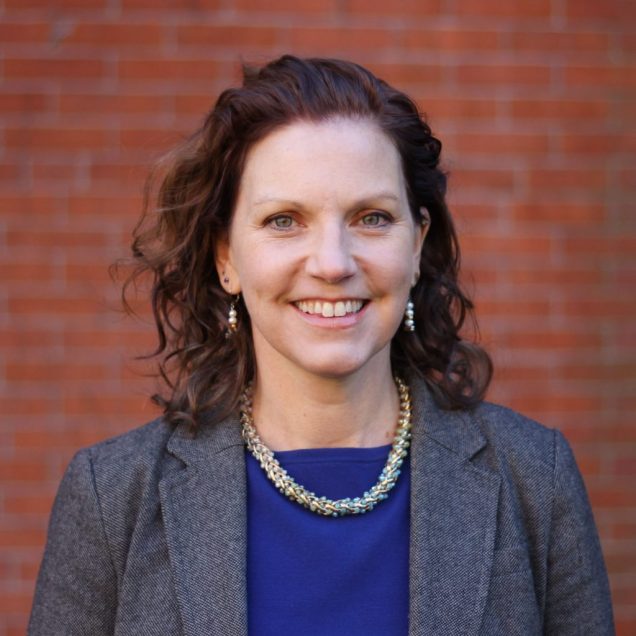
Each newsletter we feature a CTMH affiliate to learn a bit more about their work. This month we speak with Dr. Stephanie Ettinger De Cuba, research associate professor at BUSPH in Health Law, Policy, and Management.
Tell us a bit about yourself and how you arrived at public health and mental health.
When I was going to college, public health wasn’t an option at the undergraduate level. I come from a family with many clinicians of various kinds and always knew I was interested in health but not in being a clinician. I was also fascinated by young children, nutrition, languages, and the ways that culture shapes us, but I didn’t have a way to bring these disparate threads together. I found public health in the Peace Corps and realized that this was a way for me to make those threads into a cohesive braid. When I returned, I applied to graduate school and was happy to end up at BUSPH!
After working in program and policy roles, I joined Children’s HealthWatch, a research and policy network focused on young children and their families and have had the opportunity to research and advocate for evidence-based change to support child health and family well-being on a wide variety of policy issues.
I realized I had an interest in mental health through working on issues related to social determinants of health like food insecurity, housing instability, energy insecurity, and foregone health care…essentially the interconnected ways that economic hardship affects mental and physical health intergenerationally and across time.
Could you tell us a bit about your recent work investigating the impact of immigration on mental health?
A qualitative study that was recently released is, unfortunately, very relevant to our current moment in time. It is focused on immigrant mothers of young children’s daily experiences caring for the health of their children and families, while managing strained family budgets and a hostile political and social climate. The interviews were conducted during the first Trump administration and the themes likely have been intensified since then.
I interviewed thirty immigrant mothers from West and Southern Africa, the Caribbean, West Indies, and Latin America. Though more than half of the mothers had legal status in the US, just like mothers with more precarious status, they shared a deep-seated fear of being separated from their children through deportation and of the potentially harmful consequences of accessing help from public assistance. Despite these fears, mothers were determined to protect their children and ensure they had everything they needed to be healthy – often at the expense of their own health.
Mothers talked about the severe mental strain they were under balancing persistent economic strain that intensified during the pandemic, gendered roles as managers of their households, as well as an intensely hostile anti-immigrant atmosphere along with a host of new laws that sought to restrict immigrants’ access to public assistance supports. Anti-Black and anti-Latino immigrant racism described by some of the mothers was additional and distinct – an integral threat to US immigrant families’ security and ability to thrive, adding to important existing work on anti-Black immigrant sentiment by demonstrating how constraints imposed by immigration policies put Black and Latino, especially Afro-Latino, immigrant families at high risk of poor health outcomes through extreme othering, whether or not they have legal status.
Mothers felt really disillusioned about ‘playing by the rules’ (working, paying taxes) but still feeling vulnerable to being ripped out of their daily lives and away from their children. They were holding up their families across multiple dimensions – navigating emotional tasks, managing their own fear and anxiety while trying to present calm, positive environments for their children. This combination of invisible emotional and cognitive alongside physical labor is known as mental load. Just like many other women, they took on planning, directing, and soothing to care for their families, the “mental gymnastics” as one participant so eloquently put it – but unlike many middle class and white women they were doing with many fewer resources and the extreme burdens of the xenophobic atmosphere, driven by direct and indirect policy violence.
The findings tie together economic constraints, gender roles, and the ways that laws and policies single out immigrants, particularly immigrants of color, in racialized ways that exclude them from support, demonstrating how these issues collide in daily life for mothers of young children. While we celebrate their perseverance and inventiveness in caring or their families, the fact that mothers had to work so hard and go to such lengths to protect and prioritize their children points to system failures that allow this situation to exist. That’s the systems change advocacy we need to do and are engaged in now.
Do you have any mental health or trauma projects in the works that you can share?
We are just beginning to get preliminary findings on a project I’ve been working on for close to two years, examining the intersections of environmental and social determinants of health and their impact on mothers and children. I’ve had two pilot grants in collaboration with colleagues at BEDAC (Sharon Coleman), in Environmental Health (Kevin Lane and Patricia Fabian), at Tufts CTSI ADAPT (MyDzung Chu), and our community partner, MassCAP. We are examining the relationships between extreme heat, energy insecurity (difficulty affording utilities) and intergenerational health – specifically maternal mental health and young children’s health and development. The preliminary findings are sobering, and we hope to use them as a call to action… I’m looking forward to sharing more when the results are finalized!