Spring 2026
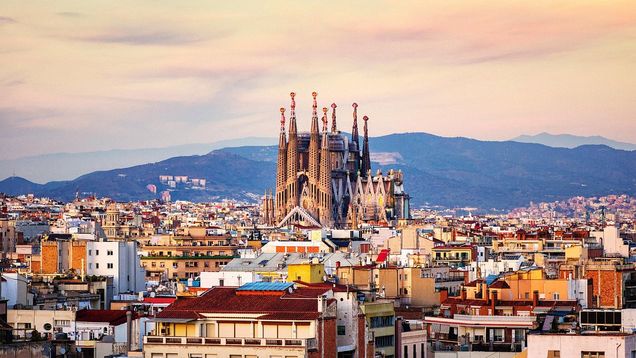
The Arenas de Barcelona
By Ruizhe Yin
March 14: Sitges and Cau Ferrat Museum
By Elena Guzman
Our first site of the day and last visit of this trip was 40 km southwest of the bustling and busyness of Barcelona and into the coastal and charming little town of Sitges. Unknown amongst Americans and treasured by Europeans, Sitges is referred to as the birthplace of Modernism, an artistic movement that was god-fathered by Spanish painter, art collector, and writer, Santiago Rusinol. In the 19th century, Sitges was populated by fishermen and farmers, supporting the town with an economy from fishing and agriculture. It was Rusinol who brought arts and culture to the town after he stopped for a rest on the way to Villanova. Overwhelmed by the kindness and hospitality of the residents, Rusinol settled and bought two houses near the coast of Sitges where he lived and worked. In exchange with the residents for their generosity, Rusinol invited visitors to come inside and view his art collections. More
March 13: Rubén Torres Gallery
By Julia Torrey
“Create your eye. No one is going to teach you that."
We visited Rubén Torres Gallery in Eixample on Friday and met with Rubén, who spoke very openly about what it means to run a gallery right now. His space felt very personal. The work on view ranged from the 17th century to contemporary pieces, which at first felt unexpected, but it made sense once he explained that everything is guided by his taste. He’s not trying to create something overly cohesive in a traditional way. He's all about building a point of view over time.
March 13: Poliana Limat at Mercat dels Flors
By Mingwei Song
This performance opens all the senses of the body. It explores themes of connecting with others, with nature, and with life itself. It is also an experience filled with surprise and reflection. In this performance, the audience can feel a rich sense of vitality through every breath, pause, shout, and sigh of the dancers. In the space where darkness and light intertwine, it almost feels possible to sense the most primal and powerful forces of nature. More
March 13: Art Market Dynamics with Isabel Causadias
By Nora Bergman
Seated in Ruben Torres Gallery, we had the opportunity to hear about the art market and dealing from 2 very different perspectives of the business — one from the gallerist's perspective, and one from a researcher’s bigger picture perspective. Isabel’s talk highlighted a number of misconceptions in and about the industry, and pushed back against them. More
March 12: Centre de Cultura Contemporània de Barcelona (CCCB)
By Meixi Huang
Walking through the narrow streets of El Raval on a sunny afternoon, it was hard not to notice the contrast between the everyday life of the neighborhood and the large glass façade of the Centre de Cultura Contemporània de Barcelona (CCCB). During this study tour, I was greatly excited to have the opportunity to listen to Maria Ribas, Head of Audiences Unit. Her insights provided us with a crucial perspective on how cultural institutions design audience engagement and educational programs.
March 12: Madeline Carey at MACBA
By Dan Tang
Today’s talk at MACBA helped me better understand how complicated it is to run a contemporary art museum in Barcelona. The Museu d'Art Contemporani de Barcelona, or MACBA, is one of the city's major contemporary art institutions. It debuted to the public in 1995 in Barcelona's Raval neighborhood and has since become a major center for contemporary art, research, and public reflection.
March 12: Claudia Segura at MACBA (Barcelona Museum of Contemporary Art)
By Yike Ding
Today we visited MACBA and had the opportunity to speak with Claudia, head of the collection. She introduced how museums choose and develop their collections, how this museum operates under a complex political situation, and how MACBA positions itself within the community and international contemporary art scene. More
March 11: Antic Teatre
By Claire-Solene Becka
Do YOUR work, YOUR ideas, YOUR job. Fight for your ideas and rights, and put all your life into it,” urged Semolina Tomic, Artistic Director of Antic Teatre. More
March 11: Development at Palau de la Musica Catalana
By Sydney Lowry
I was excited when I found out my blog assignment was the talk with the Project Manager of the Development Department at Palau de la Musica Catalana, due to my interest in development, and desire to work in the field. Marina Ventura Montes, Project Manager, was incredibly insightful and well-spoken, providing detailed information on the programs offered by the Palau and their fundraising and sponsorship efforts.