March 10: Espronceda Institute of Art and Culture
By Melissa Markstein
Tatiana Fife, the exhibition manager, emphasized that Espronceda is fundamentally people-focused. While the projects often incorporate advanced technologies such as Virtual Reality (VR), Artificial Intelligence (AI), and multimedia installations, the goal is ultimately to bring people together through creative exploration.
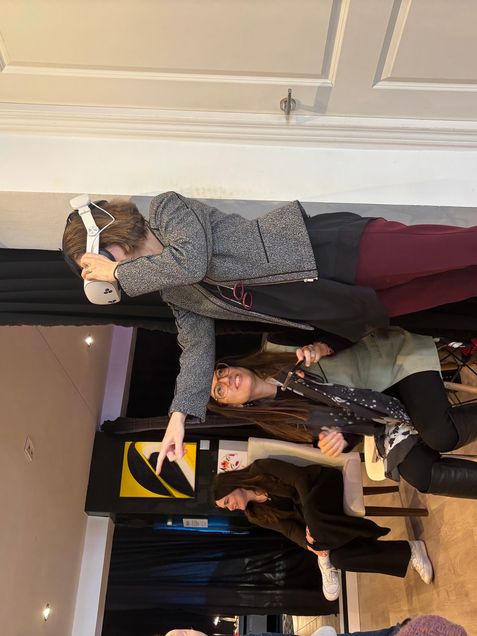
During our visit, we toured one of Espronceda’s two large buildings, which serves as a gallery space. Interestingly, the gallery is intentionally kept almost empty until each new exhibition is installed. This blank-canvas approach gives artists freedom to design the space however they wish, though it also creates a practical challenge: storage. Tatiana and another staff member, Alex, explained that finding places to store materials during installations can be difficult, and they often end up using small control rooms for temporary storage.

Preparing for exhibition openings is both exciting and stressful for the staff. Beyond installing the artworks, they must coordinate technical pilots for interactive installations, organize catering—sometimes even cooking themselves in the on-site kitchen—and manage the logistics of a constantly changing space. With two to three exhibitions every month and free public activities every week, the pace at Espronceda is intense.
We also experienced several interactive artworks. One installation featured a telephone that asked users to describe a recent dream, promising a psychological analysis powered by an AI database studying sleep. Another piece involved a VR headset filled with bright colors and hearts that responded dynamically to music, creating an immersive visual experience.

Overall, Espronceda offered a fascinating glimpse into how contemporary art spaces blend technology, creativity, and community engagement.