Staff Spotlight: Nina Cesare, PhD
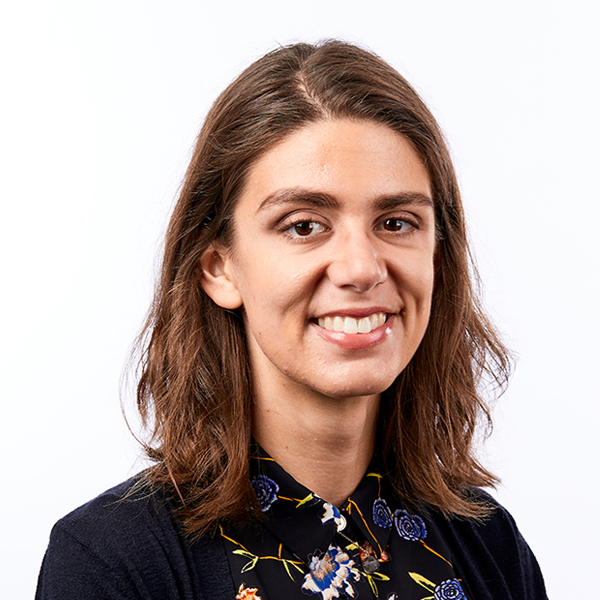 Dr. Nina Cesare is a Research Scientist at Boston University’s Center for Health Data Science (CHDS). With a strong foundation in sociology, Nina applies quantitative expertise to investigate the interplay between place, space, and health, often leveraging novel data sources. Her collaborative work spans a wide range of topics, including social determinants of health, mental health, and maternal health, partnering with colleagues across BU and beyond to drive impactful research.
Read on to learn more about Nina and her work!
Can you tell us briefly about your academic and professional background, and how you use data science in your current role?
I went to school to study sociology, motivated by two areas of interest: a desire to learn more about how society operates within digital spaces (social media was a cool, new thing at the time!), and a commitment to understanding and correcting structural inequities. I had wonderful mentors at my undergraduate institution, Ohio University, who supported me in developing research skills and preparing for graduate school. I made a big leap to the West Coast to attend the University of Washington, where my interest in digital data connected me with an expansive data science community. Using unstructured or semi-structured data made available to researchers (but without research design in mind) posed some interesting data management and analysis challenges. My final year of graduate school, while I was finishing my dissertation work, I began working with Dr. Elaine Nsoesie on a digital health project that had us pulling, aggregating and analyzing novel data sources. Dr. Nsoesie offered me a postdoc position here at BU, which I’ve been fortunate to turn into an almost eight-year research career at SPH.
While my research portfolio is more varied these days, I frequently use data science skills to be agile, creative and efficient when it comes to solving data challenges! While the term ‘data science’ implies fancy methodology, it really requires a ‘back to basics’ approach when it comes to problem solving and decision making!
What do you enjoy most about your work?
The diversity of projects I get to work on and the quality of people I get to work with are the highlights of my job. Through my projects, I get to explore topics such as tuberculosis and HIV treatment and prevention, neuroscience, substance use disorders, and cumulative environmental exposures. A pretty cool portfolio for someone with a social science background!
My colleagues at CHDS are also the friendliest, smartest, most collaborative people you’d ever want to work with. I’ve become a much stronger and more versatile researcher with their support (and have shared many laughs with them along the way).
Some of your research focuses on social determinants of health. Can you explain what means and how you’ve applied it to your work?
I think it’s fair to say almost all my projects incorporate social determinants of health in some way! Conversely, I would consider even the more social science-focused projects I work with to be specifically health-related. Our environment shapes who we are and how we behave, which has important implications for our health and wellbeing.
What advice would you give to students and trainees interested in this field?
Stay curious, recognize your strengths, and don’t feel penned in by your academic training. Say yes to interesting opportunities – even those that seem like an odd fit. When it comes to working with data – don’t neglect your foundations! Understand the structure and source of your data, and how this might shape your results.
What is something about you that others might be surprised to learn?
I love bad movies of all kinds. I grew up watching Mystery Science Theater 3000 (still excellent comfort TV) and can’t get enough of watching big ideas executed questionably on film.