Home
FAMILY JUSTICE CENTER (FJC)
Family Justice Center (FJC)
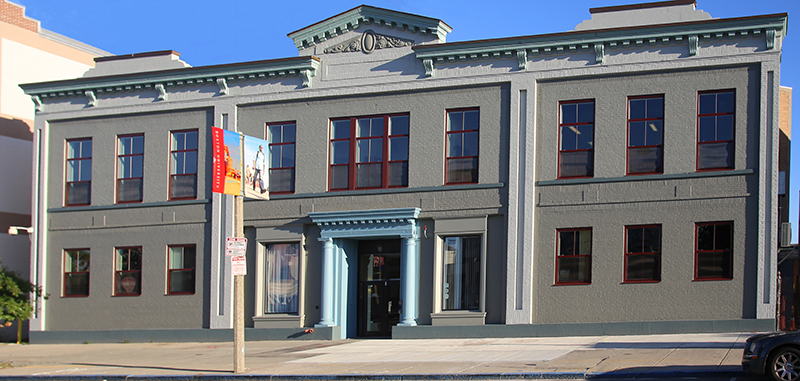
Location and Hours
989 Commonwealth Ave. Boston, MA
9am-5pm Monday-Friday (FJC, hours for partner organizations may vary).
Appointments are available for after-hours appointment.
Website: http://www.bphc.org/whatwedo/violence-prevention/Family-Justice-Center/Pages/Family-Justice-Center.aspx
About the Center
The Family Justice Center (FJC) is part of the Boston Public Health Commission. It provides services to victims of abuse and assault, and their families, through nonprofit and government agencies. The FJC is also an initiative of the Mayor’s Office and the Suffolk County District Attorney Daniel F. Conley, and the Family Justice Division of the Boston Police Department. The center provides services to all survivors regardless of their immigration status, race, sex or orientation.
The center provides a wide range of services free of charge, childcare during visits, and no is appointment necessary for services. The FJC also provides 24-hour domestic violence, sexual assault, and child abuse resources.
To provide survivors the tools needed to start over, The FJC provides health and professional development services. In addition to providing a safe space for to talk about your experiences, the center also helps victims learn about their options. The FJC can help victims navigate the legal system and inform them of their rights. Partners at the FJC can conduct interviews, medical exams and provide counseling to survivors. Partners will also offer legal aid, advocacy and help with obtaining financial assistance in order to ensure that survivors are able to remain in a safe, stable environment. The FJC also works to to implement violence prevention services in the community to ensure that services are accessible to all.
Partner Organizations
Advocacy and Counseling
Asian Task Force Against Domestic Violence
Association of Haitian Women in Boston/ Asosiyasyon Fanm Ayisyen nan Boston (AFAB)
Boston Area Rape Crisis Center (BARCC)
Eva Center
Gay, Lesbian, Bisexual, Transgender & Queer (GLBTQ)
Massachusetts Alliance of Portuguese Speakers (MAPS)
Civil Legal Assistance
GLBT Domestic Violence Attorney Program
Children’s and Youth Services
Children’s Advocacy Center of Suffolk County
Child Witness to Violence Project of Boston Medical Center
MA Department of Children and Families
MA Society for the Prevention of Cruelty to Children
MA Pediatric Sexual Assault Nurse Examiner (PediSANE)
Boston Police Department/ Family Justice Group
Crimes Against Children Unit (CACU)
Domestic Violence Unit (DVU)
Human Trafficking Unit (HTU)
Sexual Assault Unit (SAU)
Suffolk County District Attorney’s Office
Other Supportive Services
Dress for Success Boston
The Overlooked Victims
The Overlooked Victims
She grew up in a wonderful home. Her parents were college graduates with advanced degrees. They had been married for over 25 years. They vacationed together, spent holidays with extended family and spent week-ends doing fun things together. High School was over and she was a freshman in one of the most prestigious schools in the state and on one of the most beautiful campuses in the country. In a few short weeks her first year would be behind her.
She was sitting in her foreign language class when they heard a popping noise. The instructor stepped out into the hall and looked the shooter in the eye. She rushed back in; the students attempted to barricade the door. There were no locks. They shoved a large desk against the door and laid on the floor trying to hold the desk against the door. He pushed on the door and shot through the small gap. Without a word, without showing any emotion, he walked away. More popping sounds. Then quiet. They moved the desk. The stairwell was just outside the door. The professor stepped out and checked the stairwell. There seemed to be no way out. The popping started again and she ran back in. They had barely pushed the desk against the door when he was back. Pushing and heaving against the door. They lay on the floor, praying, keeping the pressure on the desk, holding the door closed. He gave up trying to open the door. Pop, pop, pop. The bullets are shot through the door. It seemed there were thousands of them. It seemed to go on forever. Bullets flew over her head. He was shooting about waist high. Stay on the floor. Don’t panic. He walked away again. More pops. Then silence. Someone is trying to push the door open again. Don’t let the desk move. Don’t let them in. Please go away. Someone is saying something. He says he is the police. Don’t move the desk. How can we be sure? He walks away. In a few minutes, he comes back. Please open the door. It is the police.
The police come in. No one in our room is hurt. Not physically. We can’t go down the stairwell close to the room. We have to walk to the other end of the hall. Don’t slip. The floor is wet. Cell phones are ringing. Dozens of cell phones won’t stop ringing. Why are we having to walk this way? Police are everywhere. Where are they taking us? Be careful, don’t slip. The phones are ringing. It’s only a little after nine in the morning. They take us to another building. They want to talk to us. But it will be a little while. It’s noon. No one is talking to us. No one has questioned us. Why can’t we leave? The t.v.’s are on. It’s all over the news. I’m so tired. It’s one-thirty. Finally they want to talk to me. I’m not physically hurt. I’m not shot. No one in my class was shot. I don’t get counseling. I don’t get an advocate. I’m not a ‘victim’.
She buried herself in school work, majoring in mathematics. She earned a Master’s in Operations. She earned a second Master’s degree in Economics. Math, numbers, calculations, thing’s she can control. Control, she needs to feel like she is back in control. Her menstrual cycle stops. She is only 24. She needs to feel like she is in control. She marries. She is happy. But she is not in control. She is vigilantly watching doorways. With hypervigilance she people watches. She is never comfortable in a crowd. She can’t control the crowd. Crowds are terrifying. Small rooms more so. She lost weight. Too much weight. But it’s been eight years since the shooting.
Post-Traumatic Stress Disorder can come from a single traumatic event, such as a criminal act, as well as from chronic exposure as in the military. For crime victims their level of trauma comes not only from the event itself but it can be exacerbated by the way they are treated following the event. Law enforcement officers must be trauma informed. “With a foundational knowledge of trauma they are better armed to address victims at crime scenes… in a way that is beneficial and can possibly begin to reduce the incidences of PTSD following and event” (Rousseau, 2017).
Victims, like this student, “must also battle with the ‘secondary’ injuries that occur when there is a lack of proper support” (Trauma of Victimization, 2017). To reduce the levels of trauma, and reduce the incidences of PTSD, victims of such a traumatic event such as a school shooting are in need of immediate crisis intervention. Dr. Marlene Young, in Victim Assistance Frontiers and Fundamentals, described a Three Phase Model for Crisis Intervention. The first phase is safety and security. Even though this victim was taken to another building and was removed from the danger, her comfort needs were never met and she sat for hours with no information, other than that provided by the t.v. news, and was never placed in contact with victim service providers. The second phase of the model is ventilation and validation. During this phase, the victim should be allowed to share their account of the event and should be reassured that their reactions, no matter how intense or mild are normal. Some of this may have occurred when she was questioned about the event. And lastly, the victim should be provided prediction, preparation and information. The victim needs to know what happens next and their safety needs must be addressed and resolved. This phase also did not happen for this victim.
The brain of a 19 year old college student is still developing and growing. Trauma changes the brain. “After trauma the world is experienced with a different nervous system. The survivors energy now becomes focused on suppressing inner chaos, at the expense of spontaneous involvement in their life. These attempts to maintain control over unbearable physiological reactions can result in a whole range of physical symptoms” (VanDerKolk, 2015). For this victim her trauma and PTSD manifested itself in an eating disorder (another facet of her life she could ‘control’) and well as the cessation of her menstrual cycles. She would not realize she was suffering from PTSD until she entered counseling for the first time, some eight years after the event. She never went to counseling because those in the criminal justice system told her she was not a victim. She was not shot, she did not die, so she was not considered a victim. It was not until she and her husband wanted to have a child that she realized she must consider mental health counseling to get her physical health back. Fortunately, she was able to find a trauma informed clinician, who was able to treat her PTSD, and she and her husband have a beautiful baby girl. We must never overlook the fact that someone who witnesses such horror, even though they escape unscathed physically, they have not escaped without the physical and psychological injuries of trauma. And they should never be subjected to the horror of ‘secondary injuries’ incurred from a lack of proper support.
Enhancing Law Enforcement Response to Victims. (2009). Retrieved from International Association of Chief's of Police: http://www.ncdsv.org/images/IACP_Enhancing-LE-Response-to-Victims-Training-Supplemental_revised_2009.pdf
Rousseau, D. (2017, March). Module 3 Lecture Notes. Retrieved from MET CJ Trauma and Crisis Intervention:https://onlinecampus.bu.edu/webapps/blackboard/execute/displayLearningUnit?course_id=_34642_1&content_id=_4896066_1&framesetWrapped=true
Trauma of Victimization. (2017, April 23). Retrieved from The National Center for Victims of Crime: https://victimsofcrime.org/help-for-crime-victims/get-help-bulletins-for-crime-victims/trauma-of-victimization
Van Der Kolk, B. (2015). The Body Keeps the Score: Brain, Mind, and Body in the Healing of Trauma. New York: Penguin Books.
Baking Therapy
Nine months ago I moved to Washington, DC in search of a job in the criminal justice field, which is why I am currently baking full-time for a local cafe. I hope you furrowed your brow at the end of that sentence; if not, re-read it. After weeks upon weeks of networking and writing cover letters, I've taken a job search hiatus to throw myself into menu designing and early-morning baking at a struggling coffee shop down the street. It's in my nature to want to revive things that are broken. Before, the shop was sparsely stocked; the dwindling customer base would came in disappointed to see stale, dry muffins and no desserts. It's my goal to turn this around. It's also in my nature, and at times it is a fatal flaw, to put my entire soul into something that ignites my passion and makes me feel I'm making a difference, even if it doesn't entirely make sense. Maybe the difference I make is only one muffin at a time, but it is gratifying to see my food nourish others and brighten their days as they grab their morning coffee.
Now here's the real reason I was willing to take a detour on my career track: I believe baking has the power to heal, and some ambitious part of me envisions creating a self-sustaining nonprofit that provides mental health treatment and peer-to-peer support, as well as employment in a bakery, to citizens returning from prison.
In this course, we have talked about the healing powers of yoga, EMDR, and other traditional medical approaches that don't necessarily fit into the Western "boxes" of psychotherapy. Yoga, for instance, teaches centeredness, self-awareness, spiritual awareness, and bodily awareness. Likewise, baking for others has the power to heal, to demand mental and bodily focus, and to restore the creative senses.
In a Huffington Post article I recently read on the psychological benefits of baking, a professor at Boston University is quoted explaining: “There’s a lot of literature for connection between creative expression and overall wellbeing. Whether it’s painting or it’s making music [or baking], there is a stress relief that people get from having some kind of an outlet and a way to express themselves.” (The brackets were not conveniently added by me, by the way, if that's what you were thinking!).
One therapist has even created a Culinary Art Therapy program and describes the following benefits:
- Gaining insight into one's behavior
- Learning about social skills/cues
- Increased awareness about health and nutrition
- Improved communication skills
- Stress management
- Time management
- Increased self-esteem
- Brain development through using the senses
Another nonprofit, The Depressed Cake Shop (take a look -- their baked items reflect the name just as you'd expect) works in assisting individuals overcome anxiety and depression. It creates popups of high-quality baked goods around the world as a means of combatting the stigma of mental illness.
Beyond what baking can do for the individual, it can also be a method in restorative justice. Baking can be a means of caring for others. A nonprofit that allows formerly incarcerated people to bake for elderly homes, the homeless, or sick community members, for instance, could create a space where returning citizens give back to their communities in a very positive way. In turn, this boosts their own self-image and allows them to feel the effects of restoring their immediate community.
I'm gradually forging my career path, including considering another degree. But I have a feeling my lessons from baking will never leave me. I've never had a job where every day I come home happy and creatively motivated, no matter how tired I am. I think this would be a positive thing to share with returning citizens: change comes with patience and it comes with diligence; we can't be afraid of the messes we make even when trying to measure ingredients precisely. Baking is about love, thinking of other people; it is creation over destruction, even in just a minor way.
I remember a novel I read as a kid that used this as a metaphor -- each baking ingredient, by itself, does not taste very good. Flour is dry, baking soda bitter, buttermilk is sour, and salt is...well, you get the idea. When you look at the ingredients piece by piece, there are far more bitter ones than saccharine. But the finished product is somehow beautiful, sweet, and satisfying. Such is life. Often we have bitter ingredients to work with, but we can try to balance those out and create a product worth putting our names on. Even for those who have lived through serious trauma and insurmountably negative experiences, it doesn't mean the final products - who we are - have to be the sum of all the bad things.
People With Disabilities, Willowbrook, and Trauma
Abuse and trauma among people with disabilities is something that I have deal with for seven years I have been in the Human Services field. People with all types of disabilities are considered a vulnerable population, especially those who have limited intellectual capacity. History is wrought with stories of abuses against individuals who have intellectual and developmental disabilities. Thankfully, there are now laws and agencies in place to offer protection from abuse and neglect. However, the trauma of the past is still apparent in many of the individuals who have survived.
Prior to about 1800, people with disabilities were seen as problematic. Individuals were cast away from their families, locked away in prisons or sanitariums, or completely ignored by general society because of their differences. It was not until the 19th century that disabilities began to be studied and people began to take notice of the issues surrounding the treatment of the disabled. Institutionalism became increasingly popular and remained so until the 1970s. Willowbrook State School on Staten Island was one of these institutions that housed developmentally disabled children and became one of the major reasons for the institutionalization overhaul in the United States. Geraldo Rivera headed an exposé into the horrific living conditions of the 5000 children in Willowbrook (Office for People With Developmental Disabilities, n.d.). The severity of abuse and neglect in the institution was so awful that it prompted investigations into other institutions. The disabled children were kept in cribs constantly or housed in a single open area with no privacy. They were naked and sitting in their own excrement. To make matters worse, they were the subjects of state-sanctioned experiments that included feeding the children live hepatitis viruses. The effects of the abusive and neglectful treatment made already vulnerable and fragile individuals regress even farther into their disabilities, while others did not survive their time at the school. Those exposed to the despicable living conditions have had to overcome speech and language issues, behavioral issues, as well as serious medical implications from contracting hepatitis (Geraldo Rivera, 2017). The exposé by Rivera was only done in 1972, and many of the individuals from Willowbrook are still alive and living throughout New York State and other parts of the country (Office for People With Developmental Disabilities, n.d.).
One of the best achievements that came out of the tragedy of the institutions was the enactment of legislation to protect individuals with developmental and intellectual disabilities. In particular, the Developmental Disabilities Act of 1963, The Developmental Disabilities Assistance and Bill of Rights Act of 1975, and the Civil Rights of the Institutionalized Persons Act of 1980 (The ARC, n.d.). One of the most recent protections put into place in New York State was the establishment of the NYS Justice Center in 2012. The NYJS is designed “to protect the health, safety, and welfare of vulnerable New Yorkers.” (The New York State Senate, 2015). Special accommodations are also made for the survivors of Willowbrook, including intensive case management. This case management has much stricter guidelines for monitoring and protecting the Willowbrook individuals than non-Willowbrook. These guidelines were put into place to help ease some of the effects of the trauma that the individuals were exposed to.
Protecting the rights and lives of individuals with intellectual and developmental disabilities is an ongoing process and the programs that serve these individuals are ever-changing to reduce the risk of abuse and neglect. Trauma can impact those with disabilities in different ways than people without disabilities and it is important to ensure that they have the necessary supports to both address trauma and to prevent it from happening as much as possible.
Office for People With Developmental Disabilities. (n.d.). Retrieved April 22, 2017, from https://opwdd.ny.gov/
Geraldo Rivera. (2017), From Geraldo's book, Willowbrook: A Report On How It Is And Why It Doesn't Have To Be That Way. Retrieved April 22, 2017, from http://geraldo.com/folio/willowbrook
The ARC. (n.d.). Public Policy and Legal Advocacy. Retrieved April 23, 2017, from http://www.thearc.org/what-we-do/public-policy/know-your-rights/federal-laws
The New York State Senate. (2015, October 05). Senate Passes Legislation to Protect People With Special Needs and Disabilities From Abuse and Neglect. Retrieved April 24, 2017, from https://www.nysenate.gov/newsroom/press-releases/senate-passes-legislation-protect-people-special-needs-and-disabilities
Resiliency
Resiliency is an amazing thing--one's ability to bounce back from an event that had a traumatizing effect on them. The power to overcome an incident meant to break us and instead grow from it. The capability to rise above what would shatter others.
A friend of mine, Tristan, was in a car accident 6 weeks ago. He is only 19 years old. Tristan was hit by a drunk driver on the wrong side of the highway--both drivers were going 70 miles per an hour. He was med-flighted to the closest hospital where his parents were told they should hurry to see him--they were preparing his organs for donation. The accident broke his nose, cheek and jaw bones, along with his ribs, sacrum, pelvis and femur. He lost teeth and shattered an eye socket. His family was told to prepare for the worst.
Six weeks later and Tristan is not only alive, but he is thriving. He has been released from the hospital and is home, walking on crutches. His jaw has been unwired shut and he is already able to eat food that doesn't come from a syringe. The doctors say that he is nothing short of a miracle. The first responders say they have never seen anyone survive an accident as horrific as his. No one can believe the tremendous progress that he has made in just over a month.
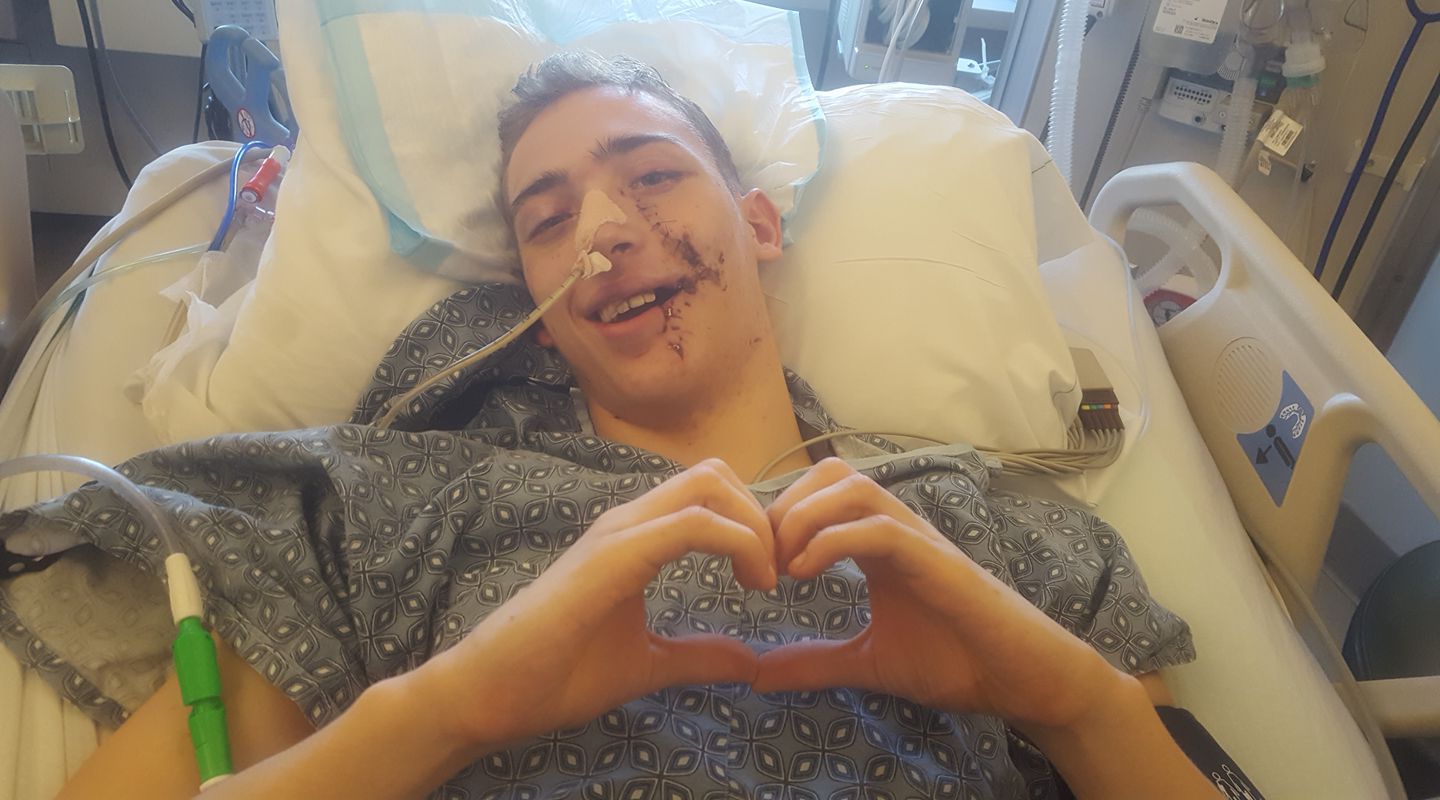
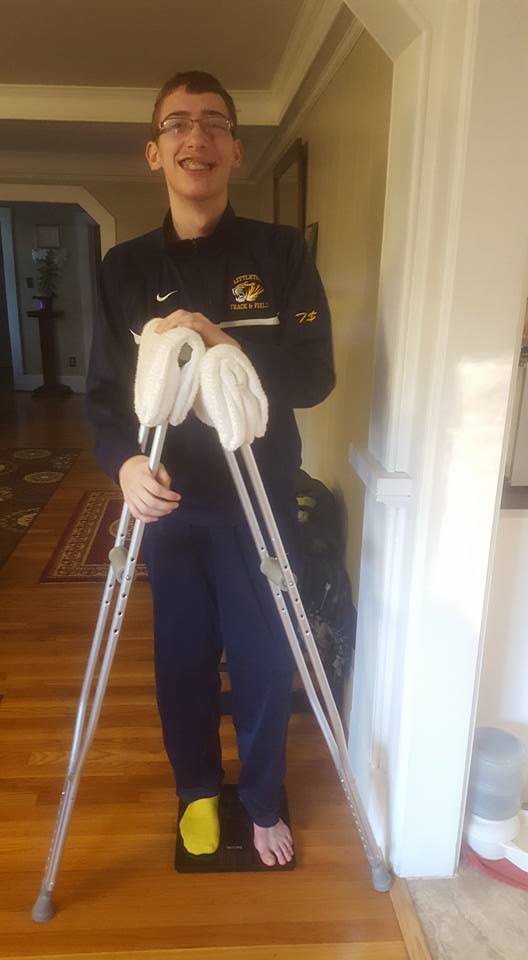
Everyone's questions is HOW? How can he be making such strides given everything that has been thrown at him? The answer is resilience.
"I have a positive attitude, a positive outlook on life. And I never blamed the other guy or questioned why this all had to happen. Instead I concentrated on getting to my next achievement," Tristan told me when I asked him what gave him his motivation to push to get better. First he wanted to stand. Then he wanted to walk with a walker. Then he wanted to walk with crutches. Then he wanted to be taken off the feeding tube. Then he wanted to go home. His drive is amazing and he has had thousands of people cheering him on as he has met every one of these goals.
Through this whole ordeal, I have never seen Tristan without a smile on his face. He could still be laying in a hospital asking "Why me?" But instead of focussing on all the bad that has happened to him, all he can talk about is the good that will be happening and the positive things that have come from his trauma. At one point he even said to me, "I'm glad it was me and not someone else. I know a few of the girls from my school passed him on the way up the highway. I'm just glad it wasn't them he hit instead."
Focussing on the future and not the past is what has made Tristan so resilient. He has a drive to be the best that he can possibly be and he knows that in order to do that, there is no room for dwelling or pointing fingers. "It came from everything I grew up knowing and believing in," Tristan said with a smile on his face. A real life example of the power of resilience.
Self care and the body
No matter what you do, one could always take "better" care of themselves. Whether it is being a first responder, veteran, or everyday person, people can experience trauma in so many different ways. Taking care of yourself not only physically, but mentally, can be the difference in your life. It is such an important thing that so many people just simply look over.
Self care was never something I thought too much about, but this class has really opened my eyes to trauma and how it can affect me. Especially with my profession, it is definitely something I need to look into more. As the semester has gone on, I realized that my way of caring for myself was to workout, which a lot of people do. The only issue for me though is actually getting to the gym as it takes some time. If I had any built up anger from something I would usually run it out or lift it out. When I put those headphones on and listen to my playlist, I am really in my own world. I focus on nothing else but bettering myself and at the end of my workout I feel better than I did before I went to the gym. I try to go to the gym as much as possible, but sometimes I am not able to make it there. I try to go everyday I can but when I found myself unable to, my day just felt different. I felt almost mentally tired as the day went on. Working out was kind of my way of getting ready for the day and being prepared to take it on. Luckily, the semester has given me more avenues and taught me that working out isn't the only thing I can do.
Yoga has been a huge topic this semester. Personally, it is not something that really interests me that much, but it is really good to know about all the benefits yoga has. The thing with yoga is that you can do it virtually anywhere. Whether if thats in a studio at your gym or even your bedroom, it does not really matter. I always see people doing it at the beach during the summer and in parks. Even doing certain aspects of yoga, like breathing techniques and meditation have great results when talking about self care. Self care isnt just physical, it has a lot to do with being in the right mental state as well. If you are constantly stressed or annoyed when working, you cannot preform you duties to the best of your ability and your production decreases. Keeping yourself in the best mental shape should go hand in hand with keeping yourself in the best physical shape as well. When it comes to yoga, I do eventually see myself trying it but for now, I am going to stick with my normal routine of working out.
People in every aspect deal with their own problems. You never know what someone has gone through and it is important to know this, especially if you are going to join the profession of law enforcement.
I think it is so important to find just one thing that can benefit you mentally. Even if you dont feel as if you need to do something to better your mental health, I say just try it. Whether its cleaning, listening to music, working out, going out for a walk, run, bike ride, etc, I think it is so important to find something that can more or less be your escape.
Continuing Self-Care Routines in the Age of Antidepressants
Throughout the past couple of months, I have been really interested in learning more about the physical and psychological effects that antidepressants can have on patients that are prescribed and use them, in addition to the ways in which people utilize both acts of self-care and the use of antidepressants to manage symptoms of trauma, anxiety, depression, and the like. In today’s society, it is easy to see how spiraling into a depression or anxious state could be easy. When going through our day-to-day activities, its not hard to forget to stop and take a moment to check in with ourselves, both emotionally and physically. Personally, on a busy day when I’m running around without stopping I find myself completely deflated at the end of the night, with my brain feeling like one huge vat of information, worries and anxieties. I think that when someone is on an antidepressant, it becomes much easier to say, “well I’m taking my pill, so that means that I should feel okay,” when in reality taking antidepressants without allowing time for self-care can prove to be detrimental.
Living with depression can make self-care seem extremely hard, or even impossible. Frontal Lobe dysfunction affects several different skills, such as attention, decision-making, emotional control, reasoning, self-monitoring, will power, and the like. When we find ourselves struggling to complete the most basic of life activities such as showering, eating, etc., it becomes so easy to lose willpower and fall back into depression. It has been encouraged time and time again for those struggling with these types of issues to create individualized self-care regiments to carry out in order to stay mentally and physically healthy. Things such as spending time in nature or keeping a routine have been proven to be largely beneficial in helping those that suffer from depression create a more livable day-to-day experience.
When I first started experiencing initial signs of depression, I was not interested in taking medication. To me, it felt like cheating, and it felt like I wasn’t even strong enough to be a living, breathing, person on my own. As the depression continued to get worse, it seemed like there was no other option besides medication, so I jumped in. In the midst of my treatment, I began to feel so much better and was amazed that a pill could have such a strong effect on the way my brain was functioning. But, that meant that I was terrified to come off of the drug. Now, 2 years later, I still feel scared to stop treatment, but I’m confident that by taking this medication over the past two years I have been caring for myself in a way that my body and brain could not. By taking my antidepressants, I was giving myself a chance to get up every morning and not be burdened by the responsibility of making myself feel happy, because the pills were apparently doing that for me. However, this doesn’t go without saying that antidepressants have come with their own share of side effects, or that I should have stopped caring for myself in other ways.
Because I was so enamored by the effects of my medication, I stopped eating and sleeping in a healthy manner. I stopped going for runs, going to the gym, and reading or writing for fun. I stopped doing all of the things I enjoyed, and started taking part in more toxic activities. What I failed to realize was that the antidepressant doesn’t do all of the work for you, it just gives you a springboard for you to do that work yourself. This is why I believe that if antidepressants seem to be the correct mode of treatment, it is also important for health-care professionals to stress the importance of continuing self-care routines.
References:
http://www.huffingtonpost.co.uk/katherine-baldwin/depression-treatment-self-care_b_5946232.html
Escaping Employment Stressors
People who hold positions in law enforcement are not alone in dealing with a multitude of work related stressors. However, those working in a law enforcement capacity can more frequently be exposed to traumatic situations. It is how a particular person is able to deal with these experienced traumatic situations that will determine the ultimate longevity of their career. In the past, police departments did not place as much effort into the mental well being of their officers as they do now.
The implementation of critical incident stress debriefings (CISD) and peer support groups have changed the ways officers can deal with stress and exposure to trauma. Prior to the recent push in ensuring the mental well being of officers, officers would deal with their stress and experiences alone and on their own terms. For example, officers could find themselves drinking more often than usual, becoming agitated more easily, isolate from their family, experience moodiness, have trouble sleeping or concentrating, and also experience other physical ailments that could be attributed to dealing with stress or trauma. As the use of CISDs and peer support groups continues to increase, officers now have a start to dealing with their stress and trauma without having to internalize it and deal with it alone. CISDs and peer support groups allow officers who have experienced traumatic events the time to discuss with other officers the event and their individual actions along with the reasons they acted as they did.
In order for law enforcement officers to remain at the top of their game they must be aware of both their physical and mental health. While many departments provide gyms for officers to work out and maintain their physical health, the discussion about mental health well being has been hidden behind closed doors and not really discussed until recently. As time progresses more and more law enforcement agencies across the country are implementing employee assistance programs, CISD teams, and peer support groups to further benefit officers. These programs provide access to resources in order for officers to maintain a healthy mental state and to assist in the processing of traumatic experiences that happen while on duty.
There has long been stigma associated with mental health illness both in law enforcement and the general population. The education regarding mental health illness it's treatment is vital in the reduction of attached stigmas. Within law enforcement, officers fear losing their job, losing their ability to carry a weapon, or be transferred within a department to a different position. These fears although real possibilities can prove beneficial to an officer's healing process after a traumatic experience where one feels the effects of PTSD. It is imperative for law enforcement agencies to continue educating officers and department managers in the importance of seeking mental well being as much as physical well being. Mental well being can be sought both through self-care and reaching out to others for help. In order for an officer to decide to use physical strength, they must have the proper mind set to make such a decision and determine if that is the right course of action. If one is not of the proper mindset, they may jump to an irrational decision creating the potential for discipline that could have been avoided. The awareness that officers possess in regards to their own self both mentally and physically is extremely important to performing their duties to the best of their ability and creating the safest mind set to perform such duties.
Davis, Joseph A. 1998. Providing Critical Incident Stress Debriefing (CISD) to Individuals and Communities. The american Academy of experts in Traumatic Stress, Inc.
Social Amnesia and American Corrections and Rehabilitation
Just as individuals have mechanisms to forget inconvenient truths or traumatic events from the past, so does the community, nation and globe. Just as the child violently abused might loose recall, so may a society loose the truth of its past. So can institutions.
Because I throw the term "social amnesia" around so freely, I want to take a little time to give it a chance to become part of your tool-set for interpreting the world at large. As amnesia is one of the defense mechanisms of man (or woman) so social amnesia is a defense against collective traumas. Perhaps it is most like our reactions to vicarious trauma which is at some distance from the individual. Perhaps its course is like the background violence that (still) surrounds life in many settings too much like the "nasty, brutish and short" Hobbes supposed of earlier times. If you believe Hobbes was looking back from the city on the hill of modern enlightenment, please remember that they still hung convicts in cages and left heads on stakes on London Bridge and other places for the people to see.
A careless Wikipedia read could lead you to think Russell Jacoby coined the term in the mid 1970's. This professor was still at home or going to his first school when Velikovsky, a doctor trained in psychiatry by Freud's pupil Wilhelm Stekel, came up with "cultural amnesia." Alas, the doctor has been a victim of the process. The story goes that his sidelining was because of bad geology (sin of anti-uniformitarianism) and orbital science (the effects of electro-magnetism along gravity, a theory since rehabilitated). Catastrophes just never have happened as he enquired of in Worlds in Collision, they screamed. Myths are myths, not edited history, they whispered. It's one thing to disregard an old man doubling down on his writings out of his expertise.
It's another to ignore the reason he was interested and to forget his area of study back in Vienna. It was his expertise that made him view an inability to accept past catastrophes as the source of man's aggression. He theorizes the greater amnesias take a time to develop. Just as with some persons, all seems to be going well, the wound healed until one day something triggers the full blown response. Hold off the forced ignorance of Freud’s early suppositions, bear with me through a little Barthes and we will end up in current America, recycling the past with new labels and calling it progress. We will even find it easily relatable to penal reforms.
The essays of Roland Barthes are about modern myth making. The Nazi made a mythic history for their race, although Aryans are technically from the far steppes and dark skinned. The Iranians and the average citizen of India are typical "Aryans." Author Winfried Sebald recounts his Bavarian school experience of being shown holocaust photos which no one could explain or contextualize. He remarks of the amnesia for 600,000 mostly civilian deaths from our carpet bombings.
Amnesias of the United States are seen with histories of who came her and why. It is easy to not ever know that several off the first vessel to live in that Thanksgiving celebrating first colony, were mutineers on board and eventually hung after returning from exile. They don't teach that at the D.A.R. The south is will rise again (it was never much above swamp level for many and others had clay not productive farmlands). We are going to make America Great (again) even as we have always had to fight to keep the drowning alive (unless they were natives - noble but in our way), even as forecasters on the rooftop tell us we are in a post-industrial world and living wage manual labor is truly retired without pension. Educators are still designing systems to pop out better citizens. Few parents are familiar with the names Steiner and Montessori who already invented the basic design of that wheel.
Two more phrases need to be introduced: "forceful repression of memories" and "willful ignorance." Pictures of Stalin often had once allies taken out the scene, a history of Pacific Northwest canneries had plates depicting the Chinese reworked into Norwegians. Not only have books been banned in the USA, but one scientist’s books were burned in the early 50's.
The German war machine kept revising schedules as the allies advanced and even as bombs hit the work camps, delivery date promises were put to the calendar. In its declining years the evil Soviet empire had the joke about the people pretending to work and the government pretending to pay them. As they lost their collection of soviet states, the annual government cookbook, celebrating all the union's cultures edited the ingredients so they could be made with the limited canned goods of those who stood waiting for the potato trucks, the farm trucks or word of their arrival. These were the free people, not those in an eastern front WWII camp! The cookbook was full color illustrated.
Barthes proposes mythologies as social control and a way to separate society from reality (the actual circumstances of the present) and place it in a dreamlike, timeless state, "once upon a time." In this state the ills are promised to be leaving us, the goods returning, and all the while we hear no solid plans, we have nothing to critically examine and evaluate. It is like so much ad copy - all sizzle and no steak. It is an attempt to "keep it all together." Trauma degrades executive function, the intelligence that plans and schedules and follows through. Traumatized individuals also have trouble with recounting their live on a time line, remembering if a year was one of the good, or not. If this sounds like the dissociated identity and sensorium of severely traumatized persons, you are getting the idea.
A journalist from various war zones claimed its time to buy an exit ticket and avoid a national psychotic break when a certain hyper-nationalized music that simultaneously sounds like from anywhere on earth takes over. The first time I heard recording of this phenomena I was astounded. He understood what Barthes was warning about, a confluence of the local and a universality. He was less trusting mythology could contain the repressed or was even intent on doing so. He was not going to fall for the local mythic version of the Spectacle and die.
Barthes only knew French style wrestling when he wrote of the parallels to mediaeval morality plays. He does an excellent, convincing job. I personally find it impossible to forget President Trump's relation to World Wide Wrestling, and my memories of Iron Sheiks, Capitan Americas German "Huns” and a whole theatric repertoire who played emotions for all the family, like a revival preacher, or a recruiting agent for the good guy’s forces.
Isis is repeating the Old Man of the Mountain (Hassan al Sabbah) while Lord's Army promises child soldiers sex and drugs while on duty not just after. Books remind us of the short psychic distance from Hassan, whose name gave us the words assassin and hasheesh, to the Muslim Brotherhood (they have not hit the news here since the Egyptian Spring). It’s a span of roughly half a millennium. Yet we ask where Isis came from "all of a sudden.
Gruder's Law of Political and Social Amnesia says we forget at the same accelerating rate at which our knowledge increases. In his calculations we are down below 10 years for a doubling of forgetting and he is appalled at how much political history some forget in a year
I have a friend, Kathy Day, who attends national conventions or appears before congress in the persona of Dorothea Dix as a reminder of how long (about 175 years) we have retread the same grounds of reforming the treatment of our mentally ill and attempted to remove them from our prisons. She focused on the indigent ones. Today we have the term street people and we recognize the prevalence of mental illness among them. Today the three largest mental institutions are Riker’s Island and the Jails of Cook and Los Angeles Counties. Interventions come and go from favor. So much just gets ignored (“it’s just how the world is”) or repackaged (“new and improved”) and put back under the Christmas tree.
In 1843 Miss Dix addressed the Massachusetts Legislature: "I proceed, Gentlemen, briefly to call your attention to the present state of Insane Persons confined within this Commonwealth, in cages, stalls, pens! Chained, naked, beaten with rods, and lashed into obedience." Think solitary confinements, the restraint chair and large canisters of riot gasses. Think suppression of symptoms, not healing.
In the book American Penology, Karol Lucken explains social amnesia as "the tendency of American penology to ignore history and precedent when responding to the present or informing the future... discarded ideas are repackaged; meanwhile, the expectations for these practices remain the same." One might, as I do, not accept his premise that the reasons for all the work was to increase control over the nation rather than provide for life liberty and happiness, it is easy to accept his reading of the history of repackaging. It is easy to accept counter mythologies that take hold in reactionary periods of retributive justice and erase the past as meddling by some opposed polity. Not surprisingly he notes the disparity between promises and deliverables. Programs that never are well funded or quite as personally matched as they should be.
In 1954 the American Prison Association became the American Correctional Association. Offenders were carefully filtered into the just right placements and courses of corrections to rehabilitate them. Soledad was built with fences, not walls. Today of course they have razor wire. Chino was pointed out as an exemplary therapeutic community. It was composed of small, decentralized units, each with a resident therapist. Evaluative research at the time indicated it worked to resocialize its "consumers," to use the latest term that has come into vogue. Today there is the California Department of Corrections and Rehabilitation. Three year recidivism hoovers around two thirds.
Meanwhile, though the rhetoric remains, rumors of turning the tide are still premature. Were the programs bad? Did the parties fudge their findings? Did the Grinch decide he had to intervene? It all mixes in our Corrections/Rehabilitation system and it is common to hear laughs or potshots over the use of either word. Though it all, for this century, we have understood, and sometimes admitted, that incarceration is criminogenic. We now whisper that it harms the jailer as well as the jailed. We are starting to have the discussion that both are traumatized merely by seeing it from the inside.
Willful ignorance and refusal to know what is really going on are not traits of only those regularly abandoned, beaten, used for sex or otherwise betrayed by parents or other full grown people or brutes. Spinning stories to divert distress can happen to societies.
Vicarious Trauma – Awareness of self
Vicarious trauma is a secondary form of trauma that is caused by the constant exposure to traumatic events and materials. You don't need to be a survivor to experience vicarious trauma. For example: BARCC is a non-profit organization that works with rape survivors, so BARCC's staff is constantly working with traumatized victims; that itself can trigger reactions in workers similar to those experienced by the survivor because they hear stories of sexual abuse everyday and the staff is exposed to traumatic material all the time. BARCC has a vicarious trauma program director who deals with the staff. Vicarious trauma caught my attention during class because criminal justice is my major and I plan to work with anti-violence organizations in the future, so I suggest all students who are planning on becoming police officers, fire-fighters, emergency care dispatchers, nurses, doctors etc to be aware of the signs and symptoms of vicarious trauma such as isolation, anxiety, mood change, ulcers, decrease in quality work, no motivation, loss of interest, impatience etc. Vicarious trauma can impact a person's mental health, so self-care must be considered essential for those who are frequently exposed and dealing with traumatic events and materials. Without self-care, professionals who are in constant contact with violence and trauma won't be able to help someone else. Suggestion for those who have a stressful job: take real breaks during a work day and go do something that has nothing to do with your job, like for example, listen to music or read a book, go exercise or even arrange lunch dates with your family or a friend. Any other suggestions? Please feel free to share your insight regarding vicarious trauma. Below website is very information regarding vicarious trauma.
Reference:
https://vtt.ovc.ojp.gov/tools-for-victim-services