Home
Boko Haram: Terrorism and Trauma
Boko Haram: Terrorism and Trauma
According to our text, Boko Haram would be considered a culturally motivated terrorist group due to its agenda to retain cultural heritage and reject capitalism and democracy which it perceives as a corrupting influence. (Bartol & Bartol, 2017 p.230) When discussing terrorism in this class I believe that some classmates are under the impression that those recruited have been brainwashed or in some way are weak and have been preyed upon. And in some cases, I am positive that manipulation has occurred, but I also believe that there is another factor to consider. The choosing of lesser of two evils.
Take Nigeria, for instance, which is a country that had its borders created for it by Britain and with zero regard for the religions or cultural difference of the citizens. This process, which according to Jonathan White, author of Terrorism and Homeland Security, took almost a century to complete and ended with a country composed of 250 ethnic groups, three different religion types (Christianity, Muslim, and tribal religion), and extended family groups across several states. (White, 2017 p.163) In addition to a myriad of different customs being jammed together Nigeria also experiences low life expectancy rates (average of 47.6 years), a 61% literacy rate, and poverty rates of 20%. (White, 2017 p.164) In addition to poor living conditions and cultural unrest is the reality that the military and government of the country is horribly corrupt and has been cited many times for corruption and crimes against humanity. Mike Smith, news editor for Israel and the Palestine territories for Agence France-Presse (AFP) and former AFP bureau chief of West Africa notes several instances of corruption in his book Boko Haram: Inside Nigeria’s Unholy War. The government itself is thought to have stolen hundred of millions of dollars from the Central Bank, a former governor of the southern Delta state embezzled more than $250 million from its oil production profits, and approximately $6 billion of oil profits each year is stolen by the military and high level government officials.(Smith, 2016 p.61) Along with corruption, the security forces used by the government use tactics such as summary executions, torture, and hold men with no provocation. (Smith, 2016 p.149) This security force has also been publicly condemned by the Human Rights Watchlist and according to their 2016 report, the security forces have been accused of torture, wrongful detainment and disappearances, as well as extrajudicial killings. (www.hrw.org) This Watchlist also states that the security forces have been known to burn houses when they question citizens about suspects, recruit children for their forces, and have been accused of raping and sexually exploiting women that are victims of displacement. (www.hrw.org) In truth, when looking at the actions of the government and military it is hard to discern a difference between them and the terrorist group Boko Haram. It is also not hard to see why people living in terror of their government as well as locked into poverty would see Boko Haram as the lesser of two evils. Boko Haram denounces the government and the democracy it supposedly stands for as well as the capitalism seen in oil sales and sees them as signs that the influences of the West are inherently corrupt. According to a Congressional Research report written in early 2015 their fighting element is anywhere from 4,000-6,000 people. (www.congressional-proquest-com.ezproxy.bu.edu) Smith reports that most of membership comes from unemployed youths with the promises of monetary gains and men disenfranchised with their lives of poverty that blame the governments they see as corrupt for their misfortune. (Smith, 2016 p.86) Also, it is reported that all members of Boko Haram take care of the basic needs of every member. (Smith, 2016 p.16, 87) The government and military do not help their cause when even a minor attack by Boko Haram is answered by a hammer being brought down by the government. For instance, in 2009 when an attack on a police station by Boko Haram killed two police officers and one soldier (as well as 39 members of Boko Haram itself), the Nigerian military response was to take armored vehicles to the Boko Haram mosque and open fire. This firefight lasted 5 days and almost 800 people were killed. (Smith, 2016 p.4)
My conclusion is that Boko Haram was born out of traumatized citizens and if the government and military are corrupt and continue to commit crimes against their own people there will always be recruits. These recruits are not brainwashed or mentally ill people, they are traumatized and terrorized people that have been pushed to the breaking point and have chosen what they perceive as the lesser of two evils.
Human Rights Watch online. Nigeria Events of 2016. Retrieved from https://www.hrw.org/world-report/2017/country-chapters/nigeria
Library of Congress. Foreign Affairs Division. (2015). Boko Haram CRS In Focus. Found at https://congressional-proquest-com.ezproxy.bu.edu/congressional/result/pqpresultpage.gispdfhitspanel.pdflink/$2fapp-bin$2fgis-congresearch$2f0$2fe$2f5$2f8$2fcrs-2015-fdt-0233_from_1_to_2.pdf/entitlementkeys=1234%7Capp-gis%7Ccongresearch%7Ccrs-2015-fdt-0233
Smith, M. (2015). Boko Haram: Inside Nigeria's unholy war.
White, Jonathan.R (2017). Terrorism and Homeland Security. Boston: Cengage Learning.
Trauma Becoming Murder
Trauma becoming Murder
Trauma looks different to everyone. What someone considers traumatic may not be so traumatic for the next person, but when something traumatic is experienced it has the potential to change that person forever. It can change the person’s perceptions, behavior, and character. Someone who is normally happy, optimistic, and light hearted can experience trauma and turn into someone who is withdrawn, pessimistic and quiet.
As we learned in the text, development plays the one of the biggest roles in predictive factors of behavior and character as an adult. If a child experiences trauma during development, the experience is so powerful it has the potential to change their brain structure. (Bremner) Research suggests that traumatic experiences are so unhealthy that it can affect brain function in a negative way, causing permanent behavioral and psychological effects in the individual into adulthood.
As of late, citizens are experiencing various levels of traumatic stimuli. The most prominent being the ever worrisome active shooter. There has been an increase in mass shootings and it is important to note that the majority of them are caused individuals and not terrorist organizations. These individuals are identified by the text as lone wolves or people who adapt their own ideologies to justify their violence. I think it is especially important to note that these individuals oftentimes have history of domestic and familial violence and commit suicide after their attacks. As we discussed, these individuals have more than likely been subjected to some sort of traumatic stimuli during development, whether it be with a parent or caregiver, or later in life with a spouse or coworker. This traumatic experience changed the course of their thinking, and had them believing that violence was their only resort.
A preventative measure that could be used in child psychology is profiling. There are five categories of profiling used in criminal investigations: psychological, suspect-based profiling, geographical profiling, crime scene profiling, and equivocal death analysis. If a child psychologist, or social worker, is given a case where there is familial or domestic violence involved, the individual should be profiled as part of their psych evaluation. It could be detrimental to their development for their profile to be forwarded to the right medical professionals to ensure they get the best rehabilitative response. In this way, we can ensure that the child receives rehabilitative therapies to help them cope with their trauma in a healthy way and encourage healthy social relationships that will keep them from isolating themselves and becoming lone wolves. In the case of adults, the therapies can work in the same way to help them identify their unhealthy behavioral patterns and address them so that they can continue the rest of their lives educated on the unhealthy habits and redirected to healthier options.
Bremner, J. D. (2006). Traumatic stress: effects on the brain. Dialogues in Clinical Neuroscience, 8(4), 445–461.
Bartol, C. R., & Bartol, A. M. (2017). Criminal Behavior: A Psychological Approach (11th ed.). Boston, MA: Pearson.
Neurological Dysfunction Within the Biological Theory
Ross Metcalfe 12/11/2017
MET CJ 725
Blog Post: Neurological Dysfunction Within the Biological Theory
One thing that stood out most from our Forensic Psychology course was the Biological Theory to criminality. More specifically it was the neurological dysfunction caused by trauma at a young age during brain maturation that really peaked my interest
Trauma at a young age can damage a child’s brain development. This adverse development will include the destruction of the frontal cortex (abstract thought), brainstem (heart rate, blood pressure and arousal) and limbic areas (affect, attachment and emotion). Traumatized children, when faced with strenuous circumstances, will likely have a hyperarousal or dissociative adaptation to any given scenario. That child will not be able to appropriately work through a response to threat which is when issue related behavior can manifest.
All external experiences are filtered by our senses. All sensory signals (e.g., sound, sight, taste, touch), in turn, initiate cellular and molecular processes in the brain that alter neurochemistry, and ultimately, brain structure and function. This process of creating some internal representation of the external world (i.e., information) depends upon the pattern, intensity, and frequency of neuronal activity produced by sensing, processing, and storing signals. The more frequently a certain pattern of neural activation occurs, the more permanent the internal representation.
I think this topic is incredibly important because so many people think that through some sort of verbal counseling you can get past your inner demons (i.e traumatic experiences as a child) but in reality the subject may have serious neurological dysfunction from said trauma. Knowing this during treatment is key to developing an appropriate rehabilitative plan.
.
Increasing Education for Police Officers in Crisis Intervention; How Boston University’s Criminal Justice Department Can Help in Training the Next Generation of Police Officers
“To protect and serve”. That is a common motto among law enforcement officers. But as Americans have watched the news in the past few years, people have realized that this motto is not as simple as it appears to be. On many calls, a law enforcement officer will protect the community by responding to radio calls, establishing probable cause, and arresting offenders when probable cause exists. They serve the community by resolving disputes and keeping noise down. But what about the cases in the middle? What about the grey-area cases where an officer has a split-second decision to decide if an individual is suffering from a mental health emergency? In these cases, the law enforcement officer must put aside the motto of protect and serve. He must revert to his academy training, draw down on the offender, give repeated orders, and if the offender does not comply, he must do the unthinkable.
An example of a grey case would be the recent death of a Georgia Tech student. On September 16, 2017, someone called 9-1-1 to report a man with a gun and a knife (Brumback, 2017). The caller, Scout Schultz, was a student at Georgia Tech and had attempted suicide before. Upon arrival, officers met with Schultz, who, after repeated orders, refused to drop the object that was in his hand. Instead, he walked toward officers with the silver object in his hand and shouted, “shoot me!” Shortly after this exclamation, Schultz was shot by a Georgia Tech police officer.
The police officer who shot Schultz was later identified as Officer Tyler Beck (Boone, 2016). Beck was hired in 2016 and had only eighteen months on the job. He was placed on paid leave. After the shooting, many people asked whether it was necessary. One of the biggest critics of the incident was Schultz’s parents. The family attorney has implied that the shooting was unnecessary since the area was contained and since no one else was at risk.
Another issue that can be noted about this shooting is the fact that Officer Beck had not received Crisis Intervention Training (CIT). CIT programs enhance communication and identify mental health resources for assisting people in crisis. CIT also improves officer safety, minimizes time spent at a call, and reduces the number of re-arrests of people with mental illness.
The original CIT program began in Memphis, Tennessee after a man with a history of mental illness and substance abuse problems was shot and killed by a Memphis police officer (Dupont & Cochran, 2000). After that shooting, the Memphis Police Department came together with the University of Memphis and the National Alliance on Mental Illness to develop a Crisis Intervention program. The coalition embarked on a great challenge because of the way law enforcement officers are trained. Police academies train recruits to identify defiance and overcome that defiance with greater force. They don’t train officers to differentiate between a person who is willfully defiant or a person whose defiance may be a sign of a mental health emergency. By decreasing the number of individuals with mental illness who are incarcerated and training law enforcement officers in effective response strategies, the University of Memphis and the Memphis Police Department’s coalition has been a huge success.
As a graduate student, I have learned a tremendous amount of information that will continue to contribute to the way I respond to various calls. Prior to taking Forensic Behavior Analysis, I didn’t know the difference between psychopathy and schizophrenia. This is frightening because the community that I serve would have expected me to respond to an individual in crisis and I wouldn’t have known how to identify what was happening. Boston University has provided me with an incredible amount of background knowledge that I can use to do my job. However, I would like my school to take one step further.
I would like to see the Metropolitan College to introduce a certificate program for individuals in crisis intervention. A certificate from such a prestigious institution would encourage law enforcement officers of all types to educate themselves on dealing with individuals who may be suffering from a mental health crisis. Just as certificate programs are provided for people who have taken specific coursework in cybercrime and management, I hope that someday one will be available for those who are interested in advancing their careers in Crisis Intervention and Trauma.
REFERENCES
Boone, Christian (September 17, 2017). “BREAKING: Listen to the 911 call in Georgia Tech shooting”. Atlanta Journal-Constitution. Retrieved December 10, 2017.
Brumback, Kate (September 18, 2017). “911 call about suspicious man was made by Georgia Tech student killed by police, officials say”.
Deane MW, Steadman HJ, Borum R, Veysey B, Morrissey J. Emerging partnerships between mental health and law enforcement. Psychiatric Services. 1999; 50(1):99-101.
Dupont R. and Cochran S. Police response to mental health emergencies – Barriers to change.
The Journal of the American Academy of Psychiatry and the Law. 2000; 28(3):338-344.
“Georgia Tech police shoot LGBTQ student dead”. The Guardian. September 18, 2017. Retrieved December 10, 2017.
Women Offending
Throughout my education at Boston University, I have always been interested in feminist criminology and the treatment of women offenders. Women offend differently and for different reasons than men, but for years, they were treated the same as men offenders, which does not work. Women for years have been discriminated against within society, and the discrimination continues into the criminal justice system by not treating them as unique offenders. Women present unique profiles and pathways within the criminal justice system. Women’s common pathways are “based on survival of abuse and poverty and substance abuse” (Rousseau, 2017, Module 4). Overall, their pathways are more economically based than men’s are.
Women’s profiles are also different. Women are more likely to have a history with abuse, both physical and sexual. They may be sole caretakers of young children or pregnant when entering prison. They have unique physical and mental health needs, as well as tend to ‘act in’ as opposed to ‘acting out. ’Women are also less violent and pose less of a threat to society (Rousseau, 2017, Module 4). Women are more likely to have a mental illness, especially depression, anxiety, and PTSD. Because of their unique profiles, they have unique pathways into crime and should be highly considered in regards to incarceration/treatment.
In terms of incarceration/treatment, there should be a higher focus on treatment. As stated, women offenders are dealing with histories of abuse and mental illness. They have faced hardships that have warped their view of the world and created lasting effects on them. By providing treatment to these women, it can help address many of the issues that are causing them to offend. Women are likely to offend because of economic reasons, in regards to abuse, poverty, and substance abuse. By helping women beat their substance abuse, find better coping mechanisms for their trauma, and helping them to find jobs, it could help to prevent recidivism within women.
This is an issue that I believe is very important. It is important to understand the unique profiles and take into consideration the differences when evaluating proper ways to incarcerate and treat. This should be applied to not only women, but individuals of color and those with mental health issues as well. Historically, the criminal justice system has shown to be racist, sexist, and inconsiderate to those with mental illness. Going forward, it is essential to change pathways and ensure that treatment is equitable, not necessarily equal. In my opinion, there are a lot of reforms that need to occur to provide a more fair, successful criminal justice system.
References
Rousseau, D. (2017). Module 4. Retrieved from
https://onlinecampus.bu.edu/webapps/blackboard/execute/displayLearningUnit?course_id=_42658_1&content_id=_5296284_1&framesetWrapped=true
Juveniles and Competency: A Case Review
How can the competence of an offender be properly identified when determining a person’s ability to stand trial and/or the death penalty? Has the criminal justice society placed enough safeguards to ensure that juveniles are protected? Regarding sentencing guidelines alone, it is crucial to determine the mental stability and competence of an individual at the time of the offense as well as while they are standing trial.
Competency can cover a variety of things. Primarily, it determines a person’s basic ability to stand trial. Does the offender understand what is going on, are they aware that they are standing trial for a crime that is believed to have been committed by them? Not all criminals are adults, although all criminals can be tried as adults. Even though there is a specific juvenile justice system in place, it is not always used. Dependency of the severity of a crime, a juvenile can be tried as adult. From 1992 to 1997, forty-four states in the U.S. passed laws to easily transfer a child from the juvenile system to the adult system. Murder is an offense that can easily escalate an offender from juvenile to adult court. The 2013 Uniform Crime Report found that juveniles under eighteen years of age are responsible for 9.8% of murders, 2.7% of those were under fifteen years of age (Bartol & Bartol). Let us reference the case of Lionel Tate.
Lionel Tate was only twelve years old when he killed a six-year-old girl, Tiffany Eunick, who his mother had been babysitting. The state of Florida determined that Tate would be tried as an adult, and was found guilty of first degree murder. Tate was fourteen years old when he was sentenced to life in prison for his crime. Even the prosecutor for Tate, Kenneth Padowitz, petitioned the state for a sentence reduction. Padowitz had initially offered the defense team plea deal which was denied: three years in a juvenile facility, one year of house arrest and ten years of probation with psychological counseling and therapy. Had this deal been accepted, Tate’s life could have wound up differently. Padowitz has stated that first degree murder was appropriate, but sentencing a 14-year-old boy to life without parole is not appropriate (ABC News).
At twelve years old, is a preteen able to understand words like: self-incrimination, burden of proof, or stipulate? These words are highlighted by Bartol and Bartol as words defendants need to understand when going through trial proceedings. How many adults can accurately understand the definition of these words? Furthermore, can a twelve-year-old fully grasp the concept that their actions can cause death or better yet that death is final? Let us consider Hollywood and entertainment based video games that continuously reenact life after death or instant start over options. These portrayals could inaccurately skew a child’s mind on the meaning of death.
Was Tate really responsible for Tiffany’s death? A study conducted by Heide and Sellers, as noted by Bartol and Bartol, while interesting doesn’t provide much insight. The study found of juvenile murderers found that adolescent males make up 88% of the offenders. Males are more likely to target victims between the ages of five through thirteen. The study also found that guns are usually the weapon of choice, and when a person is murdered, it is during the commission of another crime. Other research finds that parental monitoring might be to blame. While Tate’s mother served in the U.S. military, he reportedly moved around various family homes, once she got a job as a Florida State Trooper, he moved back in with her. When Tiffany was killed, Tate’s mother claimed to have been asleep in her room, getting rest before her shift (ABC News). While Tate’s mother was doing everything she could to provide for her family, somethings might have been out of her control while he was in other homes. Parental monitoring and the relationship parents have with their children are both prominent factors in a child’s behavior. Are these factors enough to weigh in on a child’s competency?
While the loss of life is always sad, it is simply devastating when it is a child. To sentence the juvenile murderer life without parole is almost fulfilling code of Hammurabi, an eye for an eye. After spending three years in prison, Tate was released in 2004 on a modified sentence of ten years’ probation. In 2004, after his release, he was sentenced to an additional five years’ probation for being found with a weapon. In 2006, two short years later, Tate found himself in trouble again as he held up a pizza delivery worker. This time, Tate was sentenced to thirty years in prison for the offense. Had Tate’s competency been deemed that of a child when he was twelve, would he had turned into a lifetime offender?
ABC News (2003, March 7). Leniency for Lionel Tate? ABC News. Retrieved from: http://abcnews.go.com/2020/story?id=123746&page=1
Bartol, A and Bartol, C. (2017). Criminal Behavior: A Psychological Approach. Boston, MA: Pearson.
Martin, M and Tobias, J. (2001). Basic Statistics. Frontline News, PBS. Retrieved from: https://www.pbs.org/wgbh/pages/frontline/shows/juvenile/stats/basic.html
Unknown (2006, May 18). Lionel Tate Sentenced to 30 Years in Prison: Florida Teen Caught Violating Murder Conviction by Having a Gun. Associated Press, NBC News. Retrieved from: www.nbcnews.com/id/12852539/ns/us_news-crime_and_courts/t/lionel-tate-sentenced-years-prison/#.Wi8Ra0xFz4g
Humanizing Jeffrey Dahmer?
Jeffrey Dahmer raped and murdered 17 men and boys. Some of his murders included necrophilia, cannibalism and necrophilia (Nichols, 2006). He was sentenced to 15 terms of life imprisonment in 1992 for 15 of the murders. A 16th one was added for his first murder when he was tried in Ohio (Nichols, 2006). One could argue that Dahmer was a monster. But would some people still try to humanize him? Why?
I watched the 2002 film Dahmer by Larry Ratner and David Jacobson because I was interested to learn more about Dahmer and how society views him after researching him for our first class presentation. I wondered if the film, which is slightly fictionalized, would vilify him or humanize him. I personally believe that the film humanized him and made him more likeable to the audience than if they were to just read about his murders.
Firstly, the film does not cover the full scope of Dahmer’s crimes. They only show three of his murder victims, of which he only dismembers two and has sex with one. He is also portrayed as regretful and scared after he commits his first murder, something that is not necessarily true according to his MMPI response in Nichols’ case study (2006). The film also does not mention how Dahmer thinks of his victims as objects and not people (Nichols, 2006).The film does show a sequence where Dahmer rapes multiple men at a gay bar, but he is beaten up after they find him out, so the audience may feel some sympathy because of that.
Secondly, the film actually vilifies his last victim, Tracy Edwards (named Rodney in the film) who escaped Dahmer, by making him hypersexual and prone to violence. He comes back to Dahmer’s apartment after the first time he leaves when Dahmer tries to choke him. He also uses a knife against Dahmer (did not happen in real life).
Thirdly, the film adds dialogue for Dahmer that convey his frustrations and feelings about his parents’ divorce and being gay. He says these to his victims in the second person, as if he was talking about them, but the audience is supposed to understand that they are his own thoughts. While these thoughts humanize Dahmer, they also try to get at his motivation behind the crimes. As we discussed in our presentation, the trauma of his parents’ divorce and being left alone may have been a triggering factor in the formation of Dahmer’s criminal life. Furthermore, the film highlights Dahmer’s possible internalized homophobia which may have encouraged him to hurt other gay men.
Larry, R. (Producer), Jacobson, D. (Writer), & Jacobson, D. (Director). (2002). Dahmer [Video file].
Nichols, D. S. (2006). Tell Me a Story: MMPI Responses and Personal Biography in the Case of a Serial Killer. Journal of Personality Assessment, 86(3), 242-262. doi:10.1207/s15327752jpa8603_02
Veteran’s in the Criminal Justice System
The incarceration of veteran’s is a growing area of concern as many return from overseas bearing wounds, invisible to the average person. But what is it that leads many of these veterans – individuals that have volunteered to risk their lives for our country – what leads them to criminal behavior? Although there is still little research in this area, many attribute Post Traumatic Stress Disorder (PTSD) and traumatic brain injury (TBI) as the link between those veterans that turn to devian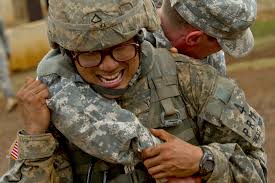 t behavior and those that don’t. Furthermore, many veterans find themselves involved with illegal drugs, prescription painkillers, or alcohol which often contribute to negative behavior.
Today’s wars vary significantly from those fought in the past. To begin with the modern day battlefield is fought using counterinsurgency warfare where the enemy is often not evident and can easily blend with the everyday civilian. This creates a distortion as to where the battle ends and the time for rest and rejuvenation begins. Because Soldiers are constantly on the guard, they are often on edge with little time to digress and renew mentally and physically. Furthermore, because of the high operational tempo Soldiers are deployed more often and with less time to reset time in between deployments. The advances in protective equipment has also introduced another factor that was not previously seen – Soldiers today tend to survive catastrophic events more frequently than they have in the past. With that said, they take with them severe, often life-changing, injuries such as partial paralysis or loss of limbs. This cycle of continual, back-to-back deployments and the modern day Soldier’s experience and ability to survive high-stress, horrific events leads them to be susceptible to PTSD. Furthermore, the common weapon used on today’s battlefield by enemy insurgents is the Improvised Explosive Device (IED) which is a frequent contributor to TBIs. PTSD, TBI’s and major depression are often called the “invisible three,” as they all affect the Soldier internally and are not visible from the outside.
As previously stated PTSD, TBI and major depression are thought to be key contributors to veterans and criminal behavior. PTSD can lead to antisocial behavior, increased irritability and aggression, and can contribute to poor decision-making. Because many individuals that experience PTSD from combat experience feel the need to be continually on the guard, these individuals may react to situations in a way that is not proportional to the event. TBI’s are often difficult to diagnose and treat and there is still much to be understood about this type of brain trauma. TBIs can affect different individuals differently depending on the severity and specific injury. This can also be associated with poor decision-making. Major depression can also add to the veteran’s pain by robbing them of the
appropriate cooping mechanisms to deal with their traumatic experiences. Although there is still much to be learned, research has shown that individuals that deal with these conditions are more susceptible to crime and to recidivism.
Another contributor to veteran engagement in crime is the use of illegal substances. Often in an attempt to mask their pain, these individuals turn to alcohol or drug use. This combined with their questionable mental state leads to a spiraling, downward effect. An individuals loses their job because of their excessive substance abuse, turns to robbery as a method to fund their addiction, becomes increasingly irritable and aggressive as a result of their illegal substance use and mental illness, and eventually their temper erupts and they find themselves being charged with an assault, or worst.
Today’s veterans experience a significant amount of trauma and stress, yet, are often overlooked in getting the treatment they need. Because of this, their susceptibility to mental health issues, and the lack of renewal time, it is no wonder the number of veteran offenders is ever increasing. Fortunately, many jurisdictions are implementing veteran’s treatment courts, which focus more on the treatment and rehabilitation of the veteran, rather than the simple punishment of the individuals. However, in order to truly reduce the number of veteran offenders, help needs to be offered much earlier to prevent the downward spiral of negative events. Without the preventative intervention, we will continue to see a high number of veterans processing through the criminal justice system.
References:
Bartol, A. & Bartol, C. 2017. Criminal Behavior: A Psychological Approach. Eleventh Edition. Boston, MA: Pearson Education, Inc.
Berenson, S. (2010). The Movement Toward Veterans Courts. Clearinghouse Review 44( Issues and 2), 37-42.
Johnson, Scott, et al. (2016). Predictors of Incarceration of Veterans Participating in U.S. Veterans’ Courts. Psychiatiric Services. Volume 68, Issue 2, February 01, 2017, pp. 144-150
Rousseau, D. (2017). Modules 1-6. Forensic Behavior Analysis (MET CJ 725). Boston University.
Photo above from the Wounded Warrior Website: woundedwarriorhomes.org/ptsd
A PTSD Society: A Society Post 9/11
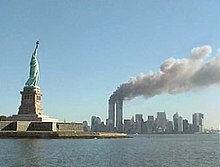
National Park Service (n.d.). Statue of Liberty and World Trade Centers 9/11. Licensed under the National Park Service website under 9.11.01 Remembrance.
9/11 a day that will live in infamy as every person around the world can remember where they were and what they were doing when they saw this horrific terrorist attack take place. But since that day many other terrorist attacks have taken place on our soil, more than any that we have ever had in the history of our nation. Due to these terrorist and lone wolf attacks, I believe that many people in our society suffer from a minor form of Post Traumatic Stress Disorder (PTSD).
Now, this is not to be compared to the degree that we see many who have served in our military, those who were in the midst of attacks, or have suffered other traumas as being equal to the rest of society. But think about the anxiety many people now have when they travel, either by public transportation plane or train/subways, go to public markets, or city holiday events. At all these areas you now see security at every corner (or sometimes wishing you saw more of them), ready to take a stand against any unforeseen or seen threat that could take place at any moment. The stress, the anxiety, the noise, and your thoughts running a thousand miles per hour as you take your daily steps towards the subway, platform 2, that you have done every day for the past 20 years. But at the end of each day, you are glad you made it home, taking a deep breath, and thankful that nothing happened today or nothing happened in your area.
This type of PTSD according to the DSM-5 would be categorized as PTSD contracted by learning about or watching a traumatic event such as 9/11 and the other terrorist attacks (American Psychiatric Association, 2013). Most American’s have seen the attacks happen either at the site of the attack or on the news either right after the attack and looking at the aftermath or sometimes during an event such as the Boston Marathon Bombing. According to some studies conducted by Galea and Schlenger (as written by Resnick, Galea, Kilpatrick, and Vlahov, 2004) a few weeks after 9/11 around “44%” of people that they surveys had symptoms of PTSD. Then around a few months to a year later, around 11% or more in the Manhattan area showed signs of PTSD (Resnick, et al., 2004). I believe that if we did a survey from the general society and asked them if they struggled with certain symptoms associated with PTSD after learning about, watching, or witnessing a terrorist attack that we would learn that a lot of people struggle with it, even for a short time.
The media does a phenomenal job of helping us relive each terrorist attack as they repeat the event over and over until a new attack happens. And as new threats continue to be posted, more and more people are anxious to go to places that have big crowds.
As a flight attendant, I talk to hundreds of people every day who are traveling for fun, work, or to see family and so many of them are anxious. Sometimes the fear and anxiety are palpable. Just this past week I went to London right after ISIS had put out a poster saying that they were going to attack the Christmas Markets. My crew and I were aware of the threat, talked about potential problems, and then how we were going to be aware of what was happening around us, but not let the threats of terrorism thwart our Christmas shopping plans. During the layover, I went to Winter Wonderland in Hyde Park, which is a beautiful Christmas Market, but those coming in had a very different demeanor than those coming out of the market. Those going in had to be searched, some got pat downs, while the majority of us had our bags searched. You could see that the police and military were jumpy, ready for something to happen, which made those of us entering on edge. Once you were in, I noticed that people were not drinking alcohol (well some might have been drinking too much) as they usually do and they were watching everyone. But looking at those leaving, they were laughing and having a great time knowing that nothing happened and they were able to have fun.
As I said, the anxiety and fear were palpable, as the media images of a terrorist attack by IED’s, knife attacks, and car attacks were running through everyone’s minds. People showed obvious signs of PTSD, and I believe struggle with it due to what is happening in our world today. We don’t let the terrorist’s win by not going to markets or doing what we want to do, but we sometimes do those things with our eyes closed and taking a deep breath in as we know where we are going could change our lives in an instance.
Thank you for taking the time to read my post.
Bonita
Resources:
American Psychiatric Association. (2013). Diagnostic and statistical manual of mental disorders: DSM-5 (5th ed.). Washington, DC: American Psychiatric Publishing. doi:https://dsm-psychiatryonline-org.ezproxy.bu.edu/doi/book/10.1176/appi.books.9780890425596
National Park Services. (n.d). 9.11.01 REMEMBRANCE. Retrieved December 11, 2017 from https://web.archive.org/web/20021019052836/http://www.nps.gov/remembrance/statue/index.html
Resnick, H. PhD., Galea, S. MD, DRPH, Kilpatrick, D. PhD., Vlahov, D. PhD. (2004). PTSD Research Quarterly: RESEARCH ON TRAUMA AND PTSD IN THE AFTERMATH OF 9/11. Retrieved December 10, 2017 from https://www.ptsd.va.gov/professional/newsletters/research-quarterly/V15N1.pdf
Psychopaths
Psychopathy is the topic that interested me the most throughout this course. To think that these individuals can be just about anyone and that in most cases you can’t tell outwardly if they are or not. In many cases these individuals are a lot smarter than the average person and have the capability to hide their actions and seem like any everyday individual.
The cause of psychopathy is something that we can’t put a definitive answer to. Some causes that are argued by professionals include genetics and early life factors (Tracy). For many individuals you can see the signs that any individual has psychopathic tendencies before they turn 16. The symptoms of psychopathy tend to be thought of as stable throughout the lifetime of the individual (Tracy). The genetics of an individual seems to have an impact on the development of a psychopath. Those with psychopathic parents are more likely to become psychopaths themselves.
To many we think of psychopaths as the type of individuals that we see in movies where they act like everyone else but may display odd behavior in the privacy of their own home or may lurk in the shadows watching someone waiting to make their move. Psychopaths are quite different from what we see in film. An interesting fact I learned through this class is that there are three categories of psychopaths. The categories of psychopaths are as follows; primary, secondary and dissocial (Bartol & Bartol, 2017, p. 179). A primary psychopath has identifiable psychological, emotional, cognitive, and biological differences that will distinguish them from the general and criminal populations. A secondary psychopath is a psychopath that commits antisocial or violent acts because of severe emotional problems or inner conflicts. In some cases, these individuals are called symptomatic psychopaths. The last type of psychopath is the most interesting to me. These individuals are dissocial psychopaths. These individuals display aggressive, antisocial behavior that they have learned from their subculture, such as their gangs, terrorist groups, or families (Bartol & Bartol, 2017, p. 179).
The dyssocial psychopath is the most interesting to me because they show that genetics and environmental factors can lead to psychopathic behavior. It just proves that nature has more of an impact than nurture. I think that for an individual to display psychopathic characteristics that it really depends on their environment and less on whether they are loved and cared for from the beginning. I think that if an individual is neglected or abused it can contribute to their criminal behavior but if they are in a safe caring environment that it can influence the individual positively.
My thinking personally has changed since taking this course when it comes to a psychopath. For most we think that anyone that commits a heinous act is a psychopath but, that’s not the case. I think that we need to study more those individuals that we determine to be a psychopath to determine what causes their behavior to see if we can do anything to turn their behavior around or keep a young person from joining in psychopathic behavior.
Bartol, C. R., & Bartol, A. M. (2017). Criminal Behavior: A Psychological Approach (11th ed.). Boston, MA: Pearson.
Tracy, N. (n.d.). Psychopathy: Definition, Symptoms, Signs and Causes - Psychopath - Personality Disorders. Retrieved December 10, 2017, from https://www.healthyplace.com/personality-disorders/psychopath/psychopathy-definition-symptoms-signs-and-causes/