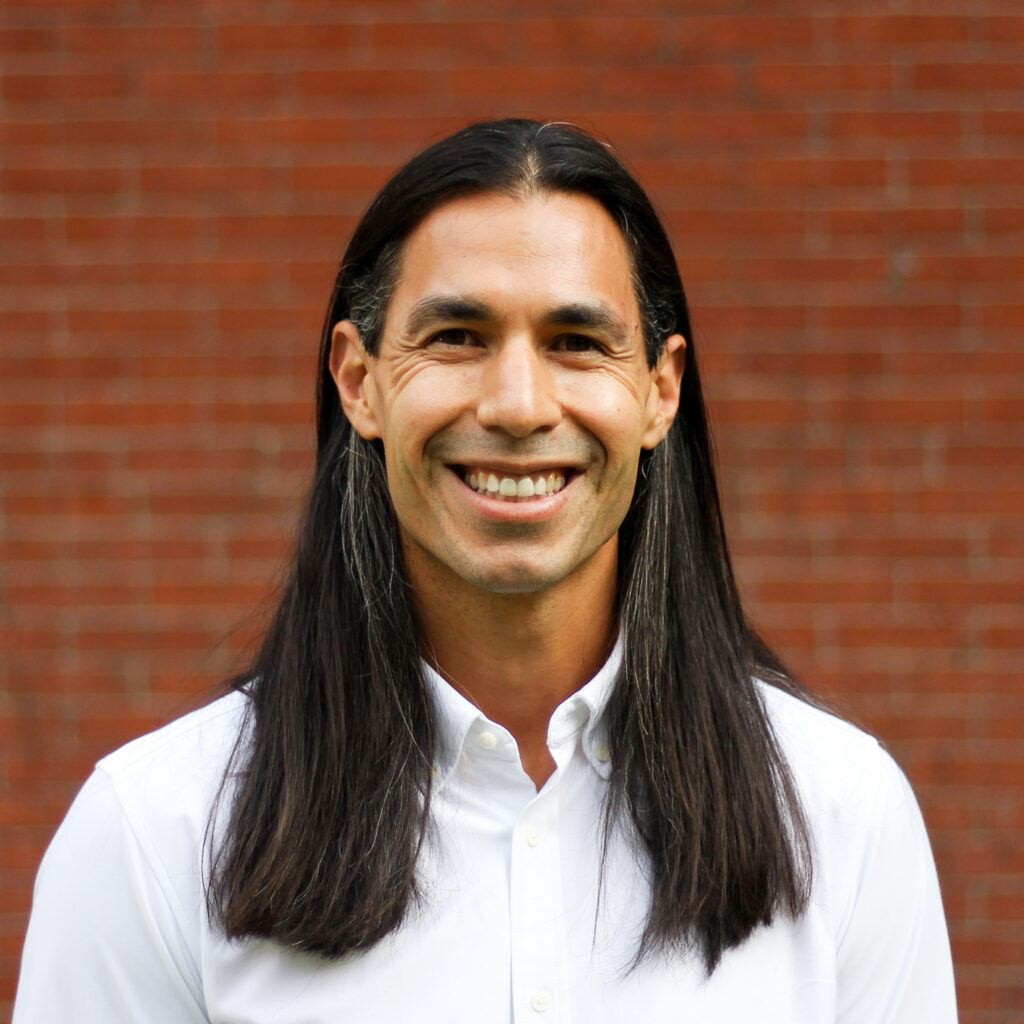
Affiliate Spotlight: Jonathan Jay, DrPH, JD
Each newsletter we feature a CTMH affiliate to learn a bit more about their work. This month we speak with Dr. Jonathan Jay research associate professor at BUSPH in Community Health Sciences. Click to listen to the audio interview:

Claire Dillenbeck: Hello, my name is Claire Dillenbeck, and I’m here to talk to Dr. Jonathan Jay, Associate Professor at the BU School of Public Health and Center for Trauma and Mental Health affiliate. Welcome, Jonathan.
Jonathan Jay: Thank you so much.
Claire Dillenbeck: Can you start by telling us a little bit about yourself and how you arrived at public health and mental health?
Jonathan Jay: Yes, I’ve been working on public health topics for a long time. I actually went to law school many years ago and then sort of bounced around in roles in research ethics and global health policy and finally ended up back in school for my doctorate in public health. I primarily work on gun violence now, and that is mainly a result of having had an opportunity to focus on that topic in my post-doctoral fellowship. That was sort of the first year that there was NIH funding for a firearm injury-specific Postdoc. One of my doctoral advisors told me about it, and it allowed me to dive in on this topic that I just think is so important. And so many people know that there hasn’t been enough funding for federally funded firearms research in the past, but this was one opportunity that popped up and made a huge difference to my career path.
01:40
Claire Dillenbeck: Sounds like a great opportune moment. I am curious about that transition that you made from law to public health, and what inspired the transition for you.
Jonathan Jay: I was one of those people who went to law school thinking, you know, this is, a flexible skill set that, that I think I could use well, but the more exposure that I had to public health law in particular, the more I realized that I wanted to be working on health issues. I realized that health outcomes and health inequities felt like the most important topics I could be working on. So, I would say from that point, I started trying to align my Law work with public health. Really overtime, I realized I wanted to be more working in the mainstream public health tradition.
Claire Dillenbeck: Gotcha, there was something missing, and it was public health!
Jonathan Jay: Exactly.
02:52
Claire Dillenbeck: Within your research around firearm violence especially, what do you see as some of the biggest missed opportunities, in current U.S. violence prevention strategies?
Jonathan Jay: There are a lot of missed opportunities, in part because of that lack of federal support, and generally misclassifying gun violence as a crime issue rather than a public health issue. But I think one that’s especially relevant to the Center’s work is lack of support for people who are survivors of gun violence in various ways. And that’s just an enormous group because of all the different forms of gun violence, all the different levels of exposure. I think that in practice, the programs that are out in the field now are conscious of survivorship, and they are, in fact, supporting survivors. But I don’t think that policy or research has caught up to what is happening. And this is important; even if what you care about the most is prevention, we need to be thinking about survivors’ needs because of the ways that violence can be self-perpetuating.
04:21
Claire Dillenbeck: How do you approach collaborating with community partners who have experienced trauma, loss, and distrust toward institutions? Obviously, this issue has had a huge impact on so many people in our communities.
Jonathan Jay: First, I think it’s really essential to collaborate with people who have been most directly impacted by this problem. I haven’t, and I think that both from an equity standpoint and a scientific standpoint, those perspectives need to be at the forefront. In this setting, all of the best practices for community-engaged research need to be present here. I think modesty about what we know as researchers, and the ways that we show up, are essential. Obviously, sensitivity towards what this issue means to people who are directly impacted. I think I’ve learned a lot over the years, but I think in the end, showing up consistently with modesty and sensitivity is what has worked the best. And in the end, it doesn’t always work, because our institutions have not earned that much trust. That makes it a little bit of an uphill process.
Claire Dillenbeck: I appreciate you talking about showing up consistently. In the field of social work, that’s one of the things we talk about frequently as a key to building trust.
Jonathan Jay: Yeah, I think a big thing has been, with enough time, people stop seeing you as BU, and start seeing you as Jon or Claire, who’s there in the room.
Claire Dillenbeck: As a person. That’s great.
06:22
Claire Dillenbeck: Looking forward, to end on a positive note, what emerging research areas or policy movements give you the most hope?
Jonathan Jay: I get a lot of hope and inspiration from seeing the ways that the world of community violence intervention has bounced back after federal funding cuts. More than $100 million of grants have been pulled back/terminated this year, which had represented this huge step forward in federal funding for the folks who were doing frontline work to support the people most at risk of being affected by violence. There are all different program models, and there’s been a lot of innovation in this space. It’s also work that has been happening for decades but has been formalized and gained steam in the last 5 to 10 years.
It was devastating, having felt close to some of the organizations that lost funding. My students were in the room with folks from three of those organizations the week after their multi-million-dollar grant had been cut. It’s devastating to see these real-world impacts. We see them in research too; people are going to have to lay off frontline staff who are out there doing life-saving work day-to-day. At the same time, even just a few days after these cancellations, the leaders of those organizations were saying things like, ‘I’ve been doing this work since before there was federal support… you couldn’t pay me not to do this work. This is my mission.’ Very often, coming from their own experiences of trauma and loss. I think it’s inspiring to see that that work continues, and as researchers, that we can be doing more to support those organizations.
Claire Dillenbeck: Such a high level of personal commitment. Thank you so much for sharing a little bit with us about you and your work. I really appreciate it.
Jonathan Jay: Thanks for having me.
(The audio transcript of this interview has been lightly edited for clarity)