News
Brianne Connizzo

Assistant Professor
- College of Engineering - Biomedical Engineering
Research Areas
mechanobiology, orthopaedics, aging
Why Women's Health?
As a former athlete and women's college graduate, I have seen the impact that exercise and aging can have on the body, particularly in terms of tendon and ligament health. Our research focuses on extracellular matrix biology, investigating how hormonal changes, mechanical loading, and aging influence the structure and function of tendons and ligaments. Women's health research is crucial in this context, as understanding these gender-specific factors can lead to more effective strategies for preventing injuries and promoting tissue regeneration, ultimately improving mobility and quality of life for women as they age.
Rabia Yazicigil
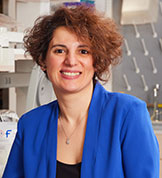
Assistant Professor
- College of Engineering - Electrical & Computer Engineering
Research Areas
Bioelectronics
Why Women's Health?
Rabia Yazicigil’s research aims to advance women's health through the development of Cyber-Secure Biological Systems. Her work utilizes hybrid bio-electronic sensors, which are constructed from engineered biological entities and seamlessly integrated with custom-designed wireless electronics. This innovative approach combines the natural advantages of biology with the reliability and robust communication infrastructure of electronics. The result is a unique and effective solution for addressing women's health challenges, including early diagnosis and real-time monitoring of health conditions and hormone levels.
Abigail Plummer

Assistant Professor
- College of Engineering - Mechanical Engineering
Research Areas
Why Women's Health?
There are many societally important and understudied questions related to mechanics in the area of women's health. I hope to contribute to efforts to provide safe and equitable healthcare by working to understand the mechanics of soft tissues that may experience growth and/or rupture.
Alyssa Tilhou

Assistant Professor
- Chobanian & Avedisian School of Medicine - Family Medicine
Research Areas
Substance use disorders
Why Women's Health?
We know humans experience health outcomes differently, reflecting diverse factors across the biopsychosocial spectrum. Understanding how outcomes vary by distinct populations allows health systems to strengthen and tailor services to meet the needs of all individuals.
Collette Ncube

Assistant Professor
- School of Public Healrh, Epidemology
Research Areas
Why Women's Health?
Maternal health in the U.S. is in crisis. Multiple Healthy People objectives related to pregnancy and childbirth demonstrate worsening metrics, and for many objectives there exist substantial disparities across racial and ethnic groups.
Julia Bond

Assistant Professor
- School of Public Healrh, Epidemology
Research Areas
Women's sexual function and dyspareunia
Why Women's Health?
Men with sexual function issues have numerous therapeutic options. However, despite population-based research that suggests that up to 40% of premenopausal women experience sexual function issues (with steep increases during and after menopause), clinical understanding and therapeutic options are limited. Women's sexual function and wellness deserves as much attention from researchers and clinicians as men's.
Michelle Pebole

Assistant Professor
Research Areas
Interpersonal violence; intervention development; lifestyle behaviors; physical activity; trauma-informed care
Why Women's Health?
Too often, women's experiences aren't addressed adequately in healthcare services or in research, especially when it comes to women's experiences of trauma and sexual / partner violence. Women's health research that acknowledges the many diverse experiences of women addresses critical in understanding exactly how biological, psychological, and social / structural factors impact women's wellbeing. Advancing work in this areas helps ensure that care and services are effective and welcoming for women, and can improve multiple domains of health. It is my goal to make women feel more seen, acknowledged, and appreciated in healthcare and society.