Neural Feedback: Smiling
In Justin Bieber’s 2010 smash hit ‘U Smile’ he addresses the idea that when “You smile I smile”, obviously deriving his inspiration from recent work by V.S. Ramachandran on the human mirror neuron system. Over 50 years before Justin Bieber’s efforts to bring Ramachandran’s research to the forefront of the media, Dale Carnegie noted in his 1936 masterpiece, How To Win Friends And Influence People, the undeniable positive effects of smiling on the people around you. Carnegie goes on to explain how smiling can actually have a positive affect on the smiler as well. He notes a passage written by the great psychologist William James: More
A Clue to Interaction between the Visual Areas and Pain Perception

You know how getting an injection is painful? Next time, try looking at your arm for a change.
Researchers at University College London and University of Milan-Bicocca have found that more pain can be tolerated if one looks at the afflicted body part. For instance, in the case of receiving an injection and anticipating pain, one should try looking at the arm to help reduce the pain perceived. More
The Odd Couple: Autism + Anorexia?

The Odd Couple via Omahype
Have you ever considered there to be commonalities between autism and anorexia? Up until a few weeks ago, the idea never crossed my mind. I was more focused on how that other autism study about vaccines was proven to be a complete hoax.
On February 10th, researchers at the University of Bath in England released some information on an upcoming paper that is to be published in the British Journal of Clinical Psychology. Dr. Mark Brosnan and the rest of his research team have possibly found a correlation between autism and eating disorders. Although there have been hints to this relationship in clinical settings (the news blurb refers to women diagnosed with eating disorders producing high scores on a "questionnaire that measures characteristics associated with Autism Spectrum Disorders (ASD)"), no formal research had been performed to test the strength of the relationship between the two diseases.
Dr. Brosnan studied 61 boys and 71 girls between the ages of 11 and 14 to make up a total of 132 children. His reasoning for testing this age group was to see if there was a correlation between the two disorders at a young age in a "non-clinical population." All of the students filled out questionnaires that examined their characteristics and how strongly they relate to autism and eating disorders. The to be published results suggest that there is indeed a link between the two disorders, and the relationship is especially strong between "eating disorder, attention to detail and communication skills."
In addition to the results of the research being simply interesting, Brosnan has stated that finding this relationship is key since "'The application of one research area to another may contribute to a better understanding of both clinical conditions.'" Brosnan then goes on to describe how autism is seen as a disorder that mainly affects men, and eating disorders mainly affect women. However, his research shows that high scores relating to "attention to detail" and "poor communication skills" were found the most among those who expressed the largest tendencies toward eating disorder. High scores in these two areas of the autism assessment were the greatest predictor of a high score on the eating disorder assessment, not sex of the student.
This paper has yet to be published, so more complex questions about the study will remain unanswered until the research is officially published. However, these implications prove to be very intriguing. Keep an eye on it. I know I will.
Eating disorders linked with autism in school children - University News of the University of Bath
“Avatar" Virtual Reality: Scientists Explore Self-Consciousness

In the 2009 film Avatar, scientists exploring the planet Pandora used alien hybrid bodies called "avatars" that functioned through a mental connection established with their genetically-matched human counterparts.
While this kind of technology seems as science fictionally fantastic as only the movies can portray it, recent work in the neuro-scientific community may lead the world to think otherwise. Neurologist Olaf Blanke, with the Brain Mind Institute at Ecole Polytechnique Fédérale de Lausanne in Switzerland, led a Virtual-Reality (VR) experiment utilizing computerized “virtual humans” to gain a deeper understanding of the neurobiological basis for the knowledge of one’s location in space. Interestingly, his team seems to have discovered that the sensation of possessing a body arises as part of our own conscious experience.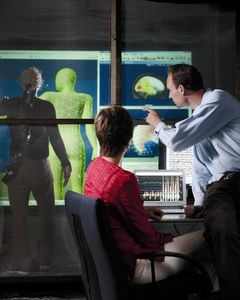
Blanke and his team had volunteers wear VR stereoscopic visors, or view projections on a large screen, while the researchers challenged them about fundamental aspects of self perception. The scientists physically touched the subjects either in sync or out of sync with their digital human “avatars” as they wandered through 3D environments, and even ‘immersed’ them into an avatar of the opposite sex. They also changed the subject’s perspective from the first to the third-person point of view. While such methods may seem a bit odd and even unorthodox, the response of the subjects to such testing was both highly positive and truly fascinating. Indeed, as Blanke commented regarding his own observations: "They start thinking that the avatar is their own body; we created a partial out-of-body experience. We were able to disassociate touch and vision and make people think that their body was two metres in front of them".
Throughout the experiement, subjects were fitted with electrode-containing skullcaps to record the electrical activity produced by their brains. The data collected by the electrodes and brain imaging scans (via fMRI) during the study demonstrated a heightened response in the temporo-parietal and frontal regions of the volunteer's brains, areas classically considered responsible for integrating touch and vision. These findings suggest that the subjects' brains were successfully being tricked as they experienced their own "bodies" in virtual space.
Progression in the knowledge of self-awareness and virtual reality could lead to major advances in the fields of robotics, neuro-rehabilitation and even severe-pain treatment. Imagine being able to temporarily “leave” the body as it heals after a serious injury! Though we may never get to explore Pandora, the implications of such out of body "avatar" experiences could be enormous.
Scientists project humans into avatars - Financial Times
Scientists explore the meaning of self-consciousness - Irish Times
The real avatar - EurekAlert
Our Attraction to the End
Since the beginning of time, there have been theories on how the world will end. One fairly recent theory is that the end of the world will occur on December 21, 2012 when the Mayan Long Count calendar ends. Although scholars reject the theory that any catastrophic event is scheduled for this date, arguing that the significance of the date has been misinterpreted, many people still believe it’s coming. Movies, countless online forums and a good number of books talk about the apocalypse that is supposed to be arriving.
It makes you wonder what makes people obsess over these end-of-the-world scenarios after they’re given facts proving that it won’t happen. In an article published in Scientific American, Michael Moyer suggests that we are constantly trying to predict our demise because we have a need to explain things that are not in our control. Our brains are always searching for patterns in order to interpret the significance of events that occur in the natural world. Sociologist, John Hall, explains in his book, Apocalypse: From Antiquity to the Empire of Modernity, that, “After events like 9/11 and the Great Recession, as well as technological disasters like the BP oil spill, people begin to wonder—not just people who are fringe zealots or crazies—whether modern society is any longer capable of solving its problems.” Therefore, Moyer suggests, people are more willing to believe that the end of the world is coming because of a psychological need to explain why these events are happening.

Michael Shermer, editor in chief of Skeptic Magazine, agrees with Moyer, saying that the mind is always creating patterns based on events, meaningful or not. This explains why some people are so willing to believe doomsday scenarios when they hear them. He adds that people will opt to believe that a proposed danger is real when it actually isn’t because it is the safer course. He gives the example of Lucy the hominid who hears a noise while walking on the plains of Africa. She has two choices; she could assume that it was just grass rustling because of the wind or that is was a predator. The safer choice would be to assume that she was in danger, even if she wasn’t, in order to save her life. He suggests that this habit of assuming the worst to stay out of danger evolved into our pattern-seeking habits, causing us to predict catastrophic events based on potentially meaningless events. Research done by Jennifer Whitson, an assistant professor at the University of Texas at Austin, supports this claim, suggesting that a decreased sense of control causes people to look for patterns in order to regain order and control as well as to find solutions to the problem.
Eternal Fascinations with the End: Why We're Suckers for Stories of Our Own Demise – Scientific American
A video and transcript of Michael Shermer's talk
Feeling Powerless? Do I have a Conspiracy Theory For You - Newsweek
"Rage" Stimulating Neurons Have Their Own Little Fight Club in the Amygdala
Ever been in a situation where you had to deal with someone/something that just really PISSED YOU OFF!? Of course you have. After all, we're all human; we've all felt that terrible tingle of insatiable rage wash over us from time to time. It's a pretty intense emotion, sometimes even frightening in its potential to completely change your whole disposition from that of a mild mannered undergrad to a rampaging Hulk wannabe. Even more interesting (and a bit more terrifying perhaps) is how such an big emotion like anger can be generated by such a tiny section of your brain!

The amygdala, nexus of RAGE and mystery
Despite the nigh inevitable incorporation of the frontal lobe in interpreting and modulating emotional responses, when it comes to generating many of the basic motivated behaviors to which mammals are bound (anger, fear, attraction, hunger/thirst, etc.) the amygdala is usually the primary suspect (or at least an important accomplice). The amygdala itself is a tiny, almond shaped bundle of neurons and fiber tracts located deep within the temporal lobes (usually near the end of the hippocampus). Countless studies from emotion-based research have targeted the amygdala as a playing a minor role in memory and, most famously, as a hot spot for emotional response. Despite all this work, researchers are still relatively hazy as to how the amygdala is able to help us feel such different emotions as fear, anger and so on. However, recent research from the Howard Hughes Medical Institute at Caltech may be starting to turn all of our uncertainty about the amygdala around, as well as shedding some light on the specific neuronal origins of our most primal emotions.

Yes, this actually is what activating those cells does to mice (minus the personality disorder)
Current investigations from the labs of Dayu Lin and David Anderson have led to the discovery of what seems to be a subset of neurons in the amygdala that exclusively help generate aggression in mice. Upon activation, these "rage" neurons (or "fight cells" as Anderson has dubbed them) can turn an otherwise docile male mouse into a hyper-aggressive brawler. Indeed, the effects are so strong that the mice can be induced to attack females and other males (usually castrated) that would otherwise not be viewed as a threat. Talk about domestic violence! To tease apart the action and sensitivity of these cells even more, Anderson and his team genetically modified a strain of these mice to express fight cells that respond to pulses of laser light. Upon shining this light in the eyes of mutated mice, an aggressive response in the presence of females, castrated males and even a rubber glove was able to be stimulated!
In the midst of all this bio-molecular wizardry, Anderson and his team stumbled across another interesting discovery: a population of "mate" stimulating cells that seems to be closely knit with the fight cells in the amygdala. As the name may imply, mate cells seem to play a large role in inducing and modulating sexual behavior. Interestingly though, upon analyzing the brains of modified mice, after having previously been induced to attack a rubber glove (or something similar) and then allowed to mate, Anderson's team that a healthy amount of fight cells were activated in concert with mate cells as the mice where engaging in sexual activity.
The fight cells' corner of the amygdala
It is this latest discovery that Anderson and his team have expressed the most excitement about, specifically because of its implications for potential remediation of violent sex offenders and predators who may be suffering from a massive "cross-wiring" of the fight cells and mate cells in their amygdalar/temporal regions. If enough homology can be drawn between these cells and their specific pathways in the mouse brain with that of the human brain, perhaps the future work of Hughes center could produce ways to untangle these connections and offer both sex offenders (and the general public) alternative solutions to their deeply ingrained problems.
Small Part of Brain Itching for a Fight - Science News
A Different Kind of "TREK"kie.
Scientists from the U.S. Department of Energy’s Lawrence Berkeley National Laboratory and the University of California Berkeley have delineated an alternative pathway for antidepressant function. Fluoxetine, the active compound in the widely-prescribed antidepressant drug Prozac, primarily acts as a selective serotonin reuptake inhibitor (SSRI). Many pharmaceutical agents, however, are known to exhibit multiple functions, and fluoxetine is now thought to act by a second mechanism. TREK1, a potassium channel expressed in reward-related basal ganglia, has been associated with symptoms of depression and implicated in mood regulation. Notably, it is inhibited by fluoxetine. Earlier studies have shown that TREK1 “knock out” mice display a depression-resistant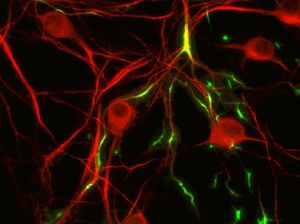 phenotype, their behavior being similar to mice treated with fluoxetine. This newfound beneficial role of fluoxetine may open up a new vessel for antidepressant treatments.
Ehud Isacoff, a neurobiophysicist in UC Berkeley’s Department of Molecular and Cell Biology, and Guillaume Sandoz, a TREK1 specialist, looked at the molecular mechanisms underlying the TREK1 channel’s function. When its C-terminal domain is bound to the plasma membrane, the TREK1 channel remains open, but when the tail is unbound, the channel closes. Isacoff and his research team separated the C-terminal domain from the rest of the protein, and tagged it with green fluorescent protein. They then used voltage clamps to measure electrical currents, and fluorescence to observe the status of the channel, finding that the addition of fluoxetine causes the isolated C-terminal domain to dissociate from the membrane. This prevents current from flowing through the channel, and effectively inhibits TREK1 function. Although the effects of the C-terminal domain’s position still need to be observed with a completely intact protein, Isacoff and his team foresee promising results.
To read Science Daily's review, click here. For the full article, click here!
Black Swans and Tiger Moms

I am surprising myself this week by delving into the more psychological and less biological side of neuroscience. Upon seeing the haunting Black Swan over winter break, I was immediately intrigued by its psychological underpinnings. Not long afterward, a friend showed me a fitting article from the Wall Street Journal titled, “Why Chinese Mothers are Superior” by Amy Chua. As it turns out, Chua’s article is an excerpt from her highly controversial book on parenting, Battle Hymn of the Tiger Mother. In her book, she describes to the Western public her use of persistence, force, and even verbal attack to get her children to be their best. Although shocked at some of the details, I found some of Chua’s arguments compelling. But how far is too far? Can we be driven insane by a desire to achieve, like the unfortunate protagonist in Black Swan? Or do the hours at the piano and the endless repetition of multiplication facts pay off in the end?
Nina, played by Natalie Portman, is the main character of Black Swan, a ballet dancer whose life seems to revolve around two places: the dance studio and the apartment she shares with her overbearing mother. The mother, we learn, was a dancer when she was younger and is channeling her unfulfilled ambitions into Nina, who she desperately wants to see take the lead in Swan Lake. Roger Ebert describes this tiger mom in his review of Black Swan as “a mother whose love is real, whose shortcomings are not signaled, whose perfectionism has all been focused on the creation of her daughter." The daughter becomes so focused on perfecting her art, trying to please her mother and her ballet company director that the rest of her life unravels along with her concept of reality itself.
 Of course, for the number of hard-driving parents out there, I’m sure there are significantly fewer Ninas: people driven to insanity by their need for perfection. Still, Black Swan makes viewers cringe at the thought of putting someone through such a rigorous practice regimen and limited schedule as hers. In the same vein, Amy Chua’s book has received much backlash, as exhibited on the Today Show where the host read viewer comments on Chua’s approach deeming it “outrageous” and calling Chua “a monster." Her daughters were not allowed to have sleepovers, participate in school plays, earn any grade less than an A, watch television, and the list goes on. In addition, she relates a story about her daughter Louisa’s struggles to learn a piano piece and the tactics she used to get Louisa to succeed. Chua forbade her daughter to leave the piano even for bathroom and water breaks, threatened her, told her to be less “lazy, cowardly, self-indulgent and pathetic” - terms she considers motivational.
In contrast, studies have shown that such verbal aggression is detrimental not only to kids’ self-esteem, but to their school grades. One such study, published in Child Abuse & Neglect showed that kids with verbally aggressive parents showed poorer marks in French, their native language, especially those students who perceived themselves as verbally abused. The authors pointed out that children who are the victims of such aggression tend to doubt their scholastic ability, their behavior and their general worth. Another more recent study in NeuroImage showed a 14.1% increase in gray matter volume in the superior temporal gyrus in subjects who were exposed to parental verbal aggression. Statements like these are compelling - but the first study failed to show any decline in math skills due to verbal abuse, and the sample size was quite small in the correlational second study.
As horrifying as Chua’s method sounds, when Louisa finally mastered the piece, she didn’t want to leave the piano and was back on excellent terms with her mother that same night. Oddly, it was an exercise in self-esteem: Chua didn’t want her daughter to give up; she wanted her to understand what it’s like to succeed when you didn’t think you could. In essence, she was berating her daughter to build her confidence because she believed in Louisa’s ability to overcome laziness and fear.
It is a fact of cognitive neuroscience that practice does make perfect (see Piano Teachers Must Be Neuroscientists). In the Time article reviewing Amy Chua’s book, psychology professor Daniel Willingham agrees. He says that once you’ve mastered a physical task like a piano piece, you can perform it without thinking about it, leaving certain areas of your brain free to engage in more complex interpretation of the music you’re playing. Rather than being stifled by verbal aggression, perhaps Chua’s children now have an extra outlet for expression. They may not be perceiving themselves as verbally abused either - it seems that Chua is somehow letting her kids know that she believes in their potential.
With such talent to express themselves with, how could a kid end up like Nina the Crazy Ballerina? My guess is that driving children to succeed is not the issue: it’s instilling a fear of failure, a fear of accomplishing nothing, a fear that Chua pushed her daughters to overcome. In another article in Time article detailing the extent to which parents go to protect their young from everything, Nancy Gibbs writes, “we were so obsessed with our kids’ success that parenting turned into a form of product development,” as she discusses the overload on extracurriculars and safety devices that parents pile on to make sure their kids survive in this competitive day and age. In the article, Gibbs cites author Carl Honore, who says, “With children, they need that space not to be entertained or distracted. What boredom does is take away the noise... and leave them with space to think deeply, invent their own game, create their own distraction. It’s a useful trampoline for children to learn how to get by.” Regardless of whether or not kids can play the piano like Mozart, they tend to find a suitable creative outlet if given time. Do kids who have practiced assigned violin exercises for hours on end have time to reflect on what they are putting into their music on a more emotional level? If they’ve never had the opportunity to create as they please, as adults these people may not know how to cope with a lack of stimulation. Maybe this was the Black Swan’s problem: when presented with a role in Swan Lake that required her to branch off from her drilled-in technical ballet skills and become her character, Nina was afraid of the freedom and the possibility of failure. In my experience growing up with non-Tiger Parents (yet supplemented with Tiger Piano Teacher), it seems to me that a blend of discipline and hard work, along with time to just have fun and be a kid is the best formula for success.
Black Swan Movie Review - Roger Ebert
Tiger Moms: Is Tough Parenting Really the Answer? - Time Magazine
Why Chinese Mothers Are Superior - The Wall Street Journal
Effects of parental verbal aggression on children's self-esteem and school marks - Child Abuse & Neglect
Exposure to Parental Verbal Aggression and Gray Matter Volume - NeuroImage
Helicopter Parents - Time Magazine
Under Pressure: Rescuing Our Children from the Culture of Hyper-Parenting - Carl Honore
Caffeine: The Good, The Bad, and The Ugly
Fatigue comes in all shapes and sizes, and sometimes it can appear in the case of the college student. Menacingly staring at the computer, eyes fixated on making sure the final paper meets the suggested word count, the college student desperately tries to block out the urge and addiction of distractions. Yet as the night sky soon turns bright with the rising sun, the college student's attention shifts more and more from the task at hand, to the preparation of the pick-me-up beverage of choice, caffeine. With only minutes before the first morning class, the college student is faced with the harsh reality of selecting his weapon of choice. Will he run across the street, bracing the brutal winds to grab a caffe mocha with a double shot of espresso, or play it conservative, and go for it with the 5 hour energy shot or name brand energy drink?
Soda, coffee, and energy drinks are the three main drinks that come to mind when thinking about caffeine. But besides these drinks, caffeine has shown to be increasingly prevalent in different foods covering multiple food groups. While most people concede to the negative attention these beverages receive, caffeine is a three - headed monster that yields both positive and negative effects. Thus the real question should be, do you want the good or the bad news first?
 Starting with the good: caffeine can increase your short-term memory and alertness while also altering your overall mood. The caffeine in one cup of coffee can stimulate the central system as it simultaneously lowers blood sugar, thus creating a temporary lift. Further research conducted by the Journal of Sports Medicine showed how "caffeine taken two hours before exercise enhanced the performance of athletes in marathon running." Yet another study published in the Journal of the American Medical Associated indicated that "people who drink coffee on a regular basis have up to 80% lower risks of developing Parkinson's disease."
On the contrary, caffeine does have a dark side. Caffeinated foods can contribute to a person's struggle with either weight gain or hunger. The stimulant itself is known to increase appetite, to increase cortisol levels, and to increase levels of insulin. Any of these factors may combine with a caffeine-induced stress that often affects the results of dieters, being that caffeine is a natural diuretic which can lead to water retention. Caffeinism, as it is often referred to, can come in waves of migraine headaches and sickness, which in turn can cause nervousness and a rapid heartbeat. So does this mean that you shouldn't have a cup of coffee in the morning? My response is no.
Ahhh coffee, such a misunderstood luxury. Caffeine, within coffee beans, has shown to be a leading source of both brain and body health benefits, specifically playing the role of your average American's number one source of antioxidants. In fact, regular coffee consumption has shown to dramatically reduce the chance of mental heath risks including Alzheimer's and Dementia. However, coffee is one of those things that is always looked down upon as if it induces the same affects as alcohol. The real problem lies not with the coffee, but with all the other unhealthy ingredients that it can be mixed with. For example, which sounds healthier, a strait shot of Espresso or a Cinnamon-Dulce-White-Mocha-Frappucino, cream based. Now when you compare the carb, chemical, and fat information of the two with the purity of the first, the controversy over coffee is plain and simple.
In essence, caffeine is one of those things that must be taken in moderation. While caffeine contains both positive and negative extremes, a balanced consumption of caffeine through artificial drinks or coffee in its purest form, seems to be just fine, especially with the college students.
Caffeine - K. Cossaboon
Foods Containing Caffeine - Ella Rain
Brain Healthy Foods - Brain Ready
Moral Code
Why is it wrong to kill babies? Why is it wrong to take advantage of mentally retarded people? To lie with the intention of cheating someone? To steal, especially from poor people? Is it possible that Medieval European society was wrong to burn women suspected of witchcraft? Or did they save mankind from impending doom by doing so? Is it wrong to kick rocks when you’re in a bad mood?
Questions of right and wrong, such as these, have for millenia been answered by religious authorities who refer to the Bible for guidance. While the vast majority of people still turn to Abrahamic religious texts for moral guidance, there are some other options for developing a moral code. Bibles aside, we can use our “natural” sense of what’s right and wrong to guide our actions; a code based on the natural sense would come from empirical studies on what most people consider to be right or wrong. Ignoring the logistics of creating such as code, we should note that the rules in this code would not have any reasoning behind them other than “we should do this because this is what comes naturally.” How does that sound? Pretty stupid.
The other option is to develop a moral code based on some subjective metaphysical ideas, with a heavy backing of empirical facts. “Subjective” means these ideas won’t have an undeniability to them; they are what they are and that’s it. Take as an example the rule such as “we should not kill babies.” There is no objective, scientific reason why we shouldn’t kill babies. Wait!, you say, killing babies is wrong because it harms the proliferation of our species and inflicts pain on the mothers and the babies themselves! But why should we care about the proliferation of our species? About hurting some mother or her baby? While no one will deny that we should care about these, there is nothing scientific that will explain why. Science may give us a neurological reason why we care about species proliferation (it will go something like, “there is a brain region that makes us care about proliferation of our species.”), but why should we be limited to what our brains tend to make us think or do?
Subjective rules like these must therefore be agreed upon with the understanding that they are subject to change. Interestingly, some argue that science can answer moral questions because it can show us what “well-being” is, how we can get it, etc. But the scientific reason why we should care about well-being is nowhere to be found. The result is that we can use science to answer moral questions, but we have to first agree (subjectively) that we want well-being. Science by itself cannot answer moral questions because it shows us what is rather than what ought to be. (Actually, Sam Harris is the only one to argue that science can be an authority on moral issues; his technical faux-pas is an embarrassment to those who advocate “reason” in conduct).

But more on the idea of metaphysically constructed moral codes. What properties should this code have, and how should we go about synthesizing it? Having one fixed/rigid source as an authority for moral guidance is dangerous. Make no mistake: there must be some authority on moral questions, but it must be flexible, and adaptable; it must be able to stand the test of time on the one hand, but to be able to adjust to novel conditions on the other. This sounds a lot like the constitution of the U.S. But even with such a document as The Constitution, which has provided unity and civil progress since the country’s founding, there are some who take its words literally and allow no further interpretation; if it’s not written in the constitution, it can’t be in the law, they argue (see Strict Constructionism versus Judicial Activism). These folks also tend to be rather religious (read: they spend a lot of time listening to stories from the Bible; not to be confused with “spiritual” or of religions other than the Abrahamic ones). So while we must have a moral code, it must be flexible (i.e. change with time) and we must seek a balance between literal and imaginative interpretations, just as we do with the US Constitution.
Why and how is a rigid moral authority dangerous? Our authority must change with time because new developments in our understanding of the world must update how we interact with others. For example, if science finds tomorrow that most animals have a brain part that allows them to feel emotional pain in the same way that humans do, we will have to treat them with more empathy; research on dolphin cognition has recently produced an effort by scientists to have dolphins be considered and treated as nonhuman persons. Furthermore, if we don’t explain why we do certain things, we won’t understand why we do them and therefore won’t know why violating them is bad. This unquestionability aspect of God as moral authority or the Strict Constructionists as law-makers is what makes them particularly dangerous and leads to prejudice and ignorance. Our moral code must therefore be based on empirical research, with every rule being subject to intense scrutiny (think of two-year-olds who keep asking, “but why?”).
But why should we have a moral code in the first place? Perhaps if everyone followed a moral code of some sort, the world would have fewer injustices and atrocities. Getting people to follow a moral code of any kind is a completely different issue.
Nonhuman Personhood for Dolphins
