GenAI for Lean Management Applications
Researchers: Florence Metivier and Nursaya Imamurat
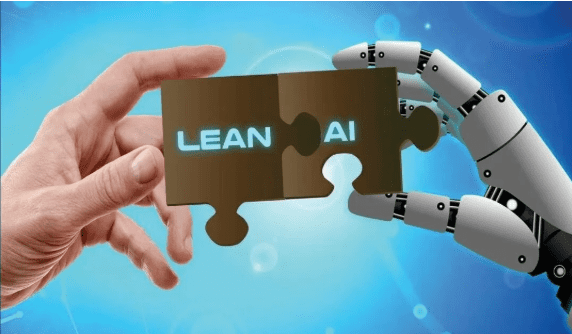
This research examines how Generative AI (GenAI) can be integrated with Lean methodologies to support structured problem-solving and process-improvement. We use case studies and real-world scenarios to compare solutions developed by humans using Lean methods with those generated by AI guided by Lean tools. Results are tested based on multiple criteria such as simplicity, accuracy, clarity, robustness, and completeness.
Because LLMs are typically based on a DNN architecture, they may not be capable of creating effective solutions. The methodologies create scenarios based on currently-used case studies as surrogates for real world problem creation. Examples include using GenAI to find root cause, generate process maps, and apply lean methods such as 5S, kanban, SMED, and poka-yoke. This research will encourage practitioners to collaborate with GenAI rather than outsourcing their work to it, and it will expose students to a skill whose demand is increasing in today’s job market.
Image source: garyping.com