The hot Big Bang model describes the universe as beginning in a hot, dense state about 13.8 billion years ago. This primordial plasma—consisting primarily of protons, electrons, and photons—expanded and cooled until, 380,000 years later, the protons and electrons combined to form hydrogen atoms. Photons were then able to travel unimpeded throughout the universe.
We can see this radiation today! The Cosmic Microwave Background (CMB), thermal radiation peaking in the millimeter range of the electromagnetic spectrum, is the most direct way to learn about the early universe. Since the CMB’s discovery, its homogeneity (smoothness) has remained a mystery: it is almost exactly the same temperature in every direction on the sky. Standard physics offers no natural explanation for this and several other related properties.
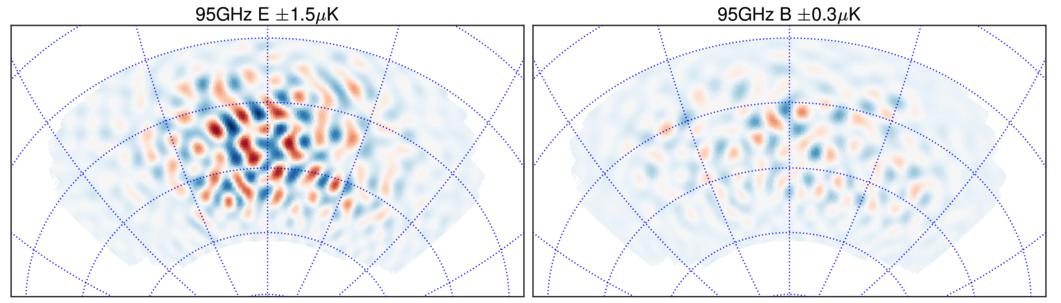
The model of cosmic inflation offers a solution: if the universe expanded exponentially in a very short period of time, a microscopic region that was in thermal contact would grow to macroscopic scales, naturally setting the initial conditions we see in the CMB today. Inflation also explains the origin of structure as arising from quantum fluctuations that are frozen in as the universe expands. While inflation is a wild extrapolation from physics tested in laboratory environments, since its introduction over 40 years ago almost all of its predictions have been observed in the CMB—except for one. Inflation generically predicts a background of gravitational waves, which would imprint a distinct, curl-type “B-mode” signature in the CMB’s polarization at degree angular scales.
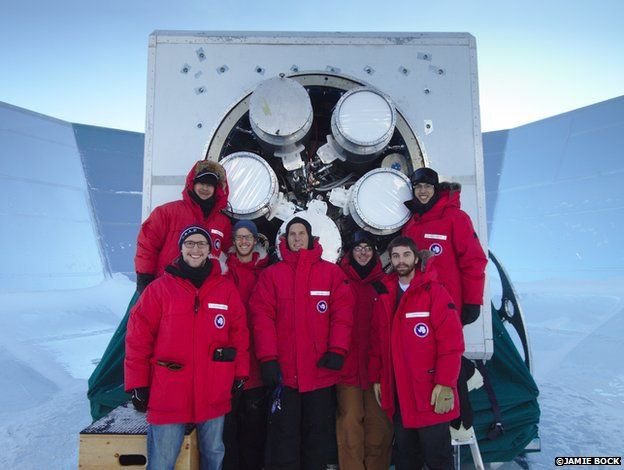
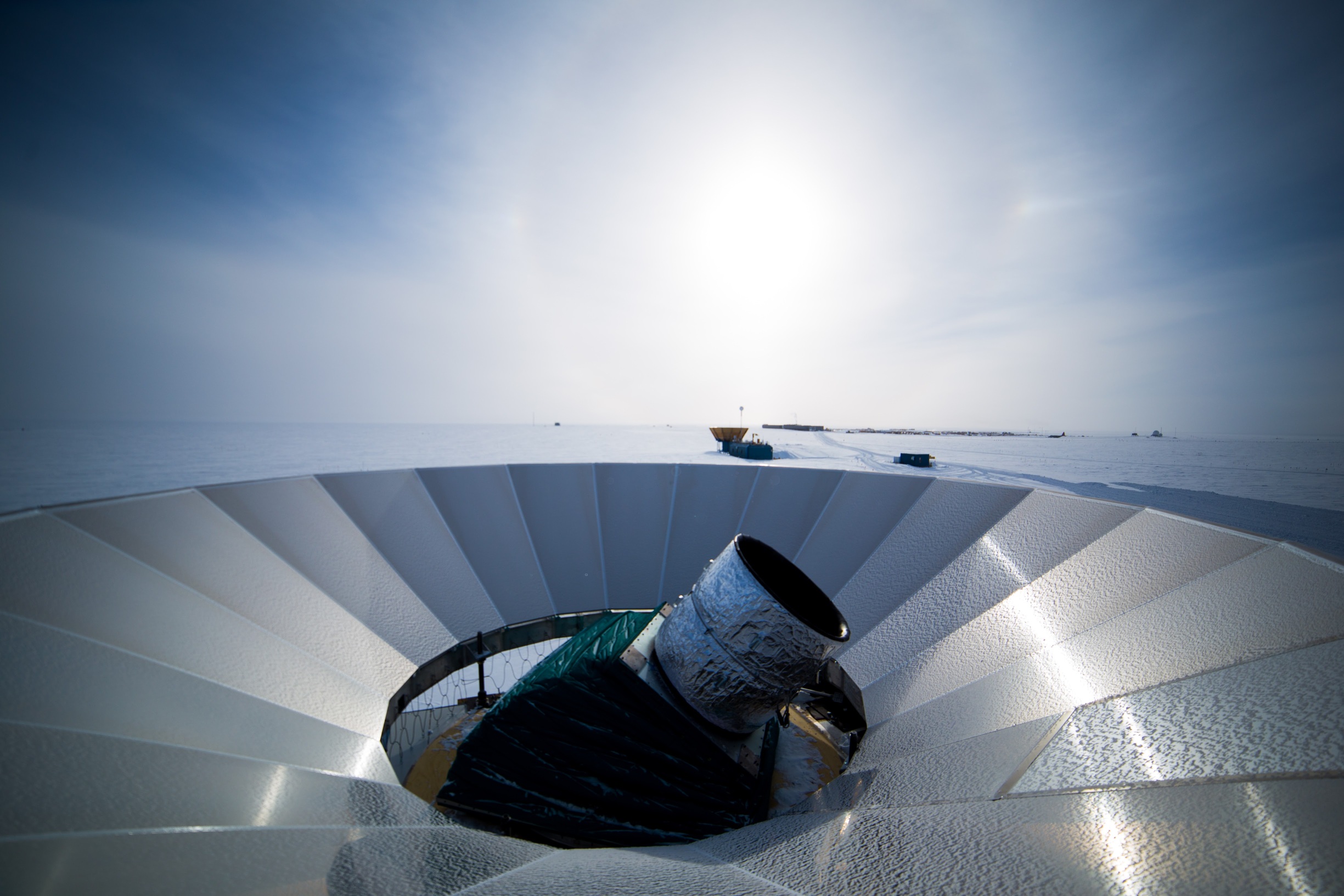
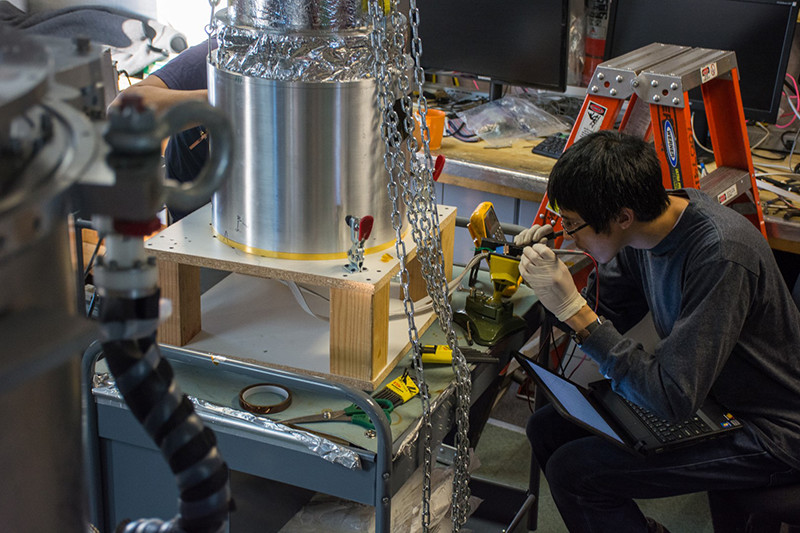
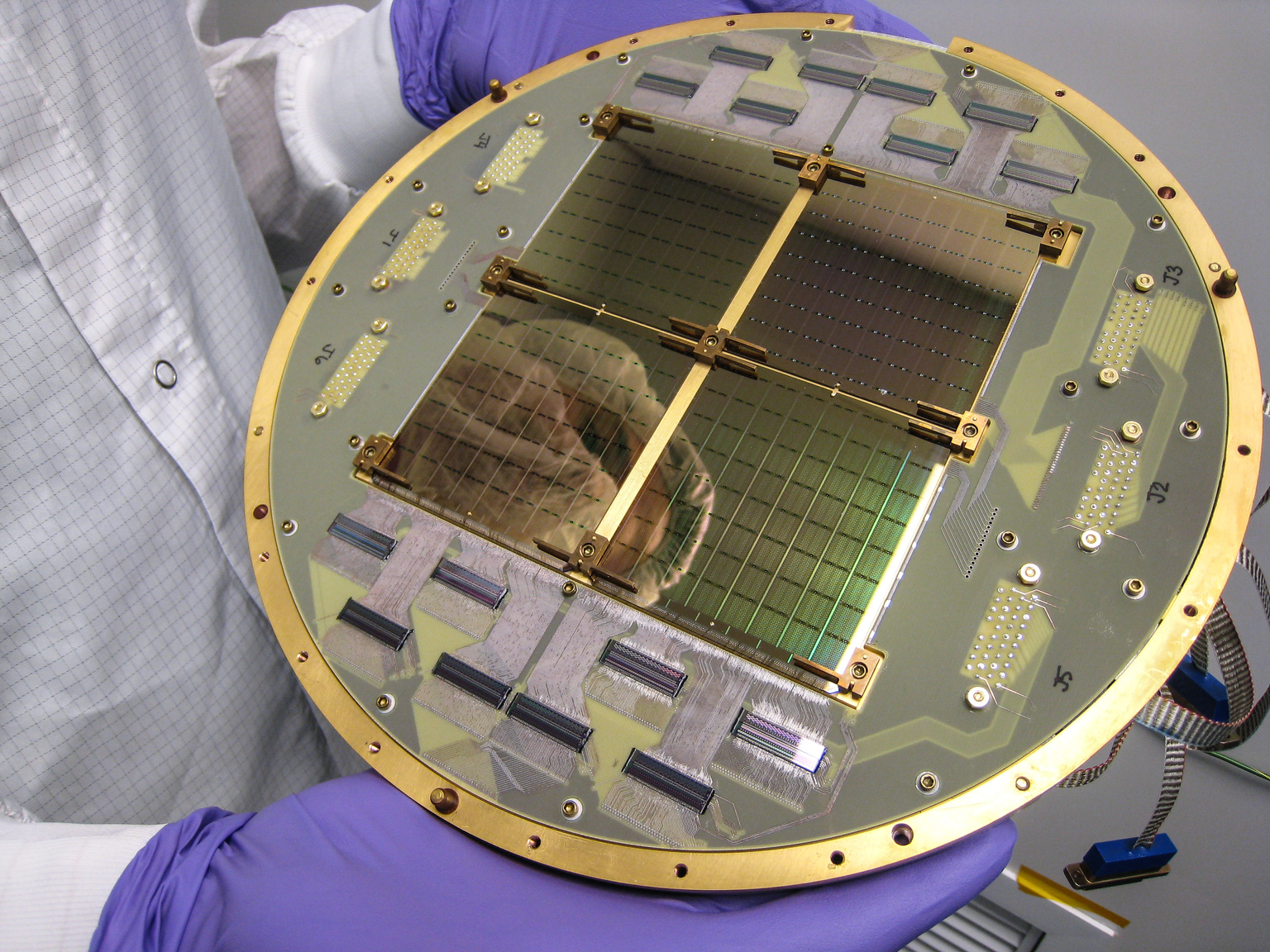
Our group at BU is a member of the BICEP/Keck (BK) collaboration. We operate a series of telescopes at the South Pole focused on measuring degree-scale CMB polarization, and for the past 15 years our experiment has provided the most stringent constraints on inflationary B modes. Our work involves building cryogenic telescopes and calibrators, taking them to the South Pole, and operating them during the Antarctic winter. We are particularly interested in instrumental systematics and calibration: understanding all of the details of our telescope and how they might affect the measurement. Specific projects include:
- Fourier Transform Spectroscopy (FTS) to measure detector bandpasses
- Beam mapping to measure the detector spatial response
- Optics fabrication and characterization
- Shielding the telescope from the ground
- Analyzing and correcting for the effects of instrumental imperfections on the inflation measurement