
Activities
Monday, February 24, 2025 – 3-4pm
Rafael Cabañas Alamán
Saint Louis University, Madrid Campus
Los objetos insólitos y el alma en las minificciones de Ramón Gómez de la Serna
Zoom Presentation (for link write nfm@bu.edu or inh@bu.edu)
 En esta charla se expondrá el poder y protagonismo que tienen los objetos en las algunas minificciones de Ramón Gómez de la Serna. Primeramente, basándome en sus teorías y en recientes estudios críticos de lo insólito, comentaré sobre algunas de las minificciones más representativas de dicha modalidad provenientes de los libros inclasificables englobados bajo el término “ramonismo”. En las minificciones relacionadas con lo insólito en ocasiones se emplean los términos “absurdo”, “miedo”, “misterio” y “terror”, y aunque a menudo en ellas se entremezclan diferentes contenidos temáticos, son verdaderas joyas literarias que merecen estudio. Por otro lado, hablaré de las minificciones relacionadas con “el alma”. Hay objetos con alma que adquieren vida propia, almas humanizadas y objetos que afectan al “alma” de las personas. Estas dos vertientes temáticas ocupan un corpus lo suficientemente amplio dentro de los libros de minificciones de Gómez de la Serna, quien hace literatura partiendo de objetos tangibles, cotidianos, pero le da un giro a la realidad que observa bajo las premisas del antirrealismo literario teniendo en cuenta el humor, que no está ausente del mundo insólito y del alma de los objetos en las minificciones que merecen nuestro estudio.
Monday, October 21, 2024 – 2.30-3.30pm EST
Renée Silverman
Associate Professor, Florida International University
Maruja Mallo and the Female Figure: Destabilizing Androcentrism in the New Art
Zoom Presentation (for link write nfm@bu.edu or inh@bu.edu)
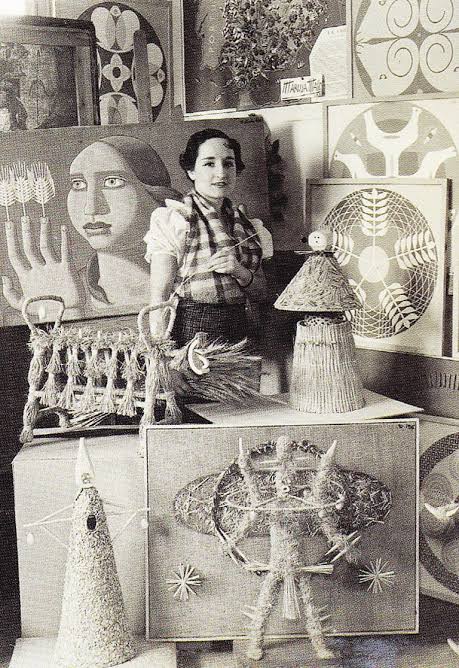 Spanish artist Maruja Mallo engages in a double rebellion against the gender norms of society and the equally gendered ideas about modernity and modern art embraced by the Madrid avant-garde of the 1920s-1930s. Mallo refuses the prevailing conceptualization of modernist and avant-garde esthetics in terms of an intellectualized abstraction that erases the body; while these elisions render the ‘new art’ and ‘new style’ apparently gender-neutral, they actually affirm male dominance. Through her portrayal of the female figure and female body, Mallo dissociates her brand of the new style from the masculine-as-objective perspective with which modern art is linked in José Ortega y Gasset’s The Dehumanization of Art. As Mallo crosses borders from home to exile, her emphasis on the female figure and body destabilizes androcentric concepts of esthetics and ontology as the basis of the new style and new art (Silverman, Renée M., and Esther Sánchez-Pardo, editors. Nomadic New Women – Exile and Border-Crossing between Spain and the Americas, Early to mid-20th century. Palgrave Macmillan, 2024)
Tuesday, March 26, 2024 – 3-4pm EST
Andrew A. Anderson
Professor Emeritus of Spanish, University of Virginia
Literary Milieux: The Case of José María Hinojosa, from Málaga, Granada, and Madrid to Paris
Zoom Presentation (for link write nfm@bu.edu or inh@bu.edu)
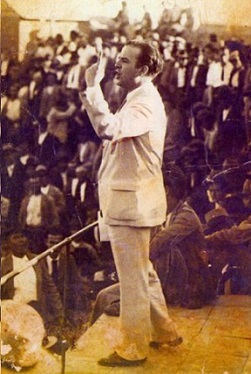 In Configurations of a Cultural Scene: Young Writers and Artists in Madrid, 1918-1930, I sought to provide a new perspective on the upsurge in creativity associated with those years by documenting where and how members of this youthful cohort interacted with each other and by exploring the networks that they established. Specifically, I coined the term “sites of engagement” for the three types of locales where they lived, studied, and socialized, places that served not only as backdrops for encounters but also often were responsible for first meetings and the subsequent development of friendships and collaborations. As the poet José María Hinojosa only spent a limited amount of time in Madrid over the 1920s, but also came to be closely connected with a wide range of notable young artists and writers, his case obliges us to envisage additional “sites of engagement” for those who did not live in Madrid or settle there permanently. Hinojosa spent a lot of time in his home town of Málaga, where he came to form part of a network that would have enduring importance for his evolution as a writer and in the later stages of his career. Likewise, the time spent in Granada and Paris would prove equally impactful as that in Madrid. This paper identifies family and a particular socio-economic milieu of Málaga as further “sites of engagement”, traces each of these steps in his personal life and artistic development, and seeks to demonstrate how each one propelled him further.
Wednesday, April 3, 2024 – 3-4pm EST
Zachary Rockwell Ludington
Associate Professor of Spanish, University of Maine
Daphnis and Chloe go to the Cinema: The Avant-garde Pastoral of Soledad
Zoom Presentation (for link write nfm@bu.edu or inh@bu.edu)
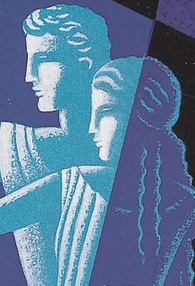 Around the second century CE, the enigmatic Roman Greek writer Longus composed his lone surviving work, Daphnis and Chloe, a pastoral romance in prose. Its title evokes bucolic poetry’s mythological founder, Daphnis, a stock character in the pastoral tradition since Theocritus. An intense interest in Longus’s shepherd lovers pervaded the European nineteenth century and endured even into the avant-gardes. Juan Valera’s Pepita Jiménez, a popular epistolary novel, updated the story for contemporary Spanish readers in 1874. In 1880, Valera published a translation of Longus’s Greek text into Castilian. Versions in Catalan and Portuguese followed in 1905 and 1912, respectively, while Carmen de Burgos produced a new Castilian translation in 1910. Meanwhile, the Ballets Russesbrought a production based on the tale to Barcelona in 1924 with costumes by Juan Gris. These translations were widely read and the Ballets Russes production —especially the score by Maurice Ravel— was well known across Iberia, where the story of Daphnis and Chloe appeared in literary and plastic works throughout the modernist period. While scholars have studied some of these echoes of Longus’s novel in Iberian letters, many avant-garde works have not garnered critical attention. In this talk, I show how the Ultraist writer César M. Arconada’s 1928 book of poems, Urbe, poems by Mauricio Bacarisse, disparate texts by Fernando Pessoa, and perhaps a lost “cartel literario” by the influential Ernesto Giménez Caballero retool the ancient love story for the avant-garde, placing the pastoral lovers Daphnis and Chloe somewhat incongruously in metropolitan locales. A muted, ironic pastiche characterizes these works, whose redeployment of an ancient story of amorous destiny functions doubly as an ironic signal of literature’s historical contingencies and as a barometer of modern, urban alienation.
Monday, October 23, 2023 – 3-4pm EST
Travis Landry, William P. Rice Professor of Spanish University, Kenyon College
José Ortega y Gasset and the Humanity of Circumstance
Zoom Presentation (for link write nfm@bu.edu or inh@bu.edu)
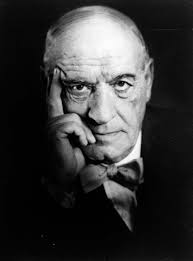 For José Ortega y Gasset, a coexistence between self and circumstance defines the radical reality that constitutes the vital being of both. This paradigm explores the nature of life. Key factors include the imagination, temporality, and the will. Nevertheless, questions remain. One relates to an imbalance. The self is a poetic becoming, dramatic for needing to decide at each moment how to live, while circumstance appears stonelike and blind to its own role in the dynamic exchange. Another involves what the formulation might look like in terms of lived experience. Any reflection on such a reality makes it an elusive idea of living, as opposed to the intimate immediacy needed for saving circumstance and ourselves in the process. Ortega frames his formulation with elasticity to model the encounter. Self and circumstance react to one another, and neither comes away from the exchange unaltered. Moreover, for this to happen, being must be reimagined. The world provides the building blocks for the self-fabrication Ortega privileges in his Cartesian inversion of I am… therefore, I think. Since circumstance is the other half of the self, that self must be present in circumstance. My thesis posits fantasy as its catalyst, in what I term the humanity of circumstance.
Monday, November 13, 2023 – 3-4pm EST
Anna Torres-Cacoullos, Assistant Professor of Spanish, University of Illinois, Urbana-Champaign
Writing for New Literacies: Moving-Image Storytelling and Film Fan Culture
Zoom Presentation (for link write nfm@bu.edu or inh@bu.edu)

This talk argues that early film fan culture was a forceful context for Spain’s literary experimentation in the 1920s. Film fan culture—manifested in the proliferation of pedagogical and interactive magazines—rendered urgent questions of audience and the emergence of new types of cultural authority and radically new forms of diversified expertise. Speaking to an expanding body of cinema-literate readers—including women and adolescents—writers experimented with their prose to explore what it meant to fuse literature and film, and by extension, what it meant to write for different kinds of reading. Thus, they produced hybrid literary-cinematographic texts that were experimental in their formal novelty and in the ways they elicited new demands and critical involvement on the part of the reader. At the same time, they were popularly-oriented, blurring the divide between high and lowbrow culture, or between the (literature) intellectual and the (film) consumer. This talk will briefly showcase a variety of such works, including Cóncha Méndez’s film script Historia de un Taxi (1927) and Pío Baroja’s novel-film El poeta y la princesa o El Cabaret de la Cotorra Verde (1929), and the ways they shed light on storytelling while challenging assumptions about the nature of literary writing.